


We may not have the course you’re looking for. If you enquire or give us a call on 01344203999 and speak to our training experts, we may still be able to help with your training requirements.
15 Essential Customer Service Skills and How to Develop Them
ByWilliam BrownLast updated on: 17 September 2026
What separates an ordinary customer interaction from a positive one? Discover 15 essential customer service skills that help professionals listen, respond, and solve problems effectively.

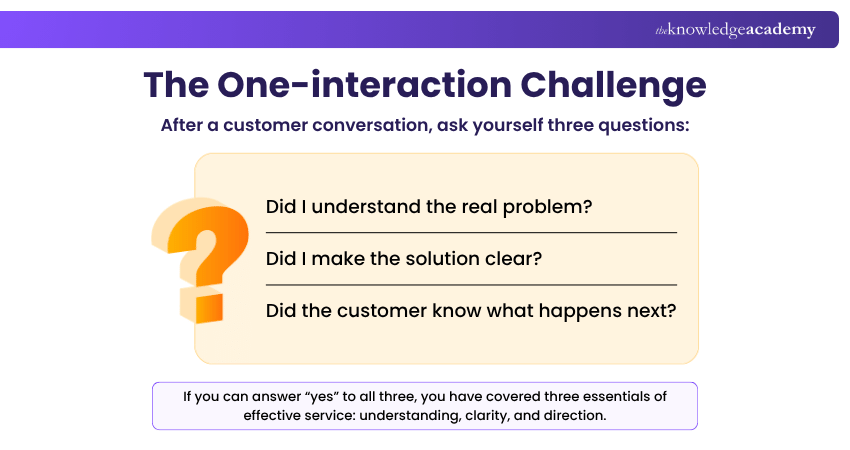
A customer calls with a billing problem. One representative rushes through the conversation and provides an answer. Another listens carefully, identifies the real issue, explains the solution clearly, and confirms what happens next.
Both addressed the same problem, but only one delivered a strong customer experience. The difference lies in customer service skills. This blog explores the essential skills that shape better interactions and how to develop them. So, read on!
What are Customer Service Skills?
Customer service skills are the abilities professionals use to understand customers, communicate clearly, address concerns, and provide effective support. They combine interpersonal qualities such as empathy and patience with practical capabilities such as product knowledge, problem-solving, and time management.
These skills apply across different customer touchpoints, including phone calls, emails, live chat, social media, and face-to-face interactions. Together, they help professionals handle conversations confidently while keeping customer needs at the centre of the interaction.

Why are Customer Service Skills Important?
Customer service skills influence how effectively organisations respond to questions, complaints, expectations, and changing customer needs. Strong skills help create consistent interactions while making customers feel understood, valued, and supported.
They can contribute to:
1) Clearer Communication: Helps customers understand information, solutions, and next steps.
2) Effective Problem Resolution: Enables professionals to identify issues and respond with appropriate solutions.
3) Higher Customer Satisfaction: Creates smoother and more supportive customer experiences.
4) Stronger Customer Relationships: Builds trust through reliable and positive interactions.
5) Consistent Service: Helps maintain service quality across phone, email, chat, social media, and face-to-face channels.
6) Better Handling of Difficult Situations: Helps professionals respond calmly and constructively to complaints or challenging interactions.
For professionals, these skills are also transferable across industries and roles involving customer communication, support, and relationship management.
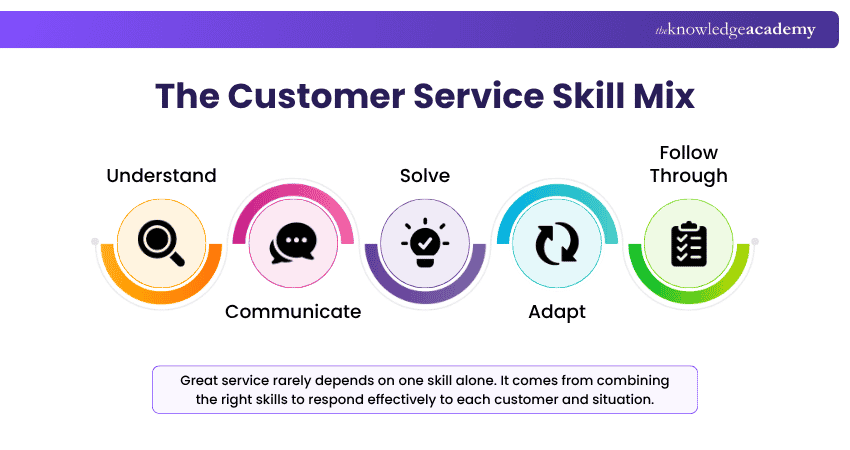
15 Essential Customer Service Skills
Customer service involves much more than being polite. Professionals often need to listen, interpret information, solve problems, manage emotions, and communicate solutions within a single interaction.
Here are 15 essential skills that support effective customer service:
1) Communication
Clear communication helps customers understand information, instructions, policies, and solutions without unnecessary confusion. Professionals should adapt their language to the customer, avoid excessive jargon, and maintain a respectful tone.
2) Active Listening
Active listening means paying close attention to what customers say, asking relevant questions, and confirming important details. It helps professionals understand the actual issue before attempting to resolve it.
Strengthen your listening and communication skills with our Active Listening Training - Join today!
3) Empathy
Empathy helps professionals recognise a customer's feelings and view the situation from their perspective. It is particularly valuable when customers are disappointed, confused, or frustrated.
Acknowledging their experience can make customers feel understood while keeping the conversation focused on finding an appropriate solution.
4) Problem-solving
Customer service professionals regularly encounter situations without an immediate answer. Problem-solving involves identifying the issue, assessing available options, and selecting an appropriate course of action.
Strong problem-solvers also look beyond the immediate symptom to understand and address the underlying issue.
5) Patience
Some customers need additional time to explain their concerns or understand a solution. Others may already be frustrated when the interaction begins.
Patience helps professionals remain composed, gather the necessary information, and guide customers without making them feel rushed.
6) Product and Service Knowledge
Understanding products, services, policies, processes, and common issues helps professionals answer questions accurately and recommend appropriate solutions.
Strong knowledge also helps representatives recognise when they can resolve an issue themselves and when specialist assistance or escalation is required.
7) Adaptability
Customers differ in their expectations, communication preferences, technical knowledge, and reasons for seeking assistance. A single approach will not work equally well for every interaction.
Adaptability helps professionals adjust their communication and approach while maintaining consistent service standards.
Quick Tip: Summarise the customer's concern in your own words before offering a solution. This gives them an opportunity to clarify anything you may have misunderstood.
8) Conflict Resolution
Complaints and disagreements require calm and constructive handling. Conflict resolution involves understanding the concern, finding common ground, explaining available options, and working towards an appropriate outcome.
Remaining composed can also help de-escalate tension and keep difficult conversations focused on resolution.
9) Time Management
Customer service can involve balancing conversations, tickets, follow-ups, and administrative responsibilities. Effective time management helps professionals prioritise these tasks without compromising service quality.
It also means recognising when an issue requires escalation rather than allowing one unresolved case to unnecessarily delay others.
10) Emotional Intelligence
Emotional intelligence helps professionals recognise and manage their own emotions while responding appropriately to those of customers.
For example, understanding that an angry customer's frustration may be directed at the situation can help a representative remain calm and solution-focused.
11) Positive Attitude
A constructive and approachable attitude can influence the tone of an interaction. This means acknowledging genuine concerns while maintaining professionalism and focusing on what can be done.
Positive language can also make explanations, alternatives, and next steps feel more supportive.
12) Attention to Detail
Names, account information, order numbers, dates, previous conversations, and promised follow-ups can all affect the outcome of a customer interaction.
Paying close attention to these details improves accuracy, prevents avoidable errors, and reduces the need for customers to repeat information.
13) Resourcefulness
Not every problem has a ready-made answer. Resourcefulness helps professionals use available knowledge, tools, documentation, colleagues, and alternative approaches to find appropriate solutions.
The goal is not to know everything. It is to know where to look, who to ask, and what to try next.
14) Digital and Technical Skills
Customer service increasingly takes place through Customer Relationship Management (CRM) platforms, ticketing systems, live chat, email, social media, and other digital tools.
Professionals should be comfortable navigating relevant systems, recording interactions accurately, retrieving customer information, and working across communication channels.
15) Teamwork and Collaboration
Some customer problems require input from multiple teams. Customer service professionals may need to work with technical support, sales, finance, logistics, or management to reach a resolution.
Effective collaboration helps information move with the issue, reducing unnecessary repetition and creating a smoother experience for the customer.
How to Improve Customer Service Skills?
Improving customer service skills starts with noticing how you communicate, respond, and solve problems during real interactions. Small adjustments made consistently can gradually improve both confidence and service quality.
1) Start with Your Weakest Area: Identify whether communication, listening, product knowledge, problem-solving, or another skill needs the most attention. Focusing on a specific area makes improvement easier to measure.
2) Practise Before the Pressure: Use role-play scenarios involving complaints, difficult questions, or unexpected situations. Practising responses beforehand can make challenging real-world conversations easier to handle.
3) Turn Feedback into Action: Ask managers or colleagues for specific feedback and convert it into something you can practise. For example, if explanations are too complex, focus on making your next few customer responses shorter and clearer.
4) Learn from Real Interactions: Review calls, emails, chats, or difficult cases and identify where the conversation changed direction. Consider what worked, what created friction, and what you would do differently next time.
5) Keep Your Knowledge Current: Stay familiar with products, services, policies, processes, and common customer issues. The stronger your knowledge, the easier it becomes to provide accurate answers or recognise when escalation is necessary.
Build confidence in handling challenging interactions with our Dealing with Difficult People Training - Join today!

William Brown creates structured resources that help professionals identify business needs, evaluate operational problems and recommend appropriate improvements. His content explains how analytical methods can support better processes, decisions.
View Detail

 If you wish to make any changes to your course, please


