


 Top Rated Course

We may not have the course you’re looking for. If you enquire or give us a call on +46 850282424 and speak to our training experts, we may still be able to help with your training requirements.
Effective Time Management Techniques
The Knowledge Academy 26 March 2026Time Management Techniques like time blocking, Pomodoro, and the Eisenhower Matrix help boost productivity, reduce stress and manage work efficiently. These strategies help individuals manage distractions, set clear goals and make better use of their time. Choosing the right technique depends on personal work style, goals and environment.

Training Outcomes Within Your Budget!
We ensure quality, budget-alignment, and timely delivery by our expert instructors.
Table of Contents
Time never slows down, but the way you use it can change everything. Good Time Management is not about doing more; it is about doing what matters most with clarity and control. From boosting focus to reducing stress, the right Time Management Techniques can transform everyday routines into productive habits.
In this blog, we explore 13 proven and effective Time Management Techniques designed to help you work smarter and achieve consistent success in both your personal and professional life. So read on and juggle this world overflowing with tasks, distractions, and endless to‑dos like a pro!
Table of Contents
1) What is Time Management
2) What are Time Management Techniques?
3) 13 Time Management Techniques
4) How to Choose the Right Time Management Technique for You?
5) Conclusion
What is Time Management?
Time Management is the practice of planning and organising how your time is allocated across tasks and responsibilities. When done effectively, it helps you work more efficiently rather than longer, achieving better results in less time, even under pressure. Strong Time Management also improves focus, reduces stress and enables better decision-making by helping you prioritise what truly matters.
What are Time Management Techniques?
Time Management Techniques refer to strategies, practices, and tools that help individuals with time optimisation, prioritise tasks, and accomplish their goals easily. They provide a planning framework, organising, and time allocation to various personal along with professional activities.
Its importance can be understood from the fact that these Time management Techniques help to improve your productivity levels, help in stress reduction, and foster a sense of control over one’s schedule. By following the Principles of Time Management, you can make the best use of your available hours and accomplish more in comparatively less time.

13 Time Management Techniques
Managing time is highly crucial for goal achieving and living a fulfilling life. By implementing specific techniques, you can not only improve your productivity but also accomplish robust tasks achievement and make the most out of each day you have. Here is a list of some of the key Time Management Tools and Time Management Techniques you should know:
1) Pomodoro Technique
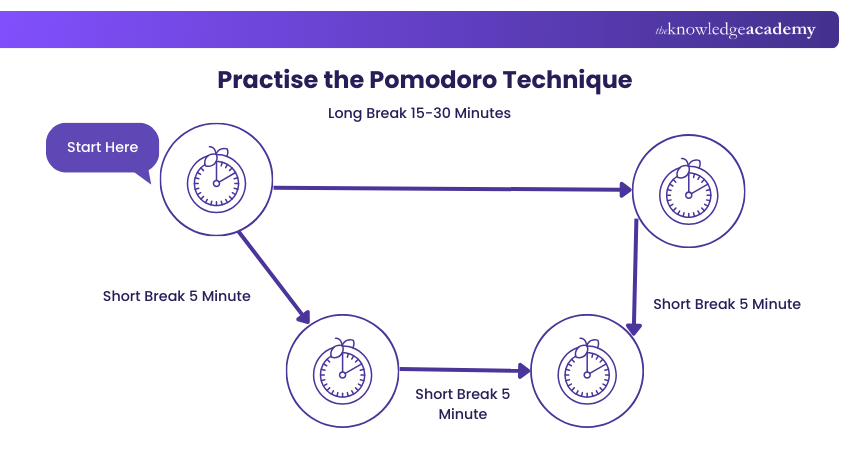
Entrepreneur and author Francesco Cirillo developed the Pomodoro Technique. It is a Time Management method that uses a timer to divide work into focused intervals, called Pomodoros, inspired by the tomato-shaped kitchen timer Cirillo originally used. Here's how it works:
a) Select a task you want to complete.
b) Set a timer, usually for 25 minutes.
c) Work on the task with full focus until the timer ends.
d) When the timer rings, record your progress with a simple checkmark.
e) Take a short break of three to five minutes to recharge.
f) Repeat the cycle. After four Pomodoros, take a longer break of around 20 to 30 minutes.
The Pomodoro Technique is ideal for creative professionals who need structured focus and individuals experiencing burnout from work or studies.
2) Time Blocking Technique
Time blocking involves assigning every part of your day to a specific activity, starting from the moment you wake up. Tasks can range from daily routines to focused work or study sessions. Here's how you apply this method:
a) Divide a page into two columns and list the hours of your day on the left, breaking them into blocks such as 30 or 60 minutes.
b) Estimate how long each task will take and allocate it to a time block.
c) Include buffer periods between blocks to handle delays or unexpected changes.
Working students or parents, and analytical thinkers benefit most from time blocking.
See the big picture, then design the path that leads to it. Sign up for our Strategic Planning and Thinking Course now!
3) Eisenhower Matrix Technique
Before becoming U.S. President in 1953, Dwight Eisenhower served as an Allied Forces Commander during World War II. The war's constant high-stakes decisions inspired the creation of the Eisenhower Matrix. How it works is that tasks are organised into four quadrants based on urgency and importance.
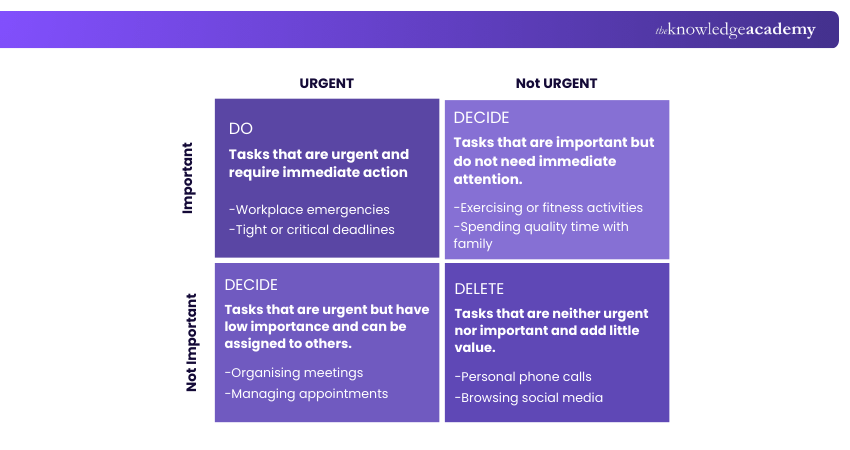
Urgent tasks require immediate attention, and important tasks support long-term goals and values. Priority should be given to tasks that are urgent and important or important but not urgent. Tasks that are neither should be delegated or eliminated. The Eisenhower Matrix greatly benefits leaders, Managers, and critical and strategic thinkers
4) Eat That Frog Technique
The Eat That Frog is one of the most prominent Time Management Techniques. It takes its name from a quote by Mark Twain: “Eat a live frog first thing in the morning and nothing worse will happen to you the rest of the day.” The idea is to begin your day by tackling the most challenging or uncomfortable task, so it no longer weighs on you. Here's how it works:
a) Identify your most important goal.
b) Write it down clearly.
c) Set a firm deadline.
d) List all the tasks required to achieve it.
e) Prioritise the list, placing the hardest and most impactful tasks at the top, these are your “frogs.”
f) Take action by completing the toughest task first.
g) Repeat this process daily to maintain consistent progress towards your goals.
Abstract thinkers and individuals working towards long-term goals benefit most from the Eat That Frog technique.
5) Getting Things Done (GTD) Method
The Getting Things Done method, developed by David Allen, is a structured approach to managing tasks by capturing everything on your mind and turning it into actionable steps. Here's how it works:
a) Write down all tasks, ideas, and commitments competing for your attention, whether personal, academic, or work-related.
b) Decide which items are actionable. If they are, choose to do them, delegate them, or schedule them. Non-actionable items can be set aside.
c) Arrange tasks based on priority, deadlines, and context.
d) Review your task lists regularly, marking completed items and adjusting priorities as needed.
e) Focus on completing the tasks you can act on immediately.
Individuals who struggle to focus on one task at a time benefit most from the GTD method.
6) Rapid Planning Method (RPM)
RPM was created by motivational speaker Tony Robbins. This approach is designed to shift your focus from tasks to outcomes, helping you turn clear intentions into real results. Here's how it works:
a) Write down all the tasks you need to complete over the week.
b) Group tasks by common themes, such as personal, academic, or work-related.
c) Create columns for each task, the result you want to achieve, and the purpose behind it. Then list the actions needed to make it happen.
d) Give yourself a motivating role or title that energises you to take action.
Working students or parents benefit most from RPM.
Master the art of Attention Management with our Attention Management Training- Sign up today!
7) Pareto Analysis
Pareto Analysis (also known as the 80/20 Rule) is a prioritisation technique introduced by Italian economist Vilfredo Pareto. It is based on the principle that a small number of actions, roughly 20%, often produce the majority of results, around 80%. This method helps focus effort on the most impactful tasks or issues. Here's how it works:
a) List the problems you are currently facing.
b) Identify the underlying cause of each issue.
c) Assign a priority score to each problem based on its importance.
d) Group problems that share the same root cause.
e) Add the scores within each group to identify the most significant issue.
f) Focus your efforts on addressing the highest-impact cause first.
The Pareto Analysis is beneficial for Problem solvers and Analytical thinkers.
8) Pickle Jar Theory
The Pickle Jar Theory is a simple way to distinguish between what truly matters and what simply fills your time. It helps you prioritise tasks effectively and leave space in your day for unexpected interruptions. How it works is that imagine a jar filled with rocks, pebbles, and sand. The order matters:
a) Sand represents daily distractions such as emails, messages, social media, and interruptions.
b) Pebbles symbolise tasks that are important but can be delayed or delegated.
c) Rocks are your top-priority tasks that must be completed today.
Build your task list by scheduling the rocks first, followed by pebbles, and sand only if time allows. Assign honest time estimates and aim to plan no more than six hours of focused work in an eight-hour day to leave buffer time. Visual learners benefit most from the Pickle Jar Theory.
9) Parkinson's Law
British historian Cyril Northcote Parkinson introduced the idea that work expands to fill the time available for its completion. Simply put, if you allow more time for a task, it will take longer, even if it does not need to. Parkinson’s Law is not a traditional Time Management method but a principle that can be used to improve productivity.
By deliberately setting shorter time limits, you encourage focused, efficient work. To apply it effectively:
a) Work without a charger to create a natural deadline.
b) Aim to complete tasks earlier than required.
c) Set strict deadlines and then reduce them.
d) Allocate limited time slots for routine tasks such as emails.
Procrastinators and Individuals who perform best under pressure benefit most from Parkinson’s Law.
10) Use a Planner or Calendar
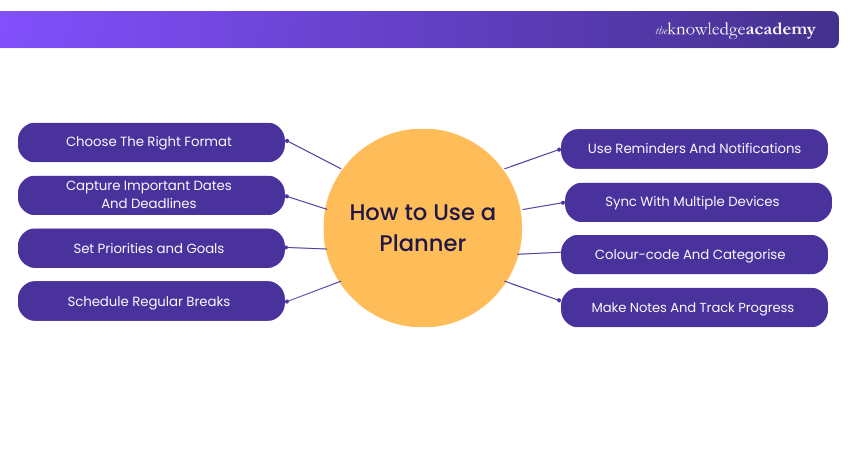
A planner or calendar is a simple yet powerful Time Management tool. It helps you organise your schedule, track deadlines, and ensure important tasks are never missed. Use it effectively by following these steps:
a) Use a paper planner, digital calendar, or both based on what suits you best.
b) Add all deadlines, meetings, events, and personal commitments in one place.
c) Highlight critical tasks to keep focus on what matters most.
d) Plan regular breaks to avoid burnout and maintain productivity.
e) Enable alerts for upcoming tasks and appointments.
f) Access and update your schedule across phone, tablet, and computer.
g) Categorise activities visually for quick identification.
This technique is ideal for individuals who juggle multiple responsibilities, struggle to remember deadlines or prefer visual organisation.
Take charge of your personal growth journey today with our comprehensive Personal Development Courses- Sign up today!
11) Set Realistic Deadlines
Setting realistic deadlines is essential for effective Time Management. It helps maintain productivity, reduce pressure, and deliver quality outcomes. Use these concise steps to set achievable timelines:
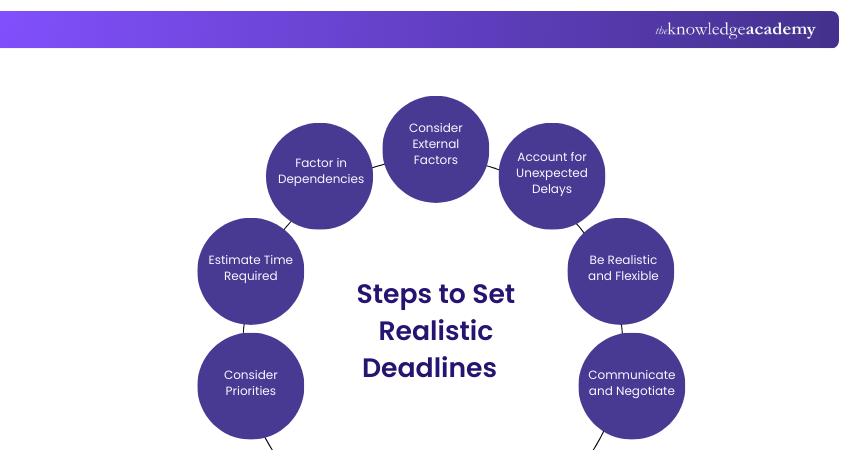
a) Align deadlines with task importance and urgency.
b) Break tasks into smaller steps and estimate time for each.
c) Identify tasks that rely on others and plan timelines accordingly.
d) Factor in resource availability and stakeholder involvement.
e) Allow flexibility for unexpected delays or changes.
f) Set achievable deadlines that match capacity and resources.
g) Discuss and agree on deadlines with teams or stakeholders early.
This method is best for professionals or students who tend to overcommit or feel stressed by unrealistic time expectations.
12) Manage Email Effectively
Effective Email Management is essential for strong Time Management at work. Without control, emails can quickly become a major distraction. Use these simple strategies to stay organised and efficient:
a) Check and respond to emails during dedicated time slots to stay focused.
b) Sort emails by urgency and importance before responding.
c) Make the purpose of your email immediately obvious.
d) Use short sentences or bullet points for clarity.
e) Reuse standard responses to save time and improve efficiency.
This is suited for roles with high email volume, such as Managers or office professionals.
13) Action Method
The Action Method is a structured Task Management approach developed by Behance co-founder Scott Belsky and his team. It focuses on helping individuals and teams organise work and move projects forward systematically. Its flexible structure makes it suitable for both personal tasks and team-based projects, supporting efficient execution and consistent progress. Here's how it works:
a) Record all ideas, notes, and tasks related to a project.
b) Convert ideas into specific, actionable tasks.
c) Group actions by project or priority for better organisation.
d) Highlight the most important tasks that require immediate attention.
e) Regularly review and update completed and pending actions.
This is ideal for goal-driven individuals who prefer clear, actionable steps and want to translate ideas into concrete tasks without feeling overwhelmed.
How to Choose the Right Time Management Technique for You?
The best Time Management approach depends on how you naturally work. You do not need to stick to one method forever. Consider these points to find the right technique:
a) Review Your Work Structure: If your day is filled with meetings, time blocking or task batching can protect focused work time. If your schedule is flexible, structured methods like Pomodoro may be more effective.
b) Evaluate Your Environment: Frequent interruptions suit shorter focus techniques, while independent work benefits from longer, uninterrupted sessions.
c) Clarify Your Goals: Use prioritisation methods to reduce stress, time-based techniques to improve focus, or simple frameworks for light planning.
d) Match Your Energy Levels: Plan demanding tasks when your energy is highest to work more efficiently and sustainably.
Conclusion
Implementing the right Time Management Techniques as described in this blog can impact your life positively. Each technique serves a specific purpose and can be adapted to fit your unique needs and preferences. Additionally, by understanding the Difference Between Attention Management and Time Management, you can tailor your approach to maximise both your attention and time, leading to improved productivity.
Strengthen your research and writing skills with our Academic Writing Course – Start now!
Frequently Asked Questions
How Can Effective Time Management Positively Impact My Career Prospects?

Effective Time Management is a career gold mine! It helps boost productivity, develop robust focus, and allow for strategic goal pursuit. In addition, by performing task optimisation and prioritising, you can easily showcase reliability, elevate your professional image, and unlock new career prospects.
How Do Time Management Skills Help Meet Deadlines and Achieve Career Goals?
Time Management is deadline magic! It ensures tasks are correctly aligned with priorities and minimising stress. Moreover, mastering this skill serves as your career rocket fuel. It helps in meeting deadlines consistently and showcases dependability, propelling you towards achieving ambitious career goals with precision.
What Are the Other Resources and Offers Provided by the Knowledge Academy?
The Knowledge Academy takes global learning to new heights, offering over 3,000+ online courses across 490+ locations in 190+ countries. This expansive reach ensures accessibility and convenience for learners worldwide.
Alongside our diverse Online Course Catalogue, encompassing 19 major categories, we go the extra mile by providing a plethora of free educational Online Resources like Blogs, eBooks, Interview Questions and Videos. Tailoring learning experiences further, professionals can unlock greater value through a wide range of special discounts, seasonal deals, and Exclusive Offers.
What is a Knowledge Pass, and How Does It Work?
The Knowledge Academy’s Knowledge Pass, a prepaid voucher, adds another layer of flexibility, allowing course bookings over a 12-month period. Join us on a journey where education knows no bounds.
What Are Related Courses and Blogs Provided by the Knowledge Academy?
The Knowledge Academy offers various Personal Development Courses including the Emotional Intelligence Training, Attention Management Course and Time Management Training. These courses cater to different skill levels, providing comprehensive insights into Improving Focus and Concentration.
Our Business Skills Blogs cover a range of topics related to Time Management Techniques, offering valuable resources, best practices, and industry insights. Whether you are a beginner or looking to advance your Time Management skills, The Knowledge Academy's diverse courses and informative blogs have got you covered.

The Knowledge Academy


Global Training Provider
The Knowledge Academy is a world-leading provider of professional training courses, offering globally recognised qualifications across a wide range of subjects. With expert trainers, up-to-date course material, and flexible learning options, we aim to empower professionals and organisations to achieve their goals through continuous learning.

Upcoming Business Skills Resources Batches & Dates
Date
 Time Management Training
Time Management Training
Fri 10th Jul 2026
Time Management Training
Fri 11th Sep 2026
Time Management Training
Fri 6th Nov 2026

 If you wish to make any changes to your course, please


