


 Top Rated Course

We may not have the course you’re looking for. If you enquire or give us a call on +46 850282424 and speak to our training experts, we may still be able to help with your training requirements.
What is Relationship Counselling? Benefits, Process, and Tips
Michael Jones 04 March 2026Relationship counseling helps couples improve communication, resolve conflicts, and build healthier dynamics with the guidance of a trained professional. It encourages empathy and trust between partners, helping them navigate challenges effectively and strengthen their relationship for long-term emotional well-being.

Training Outcomes Within Your Budget!
We ensure quality, budget-alignment, and timely delivery by our expert instructors.
Table of Contents
Relationships are like music, built with rhythm, harmony, and understanding. Once that harmony is lost, Relationship Counselling helps the partners get their tune back. It's the gateway to more effective communication and emotional development, which results in the major concepts discussed in this blog.
Table of Contents
1) What is Relationship Counselling?
2) Benefits of Relationship Counselling
3) How Does Relationship Counselling Work?
4) Tips for a Successful Relationship Counselling Experience
5) How to Find a Relationship Therapist?
6) How do we Know if Relationship Counselling is Working for us?
7) Conclusion
What is Relationship Counselling?
Relationship Counselling is a systematic way of providing psychological advice to patients through the expertise of trained professionals to address the issues affecting your relationship, such as misunderstandings and personal issues. The primary goal of Relationship Counselling is to improve communication, foster understanding, and promote healthier dynamics between partners or family members.
Let’s consider an example to understand it better. John and Lina have been married for five years, but lately, they feel like no day is left without arguments and minor fights. John feels Lina doesn't listen to him, and Lina feels John doesn't understand her feelings. They decided to go to a Relationship Counsellor.
Through a brief session, they agree on small changes, like setting aside phones at dinner and using "I" statements to improve communication. As a result, John and Lina understood each other better as time progressed. They feel more connected and argue less because they have learned the art of communicating in a healthy way.
Benefits of Relationship Counselling
Relationship Counselling offers numerous benefits not just for individuals or couples but also for family members. Let's explore some of its distinctive advantages:
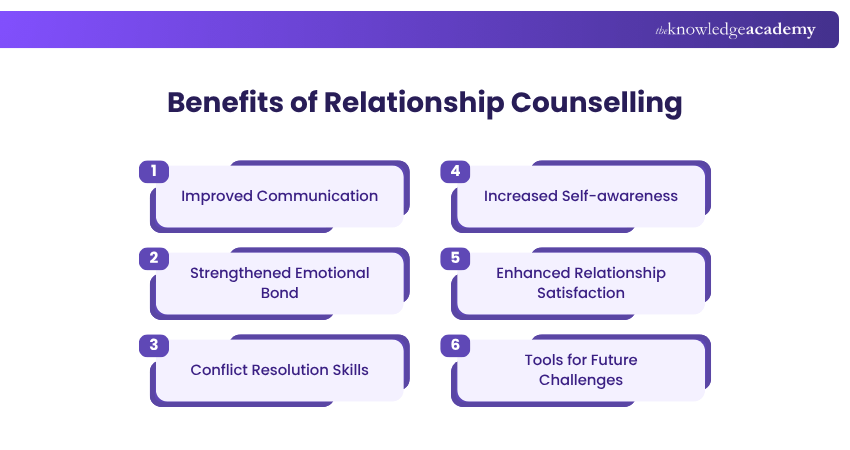
1) Improved Communication: Effective communication lays the foundation of a healthy relationship. Through Counselling sessions, couples and families learn how to communicate more effectively, listen actively, and understand each other's perspectives. By attending Counselling sessions, couples and families can be thoroughly guided to develop effective communication and active listening skills. This leads to better understanding, empathy, and connection.
2) Strengthened Emotional Bond: Emotional intimacy is crucial for maintaining a strong and fulfilling relationship. Relationship Counselling helps couples and families to strengthen their emotional connection by developing trust, vulnerability, and empathy. The Counselling process also encourages individuals to express their emotions in an honest manner, creating a safe authentic communication space.
3) Conflict Resolution Skills: Relationship Counselling equips individuals with effective conflict resolution strategies and techniques. It also provides guidance on how to navigate conflicts healthily and constructively. Learning these skills enables individuals to resolve disputes with respect and understanding, minimising damage to the relationship.
4) Increased Self-awareness: Relationship Counselling encourages a sense of self-reflection and introspection. Through supported discussions and exercises, individuals can easily gain insights into their own behaviours, triggers, and patterns. They develop a better understanding of how their thoughts, emotions, and actions can profoundly impact the relationship. This self-awareness promotes personal growth and empowers individuals to take responsibility for their actions.
5) Enhanced Relationship Satisfaction: Relationship Counselling improves overall relationship satisfaction. Couples and families can experience greater relationship fulfilment by addressing underlying issues and better communication through these sessions. They develop a deeper appreciation for each other, feel more supported, and enjoy a more harmonious connection.
6) Tools for Future Challenges: The strategies provided by the Counsellors help couples and families to navigate their future challenges more effectively and efficiently. These tools include active listening, effective communication, conflict-resolution techniques, and skills for problem-solving. By implementing these robust strategies into their daily lives, individuals can experience positive and fulfilling changes in their relationships in a better manner.
Develop empathy and communication excellence with the Counselling Course – Join now!
How Does Relationship Counselling Work?
The working process of Relationship Counselling comprises several steps that assist individuals, couples, or families towards bettering and bolstering their relationships. Below listed are some of the key elements of Relationship Counselling:
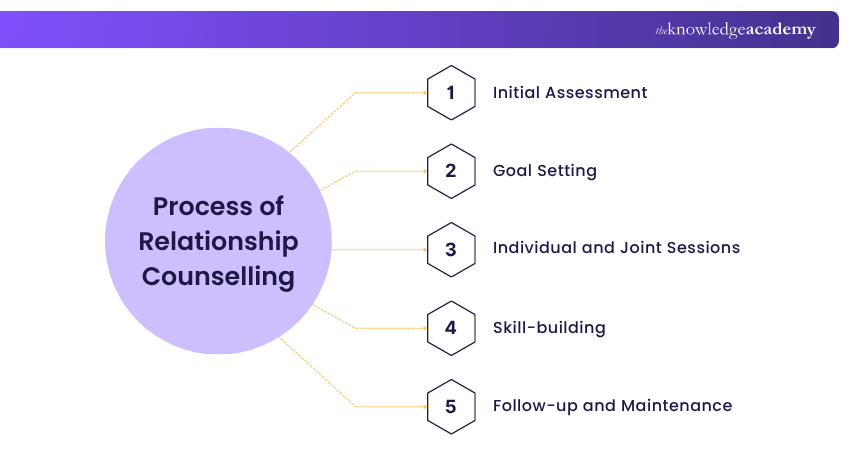
1) Initial Assessment
The evaluation of couples therapy is initiated by the assessment of the two spouses in general. The interview will be done in a way that aims at collecting the background of each partner and their future expectations. Through this assessment, the therapist tries to be familiar with the areas of satisfaction levels and communication.
2) Goal Setting
Couples should have goals to accomplish together, which will enhance their bonding and create a sense of purpose. By speaking about their aspirations, they feel satisfied and motivated in the relationship. Clear, rational, and mutually agreed-upon goals encourage unity between them in the long run.
3) Individual and Joint Sessions
Joint as well as individual sessions represent different avenues for transforming relationship work. During individual sessions, you get to learn about your own behaviours, which would help you live in a healthy relationship. These insights can then be used in joint sessions to reestablish communication and trust between you and your partner.
4) Skill-building
Skill building involves nurturing skills like making the other person feel heard, empathy, reflection and support to explore their experiences. These skills create a meaningful relationship that encourages personal growth.
5) Follow-up and Maintenance
Long-term relationship health is supported by follow-up and maintenance sessions, which reinforce growth and adaptability. Check-ins also enable the couples to remain on track and to be ready in case anything comes up. It also shows that you are eager to develop and become better people, not just to respond to issues.
Throughout the Counselling process, the Counsellor maintains a non-judgmental and supportive environment. They provide guidance, offer insights, and encourage self-reflection and personal responsibility. Counsellor also acts as a facilitator, helping individuals or couples/families explore their feelings and behaviours in a safe and confidential space.
Transform perspectives with Social Psychology Skills - Join our Social Psychology Training today!
Tips for a Successful Relationship Counselling Experience
Relationship Counselling is widely regarded as a sustainable path towards individuals' or couples' well-being. So, to make the most of your Relationship Counselling experience and maximise its effectiveness, you should follow the below-mentioned steps:
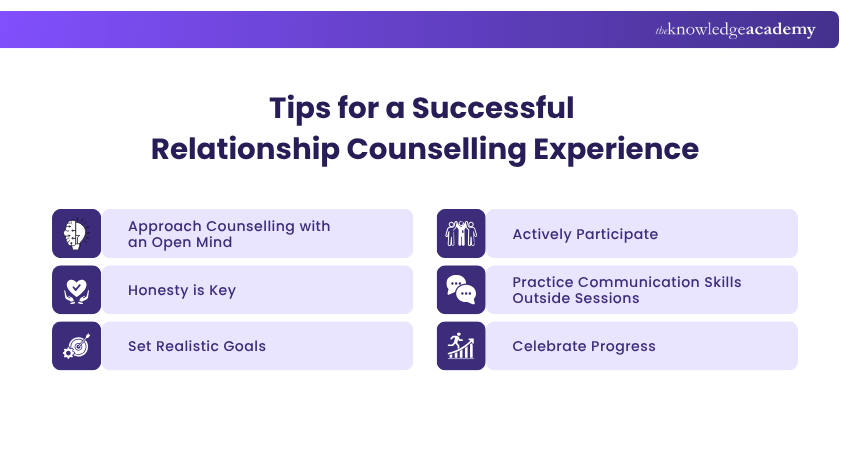
1) Approach Counselling with an Open Mind: An open state of mind at the beginning of a session helps to explore new ways of thinking, and change would be easy to accept.
2) Honesty is Key: Sharing your true, honest feelings and not holding back uncomfortable emotions, ensuring transparent communication, will help in moving towards deeper understanding.
3) Set Realistic Goals: Come together as a unit to define clear and achievable objectives for your relationship journey. Rational goals will help in the process of development.
4) Actively Participate: Be present and contribute your full attention to every session with your partner. Engaging completely accelerates the process of understanding and solving core issues.
5) Practice Communication Skills Outside Sessions: Make sure to use the techniques you have learned in therapy in your everyday conversations with your partner.
6) Celebrate Progress: Recognise and celebrate every step forward in your relationship, as it will help in motivation and bring positive changes in your relationship.
Note: Remember that Relationship Counselling is a collaborative effort between the Counsellor and the individuals or the couple/family seeking Counselling.
Unlock the potential for personal growth and well-being with our transformative Mental Health And Wellbeing Training – Sign up today!
How to Find a Relationship Therapist?
There is a wide range of professionals who provide valuable Relationship Therapy, such as Clinical Psychologists, Licensed Marriage and Family Therapists, accredited Counsellors, and Licensed Clinical Social Workers. It is important to note that despite the term “Marriage” in the Counsellors, Relationship Counselling can benefit all individuals regardless of their marital status.
While the internet is the first-hand juncture for finding a Therapist, seeking recommendations from acquaintances can be the starting point for your search journey. In an urban location, there is an abundance of qualified Therapists, so the process can become more intensive and overwhelming at times.
Many Relationship Counsellors also offer free consultancy services to their potential clients. This is an excellent opportunity to assess whether the specific Counsellor aligns with your requirements, personal style, and budget. It's important to remember that the Therapist-client relationship can have a profound impact on your life, so choose wisely.
How do we Know if Relationship Counselling is Working for us?
One key indicator that Relationship Counselling is effective is feeling better in your daily life. This improvement might be subtle, although highly effective. These include finding your life more manageable or experiencing moments of joy again.
In addition, you will gain the identify and comprehending ability of your blind spots—those previously unrecognised behaviour or thinking patterns. This identification and understanding of these blind spots will help you become better every day and help you become the newer version of yourself.
Another sign that counselling is working is your personal relationship improvement, both within and outside your partnership. You may notice better patience, empathy, and communication levels with your partner, friends, and family. You will also develop new coping mechanisms and problem-solving skills, allowing you to navigate conflicts more effectively and build stronger connections.
Unlock happiness and growth with our Positive Psychology Course today.
Conclusion
Understanding, patience and transparent communication are the foundations of healthy relationships. Relationship Counselling equips couples with the means of building trust, conflict resolution, and development. By turning to support, spouses are able to establish and develop a permanent harmony and develop a better emotional bond in the future.Make your life meaningful for personal growth.
Sign up for our Psychology of Personal Growth Training today!
Frequently Asked Questions
Explain How Diversity Impacts the Counselling Relationship?

Diversity impacts counselling by influencing communication, trust, and understanding. Thus, Counsellors must be able to recognise cultural, social, and personal differences. This approach helps avoid biases, adapt approaches, and build strong therapeutic relationships.
Does Relationship Counselling Really Work?
Yes, Relationship Counselling can be extremely effective if approached and implemented well. Research shows that about 70% of couples experience improved relationships after Counselling. Furthermore, it helps partners resolve conflicts, improve communication, and rebuild trust.
What are the Other Resources and Offers Provided by The Knowledge Academy?
The Knowledge Academy takes global learning to new heights, offering over 3,000+ online courses across 490+ locations in 190+ countries. This expansive reach ensures accessibility and convenience for learners worldwide.
Alongside our diverse Online Course Catalogue, encompassing 17 major categories, we go the extra mile by providing a plethora of free educational Online Resources like Blogs, eBooks, Interview Questions and Videos. Tailoring learning experiences further, professionals can unlock greater value through a wide range of special discounts, seasonal deals, and Exclusive Offers.
What is The Knowledge Pass, and How Does it Work?
The Knowledge Academy’s Knowledge Pass, a prepaid voucher, adds another layer of flexibility, allowing course bookings over a 12-month period. Join us on a journey where education knows no bounds.
What are the Related Courses and Blogs Provided by The Knowledge Academy?
The Knowledge Academy offers various Mental Health Courses, including the Mental Health and Wellbeing Training, Social Psychology Training, and Psychology of Personal Growth Training. These courses cater to different skill levels, providing comprehensive insights into Reverse Psychology.
Our Health & Safety Blogs cover a range of topics related to workplace safety, offering valuable resources, best practices, and industry insights. Whether you are a beginner or looking to advance your health and safety skills, The Knowledge Academy's diverse courses and informative blogs have got you covered.

Michael Jones


Health and Safety Consultant and Compliance Trainer
Michael Jones is a seasoned health and safety expert with more than 15 years of experience in workplace safety, risk management, and compliance training. He has worked across construction, manufacturing, and corporate sectors, helping organisations meet legal requirements and create safer working environments. Michael’s training and writing are known for being practical, clear, and aligned with UK regulations.
View Detail

Upcoming Health & Safety Resources Batches & Dates
Date
 Counselling Course
Counselling Course
Fri 26th Jun 2026
Counselling Course
Fri 2nd Oct 2026
Counselling Course
Fri 11th Dec 2026

 If you wish to make any changes to your course, please


