


 Top Rated Course

We may not have the course you’re looking for. If you enquire or give us a call on +0800 780004 and speak to our training experts, we may still be able to help with your training requirements.
What is Problem Solving? A Comprehensive Guide
William Brown 25 November 2025Problem-Solving involves analysing challenges and applying logical, critical, and creative thinking to develop effective solutions across contexts. It also requires identifying root causes, prioritising issues, evaluating risks, and applying structured methods like root cause analysis or the PDCA cycle for continuous improvement.

Training Outcomes Within Your Budget!
We ensure quality, budget-alignment, and timely delivery by our expert instructors.
Table of Contents
Feeling stuck at a challenge, unsure where to begin, is a very relatable experience, isn't it? This is where the power of problem Solving come in. More than merely fixing what's broken, it can be the spark for innovation and breakthroughs. From personal obstacles to complex workplace headaches, it’s the art of untangling confusion and crafting smart, workable solutions. This blog takes you on a deep dive into What is Problem Solving, the key skills needed, the best strategies and more. So read on and become the go-to troubleshooter in any situation!
Table of contents
1) What is Problem Solving?
2) The process of Problem Solving
3) Key skills for effective Problem Solving
4) Strategies for enhancing Problem Solving abilities
5) Problem Solving tools and techniques
6) Problem-Solving Skills Examples
7) What is problem-solving in the workplace?
8) What are the 5 C's of problem-solving?
9) Conclusion
What is Problem Solving?
Problem Solving is a structured approach to identify, analyse, and resolve issues. It starts with defining the problem, finding the root cause, and exploring multiple solutions. The best option is selected and implemented with planning and communication. After implementation, results are monitored.
If goals aren’t met, previous steps are revisited. Successful solutions are standardised, documented, and shared through training. Recognising efforts and promoting outcomes helps sustain improvements and fosters a culture of continuous learning and long-term problem prevention.

The Process of Problem Solving
Now that you have a basic idea of What is Problem Solving, it is time to learn about its process. Effective Problem Solving typically involves several steps that help in approaching and resolving challenges. These steps provide a structured framework to tackle problems efficiently. Let's explore each step in detail:
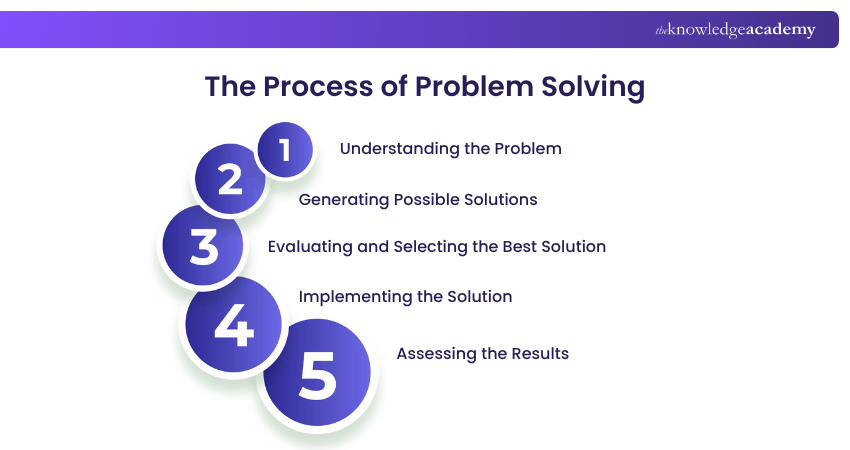
Understanding the Problem
The first step in Problem Solving is gaining a clear understanding of the issue at hand. Take the time to thoroughly analyse the problem and gather relevant information. Ask yourself questions like:
1) What is the nature of the problem?
2) What are the factors contributing to the problem?
3) What are the desired outcomes?
4) Are there any constraints or limitations to consider?
By gaining a comprehensive understanding of the problem, you lay a solid foundation for finding an effective solution.
Generating Possible Solutions
Once you have a clear grasp of the problem, it's time to brainstorm potential solutions. Encourage creativity and think outside the box. Consider all possible options without judgment or criticism. The goal at this stage is to generate a variety of ideas and alternatives.
Evaluating and Selecting the Best Solution
After generating a list of possible solutions, it's important to evaluate each option based on its feasibility, effectiveness, and alignment with the desired outcome. Consider the advantages and disadvantages of each and every solution. Assess its practicality and the resources required for implementation.
Additionally, take into account the potential risks and benefits associated with each solution. Consider any potential consequences or impacts on other aspects. Based on this evaluation, select the solution that appears most viable and promising.
Implementing the Solution
Once you have chosen the best solution, it's time to put it into action. Craft a detailed plan which outlines the necessary steps and allocate the required resources. Determine responsibilities and deadlines to ensure a smooth implementation process.
During implementation, monitor progress and make any necessary adjustments or adaptations. Stay proactive and address any challenges or obstacles that may arise along the way. Effective communication and collaboration with others involved in the process can greatly contribute to successful implementation.
Assessing the Results
After implementing a solution, assess whether it effectively resolved the problem and met your intended goals. Compare the outcomes with expectations, and note any unintended consequences. This helps determine if further adjustments are needed.
Problem Solving is an ongoing process. Reflect on what worked, what didn’t, and apply those insights to future challenges. Embracing continuous improvement strengthens your problem-solving skills over time.
Drive continuous improvement and measurable results with Business Process Improvement Training – Join Now!
Key Skills for Effective Problem Solving
What one must do to become an effective problem solver is to develop key skills that enhance your Problem Solving abilities. The skills give you the ability to tackle challenges with a strategic mind and find the needed solutions. Below is a dive into the most important of them:
Critical Thinking
Critical thinking is a skill that involves the objective analysis of information, taking different viewpoints into account, and forming a well-reasoned judgment. The Importance of Critical Thinking lies in its ability to help you evaluate problems with precise judgment and identify appropriate solutions effectively.
Creativity
It means that creativity is the ability of a person to think outside the box and come up with innovative solutions. It includes pressing the mind toward new possibilities and viewing the problem in different ways.
Analytical Skills
In this ability, there is the aspect of breaking down a problem into subunits that helps in identifying the patterns, relationships, and causes within the problem.
Decision-making
Sound skills in decision making call for the assessment of the pros and cons of all solutions provided and thus choosing the best alternative. Risks must always be considered with the benefits any alternative might bring.
Strategies for Enhancing Problem Solving Abilities
In order to improve your Problem Solving skills and become a more effective and efficient problem-solver, consider implementing the following strategies:
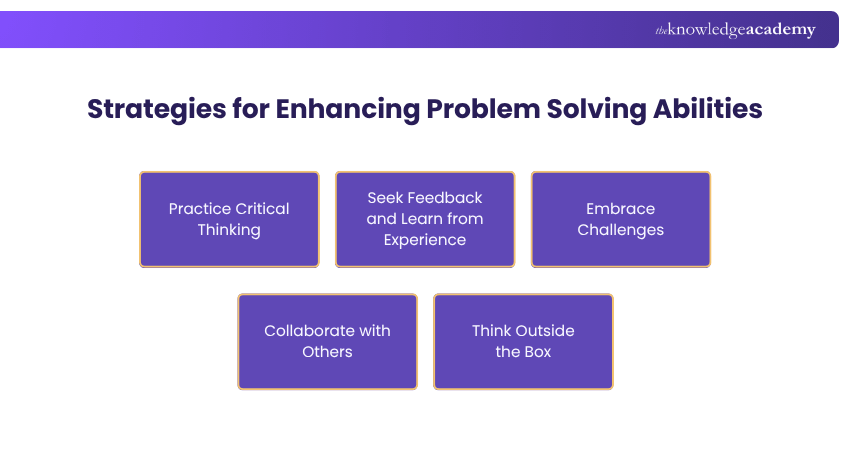
Practice Critical Thinking
Engage yourself in activities which require critical thinking, including solving puzzles, complex discussion, challenging all assumptions. This will increase your ability to enhance sharpening of your analytical skills and let you think critically at a time when problems are in your way.
Seek Feedback and Learn from Experience
Seek responses from your mentors, course peers, and Problem Solving experts. From the successes and failures, reflect on the reasons for the occurrences over previous experiences and point out what could be improved. Treat the opportunity of Problem Solving as one of the chances that shall be given to you to grow and develop each time you make it through a problem.
Embrace Challenges
You can redesign your problematic issues and take every challenge coming across as an opportunity for growth. Hence, it paves the way for the ability of resilience and strengthens your Problem Solving abilities.
Collaborate with Others
In Problem Solving, collaboration is embraced by pooling different perspectives and ideas. Work with others in activities that involve groups to discuss issues and seek input from others, listening actively to various viewpoints. Working collaboratively with others helps expand your knowledge of various ways of Problem Solving and encourages innovation.
Think Outside the Box
Encourage creative thinking by exploring unconventional ideas and solutions. Challenge every assumption and all its related alternatives. Shift to this kind of mindset, and it can drive innovative Problem Solving strategies, letting you uncover newer ways to solve age-old complex problems.
Turn problems into progress by mastering the eight disciplines of root cause resolution. Sign up for our 8D Problem Solving Training now!
Problem Solving Tools and Techniques
When faced with complex problems, utilising specific tools and techniques can help facilitate the solving process and lead to more effective solutions. Here are some commonly used Problem Solving tools and techniques:
Root Cause Analysis
Root Cause Analysis It is a methodology for to detecting the underlying causes of a problem. It involves investigating the problem's symptoms and tracing them back to their fundamental causes. Conducting a root cause analysis ensures a thorough investigation, helping Problem Solvers address the root causes and prevent the issue from recurring." Knowing the advantages and disadvantages of Root Cause Analysis is essential for its effective implementation.
Strengths, Weaknesses, Opportunities, Threats (SWOT) Analysis
SWOT analysis is a planning tool that strategically helps measure the weaknesses and internal strengths of a situation. Moreover, it can find external opportunities and threats. By assessing these factors, Problem Solvers can gain insights into the current state and make informed decisions about potential solutions.
Fishbone Diagrams
Fishbone diagrams, also known as cause-and-effect diagrams or Ishikawa Diagrams, visually represent the possible causes contributing to a problem. By organising causes into categories (such as people, process, equipment, and environment), Problem Solvers can systematically analyse the problem's potential sources.
Decision Matrices
Decision matrices are used to evaluate and compare different options based on multiple criteria. This tool helps Problem Solvers weigh the importance of various factors and objectively assess each alternative, leading to an informed decision.
Six Thinking Hats
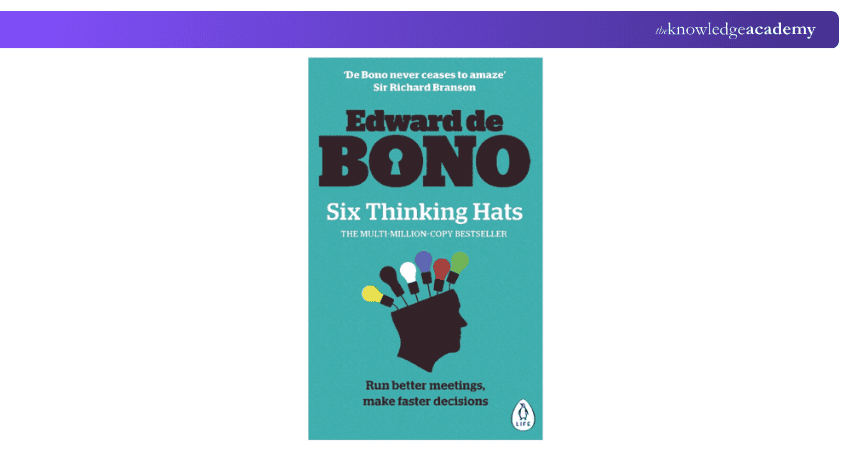
The Six Thinking Hats is a problem-solving tool by Edward de Bono as published in his 1985 book that encourages looking at challenges from six different perspectives:
1) Facts
2) Emotions
3) Risks
4) Benefits
5) Creativity
6) Process
Each "hat" represents a thinking style, helping teams collaborate more effectively, reduce bias, and make well-rounded strategic decisions.
Navigate conflicts with finesse and foster collaboration with our transformative Conflict Management Training – sign up today!
Problem-Solving Skills Examples
Mastering problem-solving requires a combination of cognitive, interpersonal, and decision-making skills. Below are three essential domains that play a vital role in addressing challenges effectively:
1) Research
Research is the crucial first step in problem-solving because it allows you to grasp the full context of the issue. It helps uncover the root cause; for example, is a drop in revenue linked to a recent sales strategy, seasonal trends or targeting the wrong audience? By exploring all possible causes, research expands your perspective. Once the underlying issue is uncovered, you can focus your efforts and move toward effective, targeted solutions.
2) Analysis
Analysis follows research in the problem-solving process. Once the problem is identified, analytical thinking helps explore possible solutions. The purpose of analysis isn’t to immediately fix the issue but to gain a deeper understanding of it. By examining the problem objectively and from multiple perspectives, you lay the foundation for discovering meaningful and effective solutions. This impartial approach ensures that no angle is overlooked and that the root of the issue is fully understood before taking action.
3) Decision-making
After identifying the source of the problem and exploring all possible solutions, the next step is choosing the most effective path forward. Strong decision-making skills help you assess the available resources, outline a realistic plan of action, and select the solution with the highest chance of success.
What is Problem Solving in the Workplace?
Problem-solving in the workplace is the process of identifying challenges, analysing their root causes, generating solutions, and implementing actions to resolve them. It helps improve efficiency, reduce conflict, and support better decision-making across teams and departments.
What are the 5 C's of Problem Solving?
The 5 C’s of problem-solving provide a structured approach to tackling issues effectively:
1) Comprehend: Understand the problem clearly and completely.
2) Cause: Identify the underlying root causes, not just symptoms.
3) Create: Brainstorm and develop a range of possible solutions.
4) Choose: Evaluate and select the most viable solution.
5) Check: Monitor implementation and measure the success of the solution.
Conclusion
The first step to understanding What is Problem Solving is that it's more than a skill. It’s a mindset for turning challenges into opportunities. By researching, analysing and making smart decisions, you can tackle anything from daily dilemmas to more complex workplace issues. The more you practise, the better you’ll get at turning problems into progress.
Unlock your management potential and elevate your skills to new heights with our up-to-date Management Courses – sign up now!
Frequently Asked Questions
What are the Types of Problem Solving?

There are two major types of Problem Solving:
1) Reflective problem-solving: This works well for clear, structured problems, like fixing a machine or improving a process.
2) Creative problem-solving: This is more about thinking in new ways. This type is great for things like designing products or solving tricky challenges with no clear rules.
What is Problem Solving in the workplace?
Problem-solving in the workplace means handling tough situations and finding ways to fix issues that affect work or business. It involves identifying the problem, understanding its cause, and selecting the most effective solution.
What are the Other Resources and offers Provided by The Knowledge Academy?
The Knowledge Academy takes global learning to new heights, offering over 3,000 online courses across 490+ locations in 190+ countries. This expansive reach ensures accessibility and convenience for learners worldwide.
Alongside our diverse Online Course Catalogue, encompassing 19 major categories, we go the extra mile by providing a plethora of free educational Online Resources like Blogs, eBooks, Interview Questions and Videos. Tailoring learning experiences further, professionals can unlock greater value through a wide range of special discounts, seasonal deals, and Exclusive Offers.
What is Knowledge Pass, and how does it work?
The Knowledge Academy’s Knowledge Pass, a prepaid voucher, adds another layer of flexibility, allowing course bookings over a 12-month period. Join us on a journey where education knows no bounds.
What are related courses and blogs provided by The Knowledge Academy?
The Knowledge Academy offers various Management Courses including Business Process Improvement Training, Performance Management Training and Introduction to Managing People. These courses cater to different skill levels, providing comprehensive insights into Resource Planning Template.
Our Business Skills Blogs cover a range of topics related to musical instruments, offering valuable resources, best practices, and industry insights. Whether you are a beginner or looking to advance your skills as a Music Producer, The Knowledge Academy's diverse courses and informative blogs have you covered.

William Brown


Senior Business Analyst and Strategic Advisor
William Brown is a senior business analyst with over 15 years of experience driving process improvement and strategic transformation in complex business environments. He specialises in analysing operations, gathering requirements and delivering insights that support effective decision making. William’s practical approach helps bridge the gap between business goals and technical solutions.
View Detail
Upcoming Business Skills Resources Batches & Dates
Date
 Problem Solving Course
Problem Solving Course
Fri 31st Jul 2026
Problem Solving Course
Fri 23rd Oct 2026

 If you wish to make any changes to your course, please


