


 Top Rated Course

We may not have the course you’re looking for. If you enquire or give us a call on +0800 780004 and speak to our training experts, we may still be able to help with your training requirements.
React Native vs Swift | Comparison Guide
Richard Harris 25 April 2026Deciding between React Native and Swift for your project? React Native offers cross-platform benefits and faster development, while Swift provides a native experience and optimised performance for iOS. Explore their strengths, differences, and use cases to choose the best framework for mobile app development!
Training Outcomes Within Your Budget!
We ensure quality, budget-alignment, and timely delivery by our expert instructors.
Table of Contents
Related Courses

Stuck in a mobile app development rut, unsure of the best framework for your project? Choosing between React Native vs Swift can feel like navigating a coding maze. Both offer fantastic features but cater to distinct needs.
React Native shines in cross-platform development, letting you build a single codebase that works on iOS and Android. This saves time and resources! However, some features might require extra development for native integration. Swift, on the other hand, is Apple's native champion. Crafting high-performance, tailor-made iOS apps becomes a breeze. The downside? Swift locks you into the iOS ecosystem.
Don't fret! This blog will help you choose the perfect framework. We'll dissect React Native vs Swift, highlighting their strengths, weaknesses, and ideal use cases. By the end, you'll be equipped to make an informed decision that propels your mobile app project towards success!
Table of Contents
1) What Is React Native?
2) What Is Swift?
3) React Native vs Swift: The Key Differences
4) React Advantages and Disadvantages
5) Swift Advantages and Disadvantages
6) Conclusion
What is React Native?
React Native is an open-source software framework developed and maintained by Facebook which allows software developers to build mobile applications using JavaScript and the React library. It enables the developers to build the native mobile application for iOS along with the Android in a single codebase. React Native is designed to be based upon React, an open-source JavaScript library for creating user interfaces (UI), which allows the creation of apps with native appearance.
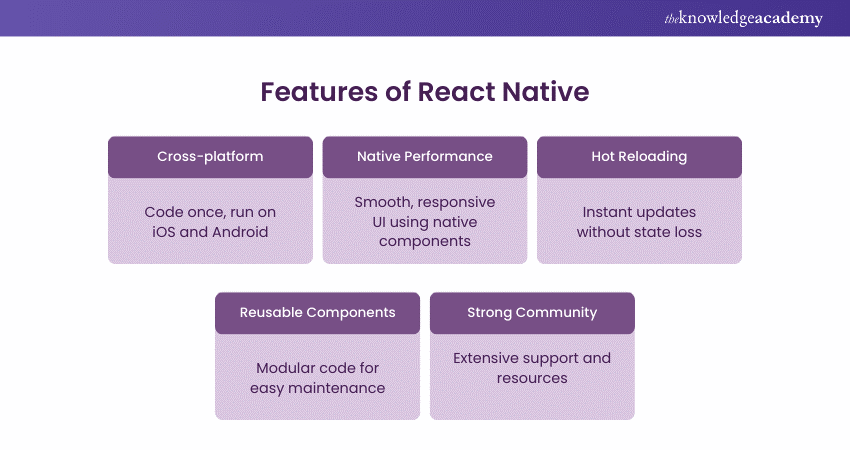
One of the main benefits of using React Native is that much of the code can be the same for both Android and iOS, since approximately 80% of the code base remains the same, which saves significant amounts of time and money. It also delivers native API and component access, meaning efficient performance and tight connection with the relevant native features. Features like hot reloading for instance, save the time of developers and the results of changes made are easily displayed.

What is Swift?
Swift is an open-source programming language that was built by Apple for creating software that runs on Apple devices such as iPhone, iPad, Macintosh, Apple Watch and Apple TV. Launched in June 2014, Swift was developed with the goal of offering newcomers a simple language to understand while also fulfilling the demands of today’s application development without the need for developers to continuously work under significant amounts of pressure.
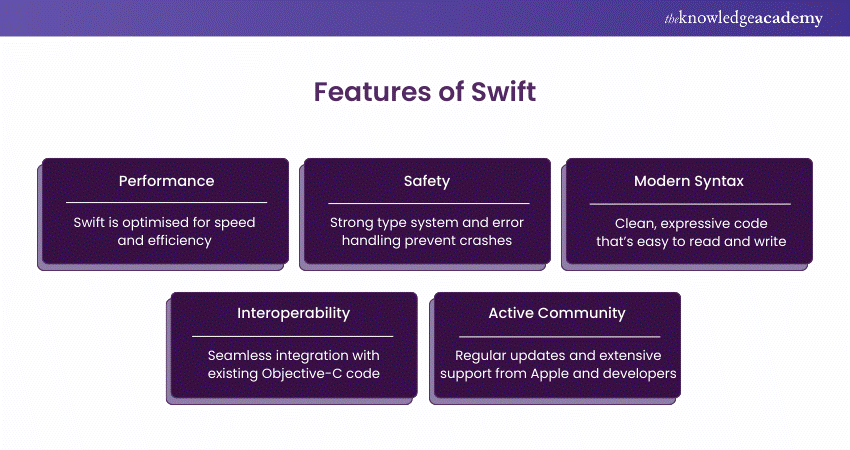
Swift has such features of modern languages as type inference, functional concepts and short language syntax, which makes it more vital and simple to code. Its safety focus assists in diminishing conventional programming mistakes, including features like optionals for coping with the lack of values. The language is optimised for speed; the code written in it is compiled using LLVM, a high-performance compiler. Swift also has the capability to mix with Objective-C thus enabling developers to combine the new Swift code with an Objective-C project.
Unlock the Power of iOS Development with Swift Training Today!
React Native vs Swift: The Key Differences

1) React Native vs Swift Performance
Performance is a crucial factor when comparing React Native and Swift. React Native allows developers to build cross-platform applications from a single JavaScript codebase, offering significant development efficiency. However, it may not achieve the same level of performance as Swift, especially for resource-intensive applications, because React Native relies on a bridge between JavaScript and native components, which can introduce latency.
Swift, being a language specifically designed for Apple's platforms, offers superior performance. It compiles directly to native code, ensuring optimised and faster execution. Swift's access to native APIs and frameworks is more direct, enabling developers to utilise all of Apple's hardware and software capabilities efficiently.
While React Native is suitable for most applications and provides a good balance of performance and development speed, Swift is preferred for apps requiring high performance, a seamless user experience (UX), and deep integration with iOS features. Thus, the choice between the two depends on the specific needs and priorities of the project.
2) SwiftUI vs React Native User Interface
Both SwiftUI and React Native provide ways to develop user interfaces for mobile apps, but they take different approaches.
SwiftUI is a new declarative framework developed by Apple for building interfaces across all Apple platforms: iOS, macOS, watchOS, and tvOS. It enables developers to write simpler, more understandable code with minimal syntax. SwiftUI allows for real-time previews and automatic updates in Xcode, tightly integrating with the Swift language. This integration provides a seamless coding, testing, and debugging experience, along with full access to native features and performance optimisations.
React Vs React Native offers a clear distinction in how mobile applications are developed. React Native, on the other hand, uses JavaScript and React to write native mobile applications in a cross-platform way. This framework allows developers to write their user interface components once and run them on both iOS and Android with just one codebase. Although React Native is quite flexible and has a vast array of third-party libraries, it relies on a bridge to communicate with native components, which can sometimes affect performance and responsiveness.
Boost Your Backend Skills – Register for our Node.js Course now!
3) React Native vs Swift Stability
When comparing stability, React Native offers flexibility with a single codebase for iOS and Android but can face stability issues due to its reliance on third-party libraries and a JavaScript-native bridge, leading to potential bugs and performance inconsistencies.
Swift, designed specifically for Apple platforms, provides superior stability, seamless integration, and direct access to the latest Apple features, resulting in fewer compatibility issues and consistent performance. While React Native is efficient for cross-platform development, Swift is more stable and reliable for iOS apps, especially those needing robust performance and deep integration with Apple technologies.
4) Swift vs React Native Coding Speed
When it comes to coding speed, React Native often has an advantage over Swift, particularly for cross-platform development. React Native permits developers to write a single codebase in JavaScript that runs on both iOS and Android. This significantly reduces development time, as there’s no need to write and sustain separate codebases for various platforms. Additionally, React Native's hot reloading feature speeds up development by allowing developers to see changes instantly without recompiling the entire app.
Swift, on the other hand, is designed specifically for iOS development. While Swift offers excellent performance and stability, coding in Swift can be more time-consuming if you need to develop apps for multiple platforms, as separate codebases are required for iOS and Android. However, Swift's strong type system and integration with Xcode can enhance productivity by catching errors early and providing robust tools for debugging and testing.
React Native can significantly speed up coding for cross-platform apps, while Swift provides a streamlined experience for iOS-specific development, benefiting from Apple's powerful tools and ecosystem.
5) Swift vs React Native Learning Curve
The learning curve for Swift and React Native varies. Swift, designed for Apple platforms, has a steeper learning curve, requiring familiarity with Xcode and its unique syntax play a significant role in app development. However, its robust documentation and type system help developers write efficient code, especially when considering the differences between Xcode vs Swift, as each has its own strengths in the development process.
React Native, built on JavaScript and React, is easier for web developers, offering a more accessible entry point and the advantage of using a single codebase for iOS and Android. Swift provides deep integration with Apple's ecosystem, while React Native is more approachable for cross-platform development.
Transform Your Ideas into Apps – Join Our Mobile App Development Training Today!
6) React Native vs Swift Platform Maturity
Swift, launched by Apple in 2014, is a mature, robust language tailored for Apple platforms like iOS and macOS, offering seamless integration with Xcode and direct access to Apple’s APIs. Its stability and strong performance make it ideal for native iOS development.
In contrast, React Native, released by Facebook in 2015, is a popular framework for cross-platform mobile apps using JavaScript and React. While efficient for developing iOS and Android apps with a single codebase, React Native's reliance on a bridge between JavaScript and native components can lead to performance and compatibility challenges.
7) Swift vs React Native Developer Cost
React Native offers a cost-effective solution for development, particularly when managing a development team. It ensures the delivery of high-quality projects without compromising on affordability. On the other hand, Swift might raise cost considerations similar to other options, yet its outstanding stability and performance are key factors in ensuring the long-term success of a project.
8) Swift vs React Native Developer's Availability
React Native’s popularity stems from its use of JavaScript, which has cultivated a vast community of skilled developers. Swift, while newer, may pose challenges in locating seasoned developers with expertise in this language.
9) IOS Swift vs React Native: Community Support and Documentation
React Native is supported by a robust international developer community, offering extensive and thorough documentation that ensures a wealth of resources for developers. Meanwhile, Apple’s dedicated team of developers regularly updates and refines the Swift programming language, providing thorough documentation and technical support across multiple public forums, thus offering developers comprehensive assistance in utilising Swift.
React Advantages and Disadvantages
Advantages
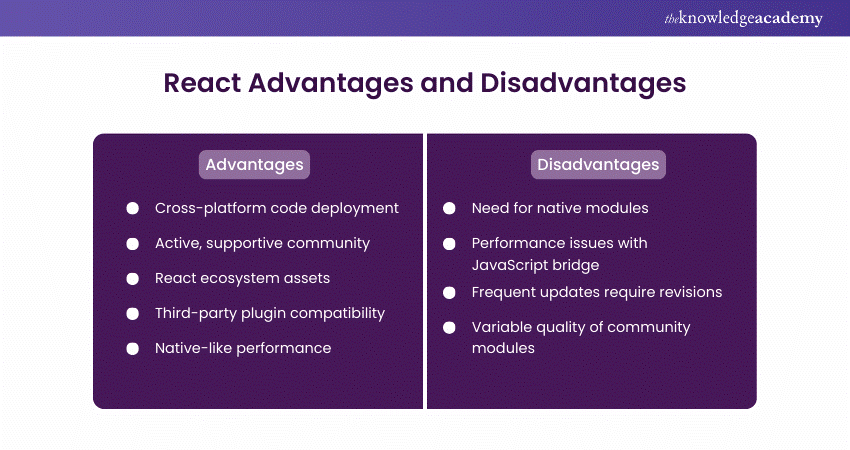
a) React Native enables developers to write code once and implement it on both iOS and Android platforms, streamlining the development workflow and conserving resources.
b) The platform benefits from a dynamic and engaged community that offers ongoing support, regular enhancements, and a plethora of tools, including a variety of libraries and plugins.
c) Developers can also utilise the React ecosystem’s assets, like React Redux for efficient state management, which further refines the development experience.
d) Compatibility with third-party plugins is another advantage, facilitating easy incorporation of platform-specific features.
e) Lastly, React Native effectively narrows the divide between JavaScript and native programming, achieving a performance level comparable to native applications.
Disadvantages
a) React Native's architecture sometimes necessitates native modules for specific features, which may not always be readily available. This limitation could compel developers to write custom native code or rely on third-party libraries, potentially complicating the development process and introducing compatibility concerns.
b) React Native's performance can be hampered by its dependency on a bridge for JavaScript-native communication, which might slow down especially demanding applications.
c) The platform's rapid iteration cycle often brings updates that can introduce significant changes, necessitating frequent codebase revisions by developers to maintain compatibility with new versions and community libraries.
d) Lastly, the quality of community-contributed modules in React Native can vary, which may affect the reliability and maintenance of these modules compared to those in native development environments.
Swift Advantages and Disadvantages

Advantages
a) Swift is renowned for its robust safety mechanisms that enhance code reliability and prevent errors. Features like optionals, type inference, and automated memory management elevate coding standards.
b) It’s engineered for superior performance, merging the precision of low-level programming with the simplicity of high-level language features, leading to swift and effective code execution.
c) As an open-source language, Swift encourages community engagement and contributions, to React Native apps. It offers a range of navigators, such as stack, tab, and drawer navigators, allowing developers to organise the app's content logically.
d) Swift embraces functional programming concepts such as first-class functions, closures, and immutability, which contribute to clearer and more maintainable code.
e) Supporting multiple programming paradigms, Swift provides developers the versatility to select either object-oriented or functional programming, depending on what suits their project’s requirements best.
Disadvantages
a) Swift’s ecosystem is still in its infancy compared to more seasoned languages such as Objective-C, which means it has a smaller selection of third-party libraries and a less extensive community network. Developers might find themselves investing additional effort to create certain features from the ground up.
b) Swift’s evolution has been marked by substantial updates, occasionally resulting in versions that lack backward compatibility. This can pose maintenance or upgrade challenges for existing projects, necessitating code adjustments to align with the most recent iteration of Swift.
c) Swift’s potential for server-side development is recognised, yet it hasn’t reached the widespread adoption levels of languages like Python or JavaScript in backend environments. Consequently, resources and support for server-side development with Swift may be scarcer.
d) While Swift is tailored for Apple’s platforms, including iOS, macOS, watchOS, and tvOS, its use in cross-platform development is limited. Developers aiming for broader platform coverage may need to integrate other technologies or programming languages, which could result in disjointed codebases.
Conclusion
When comparing React Native vs Swift, the choice depends on your project needs. React Native offers cross-platform efficiency, while Swift provides optimised performance for iOS. Both have strong communities and distinct advantages, making them suitable for different development goals. If you're using React Native, Inline Style in React can also be a great way to manage your component-level styling efficiently.
Elevate Your Career – Join our App & Web Development Training Today!
Frequently Asked Questions
Is SwiftUI Easier Than React Native?

SwiftUI may be easier for developers familiar with Apple's ecosystem, offering a declarative syntax and seamless integration with Swift. However, React Native might be easier for web developers due to its JavaScript-based framework and cross-platform capabilities.
Can React Native be Used for iOS?
Yes, React Native can be used for iOS development. It permits developers to write code once and deploy it on both iOS and Android platforms, streamlining the development process and ensuring consistency across mobile operating systems.
What is the Minimum iOS Version for React Native?
The minimum iOS version required for React Native is iOS 12. This ensures compatibility with the framework's features and capabilities, allowing developers to create modern, responsive applications for Apple's mobile devices.
What are the Other Resources and Offers Provided by The Knowledge Academy?
The Knowledge Academy takes global learning to new heights, offering over 3,000+ online courses across 490+ locations in 190+ countries. This expansive reach ensures accessibility and convenience for learners worldwide.
Alongside our diverse Online Course Catalogue, encompassing 19 major categories, we go the extra mile by providing a plethora of free educational Online Resources like Blogs, eBooks, Interview Questions and Videos. Tailoring learning experiences further, professionals can unlock greater value through a wide range of special discounts, seasonal deals, and Exclusive Offers.
What is the Knowledge Pass, and How Does it Work?
The Knowledge Academy’s Knowledge Pass, a prepaid voucher, adds another layer of flexibility, allowing course bookings over a 12-month period. Join us on a journey where education knows no bounds.
What are Related Courses and Blogs Provided by The Knowledge Academy?
The Knowledge Academy offers various App and Web Development Courses, including the React Native Training, HTML and CSS Training and Mobile App Development Course. These courses cater to different skill levels, providing comprehensive insights into Incremental Refresh in Power BI.
Our Office Applications Blogs cover a range of topics related to Power BI, offering valuable resources, best practices, and industry insights. Whether you are a beginner or looking to advance your Power BI skills, The Knowledge Academy's diverse courses and informative blogs have got you covered.

Richard Harris


Senior Full Stack Developer and Technology Educator
Richard Harris is a highly experienced full-stack developer with deep expertise in both frontend and backend technologies. Over his 12-year career, he has built scalable web applications for startups, enterprises and government organisations. Richard’s writing combines technical depth with clear explanations, ideal for developers looking to grow in modern frameworks and tools.

Upcoming Batches & Dates
Date


 If you wish to make any changes to your course, please


