


 Top Rated Course

We may not have the course you’re looking for. If you enquire or give us a call on +0800 780004 and speak to our training experts, we may still be able to help with your training requirements.
Benefits of Agile Project Management: A Complete Guide
The Knowledge Academy 29 April 2026Agile Benefits include flexibility, faster delivery, improved quality, reduced risk, better collaboration, continuous feedback, and customer satisfaction. These advantages help teams adapt quickly to change and deliver real value. As a result, organisations achieve greater efficiency, transparency, and stronger project outcomes.

Training Outcomes Within Your Budget!
We ensure quality, budget-alignment, and timely delivery by our expert instructors.
Table of Contents

Why do so many projects miss deadlines, exceed budgets, or fail to meet expectations? Teams often feel overwhelmed by changing requirements, unclear priorities, and constant pressure to deliver faster. If this sounds familiar, you are not alone. Understanding the Benefits of Agile can help teams manage change better and achieve stronger project outcomes.
This blog explains the Benefits of Agile by exploring what Agile Project Management is, the key benefits, and how it improves customer satisfaction in modern projects, helping you understand why Agile matters today.
Table of Contents
1) What is Agile Project Management?
2) What are the Key Benefits of Agile?
3) How Does Agile Improve Customer Satisfaction?
4) Why is Agile Important for Continuous Improvement?
5) Conclusion
What is Agile Project Management?
Agile Project Management is a way of handling projects by breaking them into smaller tasks called iterations or sprints. Each sprint usually lasts a few weeks and focuses on completing a set of tasks that add value to the project. Teams meet regularly to review progress, share updates, and adjust plans as needed.
This method is flexible and helps teams respond quickly to changes or feedback. It works well in fast-moving environments like Software Development, where needs often shift during the project. Agile encourages teamwork, clear communication, and delivering results step by step instead of all at once.

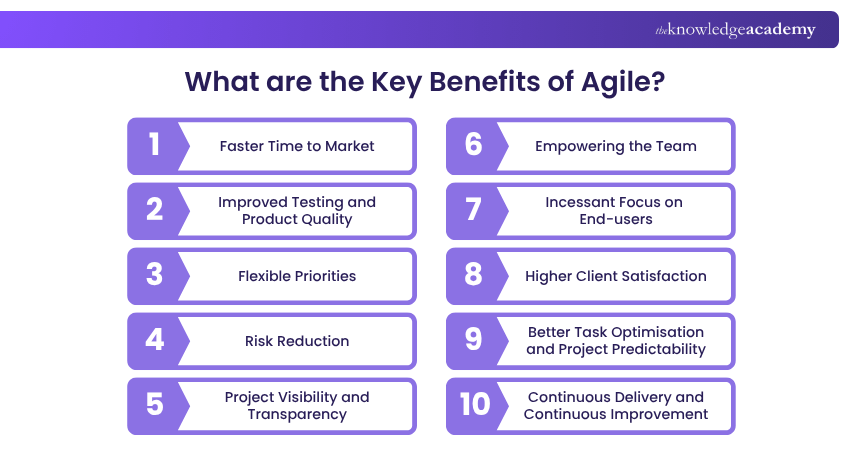
What are the Key Benefits of Agile?
Agile promotes continuous improvement through iterative cycles and regular feedback, helping teams adapt quickly and improve quality. Short sprints and reviews reduce risks and enhance efficiency, highlighting the key Benefits of Agile. Let’s explore other ways Agile delivers value.
1) Faster Time to Market
Agile delivers working features in short sprints, enabling teams to release products earlier and respond quickly to changing market demands. This approach helps organisations deliver value faster, seize opportunities sooner, and maintain a strong competitive advantage. It also allows businesses to validate ideas quickly and improve products based on real feedback.
2) Improved Testing and Product Quality
Agile integrates continuous testing and feedback throughout the development process, allowing teams to identify and resolve issues early. This improves product stability, reduces rework, and ensures solutions are reliable, user-friendly, and aligned with business objectives. As a result, teams achieve higher quality standards with fewer defects and delays.
3) Flexible Priorities
Agile enables teams to adjust priorities as requirements evolve due to customer feedback, strategic shifts, or external factors. This flexibility allows teams to adapt smoothly without disrupting workflows, ensuring they consistently deliver the most valuable outcomes. It also helps organisations respond confidently to uncertainty and changing market conditions.
4) Risk Reduction
Frequent sprint reviews and progress evaluations provide clear visibility into project status. Teams can identify potential challenges early and address them proactively, reducing uncertainty, improving stability, and increasing the likelihood of successful project delivery. This proactive approach minimises costly surprises later in the project lifecycle.
Become a certified Agile Project Manager. Register for our Agile Project Management Practitioner (AgilePM® V3) Course – Today!
5) Project Visibility and Transparency
Agile encourages open communication through daily stand-ups, sprint reviews, and retrospectives. These practices provide stakeholders with real-time insights into progress and challenges, ensuring better alignment, informed decisions, and a clearer understanding of project goals. This transparency strengthens trust between teams and stakeholders.
6) Empowering the Team
Agile promotes self-organising teams with greater autonomy and ownership of tasks. This empowerment increases motivation, engagement, and accountability, helping teams work more effectively and deliver high-quality results with confidence and commitment. It also encourages innovation and proactive problem-solving within teams.
7) Incessant Focus on End-users
Agile places end users at the centre of the development process through continuous feedback and collaboration. This approach helps teams refine features, improve usability, and deliver solutions that effectively address real-world needs and expectations. It ensures that every deliverable contributes meaningful value to customers and businesses alike.
8) Higher Client Satisfaction
Regular demos, reviews, and collaboration keep clients involved throughout the project lifecycle. This continuous engagement builds trust, encourages feedback, and ensures the final product aligns closely with client requirements and expectations. It also strengthens long-term client relationships by promoting transparency and shared ownership.
9) Better Task Optimisation and Project Predictability
Agile uses structured practices such as sprint planning, story points, and visual boards to organise work effectively. These methods help teams estimate effort accurately, track progress efficiently, and deliver predictable, well-managed project outcomes. This structured approach improves planning accuracy and overall project control.
10) Continuous Delivery and Continuous Improvement
Agile fosters a culture of continuous learning and improvement through regular sprint reviews and retrospectives. Teams evaluate performance, refine processes, and implement improvements, leading to ongoing enhancements in both products and workflows. Over time, this culture drives sustainable growth and continuous organisational improvement.
Become a Certified Agile Software Tester. Register for Agile Software Testing Training – Today!
How Does Agile Improve Customer Satisfaction?
Agile improves customer satisfaction by involving customers throughout the development process and delivering value in small, frequent increments. Regular feedback helps teams understand real needs and refine features more effectively.
This approach ensures products align closely with customer expectations and adapt quickly to change. As a result, organisations deliver higher-quality solutions, build stronger trust, and achieve greater long-term customer satisfaction.
Why is Agile Important for Continuous Improvement?
Agile is important for continuous improvement because its iterative, feedback-driven approach helps teams adapt quickly to change and refine their work. Regular sprints and reviews help identify gaps, optimise processes, and enhance product quality in small, manageable steps.
Through retrospectives and continuous feedback, Agile builds a culture of ongoing learning and improvement. It reduces risks, boosts efficiency, and enables organisations to deliver better solutions while responding effectively to evolving business and customer needs.
Conclusion
Agile Project Management isn’t just about speed, it’s about smarter, more human ways of working. From faster delivery to happier teams and clients, the benefits of Agile ripple across every phase of a project. Embrace Agile and turn complexity into clarity, one sprint at a time. In a world that never stops changing, Agile helps you stay ready, responsive, and resilient.
Join our AgilePM® Foundation & Practitioner (AgilePM® V3) Course to learn more about the Agile Methodology!
Frequently Asked Questions
What Makes Agile Better Than Traditional Project Methods?

The Benefits of Agile known for its flexibility, faster delivery, and focus on customer collaboration. Unlike traditional methods, Agile allows teams to adapt to change quickly, deliver work in smaller increments, and involve clients throughout the project. This approach reduces risk, boosts team ownership, and leads to better outcomes.
Does Agile Improve Product Quality?
Yes, Agile significantly improves product quality. By integrating testing into every stage of development, issues are identified and resolved early. Regular feedback, continuous integration, and iterative improvements ensure that the final product meets user expectations and maintains high standards throughout the project lifecycle.
What are the Other Resources and Offers Provided by The Knowledge Academy?
The Knowledge Academy takes global learning to new heights, offering over 3,000+ online courses across 490+ locations in 190+ countries. This expansive reach ensures accessibility and convenience for learners worldwide.
Alongside our diverse Online Course Catalogue, encompassing 17 major categories, we go the extra mile by providing a plethora of free educational Online Resources like Blogs, eBooks, Interview Questions and Videos. Tailoring learning experiences further, professionals can unlock greater value through a wide range of special discounts, seasonal deals, and Exclusive Offers.
What is The Knowledge Pass, and How Does it Work?
The Knowledge Academy’s Knowledge Pass, a prepaid voucher, adds another layer of flexibility, allowing course bookings over a 12-month period. Join us on a journey where education knows no bounds.
What are the Related Courses and Blogs Provided by The Knowledge Academy?
The Knowledge Academy offers various Agile Training, including the Agile Project Management Practitioner (AgilePM® v3) Training, Agile for Teams Training, and the SAFe® Agile Software Engineering Training. These courses cater to different skill levels, providing comprehensive insights into Agile Case Studies.
Our Project Management Blogs cover a range of topics related to the Benefits of Agile, offering valuable resources, best practices, and industry insights. Whether you are a beginner or looking to advance your Project Management skills, The Knowledge Academy's diverse courses and informative blogs have got you covered.

The Knowledge Academy


Global Training Provider
The Knowledge Academy is a world-leading provider of professional training courses, offering globally recognised qualifications across a wide range of subjects. With expert trainers, up-to-date course material, and flexible learning options, we aim to empower professionals and organisations to achieve their goals through continuous learning.

Upcoming Project Management Resources Batches & Dates
Date
 AgilePM® Foundation & Practitioner (AgilePM® v3)
AgilePM® Foundation & Practitioner (AgilePM® v3)
Mon 29th Jun 2026
AgilePM® Foundation & Practitioner (AgilePM® v3)
Mon 6th Jul 2026
AgilePM® Foundation & Practitioner (AgilePM® v3)
Mon 13th Jul 2026
AgilePM® Foundation & Practitioner (AgilePM® v3)
Mon 20th Jul 2026
AgilePM® Foundation & Practitioner (AgilePM® v3)
Mon 27th Jul 2026
AgilePM® Foundation & Practitioner (AgilePM® v3)
Mon 3rd Aug 2026
AgilePM® Foundation & Practitioner (AgilePM® v3)
Mon 10th Aug 2026
AgilePM® Foundation & Practitioner (AgilePM® v3)
Mon 17th Aug 2026
AgilePM® Foundation & Practitioner (AgilePM® v3)
Sat 22nd Aug 2026, Sun 23rd Aug 2026
AgilePM® Foundation & Practitioner (AgilePM® v3)
Mon 24th Aug 2026
AgilePM® Foundation & Practitioner (AgilePM® v3)
Tue 1st Sep 2026
AgilePM® Foundation & Practitioner (AgilePM® v3)
Mon 7th Sep 2026
AgilePM® Foundation & Practitioner (AgilePM® v3)
Mon 14th Sep 2026
AgilePM® Foundation & Practitioner (AgilePM® v3)
Mon 21st Sep 2026
AgilePM® Foundation & Practitioner (AgilePM® v3)
Mon 28th Sep 2026
AgilePM® Foundation & Practitioner (AgilePM® v3)
Mon 5th Oct 2026
AgilePM® Foundation & Practitioner (AgilePM® v3)
Sat 10th Oct 2026, Sun 11th Oct 2026
AgilePM® Foundation & Practitioner (AgilePM® v3)
Mon 12th Oct 2026
AgilePM® Foundation & Practitioner (AgilePM® v3)
Mon 19th Oct 2026
AgilePM® Foundation & Practitioner (AgilePM® v3)
Mon 26th Oct 2026
AgilePM® Foundation & Practitioner (AgilePM® v3)
Mon 2nd Nov 2026
AgilePM® Foundation & Practitioner (AgilePM® v3)
Mon 9th Nov 2026
AgilePM® Foundation & Practitioner (AgilePM® v3)
Mon 16th Nov 2026
AgilePM® Foundation & Practitioner (AgilePM® v3)
Mon 23rd Nov 2026
AgilePM® Foundation & Practitioner (AgilePM® v3)
Mon 30th Nov 2026
AgilePM® Foundation & Practitioner (AgilePM® v3)
Mon 7th Dec 2026
AgilePM® Foundation & Practitioner (AgilePM® v3)
Sat 12th Dec 2026, Sun 13th Dec 2026
AgilePM® Foundation & Practitioner (AgilePM® v3)
Mon 14th Dec 2026
AgilePM® Foundation & Practitioner (AgilePM® v3)
Mon 21st Dec 2026

 If you wish to make any changes to your course, please


