


 Top Rated Course

We may not have the course you’re looking for. If you enquire or give us a call on +44 20 4538 6376 and speak to our training experts, we may still be able to help with your training requirements.
What is Trading Psychology: A Complete Beginner’s Guide
The Knowledge Academy 27 February 2026Trading Psychology describes the emotions and mindset that shape a Trader’s decisions, ultimately determining success or failure in the financial markets. It plays a key role in shaping discipline, Risk Management, and decision-making. Exploring Trading Psychology helps Traders stay calm, focused and consistent under pressure.

Training Outcomes Within Your Budget!
We ensure quality, budget-alignment, and timely delivery by our expert instructors.
Table of Contents
In Trading, your biggest opponent isn’t the market; it’s your own emotions. Many Traders lose money not because they lack skill, but because fear or greed clouds in their judgment. Understanding What is Trading Psychology can help you stay patient, disciplined and focused even in uncertain markets.
In this blog, we’ll explore What is Trading Psychology and its importance. We’ll also discuss common Trading mindsets and share simple tips to control emotions and enhance Trading performance for long-term success. So read on and master the mind game behind successful Trading!
Table of Contents
1) What is Trading Psychology?
2) Why Does Trading Psychology Matter?
3) The Importance of Developing a Trading Psychology
4) Examples of Trading Psychology
5) How to Avoid Emotional Trading?
6) How to Improve Your Trading Psychology?
7) Conclusion
What is Trading Psychology?
Trading Psychology refers to the emotions, mindset, and behavioural patterns that influence a Trader’s decisions in financial markets. It shapes how individuals respond to profits, losses, risks, and uncertainty. A strong Trading Psychology helps maintain discipline, reduce impulsive actions, and stick to well-planned strategies even when market conditions become unpredictable.
It plays a big role in determining a Trader’s success or failure. While market knowledge and technical skills are important, managing emotions like fear, greed, and overconfidence is equally important. Traders who master their Psychology can make rational choices, remain consistent, and build long-term confidence in their trading approach.

Why Does Trading Psychology Matter?
Trading Psychology is important because it affects how Traders make decisions and manage their investments. Traders usually depend on two main types of analysis: fundamental analysis, which looks at company reports and economic data, and technical analysis, which studies past prices and market trends.
No matter which method they use, Traders can still be influenced by psychological biases. These are emotional or mental patterns that can lead to wrong decisions and reduce their overall Trading performance and profits.
Understand effective Risk Management strategies to protect your capital with our Day Trading Course – Join today!
The Importance of Developing a Trading Psychology
Traders commonly struggle with the fear of losing money or making mistakes (known as loss aversion). These points illustrate why developing a Trading Psychology is important:
1) Trading always involves risk. This makes emotional control essential for long-term success.
2) Treating trading like running a business can help reduce emotional decision-making.
3) Relying on data and statistics strengthens discipline and improves trade quality.
4) Beginners must build this habit early to form a strong psychological foundation.
5) Developing a daily routine supports consistency and rational thinking.
6) A typical routine might include reviewing overnight market data and rechecking their positions.
7) Regularly reassessing Risk Management helps maintain control and avoid impulsive actions.
Success in trading depends more on how effectively you learn and apply lessons than on specific information. A structured routine helps reinforce good habits, sharpen decision-making, and support continuous improvement.
Examples of Trading Psychology
Now that you know What is Trading Psychology, it’s time to explore some examples. There is an abundance of examples when we talk about Trading Psychology. A few of those include:
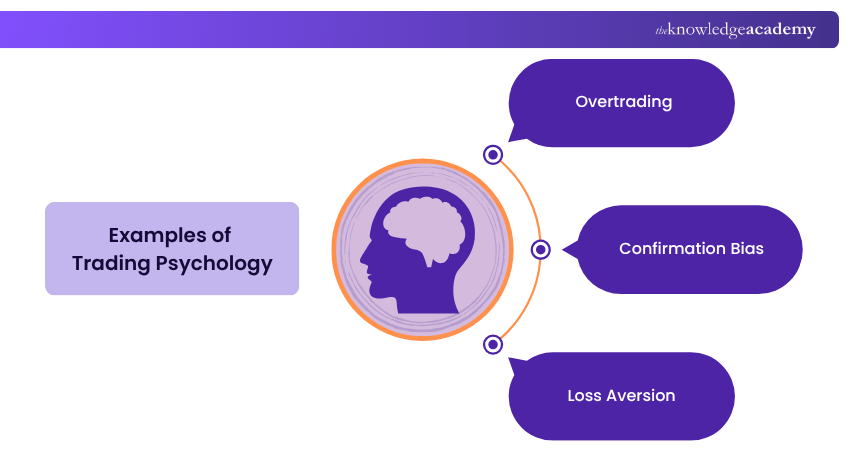
1) Overtrading
Overtrading happens when a Trader makes the trade more than they require within a short period of time, often driven by Fear of Missing Out (FOMO) or the desire to recover losses instantly. This behaviour can lead to inadequate decision-making, excessive transaction costs, and emotional exhaustion.
The reason behind this is that Traders may not have time to analyse each trade individually and thoroughly. To avoid overtrading, Traders need to follow these steps:
1) Set Clear Rules: Define thoroughly analysed criteria for entering and existing trade. Adhere to these rules to avoid impulsive decisions.
2) Use a Trading Plan: Create a well-thought-out Trading plan that matches with your goals, risk tolerance, and designed strategies.
3) Limit Trade Frequency: Set a maximum number of Trades per day or week to avoid overtrading.
2) Confirmation Bias
Traders suffering from confirmation bias tend to seek out information that supports their actual beliefs or Trading strategies while ignoring the contradictory information they perceive. This can lead to an uneven market perception, as Traders become largely confident in their decisions and miss out on potential risks. Here are some steps you can follow to avoid confirmation bias.
1) Seek Diverse Information: As a Trader, you need to actively perceive different viewpoints to avoid becoming deep-rooted in a single perspective.
2) Record Trades and Analysis: Keep a Trading journal handy that records your trades and the reasons behind them.
3) Encourage Suspiciousness: Start challenging your own beliefs and assumptions on a periodic basis.
3) Loss Aversion
Loss aversion is defined as the influence of Traders towards a stronger emotional reaction to losses, which outweighs the satisfaction derived from gains. This psychological bias can lead Traders to hold on to extended losing positions longer than they should, anticipating the market will turn in their favour and potentially miss out on other profitable opportunities. Here are some ways you can avoid loss aversion.
1) Focus on Risk Management: Allocate a specific percentage of your Trading capital to every trade. This prevents you from risking too much on a single trade and reduces the emotional impact of loss.
2) Practice Mindfulness: Be aware of your emotional reactions to losses. Take breaks, practice relaxation techniques, and maintain a long-term perspective to mitigate the pain of losses.
Understand market analysis techniques to make informed Trading decisions. Join our Stock Trading Course today!
How to Avoid Emotional Trading?
To avoid emotional Trading, it’s important to develop a disciplined approach and keep analysing emotions such as fear and greed. Here are some important strategies you can implement to stay focused and make rational decisions:
1) Develop a Solid Trading Plan: Outline your strategy, whether it’s based on technical or fundamental analysis, and include clear rules for entering and exiting trades. This reduces the chances of impulsive decisions that often arise from emotional reactions.
2) Maintain a Trading Journal: Record your emotions and decisions to help you stay objective and learn from your mistakes. This practice can provide useful insights into your Trading behaviour.
3) Implement Risk Management: Set stop loss levels for every trade and determine your risk tolerance beforehand. This helps prevent emotional attachment to a trade, especially when things are not going as planned.
4) Use Stop Loss Orders: Avoid holding onto losing positions by using stop loss orders. This helps you make decisions more systematically rather than emotionally, especially for both Margin Trading and Short Selling in the market.
5) Build Consistent Practices: Incorporate these strategies into your routine to help you maintain focus, stay calm, and execute trades with confidence instead of reacting impulsively to market fluctuations.
How to Improve Your Trading Psychology?
Improving your Trading Psychology is essential for long-term success in the markets. Here are some prominent strategies you can implement to develop a strong Trading mindset:
1) Manage Your Emotions: Focus on controlling emotions such as fear and greed, which often manage to impulsive decisions like exiting trades too early or holding onto losing positions.
2) Develop a Clear Trading Plan: Create a plan that emphasises statistics and data to reduce the emotional impact of losses and help you remain disciplined.
3) Build a Robust Routine: Start each day by reviewing market data and reassessing your Risk Management strategy to stay focused and avoid making trades based on gut feelings.
4) Practice with a Demo Account: Improving your Trading Psychology is essential for long-term success in the markets. Here are some prominent strategies you can implement to develop a strong Trading mindset:
5) Recognise and Address Biases: Maintain your objective attitude and review each trade in a journal to avoid mental traps such as confirmation bias or gambler’s fallacy.
Understand that losses are a common part of Trading. Accepting the fact and moving will help you avoid making emotional decisions.
Conclusion
Understanding What is Trading Psychology can completely change the way you trade. It’s the bridge between smart strategies and smart emotions. By managing fear, greed and overconfidence, Traders can make calm, confident choices. Developing emotional control and self-awareness helps create a more focused and ultimately successful Trading mindset.
Become familiar with all crucial aspects of investing and Trading. Join our Investment and Trading Training now!
Frequently Asked Questions
How Does Mindset Affect Trading Outcomes?

A positive mindset can help you handle with market volatility, manage risk, and make rational decisions. In contrast, a negative mindset can lead to emotional Trading, poor discipline, and inefficient performance.
How can I Develop Strong Trading Psychology Skills?
To develop strong Trading Psychology skills, you need to be aware of your emotions, biases, and behaviours and how they affect your Trading. You also need to have a clear and realistic Trading plan with discipline and consistency.
What are the Other Resources and Offers Provided by The Knowledge Academy?
The Knowledge Academy takes global learning to new heights, offering over 3,000 online courses across 490+ locations in 190+ countries. This expansive reach ensures accessibility and convenience for learners worldwide.;
Alongside our diverse Online Course Catalogue, encompassing 17 major categories, we go the extra mile by providing a plethora of free educational Online Resources like Blogs, eBooks, Interview Questions and Videos. Tailoring learning experiences further, professionals can unlock greater value through a wide range of special discounts, seasonal deals, and Exclusive Offers.
What is The Knowledge Pass, and How Does it Work?
The Knowledge Academy’s Knowledge Pass, a prepaid voucher, adds another layer of flexibility, allowing course bookings over a 12-month period. Join us on a journey where education knows no bounds.
What are the Related Courses and Blogs Provided by The Knowledge Academy?
The Knowledge Academy offers various Investment and Trading Training, including the Forex Trading Course, Stock Trading Course, and the Day Trading Course. These courses cater to different skill levels, providing comprehensive insights into Forex Day Trading.
Our Business Skills Blogs cover a range of topics related to Trading, offering valuable resources, best practices, and industry insights. Whether you are a beginner or looking to advance your Trading skills, The Knowledge Academy's diverse courses and informative blogs have got you covered.

The Knowledge Academy


Global Training Provider
The Knowledge Academy is a world-leading provider of professional training courses, offering globally recognised qualifications across a wide range of subjects. With expert trainers, up-to-date course material, and flexible learning options, we aim to empower professionals and organisations to achieve their goals through continuous learning.

Upcoming Business Skills Resources Batches & Dates
Date
 Stock Trading Course
Stock Trading Course
Thu 28th May 2026
Stock Trading Course
Thu 3rd Sep 2026
Stock Trading Course
Thu 22nd Oct 2026

 If you wish to make any changes to your course, please


