


 Top Rated Course

We may not have the course you’re looking for. If you enquire or give us a call on +44 20 4538 6376 and speak to our training experts, we may still be able to help with your training requirements.
What Does an Interior Designer Do? Roles, Skills and Workplace
Richard Harris 27 February 2026Interior Designers plan layouts, select materials and manage projects to create safe and beautiful spaces, working with clients from concept to completion. They consider factors like space planning, colour palettes, and materials, collaborate with Architects and contractors and stay informed on design trends and sustainable practices.

Training Outcomes Within Your Budget!
We ensure quality, budget-alignment, and timely delivery by our expert instructors.
Table of Contents

Walking into a space that instantly feels inspiring, comfortable and perfectly balanced! This is the magic woven by Interior Designers. It's a world where creativity meets functionality, resulting in beautifully styled spaces and environments where people live, work, and connect. From choosing colours and layouts to ensuring safety and practicality, they bring ideas to life while reflecting individual style and purpose.
This blog answers What Does an Interior Designer Do in detail, highlighting the skills that set them apart and how they contribute to today’s design-conscious world. So read on and find your own niche in the art of shaping spaces!
Table of Contents
1) What is an Interior Designer?
2) What Does an Interior Designer do?
3) Types of Interior Designers
4) What Type of Skills do You Need to be an Interior Designer?
5) The Workplace of an Interior Designer
6) What's the Main Difference Between an Interior Decorator and an Interior Designer?
7) When Do You Need an Interior Designer?
8) Conclusion
What is an Interior Designer?
An Interior Designer refers to a professional who creates spaces that are both beautiful and practical. Their job goes far beyond choosing colours or cushions. They plan the layout of a room, solve design problems, select materials and finishes, and bring an entire vision together while keeping the client’s lifestyle, needs, and budget in mind.
Interior Designers work on all kinds of spaces like homes, flats, cafes, shops, offices, hotels and more. Since people spend much of their time indoors, Designers make sure these spaces not only look great but also feel comfortable and support how people live and work.

What Does an Interior Designer Do?
Interior Designers handle a wide range of responsibilities related to both the space and the client:
1) Client Collaboration: They work closely with clients to understand their lifestyle and expectations, ensuring every design supports daily living and long-term comfort.
2) Health, Safety and Accessibility Compliance: They ensure all the design plans follow safety regulations and align with community requirements.
3) Project Planning and Execution: They develop design concepts, create timelines and manage projects from start to finish.
4) Creative Design Development: They produce sketches, mood boards and layout plans while selecting materials, finishes, colours and furnishings that bring a design vision to life.
5) Space Planning and Functionality: They focus on making the best use of available space, improving flow, comfort and overall usability for residents or workers.
6) Technical Drawings and Documentation: They prepare construction drawings and detailed plans for contractors, ensuring that the designs can be executed properly on-site.
7) Coordination with Experts: They work with engineers, contractors and consultants to address structural requirements throughout the project.
8) Versatile Project Work: They handle a variety of commercial and residential projects, from homes and offices to healthcare and educational facilities. They can adapt to unique client needs.
9) Focus on Well-Being and Sustainability: They select materials and design solutions that support the mental and physical well-being while considering durability and environmental impact.
Types of Interior Designers
Interior Designers can specialise in different areas, depending on the type of space and purpose. Here are some common types:
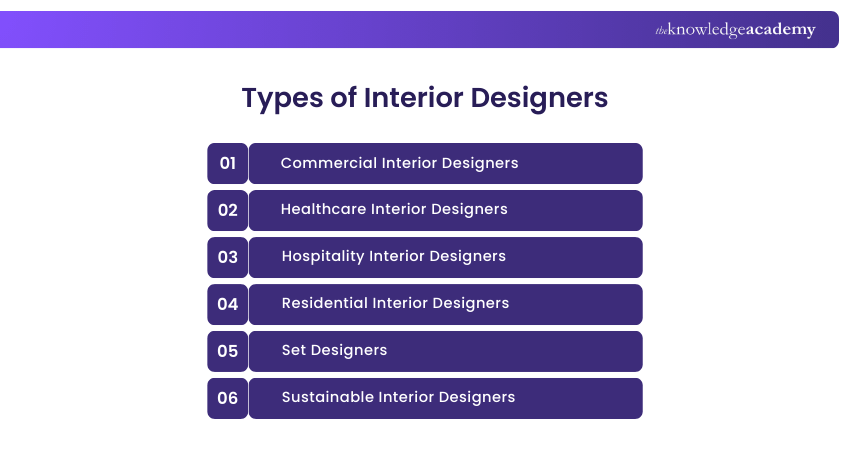
1) Commercial Interior Designers: They design spaces for offices, shops, and other businesses. Their focus is on using space efficiently, showcasing brand identity, and creating environments that support productivity and customer satisfaction.
2) Healthcare Interior Designers: They design hospitals, clinics and medical offices with patient comfort, safety, and well-being in mind. At the same time, they create layouts that make healthcare providers’ work easier and more efficient.
3) Hospitality Interior Designers: They create stylish and welcoming spaces for hotels, restaurants, and resorts. Their designs aim to give guests memorable experiences while reflecting the brand and improving overall comfort.
4) Residential Interior Designers: They design homes, apartments, and condos. By working closely with homeowners, they create spaces that suit their lifestyle, reflect their personality, and provide both comfort and functionality.
5) Set Designers: They design backgrounds and environments for theatre, film, television, and events. Working with directors and producers, they bring stories to life through creative, practical, and budget-friendly sets.
6) Sustainable Interior Designers: They focus on eco-friendly design, using sustainable materials and energy-efficient systems. Their aim is to mitigate negative environmental impact and craft healthier, greener indoor spaces.
Make sure AutoCAD skills are your gateway to design excellence. Register for our AutoCAD Training now!
What Type of Skills Do You Need to be an Interior Designer?
Interior Designers need a blend of natural talent and learned skills to succeed in the industry. Here are the essential skills needed to become a successful Interior Designer:
1) Communication
Designers frequently interact with clients and fellow Designers. Strong communication helps you understand client needs and explain ideas clearly. Useful communication skills include:
a) Active listening
b) Verbal and written communication
c) Public speaking and presentations
d) Negotiation
2) Creativity
Interior Designers must be creative thinkers who can visualise how a space can be improved. Creativity helps make rooms more attractive and comfortable. You should also be able to sketch or present ideas clearly for clients. Helpful creative skills include:
a) Strong grasp on Colour Theory
b) Innovative thinking
c) Open-mindedness
d) Brainstorming
e) Collaboration
3) Attention to Detail
Great design comes from noticing small details. Being detail-oriented helps you create well-planned spaces. To strengthen this skill, you can develop:
a) Time Management
b) Organisation
c) Observational skills
d) Analytical thinking
4) Knowledge of Design Trends
Trends change constantly, so staying up to date is important. Understanding both modern trends and classic styles helps you appeal to a diverse range of clients and pitch fresh ideas. Useful skills include:
a) Research
b) Critical thinking
c) Originality
d) Styling and staging
5) Problem-solving
Design projects often face unexpected challenges, such as unavailable furniture or layout issues. Strong problem-solving skills help you make quick, practical decisions without affecting deadlines. Helpful abilities include:
a) Conflict resolution
b) Troubleshooting
c) Task prioritisation
d) Customer service
6) Budgeting
Designers must create beautiful spaces while staying within the client’s budget. This requires financial awareness. Useful budgeting skills include:
a) Negotiating with vendors
b) Budget forecasting
c) Financial tracking
d) Identifying hidden costs
7) Technical and Computer Skills
Technology is a big part of modern design work. Tools like CAD and 3D modelling software help create accurate, shareable visuals. Important technical skills include:
a) CAD Software
b) Digital Imaging
c) 3D Modelling
d) Architectural detailing
Master structural design in our comprehensive Revit Structure Course and engineer the future - Sign up now!
The Workplace of an Interior Designer
The workplace of an Interior Designer is dynamic and varied. Much of the work happens in an office like sketching layouts, creating 3D plans, coordinating with clients, contractors and suppliers. Designers also visit job sites, showrooms and clients’ homes or offices to inspect spaces, discuss requirements and supervise installations.
Their day may include meetings, site visits, material selection, and on-site adjustments. They combine creativity, architecture, and project management in real-world environments.
What's the Main Difference Between an Interior Decorator and an Interior Designer?
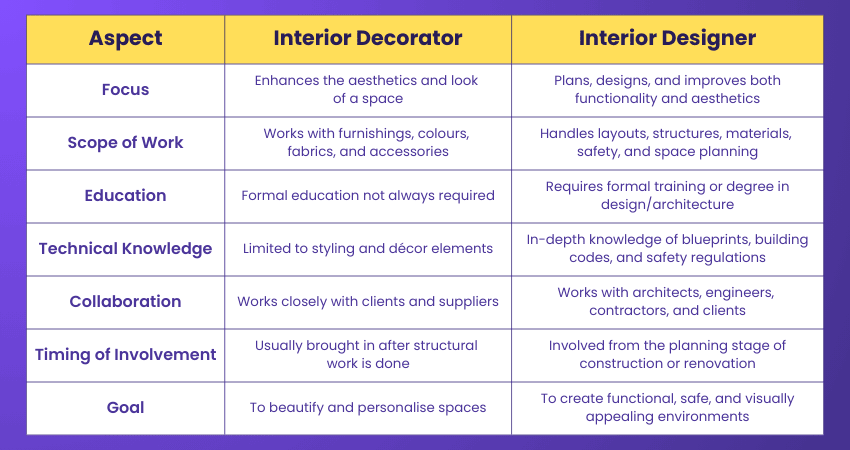
An interior decorator focuses on styling spaces by choosing colours, furniture, textiles, and accessories to enhance aesthetics. They work with existing structures and do not handle architectural changes. An interior designer, however, is trained to plan layouts, modify structures, and work with building codes. Designers focus on both functionality and aesthetics, while decorators focus mainly on visual appeal.
Here are the main differences between the role of an Interior Designer and that of an Interior Decorator:
When do You Need an Interior Designer?
You may need an Interior Designer under the following scenarios:
1) Building a New Space: When constructing a new house, office, or commercial property, an Interior Designer can help plan layouts, select materials, and create functional yet stylish interiors from the very beginning.
2) Redesigning Your Home: If you want to refresh the look of your home, an Interior Designer can reimagine your space with new colours, furniture and layouts that align with your lifestyle and taste.
3) Improving Your Workplace: An Interior Designer can improve your office environment by optimising space, improving lighting and creating designs that boost employee comfort, collaboration and productivity.
4) Creating Community Spaces: For projects like libraries, cafes, schools, or recreational centres, an Interior Designer can design inviting and functional spaces.
It’s best to involve a Designer at the earliest stage of your project. Early planning ensures smoother execution and better results. Interior Designers also play a big role in shaping spaces that improve well-being and productivity.
Conclusion
Interior Designers are visionaries who transform spaces into memorable experiences. With a unique blend of out-of-the-box thinking, technical expertise and empathy, they build environments that inspire and function flawlessly. As the demand for these professionals continues to grow, understanding What Does an Interior Designer do and the Interior Designer Salary will remain vital for anyone aspiring to stand out in this role.
Learn the power behind architectural renders and cinematic worlds in our 3DS Max Course - Sign up now!
Frequently Asked Questions
What Qualifications do You Need to Become an Interior Designer?

To pursue a career in Interior Design, receiving a degree in Interior Design or some similar discipline, along with gaining hands-on experience through internships, is necessary.
What do Interior Designers Charge?
The salary of an Interior Designer in the United Kingdom can range from £21k to £39k. The average annual salary is £27k. The hourly pay can range from £9.15 to £33.94 with the average being £12.34.
What are the Other Resources and Offers Provided by The Knowledge Academy?
The Knowledge Academy takes global learning to new heights, offering over 3,000 online courses across 490+ locations in 190+ countries. This expansive reach ensures accessibility and convenience for learners worldwide.
Alongside our diverse Online Course Catalogue, encompassing 17 major categories, we go the extra mile by providing a plethora of free educational Online Resources like Blogs, eBooks, Interview Questions and Videos. Tailoring learning experiences further, professionals can unlock greater value through a wide range of special discounts, seasonal deals, and Exclusive Offers.
What is the Knowledge Pass, and how Does it Work?
The Knowledge Academy’s Knowledge Pass, a prepaid voucher, adds another layer of flexibility, allowing course bookings over a 12-month period. Join us on a journey where education knows no bounds.
What are the Related Courses and Blogs Provided by The Knowledge Academy?
The Knowledge Academy offers various AutoCAD Courses including the Interior Design Training, AutoCAD Electrical Training and V-RAY Training. These courses cater to different skill levels, providing comprehensive insights into Interior Design.
Our Office Applications Blogs cover a range of topics related to Interior Designer offering valuable resources, best practices, and industry insights. Whether you are a beginner or looking to advance your Designing skills, The Knowledge Academy's diverse courses and informative blogs have you covered.

Richard Harris


Senior Full Stack Developer and Technology Educator
Richard Harris is a highly experienced full-stack developer with deep expertise in both frontend and backend technologies. Over his 12-year career, he has built scalable web applications for startups, enterprises and government organisations. Richard’s writing combines technical depth with clear explanations, ideal for developers looking to grow in modern frameworks and tools.

Upcoming Office Applications Resources Batches & Dates
Date
 Interior Design Course
Interior Design Course
Fri 15th May 2026
Interior Design Course
Fri 3rd Jul 2026
Interior Design Course
Fri 2nd Oct 2026

 If you wish to make any changes to your course, please


