


 Top Rated Course

We may not have the course you’re looking for. If you enquire or give us a call on +40 316317743 and speak to our training experts, we may still be able to help with your training requirements.
What Is Scrum? Roles, Process and Benefits
The Knowledge Academy 13 July 2026Scrum is a framework for developing, delivering, and sustaining complex products through iterative progress where teams work in short cycles called Sprints. It includes roles like the Scrum Master, Product Owner, and development team, along with events such as Sprint Planning, Daily Scrum, Sprint Review, and Sprint Retrospective.

Training Outcomes Within Your Budget!
We ensure quality, budget-alignment, and timely delivery by our expert instructors.
Table of Contents
Every team needs a good rhythm to go from good to high-performing excellence. Scrum is that rhythm that keeps teams fast, focused, and always in sync. Lightweight, flexible framework designed to help teams work together, adapt quickly, and build high-quality products. It encourages short work cycles, clear roles, and regular feedback.
This blog explores What is Scrum and highlights why it's a smart way to stay organised and deliver results in a fast-moving world where change is constant. So read on, learn about Scrum roles, events, artefacts and more, and why it’s the go-to framework for getting things done!
Table of Contents
1) What is Scrum?
2) How Does Scrum Work?
3) Difference Between Agile and Scrum
4) What are Scrum roles?
5) What are Scrum Artefacts?
6) What are Scrum Events?
7) What are Scrum Values?
8) Conclusion
What is Scrum?
Scrum is a method used to help teams work together to build products and reach a shared goal. It allows teams to create a plan, try it out, review what worked or didn’t, and make changes as needed. This process fits into the Scrum workflow for handling Product Backlog Items (PBIs). Additionally, Scrum Development Team Roles play a vital part as Scrum is designed so that teams can integrate practices from other frameworks that suit their specific context.
Scrum is a framework used for managing the development of products and moving towards a common goal. It follows a way that empowers teams to develop a model about how something works, experiment with it, look upon the results, and make necessary adjustments. This approach works productively only when the framework is implemented correctly.
How Does Scrum Work?
Scrum helps teams work together to deliver products in short, focused cycles called sprints. Here's how Scrum works:
1) Sprint Planning: Firstly, the team picks tasks from the product backlog to complete during a fixed period. This period is called a sprint, which usually lasts 1–4 weeks.
2) Daily Stand-ups: Short daily meetings are important as athey help team members share their progress, challenges and plan the day’s work.
3) Sprint Execution: The team works to finish the tasks, with emphasis on collaboration and flexibility.
4) Sprint Review: The team presents what was built to stakeholders at the conclusion of every sprint.
5) Sprint Retrospective: The team reflects on the things that went well and what can be improved for the next sprint.
Difference Between Agile and Scrum
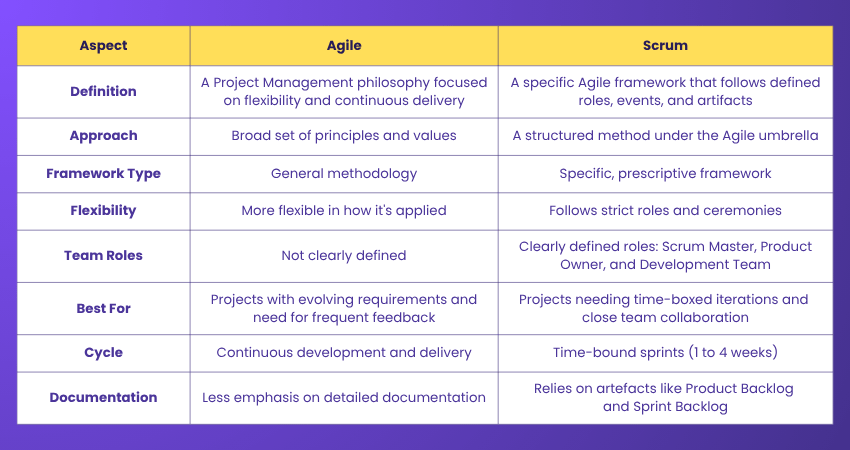
Here are the key distinctions between Agile and Scrum:
What are Scrum roles?
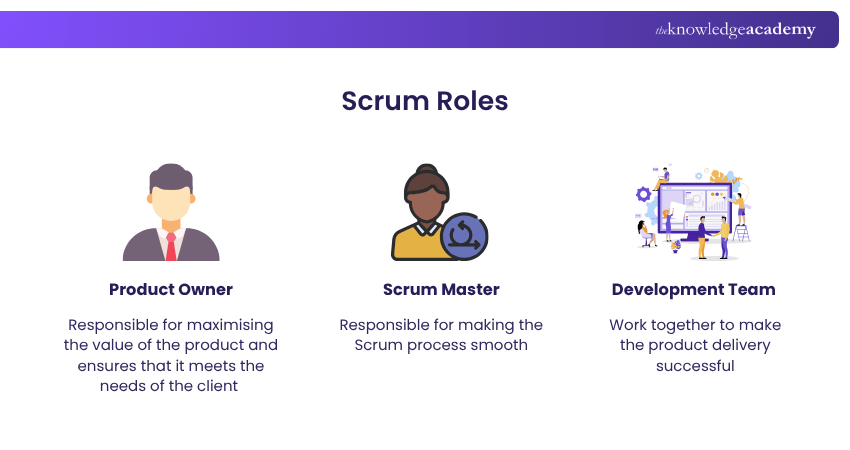
There are three different roles in Scrum. It ensures that the team is successful in delivering high-quality products. The primary Scrum Roles are Product Owner, Scrum Master, and Development Team. Let's learn about them in detail:
Product Owner
The Product Owner makes sure the team builds what brings the most value to the business. They understand customer needs and set clear priorities. Good Product Owners:
a) Tell the team which features to work on next
b) Act as a link between business goals and the team’s understanding
Decide when and how often to release new updates
Scrum Master
The Scrum Master supports the team in following Scrum and making it more effective. They coach team members, help improve processes, and ensure smooth delivery. Scrum Master also perform the following functions:
a) Arrange the people and tools needed for each Sprint
b) Run team meetings and Sprint sessions
c) Guide the team in adopting digital tools and new tech
d) Provide training when needed
Talk to other teams or departments to solve team-wide issues
Development Team
The Scrum Team includes Developers, Testers, Designers, and others with different skills. They work together and train each other, so work doesn't depend on just one person. Scrum teams perform the following:
a) Work together to finish Sprint goals
b) Follow good development practices
c) Organise themselves and take shared responsibility
d) Plan how much work they can complete in each Sprint
What are Scrum Artefacts?
Scrum artefacts are important tools that help you ensure that your team and the stakeholders are on the same page. They show what’s being worked on, what’s already done, and what still needs to be done. The three main Scrum artefacts are the Product Backlog, Sprint Backlog, and Increment.
Product Backlog
The Product Backlog refers to a list of changes, features and fixes that are needed for the product. It’s managed by the Product Owner and is updated regularly as the project grows or changes. This list helps the team know their next point of focus and keeps their work aligned with business goals.
Sprint Backlog
The Sprint Backlog includes tasks picked from the Product Backlog to be performed in the current sprint. It also has a clear plan to reach the Sprint Goal. The team updates this list daily so everyone can track progress and make sure the work is on track.
Increment
The Increment is the finished work from the current sprint, combined with all past completed work. It should be complete, usable, and ready to release if needed. Every increment must meet the team’s agreed definition of “Done.”
What are Scrum Events?
Essentially, Scrum events are regular meetings that help drive the team through each stage of the work. They keep everyone focused, help track their progress, and support continuous improvement. The main Scrum events include:
Organise the Backlog
This is an ongoing task that requires the Product Owner and team to review the product backlog. They make sure that all the items are clear, up to date, and prioritised, so that the team can be ready for the next sprint.
Sprint Planning
At the beginning of a sprint, the team meets to plan what work they’ll complete. They choose the top items from the backlog and agree on a goal. Then, they break the work into smaller tasks and decide how to complete them.
Sprint
A sprint is a set time, usually one to four weeks, where the team works on the planned tasks. The goal is to deliver working parts of the product by the end of the sprint.
Daily Scrum or Stand up
This is a quick, 15-minute meeting held every day during the sprint. Team members share what they’re working on, what’s done, and if there are any problems. It helps keep everyone on track.
Sprint Review
At the end of every sprint, the team shows the work they’ve completed to stakeholders. This meeting allows for feedback so the product can keep improving based on real needs.
Sprint Retrospective
After the sprint review, the team meets to talk about how the sprint went. They discuss what went well, what didn’t, and how to improve in the next sprint. This helps the team keep getting better.
Scrum makes Agile Project Management a team-powered triumph! Learn how in our Managing Agile Projects With Scrum Course - Register now!
What Are Scrum Values?
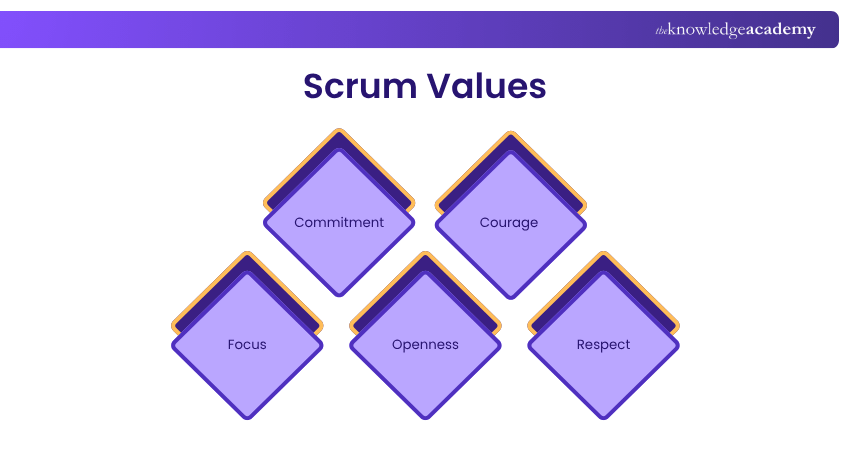
Scrum is built around five core values that guide team behaviour and decision-making: Commitment, Courage, Focus, Openness, and Respect. These values foster trust, collaboration, and continuous improvement within Scrum teams.
Commitment
Scrum team members personally commit to achieving the goals of the team. This involves dedicating themselves to the team's objectives and being accountable for their contributions.
Courage
Team members must have the courage to do the right thing and tackle tough problems. This means being open to feedback, admitting mistakes, and addressing challenges directly.
Focus
Everyone must concentrate on the work of the Sprint and the goals set by the Scrum Team. By focusing on the tasks at hand, teams can deliver valuable increments efficiently.
Openness
The Scrum team and its stakeholders must agree to be open about the work and the challenges that come with it. This transparency fosters trust and facilitates problem-solving.
Respect
Scrum Team members must respect each other to be capable, independent people. This mutual respect encourages a collaborative environment where diverse perspectives are valued.
Own the product, own the process! Be at the driver's seat with our Scrum Product Owner Certification - Sign up now!
Conclusion
Scrum is a flexible approach to Project Management that highlights communication, teamwork, and continuous improvement. It can be a highly effective method for delivering high-quality results in a timely and efficient manner. Scrum offers a framework for building better products and empowering teams to achieve their full potential. By understanding What is Scrum and applying it to your organisation, you can enable teams to collaborate effectively and respond quickly to any changes.
Build better and sprint smarter! Let our Scrum Developer Training be your launchpad to Agile excellence - Sign up now!
Frequently Asked Questions
What are the Five Principles of Scrum?

The five principles of Scrum are Commitment, Focus, Openness, Respect, and Courage. These values guide teams in collaborative work, ensuring transparency, inspection, and adaptation within the Scrum Framework.
What are Benefits of the Scrum Methodology
Scrum offers faster delivery, better teamwork, and flexibility to handle changing requirements. It encourages regular feedback, helping teams improve continuously. With clear roles and short sprints, progress is easier to track, and risks are reduced. Scrum also promotes transparency and accountability.

The Knowledge Academy


Global Training Provider
The Knowledge Academy is a world-leading provider of professional training courses, offering globally recognised qualifications across a wide range of subjects. With expert trainers, up-to-date course material, and flexible learning options, we aim to empower professionals and organisations to achieve their goals through continuous learning.


 If you wish to make any changes to your course, please


