


 Top Rated Course

We may not have the course you’re looking for. If you enquire or give us a call on +40 316317743 and speak to our training experts, we may still be able to help with your training requirements.
15 SMART Goals Examples for Planning and Achieving Results
The Knowledge Academy 23 April 2026SMART Goals help you set clear, realistic, and trackable targets by setting Specific, Measurable, Achievable, Relevant, and Time-bound objectives. It improves focus, motivation, and success. From fitness to business, SMART Goal Examples offer a practical way to plan better, boost confidence, reduce stress, and achieve real results.

Training Outcomes Within Your Budget!
We ensure quality, budget-alignment, and timely delivery by our expert instructors.
Table of Contents

Are you already tired of setting goals that never quite get done? This is a common struggle around the world. Many people aim high, but vague plans and a lack of direction hold them back. What if there is a simple way to set goals for a successful result? That’s where SMART Goals come in to stay focused, track progress, and reach heights in any area of life.
Whether you're trying to grow your business, improve your health, or learn something new, these goals help you move forward with clarity and confidence. With clear SMART Goals Examples and easy steps, you can start achieving more. Curious to know how? Read on this blog to turn your goals into real and lasting progress!
Table of Contents
1) What are SMART Goals?
2) 15 SMART Goal Examples
3) How to Write SMART Goals?
4) Benefits of Implementing SMART Goals
5) Conclusion
What are SMART Goals?
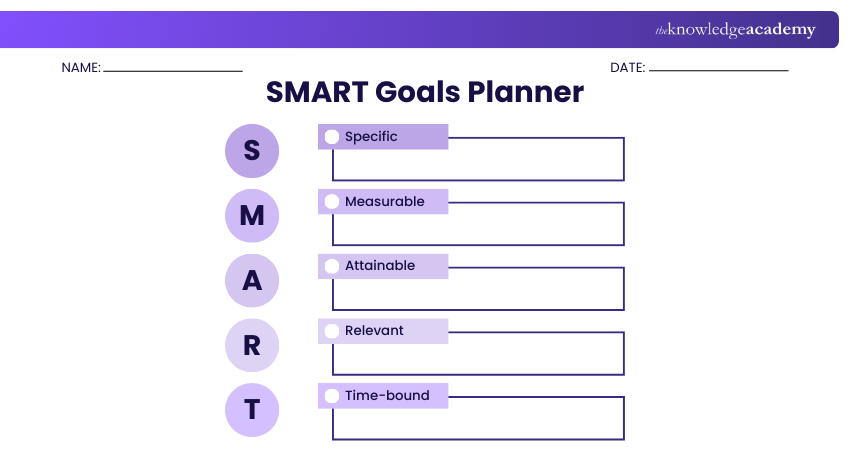
SMART is a method to help you set goals that are easier to achieve. The word SMART refers to the following:
1) Specific: The goal needs to be defined clearly as what you want to do
2) Measurable: You need to track progress and measure its outcomes
3) Achievable: The goal has to be realistic and attainable
4) Relevant: It needs to align with your objectives or values
5) Time-bound: Set a deadline to focus your effort and stay on track
This goal-setting framework removes confusion and encourages accountability. With a SMART Goal, you’re setting yourself up for strategic success.

15 SMART Goal Examples
Here are 15 simple SMART Goals Examples you can use and get inspired by. They follow all five parts of the SMART method.
1) SMART Goal for Completing a Marathon
1) Specific: I want to finish a marathon by following a structured training plan.
2) Measurable: I will run four days a week and slowly increase how far I can run.
3) Attainable: I’ve been running for six months and can already run 15 km.
4) Relevant: This goal suits my plan to get fit and strong.
5) Time-bound: I will be ready to run the marathon by 15 June next year.
2) SMART Goal for Building a Better Relationship
1) Specific: I want to make my relationship stronger by spending more time with my partner.
2) Measurable: We’ll have one date night every Friday for the next three months.
3) Attainable: We’re free on Friday evenings, so this plan is easy to follow.
4) Relevant: Having a strong relationship matters because it helps us stay happy together in the long run
5) Time-bound: I’ll do this continuously for the next 12 weeks.
3) SMART Goal for Broadening Market Presence
1) Specific: I want to expand our brand’s reach through social media campaigns.
2) Measurable: I aim to gain 5,000 new followers and reach 50,000 views.
3) Attainable: Our content team can create and post quality content.
4) Relevant: Greater brand visibility supports our overall marketing strategy.
5) Time-bound: I want to reach this in two months.
4) SMART Goal for Publishing a Book
1) Specific: I want to write and publish a 200-page non-fiction book.
2) Measurable: I’ll write 1,000 words every weekday.
3) Attainable: Writing every day can be easily done because it fits into my current routine.
4) Relevant: Publishing a book supports my goal of becoming a thought leader.
5) Time-bound: I plan to complete the draft within 10 weeks.
5) SMART Goal for Waking up Earlier Daily
1) Specific: I want to build a habit of waking up at 6:00 am on weekdays.
2) Measurable: I’ll track my wake-up times daily using a sleep app.
3) Attainable: I’ll go to bed earlier to make it easier.
4) Relevant: This will give me more time for exercise and planning my day.
5) Time-bound: I’ll maintain this habit for the next 30 days.
Sharpen your decision-making and lead with vision with our Strategic Planning and Thinking Course – Register today!
6) SMART Goal for Boost Website Traffic by 20%
1) Specific: I want to increase website visits through blogging and SEO.
2) Measurable: We need to increase monthly traffic from 10,000 to 12,000 visits.
3) Attainable: Our content team can post two blogs per week.
4) Relevant: Getting more website visitors will help bring in more potential customers.
5) Time-bound: I’ll reach this target in the next three months.
7) SMART Goal for Learning French
1) Specific: I want to learn how to speak French.
2) Measurable: I’ll complete language lessons daily and attend weekly group meetups.
3) Attainable: I already know the basics of French vocabulary and phrases, so I can build on that.
4) Relevant: Learning French will help me on my upcoming trip and career goals.
5) Time-bound: I’ll reach conversational level in six months.
8) SMART Goal for Starting a Side Business
1) Specific: I want to launch a new shop selling handmade candles.
2) Measurable: I will design five products, set up the store, launch it, and promote it on various Social Media platforms.
3) Attainable: I’ve already made and tested samples and have marketing experience.
4) Relevant: This will help me earn extra income doing something I enjoy.
5) Time-bound: I’ll launch the shop by the end of October.

9) SMART Goal for Lower Google Ads Cost Per Lead by 25%
1) Specific: I want to lower how much we pay for each ad lead in our Google Ads campaigns.
2) Measurable: I will reduce the cost from £12 to £9 per lead.
3) Attainable: I will run A/B tests on ad copy and adjust targeting.
4) Relevant: Reducing costs helps increase return on marketing investment.
5) Time-bound: I’ll achieve this within six weeks.
10) SMART Goal for Growing Monthly Revenue by 20%
1) Specific: I want to increase monthly revenue by offering new services.
2) Measurable: I need to increase my income from £10,000 to £12,000 monthly.
3) Attainable: Our team can upsell to current clients and launch a premium package.
4) Relevant: More revenue supports business growth and profitability.
5) Time-bound: I’ll reach this goal within three months.
11) SMART Goal for Becoming a Better Leader at Work
1) Specific: I want to improve my leadership skills to enhance how I lead my team.
2) Measurable: I’ll take a six-week leadership course and meet my team weekly.
3) Attainable: I can fit the course and meetings into my weekly schedule.
4) Relevant: Better leadership will help with team engagement and performance.
5) Time-bound: I’ll work on this consistently over the next three months.
12) SMART Goal for Improving Team Productivity by 10%
1) Specific: I want our team to complete more tasks.
2) Measurable: I need to increase the completed tasks by 10%.
3) Attainable: I’ll implement a Task Management tool and weekly reviews.
4) Relevant: Better productivity means better results for our projects.
5) Time-bound: I’ll measure progress over the next 60 days.
13) SMART Goal for Improving Emotional Regulation
1) Specific: I want to stay calmer and manage my stress better.
2) Measurable: I’ll journal daily and meditate for 10 minutes each morning.
3) Attainable: I can set aside 20 minutes each day for this routine.
4) Relevant: Managing emotions helps me stay calm, focused, and productive.
5) Time-bound: I’ll stick to this plan for 30 days.
Build the power of emotional strength with our Emotional Intelligence Training – Join soon!
14) SMART Goal for Enhancing Customer Service Quality
1) Specific: I want to improve our customer service ratings.
2) Measurable: We have to raise the average ratings from 4.2 to 4.7 stars.
3) Attainable: I will provide team training and gather weekly customer feedback.
4) Relevant: Great service leads to better reviews and more repeat customers.
5) Time-bound: We will reach this rating within four months.
15) SMART Goal for Acquiring 50 Sales-qualified Leads Monthly
1) Specific: I want to generate more qualified leads for our sales team.
2) Measurable: I need to get 50 sales-qualified leads each month.
3) Attainable: I’ll run Social Media ads and attend two networking events monthly.
4) Relevant: More leads will help increase conversions and sales.
5) Time-bound: I’ll do this consistently for the next quarter.
How to Write SMART Goals?
Writing your own SMART Goals becomes simple when you follow these five steps to ensure your goals hit all the right criteria. Those steps are as follows:

1) Define Your Goal Clearly (Specific)
The first step is knowing what you want to achieve. A specific goal tells you exactly what you’re working towards. You can ask questions like:
1) What do I want to do?
2) Why is this goal needed?
3) What steps will I take?
2) Track Progress With Metrics (Measurable)
A good SMART Goal lets you track progress. Adding numbers or a time limit gives you a way to check if you’re moving forward or falling behind. You can track:
1) Time taken to complete tasks
2) Results achieved
3) Progress milestones
3) Ensure It’s Realistic (Achievable)
Your goal has to be realistic based on the time, tools, and support you have. Setting goals that are out of reach might cause frustration. Consider asking:
1) Can I actually complete this with my current schedule?
2) Do I need help or training?
3) Is this within my control?
4) Align With Your Priorities (Relevant)
A relevant goal supports your bigger picture, whether it is your team’s success, personal development, or business goals. You can ask:
1) Does this goal matter to my role or mission?
2) Is this the right time for this goal?
3) Will this help us progress in the right area?
5) Set a Clear Deadline (Time-Bound)
Finally, every SMART Goal needs a deadline. Without a time limit, it can be easily delayed or lose focus. A strict timeframe helps you:
1) Stay focused and track your steps
2) Avoid any delay in the progress
3) Break down big goals into smaller tasks
Develop the skills to connect and collaborate with our Building Business Relationships Course – Sign up anytime!
Benefits of Implementing SMART Goals
SMART Goals are helpful because they give you clarity. Its benefits are:
1) Clarity and Direction: You know exactly what you're working for.
2) Improved Planning: SMART Goals make it easier to make good choices.
3) Better Motivation: Clear goals keep you focused on what you want to achieve.
4) Better Decision-making: They help you prioritise and allocate resources effectively.
5) Higher Success Rate: You're more likely to follow through on goals that are clear and time-sensitive.
6) Less Stress: You will have a clear idea of what to do and won’t feel lost about what to do next.
Conclusion
Setting goals is easy but achieving them is what truly counts. The SMART Goals give you a simple, structured way to turn vague ambitions into clear, actionable steps. If you want to change something in your life or business, start by setting these goals. The SMART Goals Examples above offer practical inspiration to get started. Now it is your turn to apply them and plan your results.
Unlock your full potential and turn your goals into reality with our Personal Development Training – Explore now!
Frequently Asked Questions
How do I Create a SMART Plan?

Start by thinking of a clear goal, then fit it as per the SMART framework. Make it Specific, Measurable, Achievable, Relevant, and Time-bound. Finally, write it down and review your progress regularly.
How to Write Goals for Yourself?
Think about what you want to achieve in your life. You can use the SMART framework to ensure your goals are actionable and realistic. Write them down, review them weekly, and adjust if you want any changes.
What are the Other Resources and Offers Provided by The Knowledge Academy?
The Knowledge Academy takes global learning to new heights, offering over 3,000+ online courses across 490+ locations in 190+ countries. This expansive reach ensures accessibility and convenience for learners worldwide.
Alongside our diverse Online Course Catalogue, encompassing 17 major categories, we go the extra mile by providing a plethora of free educational Online Resources like Blogs, eBooks, Interview Questions and Videos. Tailoring learning experiences further, professionals can unlock greater value through a wide range of special discounts, seasonal deals, and Exclusive Offers.
What is The Knowledge Pass, and How Does it Work?
The Knowledge Academy’s Knowledge Pass, a prepaid voucher, adds another layer of flexibility, allowing course bookings over a 12-month period. Join us on a journey where education knows no bounds.
What are the Related Courses and Blogs Provided by The Knowledge Academy?
The Knowledge Academy offers various Personal Development Courses, including Motivation and Goal Setting Training, Emotional Intelligence Training and Strategic Planning and Thinking Course. These courses cater to different skill levels, providing comprehensive insights into Interpersonal Skills.
Our Business Skills Blogs cover a range of topics related to SMART Goals, offering valuable resources, best practices, and industry insights. Whether you are a beginner or looking to advance your Personal Development skills, The Knowledge Academy's diverse courses and informative blogs have got you covered.

The Knowledge Academy


Global Training Provider
The Knowledge Academy is a world-leading provider of professional training courses, offering globally recognised qualifications across a wide range of subjects. With expert trainers, up-to-date course material, and flexible learning options, we aim to empower professionals and organisations to achieve their goals through continuous learning.

Upcoming Business Skills Resources Batches & Dates
Date
 Motivation and Goal Setting Training
Motivation and Goal Setting Training
Fri 31st Jul 2026
Motivation and Goal Setting Training
Fri 23rd Oct 2026

 If you wish to make any changes to your course, please


