


 Top Rated Course

We may not have the course you’re looking for. If you enquire or give us a call on +40 316317743 and speak to our training experts, we may still be able to help with your training requirements.
What is Blockchain Accounting: A Complete Overview
Olivia Taylor 02 March 2026Blockchain Accounting uses a decentralised, tamper-proof digital ledger to record transactions, improving transparency, security, and operational efficiency. It enables real-time financial reporting, reduces manual reconciliation, and increases trust by providing an accurate, auditable record of all financial activities.

Training Outcomes Within Your Budget!
We ensure quality, budget-alignment, and timely delivery by our expert instructors.
Table of Contents
As organisations demand greater transparency, accuracy, and real-time financial insights, traditional accounting systems are reaching their limits. This is where Blockchain Accounting comes in to offer a secure, decentralised way to record and verify transactions with enhanced trust and efficiency. In this blog, we explore what Blockchain in Accounting is, how it works, and why it is transforming financial reporting, auditing, and compliance for modern businesses. So read on!
Table of Contents
1) What is Blockchain Technology?
2) What is Blockchain Accounting?
3) How Does Blockchain Work in Accounting?
4) How Can Blockchain Technology Transform the Accounting Industry?
5) Benefits of Blockchain Accounting
6) Disadvantages of Blockchain in Accounting
7) Examples of Blockchain in Accounting
8) Future of Blockchain in Accounting
9) How Blockchain in Accounting Can Help Business Owners?
10) What are the Types of Blockchain Used in Accounting?
11) Conclusion
What is Blockchain Technology?
Blockchain Technology refers to a decentralised digital ledger that can record transactions securely across multiple computers. It ensures transparency and immutability, making it suitable for various applications like finance and supply chain management. This shared ledger allows for the tracking of assets within a business network, providing a more secure and efficient way to manage information.
Each transaction, known as a block, is linked to the previous one, forming a continuous chain that is nearly impossible to alter. Because there is no central authority, blockchain promotes trust between parties, reduces fraud, and enables faster, more reliable data exchange.

What is Blockchain Accounting?
Blockchain for Accounting is the practice of recording, verifying, and managing financial transactions using Blockchain Technology. Instead of relying on centralised ledgers, it uses a decentralised and immutable system that securely records transactions in real time. This approach improves transparency, accuracy, and auditability, making it particularly relevant for digital assets, Cryptocurrencies, and modern financial ecosystems.
How Does Blockchain Work in Accounting?
Blockchain in Accounting involves using decentralised ledger technology to securely record, validate, and manage financial transactions. Rather than relying on a central authority, it distributes the data across a network of nodes, ensuring each transaction is verified and permanently stored.
Since every entry is traceable, it removes the need for intermediaries and can significantly reduce the risk of fraud or manipulation. This creates a more trustworthy and auditable financial ecosystem.
1) A Primer on General Ledgers and Double-entry Accounting
A general ledger is the central record of all a company’s financial transactions, organised into accounts such as assets, liabilities, equity, revenue, and expenses. It functions as the backbone of financial reporting, ensuring accuracy and consistency.
Double-entry Accounting is the system used to maintain the general ledger. Every transaction is recorded in at least two accounts: one account as a debit and the other as a credit. The main thing is that the accounting equation (Assets = Liabilities + Equity) always remains balanced. This method reduces errors, improves transparency, and provides a complete financial picture for decision-making and compliance.
Learn to manage financial records with confidence through our Maintaining Financial Records (FA2) Course – Join now!
2) How is Blockchain Related to Accounting?
Unlike Traditional Accounting, where different parties keep separate ledgers that can lead to discrepancies, inefficiencies, and delays in data sharing, Blockchain Technology offers a new way of managing financial records. Here are the key points to remember:
1) In a Blockchain-based Accounting system, all financial transactions are recorded on a shared digital ledger.
2) Every network participant can access this ledger.
3) This decentralised access reduces the chances of data discrepancies and manipulation.
4) Each transaction is encrypted, time-stamped and connected to the previous entry. This forms an immutable chain of financial records.
5) The system uses a consensus mechanism where participants must validate transactions before they are added to the ledger.
6) This process prevents fraudulent entries and strengthens system integrity.
7) Real-time recording reduces errors and speeds up auditing and compliance activities.
8) With a single shared source of truth, transparency increases and trust among participants is significantly elevated.
Balance sheets meet AI-powered feats. Explore the future of Finance with our Certified Artificial Intelligence (AI) For Accountants Training - Sign up now!
How Can Blockchain Technology Transform the Accounting Industry?
The Accounting industry can benefit from three main features of Blockchain Technology:
1) Smart Contracts
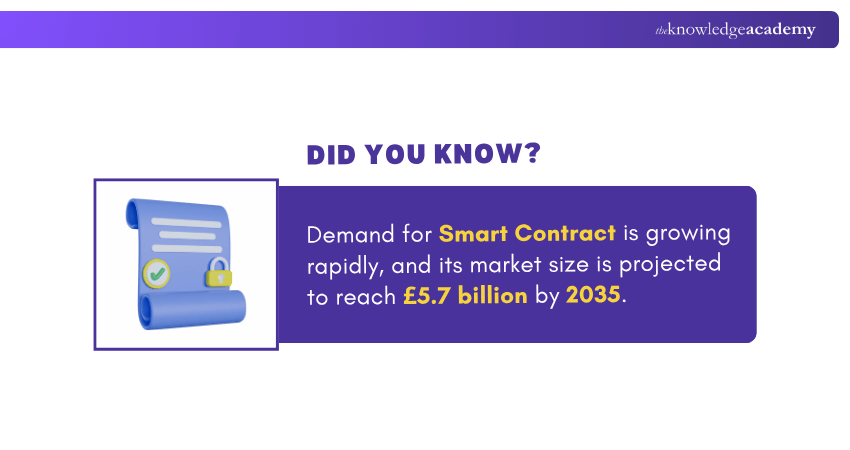
Smart Contracts are Blockchain applications that can automate repetitive tasks in Accounting. Smart Contracts execute transactions when predefined conditions are met. It can help Accounting professionals and organisations simplify processes like payroll and reconciliations.
It can also reduce the costs associated with manual errors and administrative expenses. Smart Contracts can also elevate security and trust between clients and organisations by fighting fraud and scams.
2) Decentralised, Distributed Ledger Technology
Eliminating the need for intermediaries in money transfers is among the earliest applications of Blockchain Technology. For example, you can send money directly to another person without involving a bank or a credit card company.
Intermediaries can slow transactions and charge fees, but they also serve an important role in protecting parties from fraud and disputes. Blockchain Technology achieves similar protection with public validators called miners, who replace the central authority in verifying transactions. They do this securely using a consensus protocol which is a set of agreed-upon rules.
3) Tamper-proof Financial Records
Blockchain technology creates a reliable and verifiable record of transactions. Traditionally, paper receipts acted as proof and were difficult to forge, but with the rise of digital payments, electronic receipts became common and easier to manipulate. Blockchain solves this by ensuring immutability. Once a transaction is approved through public consensus and added to the ledger, it cannot be altered or removed.
Any attempt to modify it changes the hash value, instantly indicating tampering. A hash is a unique string created from transaction data. It secures sensitive information and confirms the exact moment a transaction took place. Similar to password hashing, this mechanism ensures authenticity and data protection in financial records.
Your formula for financial success is to learn Accounting the smart way. Our Accounting Courses will show you how - Sign up now!
Benefits of Blockchain Accounting
Blockchain Technology is a system of storing and transferring data with several advantages for the Accounting industry. Some of these advantages of Blockchain Accounting are:
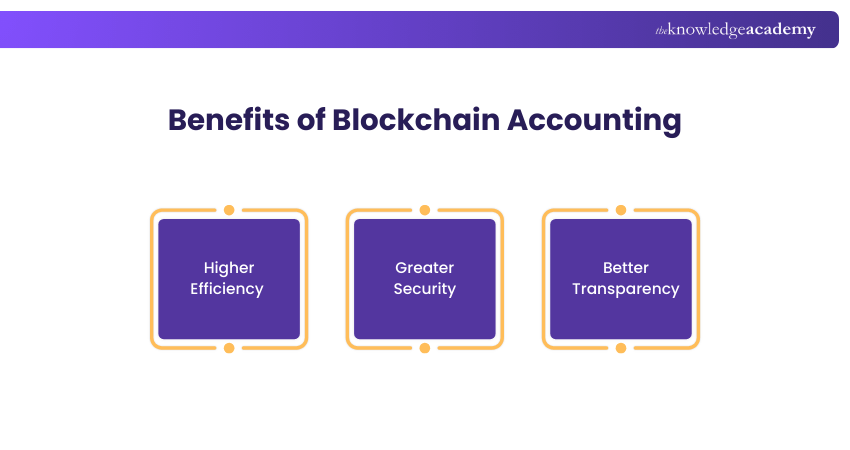
1) Higher Efficiency
Blockchain Technology mitigates the need for manual Data Entry and the risk of human error. Transactions get automatically recorded on a secure ledger that solely authorised parties can access. It also facilitates auditing, since transactions can be traced and verified on the Blockchain. Auditors can spend less time on routine tasks and more on detecting and preventing fraud.
2) Greater Security
Blockchain technology uses various methods, such as encryption, digital signatures, and cryptographic keys, to protect data from unauthorised access and manipulation. Transactions are immutable, meaning they cannot be changed or deleted once the network validates them. It prevents fraud and corruption and ensures the integrity and reliability of the data.
3) Better Transparency
Blockchain technology enables a client, an Accountant, and an Auditor to share the same ledger of transactions. It improves the accuracy and consistency of the data and allows for faster and easier verification and reconciliation. It also enhances trust and accountability between parties and reduces potential disputes and errors.
Drawbacks of Blockchain Accounting
Blockchain Technology is a cutting-edge system of storing and transferring data with many advantages and challenges. Some of the challenges of Blockchain Accounting are:
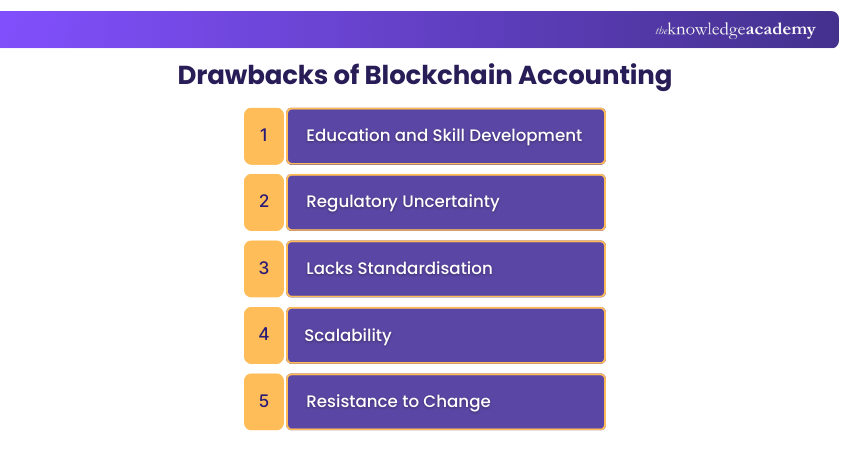
1) Education and Skill Development
Blockchain Accounting demands a skilled workforce in new technology, Cryptography and contracts. Overcoming this talent gap is vital. It necessitates targeted training or hiring to handle the complexities of Blockchain.
2) Regulatory Uncertainty
Blockchain regulations still need to be clarified and consistent worldwide. In the UK, the government has been working on formal crypto regulation for several years. Detailed proposals to bring Crypto assets into the UK financial regulatory perimeter have been published.
3) Lacks Standardisation
There is no common or agreed-upon way of using Blockchain in Accounting. It makes it hard for practices of different sizes to adopt the technology.
4) Scalability
Blockchain can slow down when there are fewer transactions on the network and more competition for processing them. Block sizes are restricted, and Blockchain depends on a network of ‘miners’ (Blockchain users who validate transactions in a new block) to solve complex mathematical problems for a spot-on new block.
5) Resistance to Change
Blockchain could require a significant shift in attitude and method for Accounting professionals. It could be daunting, and some Accounting professionals may be less willing to change than others.
Learn to manage financial records with confidence through our Maintaining Financial Records (FA2) Course – Join now!
Examples of Blockchain in Accounting
Leading firms such as Deloitte, PwC, KPMG, and EY are actively exploring and implementing Blockchain Technology within accounting and financial services.
Deloitte, for example, provides strategic advisory services, professional training, and assisted prototyping to develop enterprise-grade Blockchain solutions. Its offerings include cross-border payment systems that remove intermediaries and fraud detection tools that combine Blockchain with Machine Learning to identify irregular transactions and assign risk scores.
Similarly, EY delivers several Blockchain-based accounting solutions, including a Blockchain analyser and reconciler that enables organisations to track, match, and reconcile transactions with greater accuracy and transparency.
Future of Blockchain in Accounting
The future of Blockchain in Accounting continues to evolve, with the technology expected to streamline transactions through smart contracts, enabling faster settlements and easier verification for auditors. Transaction-level accounting will reduce manual reconciliation, allowing professionals to focus more on validating asset details and financial accuracy.
As Blockchain creates secure, immutable audit trails, audits, and compliance processes will become more reliable and efficient. In the long term, asset ownership recording and automated regulatory compliance could transform financial reporting, taxation, and oversight across industries.
How Blockchain in Accounting Can Help Business Owners?
Blockchain in Accounting helps business owners by providing a secure, transparent, and tamper-proof way to record financial transactions. It reduces fraud risks, automates reconciliation, speeds up audits, and ensures real-time access to accurate data. This improves decision-making, strengthens compliance, and builds trust with investors, clients, and regulators.
What are the Types of Blockchain Used in Accounting?
There are several types of Blockchain in Accounting, each serving different business and security requirements. The key types:
1) Public Blockchain: Open and accessible to anyone.
2) Private Blockchain: Limited to authorised participants.
3) Consortium Blockchain: Managed by a group of trusted organisations.
Conclusion
Blockchain Accounting is reshaping how financial data is recorded, verified, and audited in an increasingly digital economy. By improving transparency, security, and efficiency, it offers clear advantages over traditional accounting systems. As this technology matures and adoption grows, Blockchain in Accounting is set to become a critical capability for modern accounting professionals and organisations alike.
Unlock the future of finance with our comprehensive Blockchain Training – Join now!
Frequently Asked Questions
How Blockchain is Used in Accounting Today?

Accounting systems use Blockchain to track supply chains. Each item gets a unique identifier and can be traced in real time, creating a transparent log across all participants. It enables triple-entry accounting, where the Blockchain serves as a third entry in addition to a company’s internal books. This ensures data integrity.
What Companies are Using Blockchain in Accounting?
Several major firms are integrating Blockchain into accounting, including PwC, Deloitte, EY, and KPMG, to enhance transparency and automate audits. Companies like IBM and Microsoft also use Blockchain for Financial Reporting, compliance, and secure transaction tracking across global operations.
What are the Other Resources and Offers Provided by The Knowledge Academy?
The Knowledge Academy takes global learning to new heights, offering over 3,000+ online courses across 490+ locations in 190+ countries. This expansive reach ensures accessibility and convenience for learners worldwide.
Alongside our diverse Online Course Catalogue, encompassing 17 major categories, we go the extra mile by providing a plethora of free educational Online Resources like Blogs, eBooks, Interview Questions and Videos. Tailoring learning experiences further, professionals can unlock greater value through a wide range of special discounts, seasonal deals, and Exclusive Offers.
What is The Knowledge Pass, and How Does it Work?
The Knowledge Academy’s Knowledge Pass, a prepaid voucher, adds another layer of flexibility, allowing course bookings over a 12-month period. Join us on a journey where education knows no bounds.
What are the Related Courses and Blogs Provided by The Knowledge Academy?
The Knowledge Academy offers various Accounting Courses, including Certified Artificial Intelligence (AI) For Accountants Training, Accounting Course and the Fixed Assets Accounting And Management Course. These courses cater to different skill levels, providing comprehensive insights into Accounting Software.
Our Accounting and Finance Blogs cover a range of topics related to Blockchain Accounting, offering valuable resources, best practices, and industry insights. Whether you are a beginner or looking to advance your knowledge on cutting-edge Accounting techniques, The Knowledge Academy's diverse courses and informative blogs have you covered.

Olivia Taylor


Chartered Accountant and Financial Training Specialist
Olivia Taylor is a qualified chartered accountant with over a decade of experience in financial management, auditing and corporate reporting. Having worked with leading firms in both the public and private sectors, Olivia brings clarity to complex financial topics. Her writing focuses on helping professionals build confidence in key areas of accounting, compliance and financial planning.
View Detail
Upcoming Accounting and Finance Resources Batches & Dates
Date
 Accounting Course
Accounting Course
Fri 20th Mar 2026
Accounting Course
Fri 15th May 2026
Accounting Course
Fri 14th Aug 2026
Accounting Course
Fri 13th Nov 2026

 If you wish to make any changes to your course, please


