


 Top Rated Course

We may not have the course you’re looking for. If you enquire or give us a call on + 1-866 272 8822 and speak to our training experts, we may still be able to help with your training requirements.
Just-In-Time Inventory: Definition, Benefits and and Examples
The Knowledge Academy 16 July 2026Just-in-Time (JIT) Inventory is a strategy where materials and products are received from suppliers only as needed, minimising storage costs and waste. It improves efficiency by aligning production closely with demand and reducing excess stock. It enhances cash flow and operational efficiency by reducing inventory holding costs.

Training Outcomes Within Your Budget!
We ensure quality, budget-alignment, and timely delivery by our expert instructors.
Table of Contents

The proper management of inventories can either support or disrupt a business’s operations. Learning about Just-in-Time (JIT) Inventory highlights how organisations reduce waste, lower costs, and stay flexible in rapidly changing markets. Let us explore this approach and understand its significance in this blog.
Table of Contents
1) What is Just-in-Time (JIT) in Inventory Management?
2) Why Use JIT Inventory Management?
3) How Does Just-in-Time Inventory Management Work?
4) Features of JIT Inventory Management
5) Benefits of Just-in-Time Inventory
6) Drawbacks of Just-in-Time Inventory
7) JIT Inventory Methodology
8) Just-in-Time Inventory Examples
9) How to Implement JIT Inventory?
10) Is Just-in-Time Manufacturing Risky?
11) What Kind of Companies Use JIT Inventory?
12) Conclusion
What is Just-in-Time (JIT) in Inventory Management?
Just in Time (JIT) Inventory Management is a strategy where businesses receive only the exact amount of inventory they need, and that is exactly when they need it. This approach helps reduce storage costs, minimise waste, and improve operational efficiency. JIT depends on accurate demand forecasting, strong communication between suppliers and businesses, and often, the use of reliable, streamlined inventory software.

Why Use JIT Inventory Management?
Why is JIT so appealing? Because it tackles common inventory challenges head-on. Companies adopt Just in Time Inventory Management to reduce costs and minimise excess stock. When implemented effectively, JIT creates greater value than traditional inventory models by lowering storage needs and improving operational efficiency.
JIT improves business performance by reducing waste, improving cash flow, and increasing flexibility. Organisations use data-driven systems such as ERP platforms to track inventory, optimise resources, and manage stock movement efficiently across the supply chain.
Understand how treasury functions in real-world settings with our Treasury Management Training – Register today!
How Does Just-in-Time Inventory Management Work?
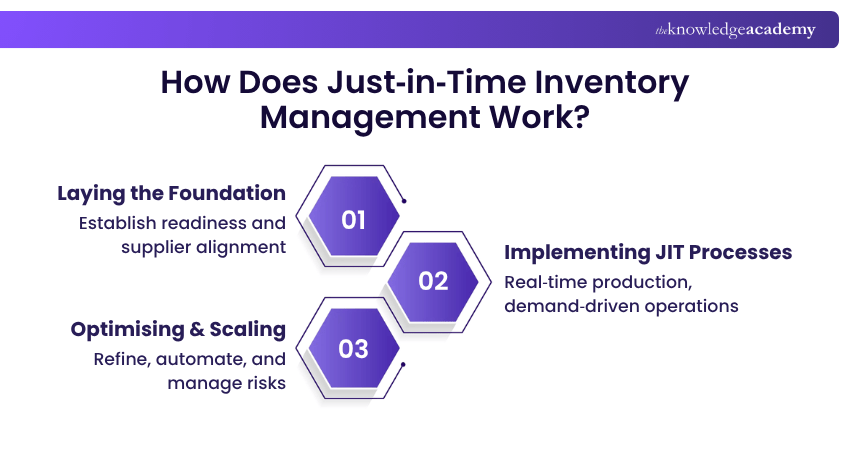
Just-in-Time (JIT) inventory management operates by closely matching the supply of materials with actual customer demand. Instead of holding large quantities of stock, businesses receive goods only when they are required for production, helping to minimise inventory levels and reduce storage costs.
This method depends on accurate forecasting, streamlined production, and strong supplier coordination. Materials are delivered at precisely the right time, ensuring efficient workflows, reduced waste, and smoother overall operations.
Become a Fixed Assets Management Expert with our Fixed Assets Accounting and Management Course – Join now!
Features of JIT Inventory Management
JIT Inventory Management execution requires specific features to boost operational performance alongside reducing resource waste. These features ensure that materials and products are available precisely when needed, reducing storage costs and improving operational flow.
1) Barcode and Tagging Systems
Utilising barcode and tagging systems allows for real-time tracking of inventory levels. Every record carries its unique code, allowing quick barcode scanning and data access capabilities. The system's exact tracking capabilities allow businesses to stay on top of their inventory levels, leading to timely restocking purchases while avoiding excess supplies and empty shelves.
2) Improved Efficiency
Doing business with Just-In-Time systems demands a strong focus on security protection and data backup procedures. Protecting inventory data through strict authorisation procedures and regular backup protocols stops unauthorised access and safeguards data from loss. Reliability maintains supply chain integrity during unforeseen events, ensuring operations remain uninterrupted.
3) Inventory Forecasting
To successfully predict future inventory needs, businesses must analyse past sales patterns, market patterns, and periodic consumption variations. Forecasting patterns enable businesses to strategically set inventory levels, ensuring materials and products are ready precisely when production or sales happen while maintaining minimal extra inventory.
4) Inventory Alerts
Real-time inventory alerts through purpose-built systems notify businesses whenever their stock volumes meet designated preset points. Businesses receive alerts from product Inventory Management systems to quickly reorder quickly, avoiding stockouts and supply chain disturbances.
A proactive inventory approach is fundamental for sustaining customer satisfaction and operational efficiency. These integrated features enable businesses to efficiently manage JIT inventory, through which they achieve operational efficiencies while reducing costs and improving market reactiveness.
Benefits of Just-in-Time Inventory
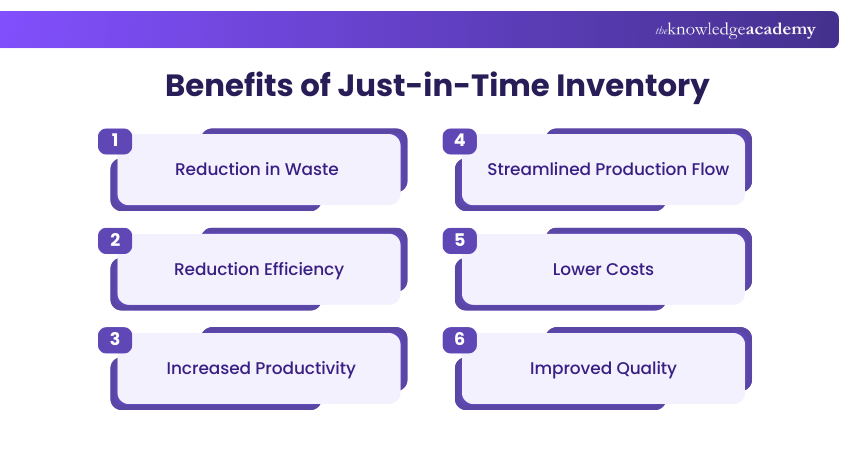
Adopting Just-in-Time inventory, companies can not only save money but also operate better by aligning their production with actual consumption and thus, with the help of JIT, they can easily eliminate their extra stock that is not needed and make their operations more efficient and also their supply chain more responsive and leaner.
1) Reduction in Waste
JIT stops overordering and keeping extra stock, which leads to obsolete inventory and the loss caused by defective products. Less waste means not only the elimination of scrap cost but also the good use of resources.
2) Reduction Efficiency
With only the right inventory, JIT increases turnover and, at the same time, decreases the storage and handling costs of items. In addition to this, companies have less obsolescence and better utilisation of space.
3) Increased Productivity
Because of fewer materials to handle and quicker production turnaround times, the personnel can be more productive. Besides, production runs that are shorter make the implementation of changes easier.
4) Streamlined Production Flow
JIT clears bottlenecks and shortens the production cycles, which leads to smoother operations and faster delivery. This lean strategy contributes to an improvement in the whole process flow.
5) Lower Costs
The reduction in the amount of inventory leads to a decrease in the costs of holding, labor, and capital, thus making more cash available for other needs of the business. The companies have to spend less on the storage of raw materials and on the large purchases of raw materials.
6) Improved Quality
The reduction in the amount of inventory enables the teams to be more focused on quality control, which results in less wastage and more customer satisfaction. In addition, the fact that fewer items are stored minimises damage and waste.
Enrich your market dynamics and investment principles with our Capital Market Course – Join now!
Drawbacks of Just-in-Time Inventory
Just in Time (JIT) Inventory Management offers efficiency but poses risks like supply chain disruptions, inventory shortages, and increased dependency on precise processes. Effective planning and strong supplier relationships are essential to mitigate these challenges.
1) Elevated Inventory Costs
Implementing JIT can lead to increased inventory costs if suppliers impose higher prices for smaller, more frequent orders. Additionally, any delays or issues in the supply chain may necessitate expedited shipping, further escalating costs.
2) Potential for Supply Chain Disruptions
JIT's reliance on timely deliveries makes it vulnerable to supply chain disruptions caused by natural disasters, labor strikes, or transportation delays. Such interruptions can halt production, leading to missed deadlines and potential revenue loss.
3) Risk of Inventory Shortages
With minimal stock on hand, unforeseen spikes in demand or supplier inconsistencies can result in inventory shortages. This scenario may cause production stoppages and an inability to meet customer orders, damaging the company's reputation.
4) Staffing Challenges
Aligning Just in Time (JIT) Inventory with demand ensures reduction in excess stocks, decrease of holding costs, and enhancement of efficiency and cash flow. However, its success is mainly dependent on precise forecasting, trustworthy suppliers, and adaptive staffing because disturbances could heighten risk.
Enhance Your Financial Skills with Our Cash Cycle Management Training – Join Today!
JIT Inventory Methodology
The Just-in-Time (JIT) inventory methodology focuses on producing and receiving goods only when they are needed. It aims to reduce excess stock, minimise waste, and improve efficiency by aligning inventory levels closely with actual demand.
This approach relies on accurate forecasting, streamlined processes, and strong supplier relationships. By maintaining minimal inventory, organisations can reduce holding costs, improve cash flow, and respond more effectively to changing market conditions.
Just-in-Time Inventory Examples
Some of the examples of Just-in-Time Inventory are given below:
1) Manufacturing: Raw materials are delivered just before production begins, ensuring minimal storage and efficient use of resources.
2) Retail: Products are restocked based on real-time sales data, reducing excess inventory and keeping stock relevant.
3) Automotive Industry: Components are supplied exactly when needed on the assembly line, improving efficiency and reducing waste.
4) Food Industry: Ingredients are ordered in small quantities based on demand, ensuring freshness and minimising spoilage.
5) E-commerce: Inventory is managed based on order patterns, with suppliers fulfilling stock requirements as demand arises.
How to Implement JIT Inventory?
To implement JIT inventory effectively, organisations must first analyse demand patterns and establish accurate forecasting methods. Understanding customer needs helps ensure that materials and products are available at the right time.
It is also essential to build reliable supplier relationships and streamline internal processes. Efficient communication, quality control, and continuous monitoring help maintain smooth operations and support the successful adoption of JIT inventory.
Acquire the techniques for managing and minimising credit risk with our Introduction to Credit Control Training – Sign up now!
Is Just-in-Time Manufacturing Risky?
Yes, Just in Time manufacturing can be risky if not carefully managed. Because it relies on receiving materials only when needed, even a small supply chain delay can disrupt production. Events like natural disasters, transport strikes, or supplier issues can cause major setbacks.
Though it offers major benefits like reducing inventory storage needs, improving efficiency, and cutting costs, it can be problematic when facing unexpected supply or demand shocks. Since JIT relies on receiving materials exactly when needed, any delay from suppliers can halt production. These risks highlight the importance of building reliable supplier networks, using accurate demand forecasting, and having backup plans.
What Kind of Companies Use JIT Inventory?
Just in Time Inventory is widely used by businesses that want to reduce storage costs and operate more efficiently. It is applicable for companies that deal with products that either require precision timing or have fast-changing trends. Here are some of them:
1) Automobile Manufacturers: They use JIT to receive parts just before assembly, reducing warehouse needs.
2) Tech Manufacturers: They rely on JIT to manage fast-changing components and reduce outdated stock.
3) Clothing, Shoe, and Jewellery Retailers: Use JIT to keep up with trends and avoid unsold inventory.
4) Restaurants: Benefit from JIT by receiving fresh ingredients daily, reducing food waste and storage needs.
5) Businesses with Limited Storage: Ideal for companies that don’t have large warehouse space.
6) Companies with Tight Margins: Helps reduce upfront costs by avoiding bulk inventory purchases.
7) Fast-moving Consumer Goods (FMCG): Helps maintain fresh, in-demand products without overstocking.
Conclusion
Just in Time Inventory helps companies minimise waste, increase efficiency, and react more quickly to consumers' needs. If very good planning and dependable supply chains are used, it can really help the company develop in the long run. We trust that this blog has given you some useful ideas to assess the possible benefits of JIT for your company.
Attain hands-on experience in auditing, tax preparation, and financial analysis with our Accounting Courses – Explore now!
Frequently Asked Questions
How do I Implement JIT Inventory Management?

To implement JIT Inventory Management, start by analysing your current inventory needs and sales patterns. Build strong relationships with reliable suppliers, invest in real-time inventory tracking software, and train team on JIT processes. Ensure clear communication to support timely ordering, delivery, and production without delays.
Does Just-in-Time Inventory Assume Zero Defects?
Yes, JIT assumes zero defects in materials and processes to maintain seamless operations. Defective products or materials can disrupt the supply chain, leading to delays and inefficiencies, which counteract the benefits of JIT systems.

The Knowledge Academy


Global Training Provider
The Knowledge Academy is a world-leading provider of professional training courses, offering globally recognised qualifications across a wide range of subjects. With expert trainers, up-to-date course material, and flexible learning options, we aim to empower professionals and organisations to achieve their goals through continuous learning.


 If you wish to make any changes to your course, please


