


 Top Rated Course

We may not have the course you’re looking for. If you enquire or give us a call on +44 1344 203 999 and speak to our training experts, we may still be able to help with your training requirements.
Communication Skills: A Complete Guide for Professionals
Charlotte Wilson 15 July 2026Communication Skills help share information clearly through speaking, writing, listening, and non-verbal cues in personal and work life. It builds stronger relationships, prevents misunderstandings, and boosts teamwork. Good communication also helps express ideas clearly, resolve conflicts, and create mutual respect.

Training Outcomes Within Your Budget!
We ensure quality, budget-alignment, and timely delivery by our expert instructors.
Table of Contents
Ever walked out of a meeting wishing you’d said things differently? Or sent an email that sounded way colder than you meant it to? Don’t worry, we’ve all been there. Communication Skills can make or break how your message is received, and mastering the right words, tone, and timing can completely change how people see and respond to you.
In this blog, you’ll learn what Communication Skills are, their types, examples, ways to improve them, and why they matter at work. Let’s get started!
Table of Contents
1) What are Communication Skills?
2) Types of Communication Skills
3) Examples of Communication Skills
4) How to Improve Your Communication Skills?
5) Communication Skills in the Workplace
6) Why are Communication Skills so Important?
7) How Do You Describe Good Communication Skills?
8) Conclusion
What are Communication Skills?
Communication Skills refer to the ability to share ideas clearly with others. This includes talking, writing, listening, and using body language. It can also include using facial expressions. These skills are the oxygen in our everyday lives. Why? Because they help people understand each other. This helps in giving birth to good relationships.
In the workplace, Communication Skills help teams work in the best manner possible. Meaning, they are pushed to do better. It also helps them to stay organised. This helps in creating a positive environment. Remember that a good communicator always knows how to adjust how they speak. They ask clear questions and give useful responses.
Types of Communication Skills
Communication includes speaking, writing, body language and visuals. These are the main types of communication.
1) Verbal Communication Skills
Verbal Communication means sharing thoughts using spoken words. It’s about what you say and how you say it. Your tone, pitch and clarity can make a huge difference in how people understand your message.
2) Written Communication Skills
Written communication is about expressing your thoughts through writing. This includes emails, messages, reports, or notes that are clear, simple, and easy to read. Good writing helps others understand your ideas quickly.
3) Interpersonal Communication Skills
Interpersonal communication helps you build and maintain good relationships with others. It includes listening, showing empathy, understanding feelings, and responding in a kind and respectful way.
4) Non-Verbal Communication Skills
Non-verbal Communication is the way you express yourself without using words. Your gestures, facial expressions and eye contact can say a lot about how you feel and what you mean.
5) Visual Communication
Visual Communication is the way of sharing information using pictures, charts, graphs, or diagrams. It helps people understand ideas more easily, especially during presentations or when reading reports.
Boost communication with compelling visuals — sign up for the Visual Communication Course today!
Examples of Communication Skills
Communication Skills are essential in both personal and professional life. They shape how we connect, share ideas, and build relationships. Here are some key examples of communication skills and how they can be applied effectively.
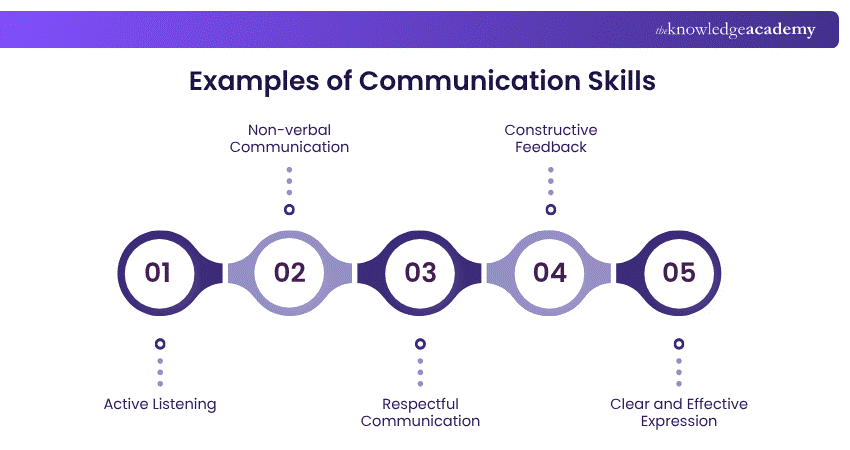
Active Listening
Active Listening means focusing fully on what others say. It involves giving full attention, asking clarifying questions, and showing interest through both verbal and non-verbal signals. For example, in a meeting, you might nod, maintain eye contact, and repeat key points in your own words to confirm understanding.
Non-verbal Communication
Non-verbal Communication refers to messages conveyed through gestures, facial expressions, and body language. It plays a massive role in how others perceive and interpret your communication. For example, maintaining an open and confident posture, smiling, and using appropriate hand gestures can enhance communication effectiveness.
Respectful Communication
Respectful Communication means treating others with courtesy and consideration. It involves listening without interrupting, valuing different viewpoints, and responding with empathy. For example, respecting colleague's ideas encourages collaboration and helps create a positive workplace culture.
Constructive Feedback
Giving and taking constructive feedback is crucial for personal and professional growth. It involves providing specific and actionable suggestions to help others improve. Being open to feedback and responding positively also showcases your willingness to learn and grow. In an interview, you can highlight instances where you have given or received constructive feedback, emphasising the positive outcomes it has generated.
Clear and Effective Expression
Clear communication is essential for accurately conveying ideas and information. It involves articulating thoughts clearly, using appropriate language and tone, and structuring your message concisely and clearly. In your cover letter, resume and interview responses, focus on showcasing your ability to express yourself effectively, using simple and concise language that is easy to understand.
Speak with clarity and confidence — register now for Public Speaking Course today.
How to Improve Your Communication Skills?
Improving how you express your thoughts can change everything. This is why improving your Communication Skills is important. Below are some of the tips you can follow:
Consider Your Audience
a) Think about who’s listening before you speak
b) Every person hears things differently
c) Match your tone to their mood
d) Choose words that suit their level of understanding
e) Avoid jargon because it might overcomplicate things
Think About the Most Effective Way to Convey Your Message
a) Before you speak, take a moment to think
b) Decide how you want to share your message
c) It could be a casual talk, a short message, or something more formal
d) Timing matters, so pick the right moment
e) Use simple, clear language
f) Swap in an example or story if it helps
g) A picture might say it better than words
h) What matters most is that the other person understands you just as you intended
Encourage Participation
a) Involve others to keep the conversation engaging and meaningful
b) Ask questions that invite real thought
c) Encourage opinions from everyone, not just the loudest voices
d) Pay close attention when people speak
e) Make space for those who might hesitate to join
f) When people feel included, they speak more freely and ideas improve
g) True interaction builds trust and turns simple talk into a shared moment
Leverage Face-to-face Contact
a) Take full advantage of face-to-face conversations when you can
b) A look, a smile, or a simple gesture can say more than words
c) Being there in person helps you connect and clears up confusion more quickly
d) It also shows you care about the moment, making your message feel more honest and real
Make Eye Contact
a) Looking someone in the eye is a great way to show confidence and honesty
b) It helps you instantly build trust and keeps the other person engaged
c) Avoid staring, but don’t shy away either
d) A steady glance makes your words feel more personal and sincere
e) It signals that you're present, focused, and open to real connection
Recognise Non-verbal Cues
a) Pay attention to more than just words
b) Notice posture, gestures, facial expressions, and tone
c) These subtle signs reveal feelings that may not be spoken
d) A slight pause, crossed arms, or a smile can say a lot
e) By picking up on these cues, you’ll respond more thoughtfully and connect more deeply
Reduce Interruptions
a) Minimise distractions to keep conversations smooth and respectful
b) Let others finish their thoughts before you respond
c) Avoid checking your phone or cutting in mid-sentence
d) Pausing shows patience and lets you fully understand what's being said
e) Fewer interruptions lead to clearer, more focused communication
Build essential skills to lead with clarity, persuade effectively, and influence decisions with our Executive Communication Training – Join now!
Communication Skills in the Workplace
Good communication at work isn't just about talking. It's about connecting, understanding, and getting things done together. Here are a few simple ways to strengthen how you communicate with your team:
a) Be Clear and Concise: Say what you mean in as few words as possible. It saves time and avoids confusion.
b) Practise Empathy: Try to understand how others feel or where they’re coming from. It builds trust.
c) Assert Yourself: Speak confidently when you need to. Being honest and direct helps you get results.
d) Stay Calm and Consistent: Even in tense moments, keep a steady tone and body language. It keeps conversations productive.
e) Read and Use Body Language: Pay attention to how people move, not just what they say. Your body often speaks first.
Why are Communication Skills so Important?
Communication Skills are important because they help you share ideas clearly and understand others better. Here’s why they matter:
a) They make it easier to connect and avoid confusion
b) Good communication builds trust and teamwork
c) It helps solve problems and stay organised
d) Tough talks become calmer and more respectful
e) Strong skills make life and work smoother
How Do You Describe Good Communication Skills?
Good Communication Skills involve clearly expressing ideas, actively listening, using appropriate body language, showing empathy, and adapting your message to your audience. It's about being respectful, concise, and confident while ensuring mutual understanding in every interaction.
Conclusion
Strong Communication Skills make a big difference in both work and life. They help you express yourself clearly, build trust, and connect better with others. By learning to listen, speak, and respond effectively, you can create stronger relationships, solve problems faster, and succeed with confidence. Good communication also boosts teamwork, reduces stress, and helps you grow personally and professionally.
Frequently Asked Questions
Why Communication Skills are Vital to Career Success?

Effective communication is vital for career success as it fosters clarity and reduces the chance of misunderstandings. Good communication helps you create a collaborative environment that helps build teamwork and get work done.
How Does Cultural Awareness Impact Communication?
Cultural awareness enhances communication by fostering respect for diverse perspectives, avoiding misunderstandings, and promoting inclusivity. Recognising and adapting to cultural differences strengthens relationships, boosts collaboration, and creates a harmonious environment.

Charlotte Wilson


Soft Skills and Business Training Manager
Charlotte Wilson is an expert in soft skills development, with over 14 years of experience helping individuals and teams improve communication, productivity and emotional intelligence in the workplace. Her training content is focused on enhancing interpersonal effectiveness and fostering positive, collaborative environments across all levels of an organisation.
View Detail

 If you wish to make any changes to your course, please


