


 Top Rated Course

We may not have the course you’re looking for. If you enquire or give us a call on +44 1344 203 999 and speak to our training experts, we may still be able to help with your training requirements.
Campaign Planning: A Step-by-Step Guide
James Smith 05 December 2025Campaign Planning defines goals, target audience, budget, channels, and messaging, while tracking performance to ensure marketing success. It includes setting goals, identifying the audience, crafting strategy, allocating resources, and scheduling tasks. It ensures campaign efforts align and execute effectively for maximum impact.

Training Outcomes Within Your Budget!
We ensure quality, budget-alignment, and timely delivery by our expert instructors.
Table of Contents
Ever felt like your marketing efforts are all over the place with little to show for it? That’s where effective Campaign Planning steps in. It gives your ideas structure, your goals direction, and your team a clear path forward. With the right plan, you can create campaigns that truly connect and deliver measurable results.
But just being seen online isn’t enough; you need to stand out and remember. That’s where strong Campaign Planning and clear writing come together to turn ideas into results. In this blog, we’ll cover the steps in the Campaign strategy process, why it matters, and practical tips to make your plan more effective.
Table of Contents
1) What is Campaign Planning?
2) Steps in the Campaign Planning Process
3) The Importance of Campaign Planning
4) Tips for an Effective Campaign Plan
5) What Should a Marketing Campaign Plan Include?
6) What Should a Campaign Plan Look Like?
7) Conclusion
What is Campaign Planning?
Campaign Planning is about deciding what you want to attain and how to obtain it. It starts with setting correct targets like getting more customers or making your brand more famous. You then understand who your audience is, what they like, and how they behave. So, your message speaks to them in the right way.
Once that is done, you look at what your competitors are doing and what is happening in the market. You create content that takes attention and select the good places to share it like social media, websites or events. As the campaign runs, you watch the results and make improvements along the way to get the best results.

Steps in the Campaign Planning Process
Crafting an effective Campaign begins with a straightforward blueprint. Here’s a refined approach to structuring your Campaign Plan:

Step 1: Understand the Objective
Begin by identifying the scope and resources required for your Campaign. To increase brand awareness, engage your Social Media team, Brand Managers, PR professionals, and content marketers.
Collaborating with your tech team may be crucial for incorporating sign-up forms onto your website to generate leads. The Campaign's goal will determine which stakeholders are involved.
Step 2: Determine Required Resources
Once you have established the Campaign's objective, determine the necessary resources for its successful implementation. Consider whether you need images, written content, fresh website pages, or Social Media updates.
Evaluate the Campaign's technical requirements and work with your marketing team to plan every stage. Clearly outline the marketing channels and types of content you can use.
Step 3: Involve Stakeholders
After finding the essential resources, involve stakeholders in the process. Precisely define your expectations from external partners or other groups. Use a Campaign Planning template to assign tasks to each member of your internal team and monitor their progress to ensure timely completion.
Step 4: Create a Timeline
After consulting with stakeholders, estimate how long each task will take and develop a schedule. Include deadlines for reviews and approvals, allowing adequate time between final approval and publication to accommodate potential setbacks.
For external freelancers or designers, set clear deadlines for asset reviews and final approvals, ensuring they are aware of the timeline.
Step 5: Track Progress
Ensure that your Campaign Plan stays on course by closely monitoring the advancement of each individual step. Ensure that stakeholders consistently update the statuses of their tasks and have regular check-ins to pinpoint any bottlenecks. Consistent communication promotes clear understanding and keeps everyone on the same page during the Campaign Planning phase.
Step 6: Execute the Campaign
Once everything is in place, launch your campaign according to the planned schedule. Ensure all team members are aware of their roles and responsibilities during the execution phase.
Step 7: Evaluate and Optimise
After the campaign concludes, evaluate its performance against the set objectives. Analyse key metrics and gather feedback from stakeholders to identify areas for improvement. Use these insights to optimise future campaigns.
Step 8: Reflect on the Future
After your campaign ends, take time to think about what went well and what could be better. Use what you’ve learned to plan your next steps. This helps you improve future campaigns and stay focused on your goals.
Learn advanced strategies to enhance your online presence effectively. Join our Social Media Marketing Course now!
The Importance of Campaign Planning
A good marketing Campaign isn’t just about writing a few blogs on the same topic or creating related videos for Social Media. It’s a bunch of steps that all work together to meet a big goal for your business or marketing.
Think of it like a game plan for a big project, not just a one-time sale. There are lots of things to keep track of and a big target to hit, so you need to plan ahead. When you plan your marketing Campaigns smartly, you’ll:
1) Make sure you don’t skip important parts that could mess things up
2) Keep track of your money and know when to ask for more
3) Follow your plan so you don’t miss any big dates
4) Work with the right team to get the advice and help you need
So, with the right plan in place, your Campaign isn’t just a to-do list. It’s the roadmap that helps your business succeed.
How to Create Your Campaign Strategy
To make a successful marketing strategy, you need a good strategy that includes all the important steps.
Here’s a simple checklist for your Campaign Planning:
1) Set SMART goals that are clear, realistic, and achievable
2) Know your audience well by doing proper research
3) Create one strong campaign idea with content to grab attention
4) Plan your main messages to explain your brand clearly
5) Choose the right media and timing to reach your audience
6) Make a step-by-step action plan with content and materials
7) Include a way to check if your plan is working as expected
8) This structure helps you stay organised and run a campaign that gets real results.
Learn how to create SEO-friendly content that resonates with your target audience. Join our SEO Course now!
Tips for an Effective Campaign Plan
Want to make your Campaign Plan effective? Here are some of the useful tips that will help you build a solid Campaign Plan for your marketing goals.
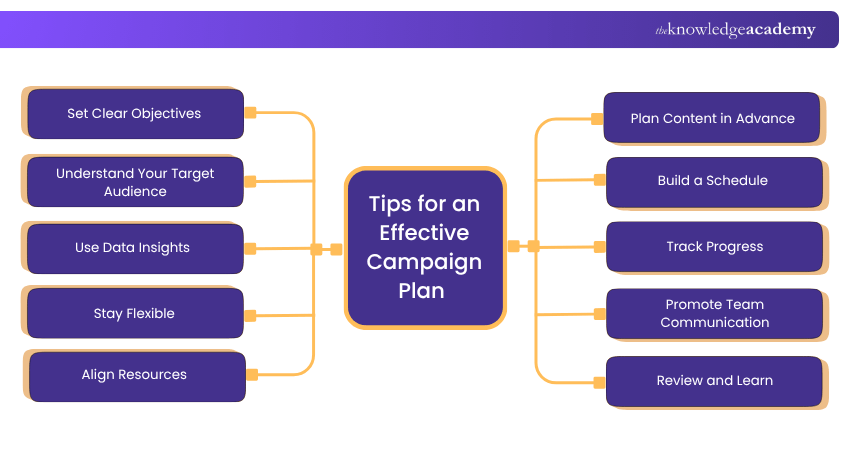
Establish precise and quantifiable objectives that are in line with your business plan and ensure team alignment.
1) Set Clear Objectives: Define individual and measurable goals that align with your business strategy and keep your team on the same page.
2) Understand Your Target Audience: Research your audience’s demographics, interests, and behaviour to craft messages that truly connect.
3) Use Data Insights: Base your strategy on analytics and market research to make informed decisions throughout the campaign.
4) Stay Flexible: Be ready to adjust your plan based on feedback and real-time performance.
5) Align Resources: Match your budget and tools to your campaign goals, focusing on the most effective channels.
6) Plan Content in Advance: Create your content early to keep your messaging consistent and well-organised.
7) Build a Schedule: Develop a timeline with key dates while leaving room for adjustments if needed.
8) Track Progress: Monitor your campaign regularly and hold check-ins to keep everything on track.
9) Promote Team Communication: Encourage open communication to spark ideas and ensure everyone stays aligned.
10) Review and Learn: Compare results with your goals and gather insights to improve future campaigns.
What Should a Marketing Campaign Plan Include?
A marketing campaign plan should include clear SMART goals, a well-researched target audience, a strong central idea with a content strategy, a messaging structure, a media plan with a schedule, an action plan outlining tasks and needed content, and a reliable way to track progress and measure overall campaign success effectively.
What Should a Campaign Plan Look Like?
A good campaign plan uses the OASIS framework. First, set clear and realistic goals. Then, learn about your audience and what matters to them. Next, create a strong idea and choose the right ways to share it. Plan out who will do what and when. Finally, track your results to see what worked and use those lessons to improve next campaign.
Conclusion
Campaign Planning is the key to running successful and organised marketing efforts. By setting clear goals, knowing your audience, and tracking results, you can create campaigns that truly work. With the right structure and planning, each campaign becomes more focused and effective, helping you reach your business goals more quickly. Kickstart your marketing strategy with confidence today.
Learn how to optimise strategies using SEO, social media, and content tools. Join our Digital Marketing Tools Training now!
Frequently Asked Questions
What are the Basic Principles of Campaign Planning?

The basic principles of Campaign Planning involve setting SMART goals, knowing your audience, crafting compelling messages, selecting appropriate channels, allocating resources effectively, and continuously monitoring and adjusting strategies.
What are the Three Phases of Campaign Planning?
Campaign Planning consists of three phases:
a) Pre Campaign: Focus on research and strategy development
b) Implementation: Execute tactics
c) Post Campaign: Analyse results and refine strategies
What are the Other Resources and Offers Provided by The Knowledge Academy?
The Knowledge Academy takes global learning to new heights, offering over 3,000 online courses across 490+ locations in 190+ countries. This expansive reach ensures accessibility and convenience for learners worldwide.
Alongside our diverse Online Course Catalogue, encompassing 19 major categories, we go the extra mile by providing a plethora of free educational Online Resources like Blogs, eBooks, Interview Questions and Videos. Tailoring learning experiences further, professionals can unlock greater value through a wide range of special discounts, seasonal deals, and Exclusive Offers.
What is The Knowledge Pass, and How Does it Work?
The Knowledge Academy’s Knowledge Pass, a prepaid voucher, adds another layer of flexibility, allowing course bookings over a 12-month period. Join us on a journey where education knows no bounds.
What are the Related Courses and Blogs Provided by The Knowledge Academy?
The Knowledge Academy offers various Digital Marketing Courses, including the Marketing Course, Social Media Marketing Course, and Customer Acquisition Training. These courses cater to different skill levels, providing comprehensive insights into Campaign Optimisation.
Our Digital Marketing Blogs cover a range of topics related to Campaign Planning, offering valuable resources, best practices, and industry insights. Whether you are a beginner or looking to advance your Digital Marketing skills, The Knowledge Academy's diverse courses and informative blogs have got you covered.

James Smith


Digital Marketing Manager and Trainer
James Smith is a digital marketing professional with over a decade of experience in SEO, content strategy, paid media and analytics. He has supported both SMEs and global brands in transforming their digital presence. James’s writing and training are rooted in results-driven tactics and the latest marketing trends.
View Detail
Upcoming Digital Marketing Resources Batches & Dates
Date
 Campaign Planning Training
Campaign Planning Training
Fri 17th Apr 2026
Campaign Planning Training
Fri 11th Sep 2026
Campaign Planning Training
Fri 27th Nov 2026

 If you wish to make any changes to your course, please


