


 Top Rated Course

We may not have the course you’re looking for. If you enquire or give us a call on +61 1-800-150644 and speak to our training experts, we may still be able to help with your training requirements.
Manual Handling Techniques: Explained
Michael Jones 03 March 2026Safe Manual Handling Techniques include planning the lift, bending your knees, keeping the load close, avoiding twisting the body, and using mechanical aids. Implementing these techniques can help prevent Musculoskeletal Disorders (MSDs) such as back pain and strains in the workplace and during daily activities.

Training Outcomes Within Your Budget!
We ensure quality, budget-alignment, and timely delivery by our expert instructors.
Table of Contents
The human body is a masterful piece of organic machinery capable of handling amazing workloads. But there's always a price to pay when its individual capacities are pushed too far. For example, lifting a heavy box the wrong way and pulling a muscle is an unfortunate package deal. This is where Manual Handling Techniques come in. Smart Manual Handling is not just about strength; it’s about technique, balance, and knowing how to move safely.
So essentially, it’s an artform of balance, posture and precision to stop your body from breaking. This blog explores the most effective Manual Handling Techniques that keep you injury-free, boost productivity, and make heavy tasks feel lighter. So read on and dodge those dreaded injuries with confidence!
Table of Contents
1) Why Proper Manual Handling is Essential?
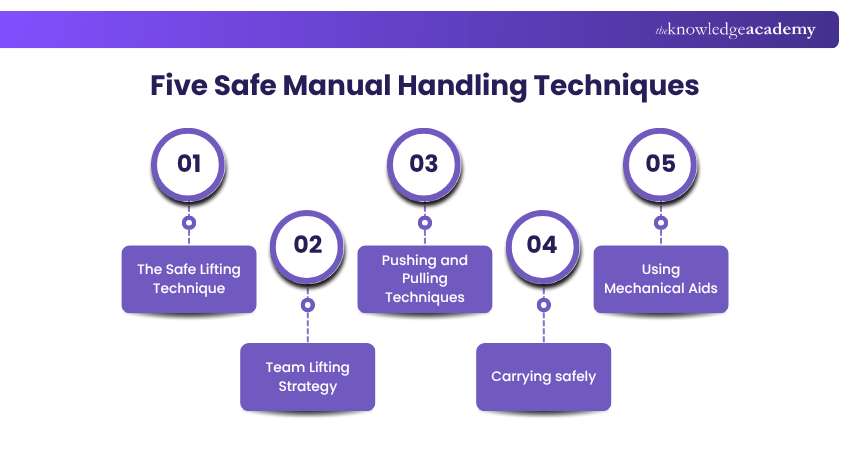
2) Five Safe Manual Handling Techniques
3) The Risks of Manual Handling
4) What is the Golden Rule of Manual Handling?
5) What is the 3-3-3 Rule for Lifting?
6) Conclusion
Why Proper Manual Handling is Essential?
Proper manual handling is crucial, particularly in the workplace, to ensure employee safety, maintain productivity, and comply with legal requirements. Here's an overview of why it's essential:
Injury Prevention
The primary reason to employ correct Manual Handling Techniques is to prevent injuries. Improper methods can lead to strains, sprains, and more severe Musculoskeletal Disorders. The spine and back are especially vulnerable, with incorrect lifting being a common cause of back injuries.
Economic Implications
Work-related injuries resulting from improper Manual Handling lead to absenteeism and reduced productivity. There's also the potential for increased medical and insurance costs for businesses. This can result in practical training, a cost-saving measure in the long run.
Legal Obligations
In many regions, employers are legally obligated to ensure that employees are trained in and practice safe Manual Handling Techniques. Non-compliance can lead to legal repercussions, fines, and a damaged reputation.
Enhanced Productivity
Proper techniques often mean tasks are completed more efficiently. When workers know the best way to lift, carry, or move items, they do it faster and with less hesitation.
Worker Morale
A safe environment boosts worker morale. When employees feel that their well-being is a priority, it improves job satisfaction, reduces turnover, and fosters a positive work environment.
Long-term Health
Regular exposure to incorrect Manual Handling can lead to chronic ailments. Proper techniques ensure employees' long-term health and well-being, preventing conditions that might affect their quality of life beyond the workplace.
Adaptable skills
Proper Manual Handling Techniques, once learned, are skills that employees can apply across various jobs and in daily life. This goes a long way in promoting overall safety and well-being.
Physical safety is the first step towards productivity! Sign up for our Manual Handling at Work Training and stay injury-free!
Five Safe Manual Handling Techniques
Let us look at five safe Manual Handling Techniques to ensure safety at the workplace when engaging in Manual Handling activities:
The Safe Lifting Technique
Some of the key components and practices of safe lifting technique involves the following:
a) Preparation is Key: Before you lift, clear your path and ensure the destination area is ready to receive the item. This reduces the need for unnecessary adjustments or movements with the load.
b) Assess the Load: Always gauge the weight by trying to gently move or lift a corner before fully committing. If it feels too heavy, get help or use an assisting tool.
c) Proper Foot Position: Stand with your feet shoulder-width apart, giving a stable base of support. One foot can be slightly in front of the other to improve balance.
d) Get Close: Stand as close as possible to the load. This reduces the strain on the back and arms and helps maintain your centre of gravity.
e) Bend at the Knees, not the Waist: When getting ready to lift, bend your knees and keep your back straight. This technique utilises the strong leg muscles and reduces pressure on the back.
f) Tighten your Core: Engaging your core muscles provides added support to the back during the lift.
g) Firm Grip: Ensure both hands have a secure and comfortable grip on the item. This minimizes the risk of the object slipping and causing an injury, particularly in relation to Manual Handling Injuries that can occur from improper handling.
h) Lift Smoothly: Use your leg muscles, the strongest muscles in your body, to push upwards. Keep the movement steady and avoid any jerking motions.
i) Keep Load Close: Hold the item close to your body, preferably near waist level. This decreases the strain on the back and makes the load feel lighter.
j) Look Ahead: Keep your neck and head in a neutral position. Look straight ahead, not up or down, to prevent neck strain.
k) Avoid Twisting: If you need to turn, move your feet so your entire body turns instead of twisting your back.
Team Lifting Strategy
Some of the key components and practices of team lifting strategy involves the following:
a) Communication is Crucial: Before lifting, establish a clear line of communication between team members. Deciding who'ill lead and who will follow helps ensures both are on the same page throughout the process.
b) Equal Weight Distribution: Ensure the object's weight is equally distributed between the lifters. This might mean adjusting hand or grip positions to maintain balance.
c) Unified Timing: The lift should be synchronised. Use a simple countdown ("3, 2, 1, lift") to make sure both individuals lift and lower simultaneously. This can prevent uneven force application.
d) Foot Positioning: Team members should maintain similar foot stances, providing stability and reducing the chances of stumbling or imbalance.
e) Maintain Close Proximity: Just as in individual lifting, the object should be kept close to the body, ensuring minimal strain on the back and arms.
f) Assign Roles: One person can act as the guide, navigating the route and watching for obstacles, while the other ensures the load remains stable.
g) Regular Rest Breaks: For extended carries, plan for short breaks to adjust grip, change leading roles, or simply rest to prevent fatigue.
h) Use Support Tools: Employing lifting belts or straps can provide additional support and further distribute the weight.
i) Training Together: It's beneficial for team members to train together, understanding each other's strengths and limitations. This can ensure a more cohesive lifting strategy.
Create a work culture that celebrates health and safety! Sign up for our Health & Safety in the Workplace Training now!
Pushing and Pulling Techniques
Some of the key components and practices of pushing and pulling techniques involves= the following:
a) Evaluate the Task: Before pushing or pulling, assess the weight and dimensions of the object, as well as the distance and path you'll be moving it over. Check for obstacles and potential hazards.
b) Footwear Matters: Wear shoes with excellent grip and support. Proper footwear gives you the stability and reduces the risk of slipping, especially when exerting force.
c) Positioning: Whenever possible, push rather than pull. Pushing allows better weight distribution, visibility, and control over the object.
d) Stable Stance: Keep feet at least shoulder-width apart, providing a firm base of support when applying force.
e) Engage the Core: Tightening your core muscles offers added support, reducing the strain on the back.
f) Use body Weight: Lean into the object when pushing, utilising your body weight for momentum. When pulling, use a controlled step backwards, aligning the movement with the pull.
g) Maintain a Straight Back: Whether pushing or pulling, keep the back straight and the head up. This posture helps distribute force more evenly and reduces the risk of injury.
h) Adjustable Grip: Use both hands and adjust your grip as necessary for maximum control and force distribution.
i) Smooth Movements: Avoid jerky motions. Instead, aim for a consistent, smooth application of force, making the task more manageable and reducing the risk of muscle strain.
j) Regularly check Equipment: If using carts, trolleys, or other equipment, ensure they are in good working order, with functioning wheels and no obstructions.
Carrying safely
Some of the key components and practices of carrying safely technique involves the following:
a) Preliminary Assessment: Before carrying any object, gauge its weight and shape. Make sure you maintain a firm grip throughout the transportation process.
b) Clear Path: Prioritise a clear, obstacle-free route. Check the path for potential hazards, such as wet floors, cords, or clutter, that could cause trips or falls.
c) Two-handed Grip: Use both hands to distribute the weight evenly whenever possible. This ensures a secure hold and better balance.
d) Close to the Body: Keep the object as close to your body as possible, ideally around waist level. This reduces the strain on your back and arms.
e) Steady Pace: Move at a consistent, unhurried pace. Rapid or erratic movements can cause instability or increase the risk of injury.
f) Regular Breaks: For longer distances, take frequent breaks. This helps to alleviate muscle fatigue and gives a moment to readjust the grip if needed.
g) Maintain Visibility: Ensure that the carried object does not obstruct your vision. If you can't see over or around the item, ask for assistance or use mirrors to navigate.
h) Even Distribution: If carrying two or more items, try to balance the weight evenly between both hands.
i) Avoid Twisting: Just like lifting, move your entire body instead of twisting at the waist when turning.
j) Safe Setting Down: Use the principles of safe lifting in reverse when setting the object down. Bend the knees, keep the back straight, and lower the item gently.
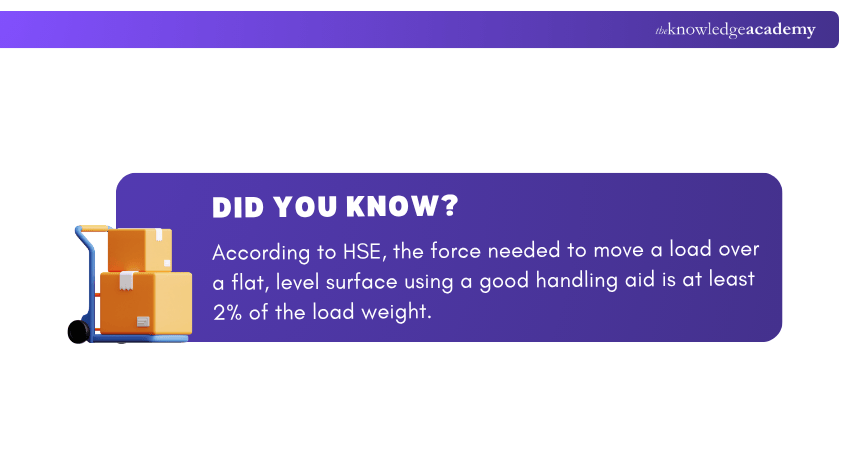
Using Mechanical Aids
Some of the key components and practices while using mechanical aids involves the following:
a) Assess the Need: Before resorting to Manual Handling, evaluate if a mechanical aid could be employed. These devices are designed to handle specific weights, sizes, and types of objects.
b) Proper Training: Ensure all users receive comprehensive training on the chosen mechanical aid. Understanding its functions, capabilities, and limitations is paramount.
c) Regular Maintenance: Consistently check and maintain mechanical aids. Ensuring they are in good working condition reduces the risk of malfunctions that could result in accidents or injuries.
d) Choose the Right Tool: From trolleys and wheelbarrows to forklifts and hoists, select the mechanical aid best suited for the specific task.
e) Safety Features: It is vital that you ensure all safety features, including brakes, guards, and alarms, are working properly. These features play a big role in preventing accidents.
f) Clear Pathways: Just as with manual carrying, ensure the route is clear of obstructions. This is especially important for larger aids like forklifts, which require more space to manoeuvre.
g) Load Stability: When using the aid, ensure the load is stable. Items should be evenly distributed and, if necessary, secured to prevent shifting or falling.
h) Limit Overloading: Never exceed the weight capacity of the mechanical aid. Overloading can lead to equipment failure or compromise control.
i) Stay Alert: Even when using mechanical aids, remain aware of your surroundings. Monitor other nearby individuals, ensuring they are safe and informed of your actions.
j) Storage: After use, store mechanical aids in their designated areas. This prolongs their lifespan and ensures they are readily available and in good condition for subsequent use.
Turn responders into lifesavers with our comprehensive Advanced First Aid Training - Sign up now!
The Risks of Manual Handling
Here are some risks associated with Manual Handling:
1) Musculoskeletal Disorders (MSDs): Improper Manual Handling is a leading cause of Musculoskeletal Disorders, affecting muscles, nerves, tendons, joints, and spinal discs. Common MSDs include:
a) Back injuries like herniated discs and chronic lower back pain.
b) Sprains and strains particularly in the shoulders, arms, and legs.
c) Repetitive Strain Injury (RSI) including Tendonitis and Carpal Tunnel Syndrome.
2) Immediate Physical Injuries: Manual handling can lead to acute injuries, such as:
a) Cuts and bruises from handling sharp or rough-edged materials.
b) Crush injuries due to dropped loads or being caught between objects.
c) Fractures resulting from slips, trips, or falls while carrying items.
3) Long-term Health Implications: Chronic exposure to poor Manual Handling practices can lead to long-term health issues, including:
a) Degenerative joint diseases such as osteoarthritis.
b) Persistent musculoskeletal pain affecting daily activities and quality of life.
c) Reduced mobility and flexibility impacting overall physical function.
4) Economic and Organisational Impact: Injuries from Manual Handling not only affect individual workers but also have broader implications for organisations:
a) Increased absenteeism due to injury-related leave.
b) Higher compensation claims leading to financial strain.
c) Reduced productivity from workforce shortages and disrupted operations.
What is the Golden Rule of Manual Handling?
The golden rule of Manual Handling is: Lift with your legs, not your back. It emphasises using the strength of your legs, not your back, to lift objects because it reduces the risk of injury.
What is the 3-3-3 Rule for Lifting?
The 3-3-3 rule is used in some workplaces to assess and manage Manual Handling risks. It refers to three seconds to assess the load before lifting, three steps to test weight and balance and three questions to ask yourself:
a) Is the load too heavy or awkward?
b) Is the path clear and safe?
c) Do I need help or equipment?
Conclusion
Proper Manual Handling Techniques are indispensable in ensuring safety and efficiency in various tasks, whether lifting, carrying, or using mechanical aids. These techniques are rooted in the established Principles of Manual Handling. By prioritising these methods and continuously updating your knowledge and skills, you can protect your physical well-being and contribute to a more productive and accident-free environment.
Rise above the risks. no matter the elevation you work in! Register for our Working at Height Training and keep your safety as high a priority as your goals!
Frequently Asked Questions
What is the Weight Limit for a 2 Person Lift?

The safe weight for a two-person lift can vary. Generally, the limit should not exceed two-thirds of their combined capacity, such as 33 kg for two people lifting 25 kg each. According to the Health and Safety Executive (HSE), loads between 65 and 85 kg fall into HSE’s “red risk zone,” requiring urgent safety measures.
What is the First Thing You Should Consider Before Manual Handling?
Before Manual Handling, the first consideration should be the task itself. You must analyse the load, the environment, and the capabilities of the person handling it.
What are the Other Resources and Offers Provided by The Knowledge Academy?
The Knowledge Academy takes global learning to new heights, offering over 3,000+ online courses across 490+ locations in 190+ countries. This expansive reach ensures accessibility and convenience for learners worldwide.
Alongside our diverse Online Course Catalogue, encompassing 17 major categories, we go the extra mile by providing a plethora of free educational Online Resources like Blogs, eBooks, Interview Questions and Videos. Tailoring learning experiences further, professionals can unlock greater value through a wide range of special discounts, seasonal deals, and Exclusive Offers.
What is The Knowledge Pass, and How Does it Work?
The Knowledge Academy’s Knowledge Pass, a prepaid voucher, adds another layer of flexibility, allowing course bookings over a 12-month period. Join us on a journey where education knows no bounds.
What are the Related Courses and Blogs Provided by The Knowledge Academy?
The Knowledge Academy offers various Health & Safety in the Workplace Courses, including the First Aid at Work Course, Manual Handling at Work Course and the Working at Height Training. These courses cater to different skill levels, providing comprehensive insights into Hazardous Conditions.
Our Health & Safety Blogs cover a range of topics related to Manual Handling, offering valuable resources, best practices, and industry insights. Whether you are a beginner or looking to advance your Manual Handling skills, The Knowledge Academy's diverse courses and informative blogs have got you covered.

Michael Jones


Health and Safety Consultant and Compliance Trainer
Michael Jones is a seasoned health and safety expert with more than 15 years of experience in workplace safety, risk management, and compliance training. He has worked across construction, manufacturing, and corporate sectors, helping organisations meet legal requirements and create safer working environments. Michael’s training and writing are known for being practical, clear, and aligned with UK regulations.
View Detail

Upcoming Health & Safety Resources Batches & Dates
Date
 Manual Handling at Work
Manual Handling at Work
Fri 10th Jul 2026
Manual Handling at Work
Fri 9th Oct 2026

 If you wish to make any changes to your course, please


