


 Top Rated Course

We may not have the course you’re looking for. If you enquire or give us a call on +47 80010068 and speak to our training experts, we may still be able to help with your training requirements.
What is Experiential Marketing? A Complete Guide
James Smith 19 December 2025Experiential Marketing creates immersive experiences to engage customers, build emotional connections, foster loyalty, and generate buzz through interaction. It goes beyond traditional ads by letting people see, feel, and try the brand in real life. This helps increase brand awareness, trust, and long-term customer relationships.

Training Outcomes Within Your Budget!
We ensure quality, budget-alignment, and timely delivery by our expert instructors.
Table of Contents
Have you ever walked into an event, tried something new, and instantly felt connected to a brand? That’s the power of Experiential Marketing, where businesses don’t just tell you about their products: they let you live them. In a world full of ads, real experiences stand out. It helps brands stay in people’s minds by giving them something to feel, not just see. In this blog, we’ll explore What is Experiential Marketing and how it turns curious visitors into loyal fans through memorable, hands-on moments. Let’s dive in and see how it works!
Table of Contents
1) What is Experiential Marketing?
2) Why Experiential Marketing Works?
3) Steps to Plan an Experiential Marketing Campaign
4) Key Benefits of Experiential Marketing
5) Effective Experiential Marketing Strategies
6) Evaluating the Effectiveness of Experiential Marketing
7) Conclusion
What is Experiential Marketing?
Experiential Marketing is a way for brands to connect with people through real experiences. Instead of just showing ads, brands create events or activities where customers can interact with their products or services. It helps people remember the brand better because they feel part of it. This type of marketing focuses on building strong emotions and lasting memories, making it a powerful tool in Brand Management.
In Experiential Marketing, companies create events like pop-up stores, product trials, or fun activities that allow customers to experience the brand directly. For example, a new drink company might set up a tasting booth in a busy mall where people can try the product for free. By tasting it themselves, people are more likely to remember and like the brand. This hands-on approach makes customers feel more connected and positive toward the company.

Why Experiential Marketing Works?
Here are the main reasons why Experiential Marketing helps brands connect better with people:
a) Creates Strong Emotional Connections: People remember experiences that make them feel happy, excited, or special.
b) Builds Trust Through Real Interaction: When customers try a product themselves, they trust it more than just seeing an ad.
c) Makes the Brand Memorable: A fun or unique experience stays in people’s minds longer than a regular advertisement.
d) Encourages Word-of-mouth Sharing: People love to share exciting experiences with friends and family, helping the brand grow.
e) Gives Immediate Feedback: Brands can see how people react to their products right away and make improvements if needed.
f) Turns Customers into Brand Fans: A positive experience can turn a visitor into a loyal customer who supports the brand, fostering Brand Loyalty.
Steps to Plan an Experiential Marketing Campaign
Here are the important steps you should follow to plan a successful Experiential Marketing campaign.

Identifying Your Target Audience
First, you need to know who you want to reach. Understanding their age, interests, and needs will help you create the right experience. A good campaign always speaks directly to the right people.
Examples:
a) Focus on young professionals who love technology
b) Target parents interested in healthy food option
c) Reach sports fans looking for new gear
Setting Clear and Measurable Goals
Before you start, decide what you want to achieve. Clear goals help you plan better and track your success later. Make sure the goals are simple and realistic.
Examples:
a) Increase brand awareness by 20%
b) Get 500 people to try the product
c) Collect 300 customer emails during the event
Generating Excitement and Buzz
Creating excitement gets people interested and talking about your event. Use social media, teasers, and invitations to build hype before the event. The more people talk, the bigger your event feels.
Examples:
a) Share sneak peeks on Instagram
b) Launch a countdown on your website
c) Offer early-bird prizes for attendees
Showcasing Key Features and Benefits
Make sure people experience what makes your product or service special. Highlight the features and benefits in a simple and fun way. This helps people remember why they liked it.
Examples:
a) Set up a demo booth for product testing
b) Offer guided tours showing special features
c) Let users test different versions side by side
Crafting a Seamless Experience
A smooth and enjoyable event keeps people happy and engaged. Plan every step carefully, from entry to exit, so there are no problems. A good experience makes a lasting impression.
Examples:
a) Easy sign-up and check-in process
b) Clear directions and friendly staff
c) Quick support for any questions or problems
Engaging and Nurturing Leads
After the event, stay in touch with the people who showed interest. Send them follow-up emails, offers, or updates to keep the conversation going. Turning visitors into customers takes good follow-up.
Examples:
a) Send a thank-you email after the event
b) Offer a special discount for attendees
c) Share a behind-the-scenes video of the event
Measuring and Reporting Success
Check how well your event did by comparing your results to your goals. Measure things like attendance, sales, and social media mentions. Good reporting helps you learn and improve for next time.
Examples:
a) Count how many people attended
b) Track how many people shared about the event online
c) Measure how many leads turned into customers
Key Benefits of Experiential Marketing
Here are the advantages of it:
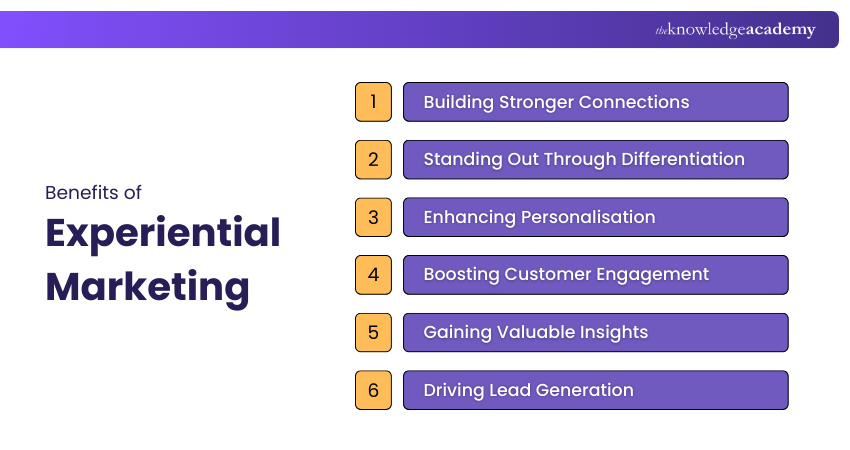
Building Stronger Connections
a) Creates real emotions between customers and your brand
b) Makes customers feel part of the brand story
c) Builds trust through personal, live experiences
d) Helps people remember your brand for a longer time
Standing Out Through Differentiation
a) Makes your brand different from regular ads
b) Shows your creativity and new ideas
c) Gives customers a reason to choose you over others
d) Helps you be remembered in a busy market
Enhancing Personalisation
a) Offers experiences made for each customer group
b) Shows customers that you understand their needs
c) Creates deeper relationships through tailored activities
d) Makes customers feel valued and special
Boosting Customer Engagement
a) Gets customers to interact with your product or service
b) Turns visitors into active participants
c) Creates fun and memorable brand moments
d) Encourages more word-of-mouth and social sharing
Gaining Valuable Insights
a) Lets you see how customers react in real time
b) Helps you understand customer needs better
c) Gives feedback you can use for future improvements
d) Shows what people really love about your brand
Driving Lead Generation
a) Collects new contacts during the event
b) Attracts people who are already interested in your product
c) Builds a list of strong future customers
d) Helps turn leads into loyal customers over time
Boost campaign results faster with our Introduction to Marketing Training –Join today!
Effective Experiential Marketing Strategies
Here are some strategies you can use to make your Experiential Marketing campaigns memorable:
Hosting Event Marketing Campaigns
Hosting events helps you bring your brand directly to customers in a fun and personal way. Events can create strong feelings and help people remember your brand better. It’s a great way to connect, build trust, and show what your brand stands for.
Examples:
a) Organise a product launch party
b) Hold a free workshop or seminar
c) Set up a community festival sponsored by your brand
Leveraging Guerilla Marketing
Guerrilla marketing uses surprise and creativity to catch people's attention. It often happens in public spaces and feels unexpected and exciting. It’s a powerful way to get people talking about your brand without needing a big budget.
Examples:
a) Create a flash mob in a busy area
b) Paint creative sidewalk art with your brand message
c) Set up funny or surprising installations in public parks
Setting Up Pop-up Shops
Pop-up shops are small, temporary stores that give customers a special chance to experience your products. They create a sense of excitement because they are only around for a short time. Pop-up shops make it easy for people to try, buy, and remember your brand.
Examples:
a) Open a pop-up store for a weekend only
b) Partner with a coffee shop to showcase your product
c) Create a themed pop-up experience inside a shopping mall
Creating Brand Activation Experiences
Brand activations are events or activities where people can interact directly with your brand. They turn customers from just watchers into real participants. These experiences make your brand feel alive and create stronger emotional bonds.
Examples:
a) Offer free product sampling at an event
b) Create a fun game where winners get prizes from your brand
c) Set up an interactive photo booth featuring your products
Spark powerful brand stories with our Strategic Marketing Course – Join today!
Examples of Experiential Marketing in Action
Here are some real examples that show how brands use Experiential Marketing:
Live Events and Product Experiences
Brands often create live events where people can see, try, and enjoy their products. These events help build excitement and strong memories around the brand. They also make it easier for customers to trust and like the product.
Coca-Cola’s free drink sampling booths at festivals
Apple’s live product launch events with hands-on demos
Lego’s pop-up play zones for children and families
Nike’s running events to promote new shoes
Creative Public Campaigns
Public campaigns use creativity and surprise to make people stop, smile, and remember the brand. They often happen in busy places where lots of people can see and join. These campaigns are fun, unexpected, and shared widely on social media.
a) Red Bull’s extreme sports events and stunts
b) IKEA’s “Real Life” setups in train stations
c) Spotify’s personalised pop-up concerts for top listeners
d) KitKat’s “Have a Break” benches placed in cities
Evaluating the Effectiveness of Experiential Marketing
Here are some easy ways to check if your Experiential Marketing campaign worked well:
a) Count how many people attended the event
b) Check how many social media posts mentioned your brand
c) Collect feedback from people who joined the experience
d) Measure how many new leads or contacts you got
e) Track if there was an increase in sales after the event
f) See how many people talked about your brand after the campaign
Conclusion
We hope this blog helped you understand What is Experiential Marketing and how it can benefit your brand. Real experiences create stronger connections, build trust, and make your brand more memorable. Whether through events, pop-ups, or creative campaigns, this type of marketing leaves a lasting impact. Use the tips and examples to plan your own campaign and connect better with your audience.
Stand out from competitors with our Marketing Courses – Join today!
Frequently Asked Questions
What are the 5 C's of Experiential Marketing?

The 5 C’s of Experiential Marketing are Clarity, Connection, Creativity, Consistency, and Customer experience. These help brands create clear and strong experiences that people enjoy and remember. When all 5 C’s are used well, marketing feels real and exciting for customers.
What are Experiential Brands?
Experiential brands are companies that focus on giving customers real and memorable experiences. They don’t just sell products; they create moments that make people feel something special. Brands like Apple, Nike, and Red Bull are good examples of experiential brands.
What are the Other Resources and Offers Provided by The Knowledge Academy?
The Knowledge Academy takes global learning to new heights, offering over 3,000 online courses across 490+ locations in 190+ countries. This expansive reach ensures accessibility and convenience for learners worldwide.
Alongside our diverse Online Course Catalogue, encompassing 19 major categories, we go the extra mile by providing a plethora of free educational Online Resources like Blogs, eBooks, Interview Questions and Videos. Tailoring learning experiences further, professionals can unlock greater value through a wide range of special discounts, seasonal deals, and Exclusive Offers.
What is The Knowledge Pass, and How Does it Work?
The Knowledge Academy’s Knowledge Pass, a prepaid voucher, adds another layer of flexibility, allowing course bookings over a 12-month period. Join us on a journey where education knows no bounds.
What are Related Courses and Blogs Provided by The Knowledge Academy?
The Knowledge Academy offers various Digital Marketing Courses, including the Digital Marketing Course, Social Media Marketing Course and Google Analytics Certification. These courses cater to different skill levels, providing comprehensive insights into Customer Engagement.
Our Digital Marketing Blogs cover a range of topics related to Experiential Marketing, offering valuable resources, best practices, and industry insights. Whether you are a beginner or looking to advance your marketing skills, The Knowledge Academy's diverse courses and informative blogs have got you covered.

James Smith


Digital Marketing Manager and Trainer
James Smith is a digital marketing professional with over a decade of experience in SEO, content strategy, paid media and analytics. He has supported both SMEs and global brands in transforming their digital presence. James’s writing and training are rooted in results-driven tactics and the latest marketing trends.
View Detail
Upcoming Digital Marketing Resources Batches & Dates
Date
 Marketing Research Training
Marketing Research Training
Thu 28th May 2026
Marketing Research Training
Thu 27th Aug 2026
Marketing Research Training
Thu 26th Nov 2026

 If you wish to make any changes to your course, please


