


 Top Rated Course


We may not have the course you’re looking for. If you enquire or give us a call on +47 80010068 and speak to our training experts, we may still be able to help with your training requirements.
Types of Java Developers: Explained
Richard Harris 23 March 2026Dive into the world of Java development with our exploration of "Types of Java Developers." Understand the distinct roles and responsibilities of Backend and Frontend Java Developers. Whether you're just starting your career or are an experienced developer, this blog will provide you with various paths available in the Java development landscape.

Training Outcomes Within Your Budget!
We ensure quality, budget-alignment, and timely delivery by our expert instructors.
Table of Contents
Java Developers are professionals specialising in programming using the versatile Java language. Java has gained immense popularity in various domains due to its platform independence. As a result, there are different Types of Java Developers, each with their distinct expertise. Understanding Java Developer Roles & Responsibilities is essential, as these professionals contribute to web and mobile app development, as well as enterprise software, within the dynamic and ever-evolving field of software development.
According to a survey by stack overflow Java is the sixth most popular language, as 33.27% of people use it worldwide. If you wish to gain insights into the diverse opportunities and career options available in the Java development landscape this blog is just for you. This blog will cover different Types of Java Developers briefly, allowing you to choose which role aligns with your interests in Java Development.
Table of Contents
1) Backend Java Developers
2) Frontend Java Developers
3) Full-Stack Java Developers
4) Mobile Java Developers
5) Conclusion
Backend Java Developers
Backend Java Developers specialise in server-side programming, concentrating on data storage, processing, and executing business logic. In alignment with a Java Developer's Objective, they leverage frameworks like Spring, Hibernate, and Java Enterprise Edition (Java EE) to build scalable and secure applications. Backend Java Developers frequently interact with databases and external systems, ensuring seamless integration within their applications. Their strength lies in developing robust and efficient backend systems that drive the functionality of web and enterprise applications.
Need a mock testing refresher? Download the Mockito PDF and start practicing mock techniques to enhance your unit testing strategies!
Backend Java Developer frameworks
Some Java frameworks used by the Backend Developer are as follows:
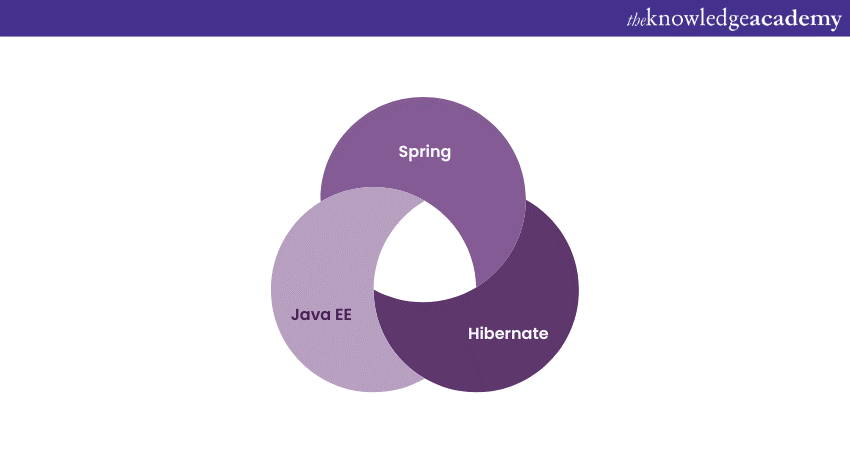
1) Spring: A comprehensive framework for Java applications that simplifies development, enhances modularity, and provides features like dependency injection and aspect-oriented programming.
2) Hibernate: An ORM framework, such as Hibernate, simplifies database access by allowing developers to work with objects instead of SQL queries, offering a high-level API for interacting with databases. For a more detailed understanding, check out the Hibernate Guide.
3) Java Enterprise Edition (Java EE): A standardised platform for building enterprise-level applications, offering components like servlets, JavaServer Pages (JSP), and Enterprise JavaBeans (EJB) for scalable and secure development.
Try our Introduction To Java EE Training Course and learn about Java API in detail!
Frontend Java Developers
Frontend Java Developers focus on developing User Interfaces (UI) and enhancing the User Experience (UX). They utilise frameworks such as JavaFX and Java Swing to create desktop applications with interactive and visually appealing interfaces. For web-based interfaces, front-end Java Developers work with Java technologies like JavaServer Faces (JSF) and Thymeleaf to build dynamic and responsive web applications. Their expertise lies in crafting engaging and user-friendly interfaces that deliver a seamless and intuitive user experience.
Frontend Java Developer frameworks
Some Java frameworks used by the Frontend Developer are as follows:

1) JavaFX: A framework for creating desktop applications with rich graphical user interfaces, offering a wide range of UI controls and multimedia support, providing a modern and visually appealing user experience.
2) Java Swing: A GUI toolkit for building platform-independent desktop applications, offering reusable UI components and layout managers for creating intuitive and interactive user interfaces.
3) JavaServer Faces (JSF): A web application framework for Java-based UI development, facilitating the construction of web interfaces with features like templating, data binding, and event handling.
4) Thymeleaf: A server-side Java templating engine for dynamic web pages, seamlessly integrating with Java frameworks like Spring, supporting powerful template features and easy data binding.
Interested in becoming a Java Developer? Try our Java Training Courses today!
Full-Stack Java Developers
Full-stack Java Developers possess expertise in both front-end and back-end development. They are proficient in building complete applications, handling UI/UX development and server-side programming. With knowledge of various frameworks, libraries, and tools, they can effectively manage all aspects of application development.
Full-stack Java Developers can design and implement user interfaces, integrating with databases and external systems. Full-stack Developers can use both front-end and back-end Java frameworks to deliver end-to-end solutions that meet the requirements of modern web and enterprise applications.

Interested in becoming a Java Developer? Try our Java Training Courses today!
Mobile Java Developers
Mobile Java Developers specialise in creating mobile applications using Java technologies. They leverage frameworks like Android Studio and Java-based frameworks such as Flutter to develop native or cross-platform mobile apps.
Mobile Java Developers have expertise in designing responsive user interfaces, integrating with device features, and implementing mobile-specific functionality. The Skills of Java Developers extend to optimising performance, ensuring compatibility across different devices, and delivering seamless mobile experiences through Java-based mobile development.
Mobile Java Developer frameworks
Some Java Developer Frameworks used by Mobile Developers are as follows:

1) Android Studio: An IDE for native Android app development, equipped with tools and libraries for building Android applications, providing extensive documentation and resources for Developers.
2) Flutter: A cross-platform mobile app development framework based on Java, enabling Developers to build apps for Android and iOS platforms with a single codebase, offering a rich set of UI components and fast development capabilities.

Conclusion
The availability of various frameworks caters to the diverse needs of the different Types of Java Developers. From backend frameworks like Spring and Hibernate to frontend frameworks like JavaFX and Java Swing, Developers have a range of tools to create efficient applications across domains and platforms, enhancing productivity and delivering exceptional software solutions.
Learn more about programming in Java with our Java Programming Course!
Frequently Asked Questions

Richard Harris


Senior Full Stack Developer and Technology Educator
Richard Harris is a highly experienced full-stack developer with deep expertise in both frontend and backend technologies. Over his 12-year career, he has built scalable web applications for startups, enterprises and government organisations. Richard’s writing combines technical depth with clear explanations, ideal for developers looking to grow in modern frameworks and tools.


 If you wish to make any changes to your course, please


