


 Top Rated Course

We may not have the course you’re looking for. If you enquire or give us a call on +47 80010068 and speak to our training experts, we may still be able to help with your training requirements.
Risk Manager Job Description: Roles, Skills and Salary
The Knowledge Academy 05 May 2026Risk management is essential for organisations to maintain stability and sustain in a competitive business environment. This blog on Risk Manager Job Description provides insight into aspects such as skills required to become a Risk Manager, along with the skills required. Explore the blog to learn how to have a rewarding career in this industry.

Training Outcomes Within Your Budget!
We ensure quality, budget-alignment, and timely delivery by our expert instructors.
Table of Contents
In today’s dynamic and complex business landscape, effective Risk Management is vital for the stability and success of organisations. Risk Managers play a pivotal role in identifying and mitigating potential risks, ensuring the resilience of businesses. A Risk Manager Job Description encompasses many factors like skills, salary, roles and responsibilities, etc.
As per Glassdoor, the median salary of a Senior Risk Manager in the UK is approximately £95,551. This career offers stability, along with many other benefits, and is a highly sought-after career. In this blog, you will learn who Risk Managers are, Risk Manager Job Descriptions, their roles and responsibilities, the skills required to become one, and the salary range they are offered.
Table of Contents
1) Who is a Risk Manager?
2) Skills required to become a Risk Manager
3) Roles and responsibilities
4) The salary range for Risk Managers
5) Conclusion
Who is a Risk Manager?
A Risk Manager is responsible for detecting, analysing, and evaluating potential risks an organisation might face. Their role involves assessing the likelihood and impact of these risks and building effective strategies to mitigate or transfer them.
Risk Managers work closely with stakeholders at all levels to ensure that the company's Risk Management policies and procedures are effectively implemented. By leveraging their expertise and knowledge, Risk Managers help organisations navigate uncertainties.
Moreover, it also assists them in making informed decisions to protect their interests and achieve their objectives.
Skills Required to Become a Risk Manager
To excel as a Risk Manager, you should possess a diverse set of knowledge and skillset. The following are key skills that are essential for a Risk Manager:
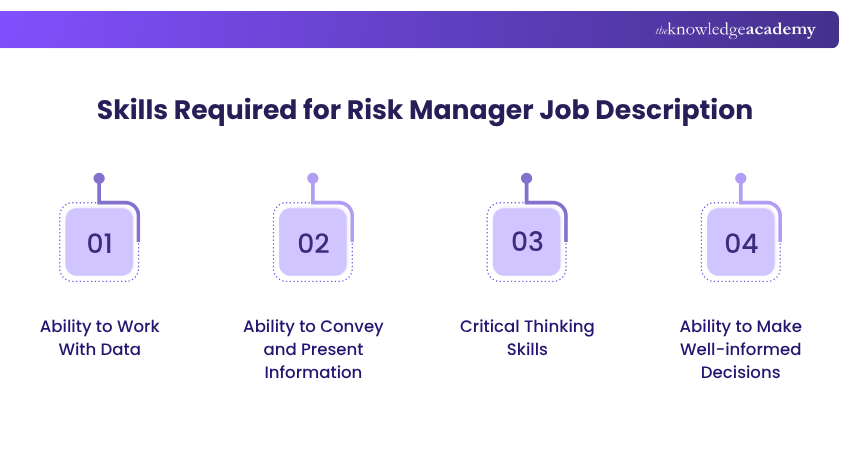
Analytical skills
Risk Managers must have strong analytical abilities to effectively identify, assess, and evaluate risks. When it comes to analytical skills, they should be adept at the following capabilities:
a) Gathering and analysing data: Collecting and analysing data helps Risk Managers make sound logical decisions driven by data.
b) Interpreting trends: They should be capable of predicting risks well in advance by finding trends and patterns using the analysed datay.
c) Making informed decisions: By combining data analysis and detecting trends, they can make informed decisions.
Communication skills
Effective communication is crucial for Risk Managers as they need to convey complex risk concepts to various stakeholders, and it involves the following tasks:
a) Articulate risks: Analysing risks alone is not enough; they should be capable of conveying their findings in laymen's terms.
b) Presenting mitigation strategies: Presenting mitigation strategies helps ensure that everyone involved is onboard and updated with the mitigation practices.
c) Provide clear recommendations: They should be capable of providing clear instructions and recommendations to senior management and other relevant parties.
Problem-solving skills
Risk Managers encounter numerous challenges related to risk identification, assessment, and mitigation. They need strong problem-solving skills to analyse issues, develop creative solutions, and implement appropriate Risk Management strategies.
Decision-making skills
Risk managers often face situations where they need to make critical decisions under uncertainty. They should possess the ability to assess risks, weigh different options, and make informed decisions that align with the organisation's objectives.
These skills, in combination with a deep understanding of the industry and regulatory landscape, enable Risk Managers to proactively manage risks and contribute to the overall success of the organisation. By staying updated on emerging risks and industry best practices, Risk Managers can continuously enhance their skills and adapt to evolving risk landscapes.
Roles and responsibilities
Risk Managers have various responsibilities aimed at effectively managing risks within the organisation. Here are the key responsibilities of a Risk Manager:
Risk and analysis
Risk Managers conduct thorough risk assessments to identify potential risks and evaluate their potential impact. They analyse internal and external factors, assess the likelihood and severity of risks, and prioritise them based on their significance to the organisation.
Developing risk strategies
Once risks are identified, Risk Managers develop strategies and action plans to mitigate or manage them effectively. They work closely with relevant stakeholders to design Risk Management frameworks, policies, and procedures tailored to the specific needs of the organisation.
Implementing risk controls
Risk Managers oversee the implementation of risk control techniques to minimise the likelihood and impact of identified risks. This involves designing and implementing risk mitigation strategies, establishing risk monitoring systems, and ensuring compliance with relevant regulations and industry standards.
Monitoring and reporting risks
Risk Managers continuously monitor risks to identify any changes or new risks that may arise. Effective monitoring and reporting risks include the following activities such as:
a) Track: Risk Managers track vital risk indicators and metrics that help find out potential risks that can affect the business.
b) Evaluate: They frequently evaluate the effectiveness of Risk Management controls to check whether implemented strategies address the risks effectively.
c) Report: They should provide regular reports to senior management and other stakeholders to give a comprehensive overview of the current risk landscape.
d) Highlight: Their reports should highlight the current risk landscape, potential areas of concern, and recommendations for Risk Mitigation
By fulfilling these responsibilities, Risk Managers help organisations proactively manage risks, safeguard their assets, and maintain operational resilience. They play a massive role in developing a risk-aware culture and ensuring that Risk Management practices are embedded across all levels of an organization. In interviews for risk management roles, candidates are often asked specific questions designed to assess their ability to handle these responsibilities effectively. Risk Management Interview Questions evaluate a candidate's capacity to identify, assess, and mitigate potential risks, ensuring that they are prepared to contribute to the organization’s risk management strategy.
Enhance your foundational knowledge of Risk Management with our Management of Risk (MoR®) Foundation Course – Sign up now!
Salary range of Risk Managers
The salary package offered to Risk Managers can vary depending on various factors such as experience, qualifications, specific industry, and geographical location. Here's an overview of the Salary of a Risk Manager in the United Kingdom, United States, and India based on data from Glassdoor:
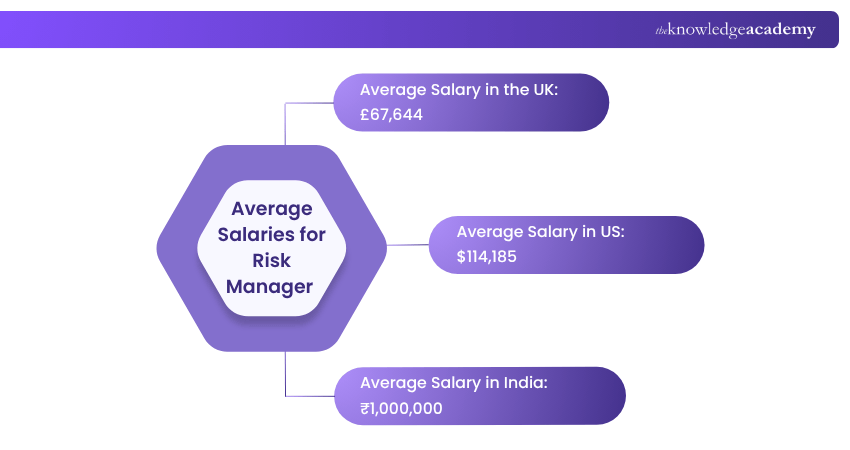
Salary range in the United Kingdom (UK)
The salary range for Risk Managers in the UK typically varies based on experience and level. Salaries for entry-level positions may start from around £49,000, while candidates applying for senior-level or managerial roles can command salaries exceeding £96,000 or more.
Salary range in the United States of America (USA)
In the United States, the salary range for Risk Managers varies depending on factors such as location, industry, and the organisation's size. Risk Managers in the US can earn anywhere between $88,000 and $150,000 per year.
Salary range in India
In India, the salary range for Risk Managers can vary based on factors like the candidate's experience, educational qualifications, and the industry in which they work. Entry-level Risk Managers may earn around ₹9,52,000 to ₹20,00,000 (20 Lakhs) per year. On the other hand, experienced professionals or those in senior positions can earn up to ₹30,00,000 or more annually.
Please note that these salary ranges are approximate and can vary based on an individual’s educational qualification, work experience, industry and market conditions, and the specific organisation. It's always recommended to refer to job portals, salary surveys, and industry reports for the most accurate and up-to-date salary information.
Elevate your Risk Management career to new heights by becoming a Certified Risk Management Professional CRMP – Sign up today!
Conclusion
We hope you read this blog and understood the Risk Manager Job Description: Skills, Salary, Roles & Responsibilities. Risk Management is a challenging yet equally rewarding career that offers higher salaries and other benefits. If you are passionate about this career, it is vital to improve the required skills and stay updated with the industry’s trends.
Level up your Risk Management expertise with our comprehensive MoR® Management of Risk Courses - Sign up now to enhance your skills and advance your career!
Frequently Asked Questions
What are the Duties of a Risk Manager?

A Risk Manager identifies, assesses, and prioritises risks that may affect an organisation. They implement strategies to reduce risks, ensure compliance, monitor trends, and communicate insights to support informed decisions and protect business operations.
What are the Skills of a Risk Manager?
Risk management requires a mix of analytical, technical, and soft skills. Key abilities include data analysis, knowledge of tools like SQL and Python, strong communication, business understanding, and leadership to build a risk-aware culture and support effective decision-making.
What are the Other Resources and Offers Provided by The Knowledge Academy?
The Knowledge Academy takes global learning to new heights, offering over 3,000+ online courses across 490+ locations in 190+ countries. This expansive reach ensures accessibility and convenience for learners worldwide.
Alongside our diverse Online Course Catalogue, encompassing 17 major categories, we go the extra mile by providing a plethora of free educational Online Resources like Blogs, eBooks, Interview Questions and Videos. Tailoring learning experiences further, professionals can unlock greater value through a wide range of special discounts, seasonal deals, and Exclusive Offers.
What is The Knowledge Pass, and How Does it Work?
The Knowledge Academy’s Knowledge Pass, a prepaid voucher, adds another layer of flexibility, allowing course bookings over a 12-month period. Join us on a journey where education knows no bounds.
What are the Related Courses and Blogs Provided by The Knowledge Academy?
The Knowledge Academy offers various MoR® Management of Risk Training, including the MoR® 4 Practitioner Risk Management Certification, Management of Risk (MoR®) Foundation V3 Course, and the Certified Risk Management Professional CRMP Training. These courses cater to different skill levels, providing comprehensive insights into Risk Assessment.
Our Project Management Blogs cover a range of topics related to Risk Manager Job Description, offering valuable resources, best practices, and industry insights. Whether you are a beginner or looking to advance your Project Management skills, The Knowledge Academy's diverse courses and informative blogs have got you covered.

The Knowledge Academy


Global Training Provider
The Knowledge Academy is a world-leading provider of professional training courses, offering globally recognised qualifications across a wide range of subjects. With expert trainers, up-to-date course material, and flexible learning options, we aim to empower professionals and organisations to achieve their goals through continuous learning.

Upcoming Project Management Resources Batches & Dates
Date
 Introduction to Project Management Course
Introduction to Project Management Course
Fri 17th Jul 2026
Introduction to Project Management Course
Fri 14th Aug 2026
Introduction to Project Management Course
Fri 11th Sep 2026
Introduction to Project Management Course
Fri 16th Oct 2026
Introduction to Project Management Course
Fri 13th Nov 2026
Introduction to Project Management Course
Fri 18th Dec 2026

 If you wish to make any changes to your course, please


