


 Top Rated Course

We may not have the course you’re looking for. If you enquire or give us a call on +41 315281584 and speak to our training experts, we may still be able to help with your training requirements.
ILM Qualification Levels: A Detailed Explanation
Benjamin Walker 25 August 2026This blog explains the different ILM Qualification Levels, who they suit and how to choose the right level for your leadership and management career.

Training Outcomes Within Your Budget!
We ensure quality, budget-alignment, and timely delivery by our expert instructors.
Table of Contents
Key Takeaways
1. ILM Qualifications are available from Level 2 to Level 7.2. Higher levels involve greater complexity and organisational responsibility.3. Awards, Certificates and Diplomas differ in size, even when offered at the same level.4. The right level depends on your responsibilities, experience and career goals.5. Qualifications at the same regulated level are comparable in difficulty, not necessarily content or duration.
Imagine you are talking to a colleague over coffee.
They have recently taken on more responsibility at work and ask:
“I want to improve my leadership skills, but which ILM Qualification should I choose?”
It sounds like a simple question, but ILM offers several levels for different roles and stages of management. Choosing the highest level is not always the right approach. The best option depends on your experience, current responsibilities and career goals.
So, where should you begin?
A good starting point is to understand what ILM Qualifications are and how they support different stages of leadership and management. Let’s begin!
What are ILM Qualifications?
Institute of Leadership and Management (ILM) Qualifications are vocational qualifications that develop practical leadership, management, coaching and mentoring capabilities. They are available at different levels to support learners ranging from aspiring Team Leaders to experienced Senior Managers.
An ILM Qualification can help learners strengthen workplace skills such as communication, Team Leadership, performance management, decision-making and strategic planning. The exact topics and level of responsibility covered depend on the qualification selected.

ILM Qualification Levels Explained
Before examining the different ILM Qualifications, it is important to understand what their levels represent. Qualifications at the same regulated level have a broadly comparable level of complexity and demand. However, academic and vocational qualifications at the same level may differ in their content, duration, assessment and purpose. Let's look at the ILM Qualifications below in detail:
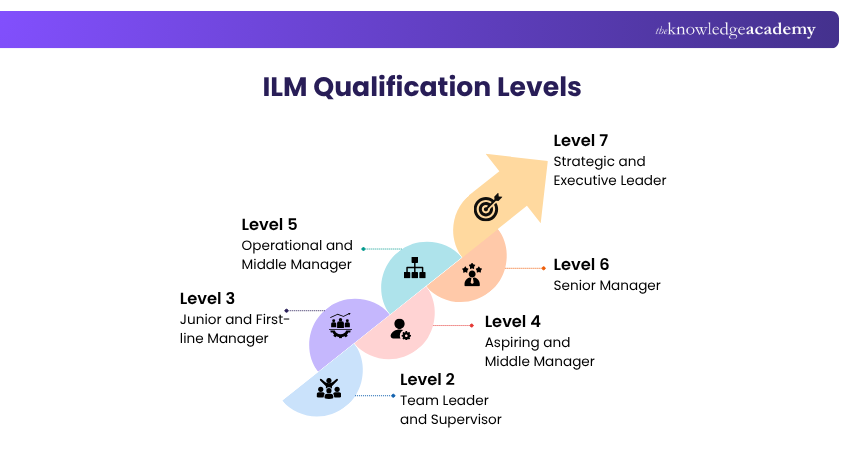
1) ILM Level 2
ILM Level 2 provides a practical starting point for developing leadership and management capabilities in day-to-day team environments. It focuses on building the confidence and skills needed to take on greater responsibility.
Level 2 Overview:
1) Best Suited For: Aspiring or practising team leaders and supervisors
2) Key Focus: Leading teams, managing tasks and supporting team performance
3) Key Qualification: Level 2 Developing Leadership and Team Skills
4) Available as: Award, Certificate and Diploma
Pro Tip
The ILM Level 2 Award for Young Leaders is designed for learners aged 14 to 24 who want to begin developing leadership skills early.
2) ILM Level 3
ILM Level 3 builds on early leadership experience by developing the practical capabilities needed to manage people and day-to-day workplace responsibilities more effectively.
Level 3 Overview
1) Best Suited For: First-line and developing middle managers
2) Key Focus: Team leadership, performance management and decision-making
3) Key Qualification: Level 3 Leadership and Management Skills
4) Available as: Award, Certificate, Diploma and Extended Diploma
The Level 3 Leadership and Management Skills qualification is part of ILM's refreshed suite and focuses on applying leadership and management skills in real workplace settings.
3) ILM Level 4
ILM Level 4 marks a progression into broader management responsibilities, where learners need to understand not only how to lead people but also how their decisions affect wider organisational performance.
Level 4 Overview
1) Best Suited For: Aspiring and practising middle managers
2) Key Focus: Leadership, performance management and organisational effectiveness
3) Key Qualification: Level 4 Leadership and Management
4) Available as: Award, Certificate and Diploma
A key feature of Level 4 Leadership and Management is its flexible unit structure. Learners can develop knowledge in areas relevant to their responsibilities, including people management, finance, communication, change, decision-making and resource management.
Master complex management and shape better outcomes by signing up for the ILM Level 4 Courses now!
4) ILM Level 5
ILM Level 5 moves further into operational leadership, where managers are expected to balance people management with the effective delivery of projects, resources and organisational objectives.
Level 5 Overview
1) Best Suited For: Operational leaders, department heads and experienced managers
2) Key Focus: People, projects and operational performance
3) Key Qualification: Level 5 Operational Leadership and Management Skills
4) Available as: Award, Certificate, Diploma and Extended Diploma
The current Level 5 Operational Leadership and Management Skills qualification covers areas such as managing people, project management, communication, decision-making, operational finance and stakeholder collaboration.
5) ILM Level 6
ILM Level 6 supports the transition into senior management, where leaders need to consider performance and change beyond individual teams or operational activities.
Level 6 Overview
1) Best Suited For: Senior managers and middle managers preparing for promotion
2) Key Focus: Strategic leadership, organisational performance and change
3) Key Qualification: Level 6 Leadership and Management
4) Available as: Award, Certificate and Diploma
The Level 6 Leadership and Management qualification provides flexibility to select units that reflect individual senior management responsibilities and development needs. It can also provide a pathway towards further study at Level 7.
6) ILM Level 7
ILM Level 7 focuses on leadership at a strategic level, where decisions can influence organisational direction, performance and long-term outcomes.
Level 7 Overview
1) Best Suited For: Senior and strategic leaders
2) Key Focus: Strategy, innovation and organisational performance
3) Key Qualification: Level 7 Strategic Leadership and Management
4) Available as: Award, Certificate, Diploma and Extended Diploma
The Level 7 Strategic Leadership and Management qualification allows senior leaders to develop capabilities in areas such as high-level strategy, innovation, performance, resource optimisation and strategic decision-making.
How do ILM Levels Compare with Other Qualifications?
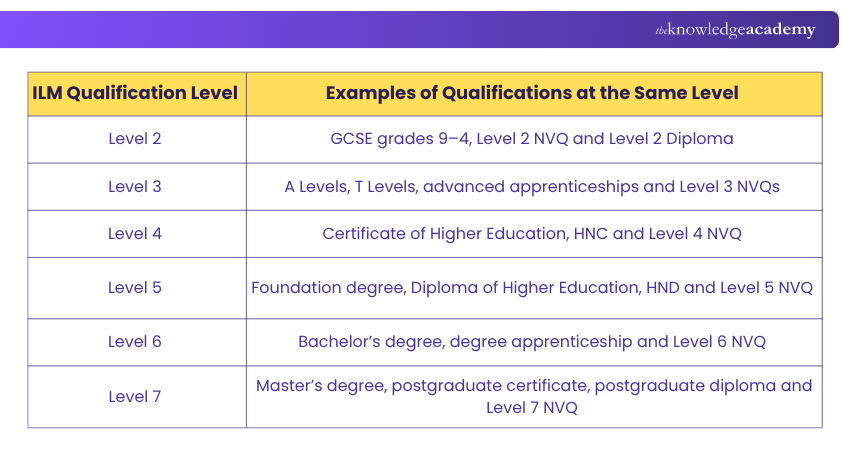
Qualification levels can help learners understand the relative difficulty of an ILM Qualification. Qualifications placed at the same regulated level involve a broadly comparable degree of learning complexity, although their subject matter, assessment methods, duration and purpose may differ. Let’s learn about it below:
Trainer’s Insight
Qualifications placed at the same regulated level involve a broadly comparable degree of complexity. However, they may differ considerably in subject matter, study time, assessment methods and purpose.
How to Choose the Right ILM Qualification Level?
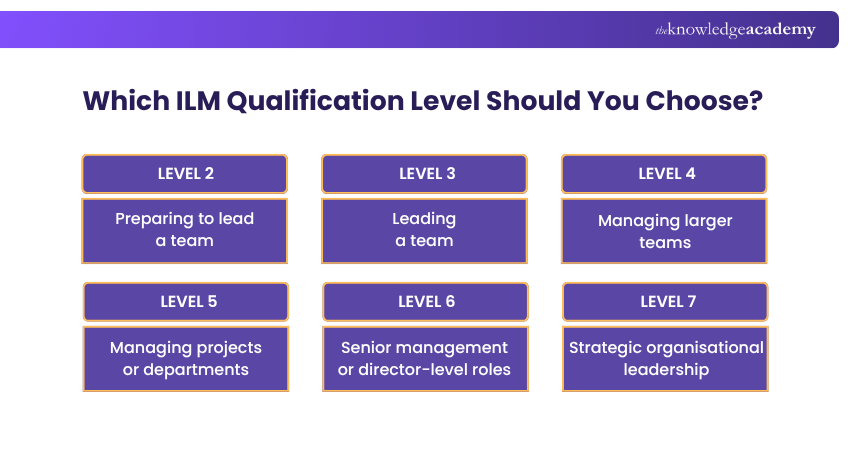
Choosing the right ILM Qualification depends on your current responsibilities, previous experience and career goals. Rather than selecting the highest available level, consider how closely the qualification matches the work you perform or expect to perform. Use the following set of questions to make the right choice:
a) Are you preparing to lead a team for the first time?
b) Do you already manage people or day-to-day operations?
c) Are you responsible for a project, department or substantial resources?
d) Does your role involve strategic planning or organisational change?
e) Are you preparing to progress into senior leadership?
Aspiring Team Leaders may benefit from a lower-level qualification, while First-line Managers commonly consider Level 3. Practising Middle Managers may find Level 4 or Level 5 more suitable, depending on the qualification and their responsibilities. Senior Managers can explore Level 6 or Level 7 options covering more advanced organisational and strategic leadership.
Before registering, review the intended audience, units, assessment requirements and qualification size. This ensures that the selected course supports both your present role and future career direction.
Conclusion
Choosing the right ILM Qualification can strengthen your leadership skills and support your career growth. Each level suits different roles, from aspiring Team Leaders to Senior Managers. Consider your current responsibilities, experience and future goals before making a choice. The right level will help you build relevant skills and lead with greater confidence.
Your leadership journey begins with one bold step by joining the ILM Level 2 Courses today!
Frequently Asked Questions
How are ILM Qualifications Assessed?

Assessment methods vary by qualification and unit. Learners may complete work-related assignments, projects, or practical tasks. Each assessment must demonstrate that the relevant learning outcomes and assessment criteria have been met.
What is the Difference Between Level 5 and Level 6?
ILM Level 5 focuses on operational leadership, including managing people, projects and departmental performance. Level 6 is aimed at senior management, with greater emphasis on strategic leadership, organisational performance, critical thinking and leading change across the wider organisation.
Do ILM Qualifications Need to be Renewed?
ILM Leadership and Management qualifications do not normally require renewal after they have been achieved. The certificate remains evidence of the learner’s achievement. However, professionals should continue developing their skills to keep their knowledge relevant to current workplace needs.

Benjamin Walker


Leadership Development Coach and Management Consultant
Benjamin Walker is a leadership coach and business consultant with over 18 years of experience in guiding organisations through strategic growth and transformation. He specialises in developing leadership capabilities at all levels, from emerging managers to executive teams. Benjamin’s work focuses on practical leadership, team dynamics, and performance management.
View Detail

 If you wish to make any changes to your course, please


