


 Top Rated Course

We may not have the course you’re looking for. If you enquire or give us a call on +91-181-5047001 and speak to our training experts, we may still be able to help with your training requirements.
What is Resource Planning: A Complete Overview
James Smith 05 December 2025Resource Planning is the process of forecasting, allocating, and managing people, equipment, and assets to ensure efficient and successful project delivery. It ensures optimal resource use and helps prevent bottlenecks that can slow project progress. It enhances communication, supports better forecasting, and improves decision-making.

Training Outcomes Within Your Budget!
We ensure quality, budget-alignment, and timely delivery by our expert instructors.
Table of Contents
Have you ever wondered how Project Managers ensure their projects are completed on time, within budget, and with the desired outcomes? This is where Resource Planning steals the show. But What is Resource Planning, and how can it be used effectively?
Resource Planning is planning and managing the resources needed for a project. It is one of the key aspects of Project Management, as it determines the project's feasibility, scope, and schedule. This blog will explain What is Resource Planning, how it works, its key components, why it is important, and the stages of a Resource Plan. So read on and handle the synergy of time, talent and tools with ease!
Table of Contents
1) What is Resource Planning?
2) How to Create a Resource Plan: 6 Steps in the Resource Planning Process
3) Key Components of Resource Planning Template
4) Resource Planning's Significance in Project Management
5) Stages of a Resource Plan
6) Benefits of Resource Planning in Project Management
7) Best practices for efficient Resource Planning
8) Emerging Trends of Resource Planning in Project Management
9) What is an Example of Resource Planning?
10) What is the Difference Between Resource Planning and Management?
11) Conclusion
What is Resource Planning?
Resource Planning is determining and allocating the resources needed for a project. Resources are the inputs used to produce the project's outputs. They can be classified into three main categories:
a) Human Resources: The people who work on the project, such as Project Managers, team members, Stakeholders, contractors, etc.
b) Physical Resources: Resources include the materials, equipment, tools, facilities, and infrastructure used for the project, such as raw materials, machinery, vehicles, office space, etc.
c) Financial Resources: The money spent or earned by the project, such as Budget, expenses, revenue, etc.
Resource Planning involves identifying, estimating, acquiring, and monitoring the resources required for each task and phase of the project. It also involves managing resource availability, allocation, utilisation, and performance throughout the project lifecycle.

How to Create a Resource Plan: Six Steps in the Resource Planning Process
Creating a Resource Plan is one of the most important steps in ensuring a project runs smoothly from start to finish. Here are the steps involved in that process:
1) Lay out Project Allocations and the Resources You Have
1) Outline all project allocations and the available resources such as people, tools, budgets and equipment.
2) Narrow down the high-priority tasks and decide which ones need to be frontloaded.
3) Use a Resource Management tool to review your team schedules and assess their availability.
4) Spot double-booked team members and reassign work to balance workloads.
2) Assign Work Based on Availability, Skills and Interests
1) Match the tasks with those team members who have the right skills and availability.
2) Consider their individual interests to ensure continued motivation and engagement.
3) Use a Resource Management tool as a central source of truth for task visibility.
4) Make sure there's transparency in assignments, timelines and responsibilities to maintain coordination.
3) Create a Project Estimate and Budget Baseline
1) Convert your resource plan into measurable estimates in terms of hourly rates and tentative hours.
2) Establish a clear project budget baseline so that you can track potential costs and profit margins.
3) Use this baseline as a reference for comparing actual progress and expenditures.
4) Monitor the project's profitability and make data-driven adjustments as the project evolves.
4) Consider the Future Demands on Resources
1) You must plan ahead by forecasting the upcoming workloads and any new project demands.
2) Make sure you don't overburden your team. You can do it by assessing capacity across future timelines.
3) Include buffer time or additional capacity to prepare for unplanned requests or emergencies.
4) Maintain flexibility to adapt to changing priorities without disrupting workflow.
5) Get Feedback From Stakeholders on Proposed Allocations
1) Share your proposed allocations with stakeholders, Managers and department heads.
2) To prevent any instances of double-booking and conflicts, confirm shared resource availability.
3) Gather feedback early on to refine allocations and improve overall coordination.
4) Involve all the team members to cultivate ownership and clear communication.
6) Make Adjustments to Your Resource Plan When Needed
1) Regularly review your Resource Plan so that it stays aligned with evolving priorities.
2) Update the allocations on a weekly basis to reflect task changes, delays or new requirements.
3) Stay flexible so that you can rebalance workloads and maintain efficiency under shifting conditions.
4) Communicate every update clearly so the entire team stays aligned on goals and progress.
Develop the skills to inspire, motivate, and lead with our Successful People Management and Team Leadership Training – Register today!
Key Components of Resource Planning Template
Components of Resource Planning are the essential elements involved in the process of planning and managing a project's resources. They include:
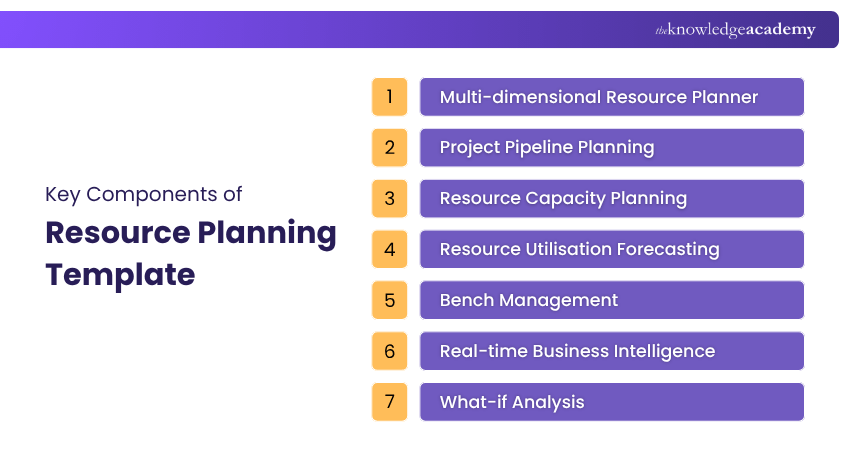
1) Multi-dimensional Resource Planner: It gives Managers visibility across teams, departments, and locations to assign the best-fit resources in real time. This ensures balanced workloads and optimal utilisation.
2) Project Pipeline Planning: This helps forecast upcoming projects and resource needs, helping Managers align capacity with demand and avoid last-minute hiring or idle time.
3) Resource Capacity Planning: It helps compare available capacity against project demand to identify shortages or surpluses. This allows for proactive steps such as retraining or workload redistribution.
4) Resource Utilisation Forecasting: It tracks billable and strategic utilisation through heatmaps and reports, enabling Managers to optimise workloads and boost productivity.
5) Bench Management: This identifies employees likely to go unassigned and enables timely redeployment, training or shadowing to minimise downtime.
6) Real-time Business Intelligence: This provides dashboards and reports for quick, data-driven decisions while maintaining security and preventing information overload.
7) What-if Analysis: It simulates different allocation scenarios to evaluate outcomes and prioritise projects based on profitability, deadlines or capacity.
Resource Planning's Significance in Project Management
Resource Planning is determining and allocating the resources needed for a project, such as people, materials, equipment, and money. It is important in Project Management because it affects the project’s success, efficiency, and quality. Some of the benefits of Resource Planning are:
1) It ensures the project has sufficient and suitable resources to meet its objectives and deliverables.
2) It optimises the use and allocation of resources, avoiding resource shortages, conflicts, and wastage.
3) It reduces the project’s costs and risks by minimising resource overruns, delays, and errors.
4) It improves the project’s quality and performance by enhancing resource productivity, quality, and profitability.
5) It increases the project’s stakeholder satisfaction by meeting or exceeding their expectations and requirements.
Attract, nurture, and retain top performers with our Talent Management Training – Join now!
Stages of a Resource Plan
A Resource Plan outlines the Resource Planning process and results for a project. It describes the resources needed, allocated, and used for the project and how they are managed and monitored. A Resource Plan typically consists of four stages:
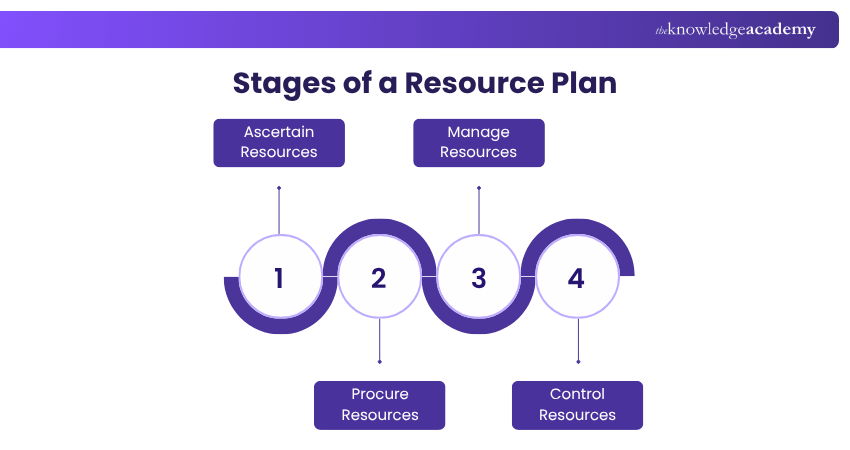
1) Ascertain Resources
The first stage of a Resource Plan is ascertaining the resources needed for the project. This stage involves identifying the types and quantities of resources required for each task and phase based on the project objectives, scope and deliverables. Some of the methods and tools that can be used for resource identification are:
1) Work Breakdown Structure (WBS): A hierarchical decomposition of the project into smaller and manageable units, such as deliverables, activities, tasks, etc.
2) Resource Breakdown Structure (RBS): A hierarchical classification of the resources needed for the project, such as human, physical, and financial resources.
3) Requirements Analysis: A process of eliciting, analysing, and validating the needs and expectations of the project stakeholders, such as customers, users, sponsors, etc.
4) Expert Judgment: A technique of using the knowledge and experience of experts, such as subject matter experts, consultants, mentors, etc., to provide guidance and advice on the project.
The output of this stage is a resource inventory, which is a list of all the resources that are available or needed for the project, including their types, quantities, sources, costs, etc.
For example, A Content Marketing campaign may require Writers, Editors, Designers, Web Developers, Social Media Managers, software, hardware, and internet access. Understanding the Benefits of Work Breakdown Structure allows the Project Manager to document the resource requirements more effectively using tools such as a Work Breakdown Structure (WBS) and a Resource Breakdown Structure (RBS).
2) Procure Resources
The second stage of a Resource Plan is to procure the resources needed for the project. It involves obtaining resources from internal or external sources, such as hiring, outsourcing, purchasing, leasing, etc. Some of the methods and tools that can be used for resource acquisition are:
1) Make-or-buy Analysis: A technique of comparing the costs and benefits of making or buying resources, such as in-house production, outsourcing, contracting, etc.
2) Market Research: A technique of gathering and analysing information about the availability, quality, and price of the resources in the market, such as suppliers, vendors, competitors, etc.
3) Negotiation: A technique of reaching an agreement with resource providers, such as suppliers, vendors, contractors, etc., on the terms and conditions of the resource acquisition, such as scope, quality, schedule, cost, etc.
4) Contract Management: A process of managing the contracts established with the resource providers, such as suppliers, vendors, contractors, etc., including their creation, execution, and closure.
The output of this stage is a resource allocation, a table or chart showing how the resources are assigned to each task and phase of the project, including their start and end dates, durations, dependencies, etc.
For example, a Content Marketing campaign may need to outsource some of the writing or design work to freelancers or agencies, and the Project Manager should ensure that they deliver high-quality work within the agreed deadlines and budget.
3) Manage Resources
The third stage of a Resource Plan is managing the resources allocated for the project. It involves coordinating and directing the resources throughout the project lifecycle, ensuring they are used effectively and efficiently. Some of the methods and tools that can be used for Resource Management are:
1) Resource Levelling: A technique of adjusting the start and end dates of the tasks to balance the demand and supply of the resources, avoiding resource overallocation or under allocation.
2) Resource Smoothing: A technique of shifting the start and end dates of the tasks to reduce the fluctuations and variations in resource utilisation without affecting the project duration or scope.
3) Resource Calendars: A tool that shows the availability and unavailability of resources, such as working hours, holidays, vacations, etc.
4) Resource Histograms: A tool that shows the distribution and allocation of resources over time, such as resource demand, capacity, surplus, etc.
The output of this stage is resource utilisation, a graph or report showing how the resources are used and consumed by the project, including their availability, demand, capacity, efficiency, etc.
For example, a Content Marketing campaign may need to adjust the resource schedule based on the client's or management's feedback, revisions, and approvals.
4) Control Resources
The fourth stage of a Resource Plan is controlling the resources used for the project. This stage involves monitoring and measuring the performance and progress of the resources and taking corrective actions if needed. Some of the methods and tools that can be used for resource control are:
1) Performance Measurement: A technique of comparing the actual and planned performance of resources using metrics such as resource variance, resource earned value, resource index, etc.
2) Performance Analysis: A technique of identifying the causes and effects of the deviations and discrepancies in the resource performance, using tools such as Root Cause Analysis, Fishbone Diagram, Pareto chart, etc.
3) Performance Improvement: A technique of implementing the changes and improvements in the resource performance using tools such as an action plan, change request, change log, etc.
4) Performance Reporting: A technique for communicating the status and results of resource performance using tools such as a dashboard, scorecard, report, etc.
The output of this stage is a resource performance dashboard or scorecard that shows how the resources are performing and contributing to the project, including their quality, productivity, profitability, etc.
For example, a Content Marketing campaign may need to measure its impact on website traffic, target audience and sales conversions and use the results to improve future Resource Planning and execution.
Learn effective strategies for sourcing with our Talent Acquisition Training – Sign up soon!
Benefits of Resource Planning in Project Management
Resource Planning has many benefits for Project Management, as it helps to achieve the project's goals and objectives while ensuring the optimal use and management of the resources. Some of the benefits of Resource Planning are:
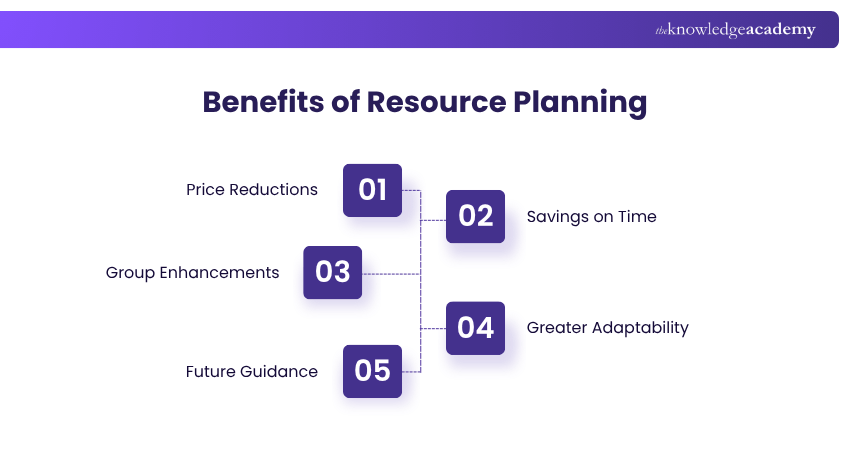
1) Price Reductions
Resource Planning can reduce the project's costs by minimising resource overruns, delays, and errors. By estimating and acquiring the resources accurately and efficiently, Resource Planning can avoid unnecessary or excessive spending on them. Resource Planning can also avoid resource wastage, duplication, or underutilisation by allocating and utilising the resources effectively and efficiently.
2) Savings on Time
Resource Planning can save the project time by optimising the project's schedule and duration. By promptly identifying and acquiring the resources, Resource Planning can avoid shortages, unavailability, or delays. By allocating and adequately levelling the resources, Resource Planning can avoid resource overallocation, underallocation, or imbalance.
3) Group Enhancements
Resource Planning can elevate the project team by improving the team's collaboration and communication. By involving and engaging the team members in the Resource Planning process, you can increase the team's commitment, ownership, and accountability. Resource Planning can increase the team's competence, performance, and productivity by assigning and directing the team members according to their skills, roles, and responsibilities.
4) Future Guidance
Resource Planning can guide the project's future by providing valuable insights and lessons learned. By documenting and reviewing the Resource Planning process and results, Resource Planning can provide helpful information and data for future reference and analysis. By updating and adjusting Resource Planning according to the project's changes and needs, the Manager can provide flexible and adaptive solutions for future challenges and opportunities.
5) Greater Adaptability
Resource Planning can increase the project's adaptability by enabling it to cope with uncertainty and change. By anticipating and preparing for resource needs and demands, Resource Planning can reduce the project's vulnerability and dependency. By estimating and acquiring resource contingencies and reserves, Resource Planning can increase the project's resilience and robustness.
Best practices for efficient Resource Planning
Resource Planning is a complex and challenging process that requires careful planning and execution. To ensure efficient and effective Resource Planning, Project Managers should follow some best practices, such as:
1) Define the project scope, objectives, and deliverables clearly and precisely to determine the resource requirements and expectations.
2) Involve and engage the project stakeholders, such as customers, users, sponsors, team members, etc., in the Resource Planning to ensure their input, feedback, and approval.
3) Use appropriate methods and tools, such as WBS, RBS, requirements analysis, expert judgment, etc., to identify and estimate the resources accurately and realistically.
4) Use reliable sources and providers, such as suppliers, vendors, contractors, etc., to acquire the resources promptly and cost-effectively.
5) Use suitable techniques and software, such as resource levelling, resource smoothing, resource calendars, resource histograms, etc., to allocate and utilise the resources optimally and efficiently.
6) Use relevant metrics and indicators, such as resource variance, resource earned value, resource index, etc., to monitor and measure the resource performance and progress.
7) Use effective communication and reporting, such as dashboard, scorecard, report, etc., to inform and update the project stakeholders about the resource status and results.
8) Use continuous improvement and learning, such as performance analysis, performance improvement, performance reporting, etc., to enhance and refine the Resource Planning process and outcomes.
Emerging Trends of Resource Planning in Project Management
The emerging trends of Resource Planning include:
1) AI and Automation: AI and automation streamline scheduling, allocation, and reporting, helping Managers make data-driven decisions, optimise utilisation, and predict project outcomes accurately.
2) Automated Resource Requisition: Automated requisition systems improve transparency, reduce manual errors, and eliminate scheduling conflicts by maintaining clear audit trails of resource requests.
3) Advanced Forecasting: Advanced forecasting techniques enable accurate prediction of future resource needs, helping teams identify capacity gaps early and ensure readiness for new projects.
4) Agile Resource Planning: Agile planning promotes flexibility, allowing real-time adjustments to meet evolving project requirements and maintain productivity in fast-paced environments.
What is an Example of Resource Planning?
Imagine a software company launching a new mobile app project. The Project Manager reviews team availability, identifies roles such as Developers, Testers, and Designers, and assigns tasks based on skills and workload to ensure balanced, efficient resource allocation.
1) Challenge: Midway through the project, a tester takes unexpected leave, causing a delay in the testing phase and a potential delivery bottleneck.
2) Solution: The Project Manager reallocates developers to assist with initial testing and adjusts timelines using resource-levelling techniques to keep progress steady.
3) Result: The team avoids downtime, maintains workflow, and stays on track, showing how flexible Resource Planning minimises disruption.
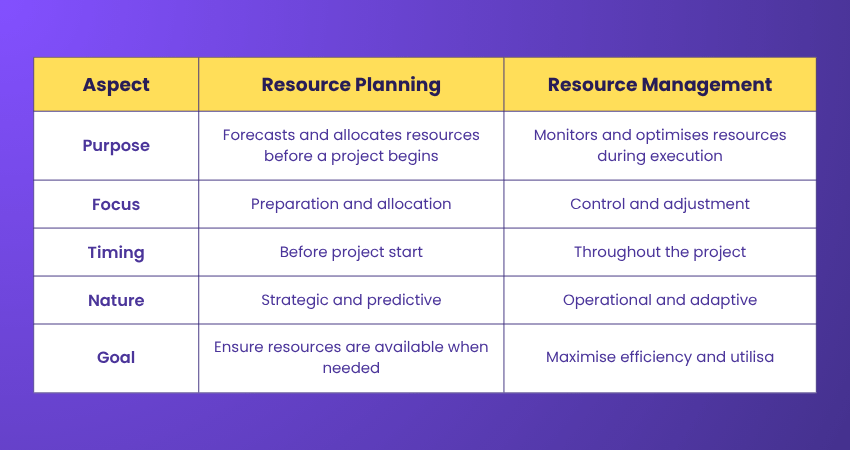
What is the Difference Between Resource Planning and Management?
Resource Planning involves forecasting and allocating resources before a project begins to ensure the right people and tools are available. On the other hand, Resource Management focuses on monitoring and optimising resource use during execution. Together, they ensure efficiency, alignment, and successful project delivery.
Conclusion
Resource Planning is more than just assigning people to tasks. It is about aligning skills, capacity and timelines to achieve project goals efficiently. With a clear idea of what resource planning is, you can prepare a well-crafted resource plan that helps teams stay organised, avoid burnout, and deliver quality results within budget and time constraints. In today’s fast-moving environment, effective Resource Planning is the foundation for sustainable project success.
Enhance your leadership skills and learn to manage teams effectively with our People Management Courses – Explore now!
Frequently Asked Questions
What is the Difference Between Resource Planning and Resource Management?

Resource Planning involves determining and allocating the resources needed for a project, while Resource Management involves coordinating and directing the resources throughout the project lifecycle.
What are the Challenges and Risks of Resource Planning?
Here are some of the challenges:
1) Resource Scarcity: Limited availability of resources.
2) Resource Uncertainty: Sudden changes in resource availability or demand.
3) Resource Complexity: Managing diverse resources across projects.
4) Resource Conflict: Competing priorities among teams.
5) Resource Change: Unexpected shifts in project scope.
What are the other resources and offers provided by The Knowledge Academy?
The Knowledge Academy takes global learning to new heights, offering over 3,000 online courses across 490+ locations in 190+ countries. This expansive reach ensures accessibility and convenience for learners worldwide.
Alongside our diverse Online Course Catalogue, encompassing 19 major categories, we go the extra mile by providing a plethora of free educational Online Resources like Blogs, eBooks, Interview Questions and Videos. Tailoring learning experiences further, professionals can unlock greater value through a wide range of special discounts, seasonal deals, and Exclusive Offers.
What is Knowledge Pass, and how does it work?
The Knowledge Academy’s Knowledge Pass, a prepaid voucher, adds another layer of flexibility, allowing course bookings over a 12-month period. Join us on a journey where education knows no bounds.
What are the related Resource Planning courses and blogs provided by The Knowledge Academy?
The Knowledge Academy offers various People Management Courses, including Workforce Resource Planning Training, Successful People Management and Team Leadership Training and Performance Appraisal Training. These courses cater to different skill levels, providing comprehensive insights into Human Resource Management.
Our Human Resource Blogs cover a range of topics related to Resource Planning, offering valuable resources, best practices, and industry insights. Whether you are a beginner or looking to advance your Resource Planning skills, The Knowledge Academy's diverse courses and informative blogs have got you covered.

James Smith


Digital Marketing Manager and Trainer
James Smith is a digital marketing professional with over a decade of experience in SEO, content strategy, paid media and analytics. He has supported both SMEs and global brands in transforming their digital presence. James’s writing and training are rooted in results-driven tactics and the latest marketing trends.
View Detail
Upcoming Business Skills Resources Batches & Dates
Date
 Workforce Planning Training
Workforce Planning Training
Fri 14th Aug 2026
Workforce Planning Training
Fri 13th Nov 2026

 If you wish to make any changes to your course, please


