


 Top Rated Course

We may not have the course you’re looking for. If you enquire or give us a call on +91-181-5047001 and speak to our training experts, we may still be able to help with your training requirements.
What is Product Management? The Guide to Modern Strategy
The Knowledge Academy 01 May 2026Product Management is the strategic process of guiding a product from conception through development, launch, and iteration to meet user and business needs. It involves cross-functional coordination, market research, prioritisation, and delivering customer-centric solutions that drive growth and innovation. Read ahead to know more!

Training Outcomes Within Your Budget!
We ensure quality, budget-alignment, and timely delivery by our expert instructors.
Table of Contents
Understanding What is Product Management?
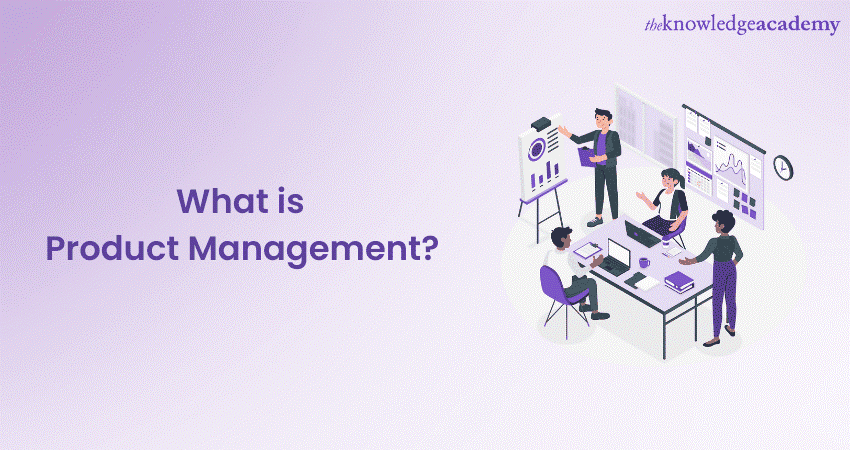
Product Management is all about guiding a product from ideal to reality and making sure it succeeds in the market. It involves understanding what customers need and creating the right features. It works with teams like marketing, design, and development to build and improve the product.
A Product Manager acts like the "Chief Executive Officer (CEO) of the product" setting the vision, making decisions and solving problems. It ensures the product adds real value for users and the business. Good Product Management keeps the team focused, the product valuable, and the customer happy.

Why is Product Management Important?
Without good Product Management, products can easily fail. Here’s why Product Management matters:
1) Aligns products with customer needs, ensuring better satisfaction and loyalty
2) Bridges the gap between business goals, technology teams, and market demands
3) Guides product development to stay focused, efficient, and cost-effective
4) Prioritises features and improvements that bring the most value
5) Reduces risks by testing ideas and gathering feedback early
6) Drives innovation by spotting opportunities in the market
7) Helps businesses grow by delivering successful products that perform well
8) Keeps teams organised and motivated with clear vision and strategy
9) Maximises Return on Investment (ROI) by focusing on what matters the most
What Does a Product Manager do?
A Product Manager (PM) wears many hats and acts as the bridge between customers, business teams, and technical teams. Their job is to make sure the right product is built, in the right way, at the right time.
They don't usually build the product themselves, but they guide every step to make sure it solves real problems and meets customer needs. Here’s a deeper look at their main responsibilities:
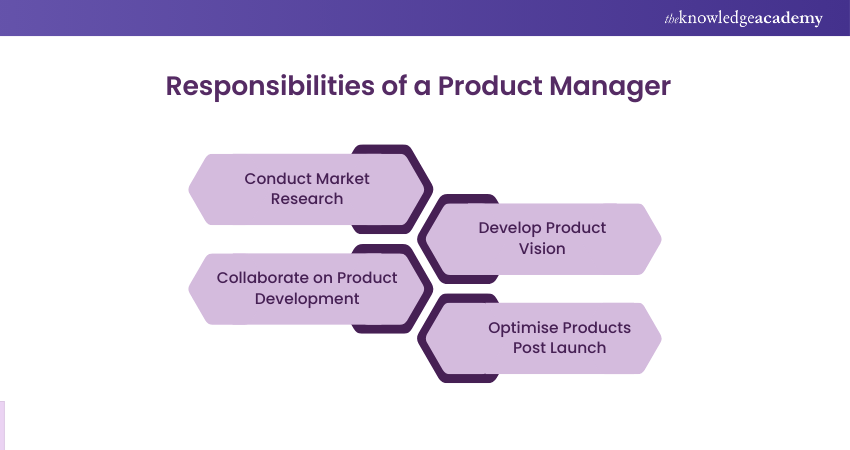
Conduct Market Research
This research helps define the product idea clearly and ensures the team builds something that people will actually use and love. Before creating anything, Product Managers need to understand what people want and need. These are done by:
1) Interviewing potential customers
2) Sending out surveys and gathering feedback
3) Studying competitors and analysing market trends
4) Looking at data to find what’s missing in the current market
Develop Product Vision
Once the research is complete, Product Managers craft a strong vision, a big picture idea of what the product will be and why it matters. The vision keeps everyone aligned and motivates the team to build a product that truly matters. This includes:
1) Defining the product’s goals and purpose.
2) Identifying who the target customers are.
3) Highlighting the key features that will make the product valuable.
4) Setting a clear direction for the entire team to follow
Trade smart — stay compliant with our expert-led Export and Trade Compliance Training.
Collaborate on Product Development
PMs connect business goals and technical work, ensuring every team member understands what they’re building and why. Product Managers team up with designers, developers, marketers, and salespeople to bring the product to life. They do things like:
1) Writing user stories or feature descriptions
2) Setting priorities for what gets built first
3) Helping the team solve roadblocks and issues during development
4) Making sure the product stays true to the vision and customer needs
Optimise Products Post Launch
After the release, Product Managers work using these strategies:
1) Track how customers are using the product through data and feedback
2) Fix bugs and improve features based on real-world use
3) Gather feedback for future updates and enhancements
4) Look for new opportunities to expand or improve the product
5) Continuous optimisation keeps the product fresh, competitive, and valuable
What is the Product Management Process?
The Product Management process involves a series of steps to guide a product from idea to launch and beyond. These steps include:

a) Idea generation
This step involves brainstorming and collecting ideas for new products or improvements to existing ones. It is based on market needs, technological advancements, or customer feedback. The goal is to gather a variety of ideas to explore further.
b) Market research
This involves analysing market trends, competitor products, and customer needs. The goal is to identify opportunities and validate the potential success of the product idea. It helps ensure the product will meet market demands.
c) Product planning
In this step, the product vision is defined, and a roadmap is created. This includes outlining the product's features, target audience, and business goals. It ensures the product aligns with the company's overall strategy.
d) Development
This step includes collaborating with engineering and design teams to build the product. It follows the specifications and requirements outlined during the planning phase. The goal is to turn the product concept into a tangible product.
e) Testing
Thorough testing is conducted using Product Management Tools to identify and fix any issues or bugs. This step ensures the product meets quality standards and functions as intended, helping to catch problems before the product is launched.
f) Launch
The product is introduced to the market through coordinated marketing and sales efforts. Monitoring its initial performance is crucial to make any necessary adjustments. The aim is to ensure a successful market entry.
g) Continuous Improvement
Customer feedback and market data are gathered and analysed. This allows for ongoing enhancements and updates to the product. The aim is to keep the product competitive and aligned with evolving customer needs.
Learn to conduct market research and customer analysis with our Logistics Management Training – join today!
Product Management Roles
Product Management is the system of different roles that work together to build, launch, and grow great products. Here’s a breakdown of the key roles and what each one does:
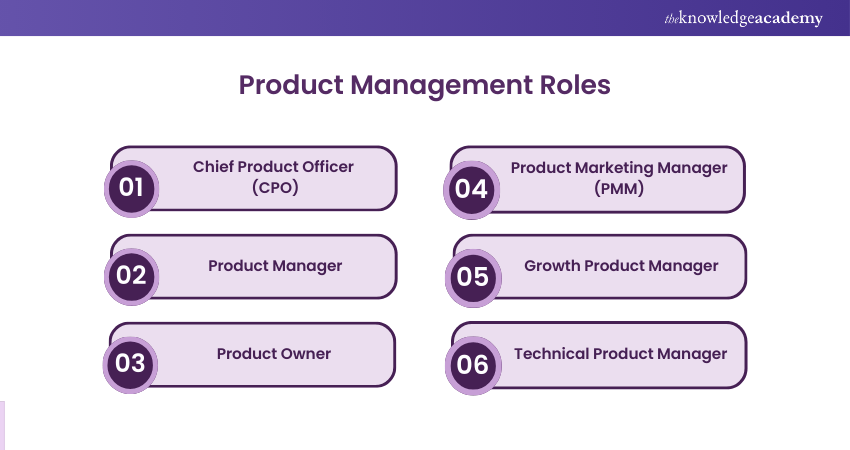
Chief Product Officer (CPO)
The Chief Product Officer (CPO) is the top product leader in a company. They set the overall product strategy and vision across all product lines. CPOs work closely with executives like the CEO and CTO to align product plans with business goals.
They manage multiple product teams, mentor Product Managers, and make big decisions about what products to build, expand, or sunset.
Product Manager
The Product Manager is the person who owns the success of a single product or product line. They work on understanding customer needs, prioritising features, planning roadmaps, and working with teams.
Some of the important ones are design, engineering, and marketing to bring a product to life. These managers balance business goals, user needs, and technical possibilities every day.
Product Owner
The Product Owner role comes mainly from Agile development teams, especially Scrum. A PO works closely with the development team, writing detailed tasks user stories. It can prioritise the backlog, and make sure the team builds the right features at the right time.
They act as the voice of the customer during product development and focus heavily on delivery.
Go global with confidence — master trade essentials in our Import Export Course.
Product Marketing Manager (PMM)
The Product Marketing Manager (PMM) focuses on how the product is positioned, promoted, and sold to customers. PMMs work on market research, messaging, launch campaigns, pricing strategies, and customer engagement plans.
They bridge the gap between the product and the customer, ensuring that the product’s value is clearly understood in the market.
Growth Product Manager
The Growth Product Manager focuses specifically on growing the product’s user base and revenue. They use data, experiments, and optimisation techniques to increase sign-ups, engagement, retention, and monetisation.
They work closely with marketing and product teams to test new features, tweak user experiences, and remove friction that might stop growth.
Technical Product Manager
The Technical Product Manager works on products that are highly technical, like APIs, cloud services, developer platforms, or complex software solutions. TPMs have strong technical knowledge and can talk easily with engineers.
It can be done while thinking about user needs and business value. They translate complex technical requirements into clear plans and often manage internal tools or infrastructure products.
Product Management vs. Project Management
Product Management and Project Management sound similar, but they have very different goals and responsibilities. While Product Management focuses on building the right product for customers, Project Management focuses on completing tasks and projects on time and within budget. Here's a quick comparison to make it clear:
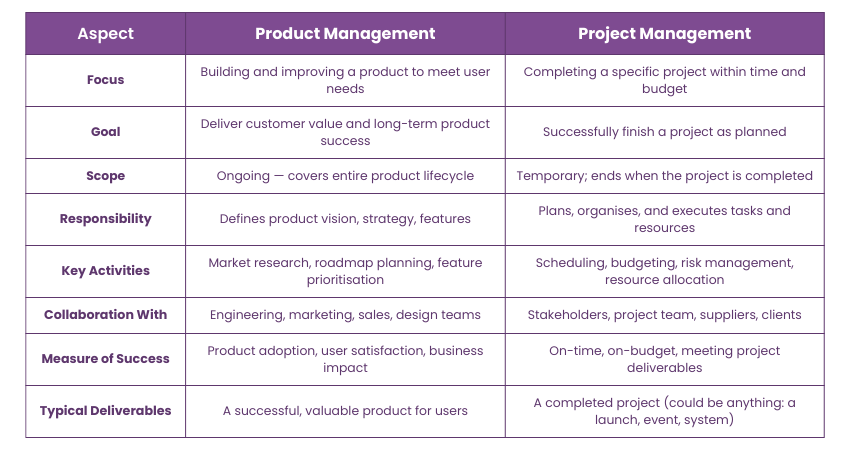
Challenges in Product Management
Here are some of the biggest challenges they face:
1) Balancing Customer Needs: Keeping customers happy while meeting business targets.
2) Prioritising Features: Choosing the most valuable features with limited time and budget.
3) Managing Cross-functional Teams: Aligning different teams like design, tech, and marketing.
4) Handling Uncertainty: Adapting quickly to market changes and evolving customer needs.
5) Measuring Success: Setting clear goals and tracking real product impact.
6) Limited Resources: Delivering results with tight budgets and small teams.
7) Communicating the Vision: Keeping everyone aligned and inspired with a clear product vision.
Future of Product Management
As technology and customer needs keep changing, the future of Product Management will demand new skills. Here are some of the smarter tools that focus on delivering real value:

1) Data-driven Decisions: PMs will rely heavily on real-time analytics and customer insights.
2) AI and Automation: Artificial Intelligence (AI) will help predict user needs and automate repetitive tasks.
3) Stronger Customer Focus: Building user-centric products will be more important than ever.
4) Remote and Global Teams: PMs will lead diverse, distributed teams effectively.
5) Business Ownership: PMs will be accountable for business results like growth and retention.
6) No-Code/Low-Code Revolution: Faster prototyping and testing without deep coding skills.
7) Continuous Learning: Mastering skills like UX, data, and AI will be essential.
What are the 5 Cs of Product Management?
The 5 Cs of Product Management are a handy way to think through what really matters when building a successful product. They help you stay focused, smart, and in sync with the bigger picture.
a) Customer: Get to know your users and what problems they're trying to solve.
b) Company: Make sure your product fits your company’s goals and strengths.
c) Competitors: Keep an eye on what others are doing so you can stand out.
d) Collaborators: Work closely with your team; designers, developers, marketers, and more.
e) Context: Be aware of what’s happening in the market and the world around you.
What is a Product Roadmap in Product Management?
A Product Roadmap is a high-level plan that shows how a product will develop over time. It outlines the product’s vision, direction, priorities, and progress. The managers help teams and stakeholders understand:
1) Where is the product going?
2) What features or improvements are planned?
3) When can users and teams expect them?
Conclusion
If you've ever wondered what really brings a product to life, the answer lies in understanding What is Product Management. It's where big ideas meet practical plans, guiding every step from concept to customer. With the right product management in place, you're not just building features; you're creating something people genuinely love.
Understand the supply chain structure and its distribution process with our Supply Chain Management Training - join today!
Frequently Asked Questions
What is Agile Product Management?

Agile Product Management is a flexible way to create and improve products. Instead of following a strict plan, teams adapt and make changes based on feedback. It focuses on quick updates, teamwork, and continuous improvement. This method helps businesses deliver better products faster by always learning and improving along the way!
What are the 5 Ps of Product Management?
The 5 Ps of Product Management; Product, Price, Promotion, Place, and People, cover everything from creation to customer. Together, they build a clear, effective strategy for product success.
What are the Other Resources and Offers Provided by The Knowledge Academy?
The Knowledge Academy takes global learning to new heights, offering over 3,000+ online courses across 490+ locations in 190+ countries. This expansive reach ensures accessibility and convenience for learners worldwide.
Alongside our diverse Online Course Catalogue, encompassing 17 major categories, we go the extra mile by providing a plethora of free educational Online Resources like Blogs, eBooks, Interview Questions and Videos. Tailoring learning experiences further, professionals can unlock greater value through a wide range of special discounts, seasonal deals, and Exclusive Offers.
What is The Knowledge Pass, and How Does it Work?
The Knowledge Academy’s Knowledge Pass, a prepaid voucher, adds another layer of flexibility, allowing course bookings over a 12-month period. Join us on a journey where education knows no bounds.
What are the Related Courses and Blogs Provided by The Knowledge Academy?
The Knowledge Academy offers various Industry Training, including Product Management Training, Supply Chain Management Training, and Logistics Management Training. These courses cater to different skill levels, providing comprehensive insights into Importance of Logistics.
Our Business Skills Blogs cover a range of topics related to Product Management, offering valuable resources, best practices, and industry insights. Whether you are a beginner or looking to advance your Product Management skills, The Knowledge Academy's diverse courses and informative blogs have got you covered.

The Knowledge Academy


Global Training Provider
The Knowledge Academy is a world-leading provider of professional training courses, offering globally recognised qualifications across a wide range of subjects. With expert trainers, up-to-date course material, and flexible learning options, we aim to empower professionals and organisations to achieve their goals through continuous learning.

Upcoming Business Skills Resources Batches & Dates
Date
 Product Management Training
Product Management Training
Fri 17th Jul 2026
Product Management Training
Fri 9th Oct 2026

 If you wish to make any changes to your course, please


