


 Top Rated Course


We may not have the course you’re looking for. If you enquire or give us a call on +91-181-5047001 and speak to our training experts, we may still be able to help with your training requirements.
Photography Lighting Setups Explained for Beginners
The Knowledge Academy 27 February 2026Photography Lighting uses natural or artificial light to shape the subject, enhance depth, and create clear, expressive images with strong visual impact. Soft light creates gentle, flattering effects, while hard light adds drama and contrast. Mastering this allows Photographers to achieve professional-quality results in any environment.

Training Outcomes Within Your Budget!
We ensure quality, budget-alignment, and timely delivery by our expert instructors.
Table of Contents
Getting a great photo is not only about the camera. It is about how you see and use light in every setting. Even simple adjustments can completely change the feel of an image. Understanding Photography Lighting helps you turn ordinary shots into expressive visuals. In the next sections, we will explore the basics and practical techniques you can start using right away.
Table of Contents
1) What is Photography Lighting?
2) The Importance of Position in Photography Lighting
3) Modifying Natural Light
4) Types of Lighting in Photography
5) Photoshoot Lighting Setup: How Position Plays A Role
6) Photography Lighting Basics: Soft Light Vs. Hard Light
7) Examples of Photography Lighting Setups
8) Conclusion
What is Photography Lighting?
Photography Lighting is the art and science of illuminating a subject to capture it as an image. In essence, without light, Photography wouldn’t exist. It's the unsung hero, painting every frame with shades, tones, and moods. There are two primary sources, namely natural light, which are sunlight and moonlight, and artificial light, including flashes, studio lights, and more. The colour temperature, measured in Kelvins (K), denotes whether the light is warm (yellowish) or cool (bluish).
Moreover, the quality of light, ranging from hard to soft, influences how shadows appear and the overall mood of the photo. Lighting techniques in photography like front, side, and backlighting allow Photographers to play with shadows and highlights, crafting depth and emotion in each shot.

The Importance of Position in Photography Lighting
The position of your light source plays a crucial role in shaping how your subject appears in a photograph. Here is a list of the various aspects of positioning in Photography Lighting:
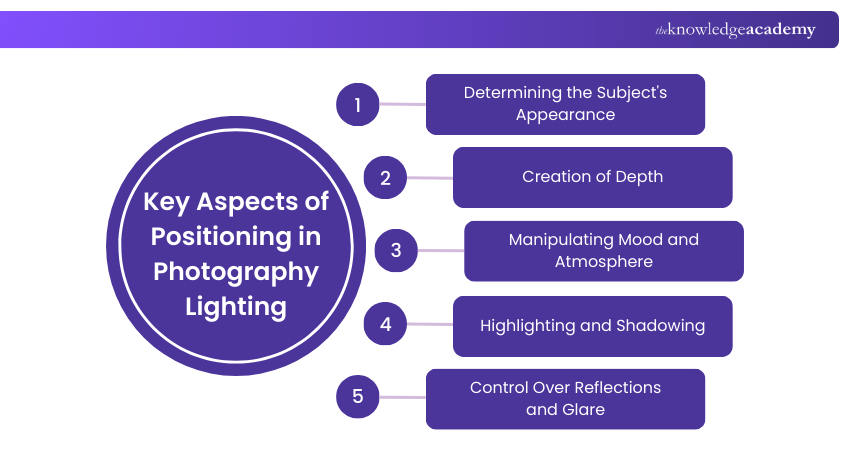
1) Determining the Subject's Appearance
The appearance of a subject in Photography is heavily influenced by lighting and its interplay with the subject. To determine and control this appearance, consider the following:
a) Direction & Angle of Light: The direction from which light hits the subject can emphasise or flatten details.
b) Quality of Light: Soft light, like that diffused through a cloud or soft box, creates gentle transitions between light and shadow, ideal for flattering portraits.
c) Intensity & Exposure: The brightness of the light source and the camera's exposure settings can dictate the brightness or darkness of a subject, impacting mood and focus.
2) Creation of Depth
Depth in Photography infuses images with a three-dimensional, lifelike quality, transcending the inherent flatness of a photograph. Here's how it's achieved:
a) Lighting & Shadows: The interplay between light and dark areas gives an image dimension. Side or angled lighting, for instance, can cast shadows that accentuate the contours of a subject, giving it depth.
b) Layering: Incorporating elements in the foreground, middle ground, and background creates a sense of space. The differentiation between these layers, especially when illuminated differently, adds depth.
c) Perspective & Angle: Shooting from unique angles or employing techniques like leading lines directs the viewer's gaze through the image, creating a sense of depth.
d) Depth of Field: A shallow depth of field, where only the subject is in sharp focus and the background is blurred, isolates the subject and creates a perception of depth.
3) Manipulating Mood and Atmosphere
The mood and atmosphere in Photography are pivotal in evoking emotions in its viewers. By manipulating various elements, Photographers can craft a specific ambience:
a) Lighting Intensity & Direction: Soft, diffused light creates a gentle, dreamy mood, while stark, hard light can evoke drama and intensity. The direction, be it backlighting for an ethereal glow or side lighting for a mysterious ambience, also plays a role.
b) Colour Temperature: Warm tones (reds and yellows) generally convey comfort, nostalgia, or romance, while cooler tones (blues and greens) can suggest calmness, melancholy, or isolation.
c) Composition & Perspective: The arrangement of elements, choice of vantage point, and inclusion/exclusion of certain details can influence mood. A low angle can increase the perceived dominant or foreboding appearance of a subject, while a high angle might render it vulnerable or diminutive.
4) Highlighting and Shadowing
Highlighting and shadowing are foundational techniques in Photography that illuminate or obscure parts of an image, moulding its perception and narrative. Here's an overview:
a) Highlights: These are the brightest parts of an image, drawing immediate attention. Highlights can emphasise specific features, lead the viewer’s eye, or give an image a radiant, luminous quality.
b) Shadows: Shadows are areas with reduced light, often cast by objects blocking a light source. They can create depth, contrast, and texture. Shadows sculpt and define, revealing the shape and volume of objects in an image.
c) Balance: Striking the right balance between highlights and shadows is crucial. This interplay determines the mood, depth, and three-dimensionality of a photo. Techniques such as dodging (increasing exposure) and burning (decreasing exposure) in post-processing can fine-tune this balance.
5) Control Over Reflections and Glare
Reflections and glare are intriguing aspects of Photography, capable of enhancing or detracting from an image's appeal. Harnessing control over these phenomena is crucial for capturing the desired effect:
a) Understanding Surfaces: Reflective surfaces like water, glass, and polished metals can mirror light sources and surroundings. Recognising these surfaces allows Photographers to anticipate reflections and use them creatively or avoid unwanted ones.
b) Polarising Filters: One of the most effective tools for managing reflections and glare, especially in landscapes, is the polarising filter.
c) Angle of Incidence: The intensity of a light's reflection can be determined by the angle at which it hits any surface relative to your camera. By shifting the camera angle or the position of the light source, one can manipulate reflections.
d) Softening Light: Using diffusers or shooting during times when light is soft, like the golden hour, can reduce harsh glares.
Accentuate your film Photography skills with lighting techniques – Sign up for our Filmmaking Course now!
Modifying Natural Light
Natural light does not always fall perfectly on a subject, but photographers can shape and improve it using simple tools and positioning. Even without adding artificial lighting, you can soften, redirect, or block sunlight to achieve a more balanced and visually pleasing image.
1) Using Diffusers
A diffuser is placed between the sun and the subject to soften harsh light. It spreads the light more evenly, reducing strong highlights and deep shadows. The larger and closer the diffuser is to the subject, the softer the light appears.
2) Using Reflectors
Reflectors bounce available light back onto the subject to brighten shadow areas. They help restore detail, add highlights, and create a more even exposure, especially during outdoor shoots.
3) Bouncing Light from Surfaces
You do not always need special gear. Walls, ceilings, and nearby structures can act as natural reflectors, scattering sunlight, and producing softer illumination. This technique is especially useful when direct light looks too harsh.
4) Blocking or Shaping Light
Objects or flags can block unwanted light and control its direction. By cutting excess brightness or glare, photographers can create contrast and better define the subject’s form.
Types of Lighting in Photography
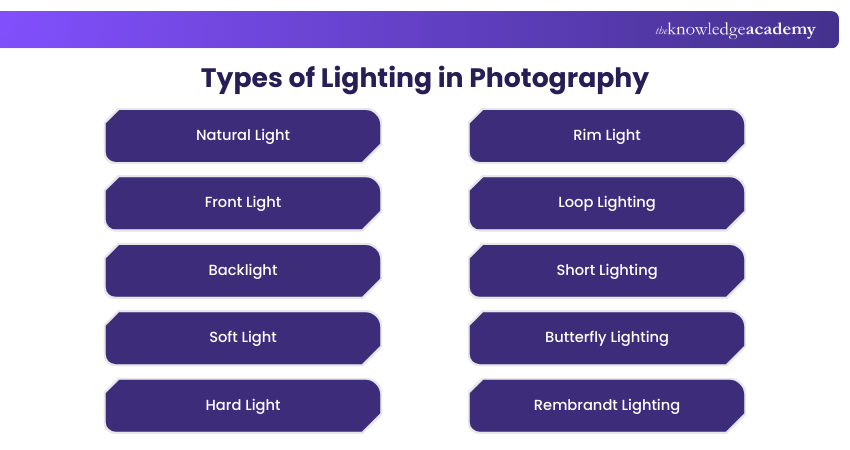
Photography Lighting encompasses various techniques. Experimenting with these techniques adds creativity to Photography. Here is a list of the many techniques used:
1) Natural Light
The natural light technique in photography harnesses the sun's illumination, exploiting its changing angles and colour temperature throughout the day. Photographers utilise the soft, warm light of the golden hour that occurs shortly after sunrise or before sunset.
The technique allows for gentle shadows, rich colours, and an ethereal quality that enhances portraits, landscapes, and various subjects. However, adapting to the unpredictable nature of natural light requires flexibility and timing to achieve captivating visuals with a distinct, natural charm.
2) Front Light
The front light technique in photography involves positioning the light source in front of the subject, eliminating shadows and evenly illuminating the scene. It's commonly used in portrait Photography, providing even illumination on the subject's face.
While it minimises texture and can create a flat appearance, careful adjustments in positioning and intensity can produce soft, pleasing results. This technique is suitable when a clean, well-lit representation of the subject is desired, often used in fashion or beauty Photography for its flattering and straightforward nature.
3) Backlight
Backlighting occurs when the light source is placed behind the subject, creating striking effects such as silhouettes, glowing edges, and long dramatic shadows. It’s especially effective during golden hour, adding depth and atmosphere to portraits, landscapes, and creative outdoor shots.
However, backlighting can cause issues like incorrect white balance or loss of detail in the subject. While this is ideal for silhouettes, you can use a reflector or light diffuser to bounce light onto the front of the subject when you want to retain some facial or surface detail. This makes backlighting both creatively rewarding and technically versatile when handled well.
4) Rim Light
The rim light technique in photography involves placing a light source behind the subject, just out of the camera's view, creating a luminous outline or ‘rim’ around the subject's edges. This technique separates the subject from the background, adding depth and dimension to the image.
Rim lighting is commonly used to emphasise the contours of a subject, especially in portraits, and to create a sense of drama and intrigue. It can transform an ordinary scene into something captivating and visually striking, drawing the viewer's attention to the subject's form and creating a sense of separation from the surroundings.
Boost your creative career with our Fashion Designing Training and start designing stunning collections today.
5) Loop Lighting
The loop light technique in photography is a classic portrait lighting setup where the light source is positioned slightly above and to the side of the subject's face, casting a small shadow of the nose that resembles a loop.
Furthermore, this technique is flattering and commonly used for portrait photography as it accentuates facial features while adding dimension. The loop light technique creates a soft, natural look that is both engaging and appealing.
6) Short Lighting
The short light technique in photography involves illuminating the side of the subject's face turned away from the camera. This positioning creates a play of light and shadow that results in a more dramatic, sculpted look.
Now by emphasising the contours and angles of the subject, short light adds depth and character to portraits. It's particularly effective for creating mood and highlighting textures.
7) Butterfly Lighting
The butterfly lighting technique, also known as paramount lighting, places the light source directly in front and above the subject's face, casting a slight shadow under the nose that resembles a butterfly's wings.
This setup creates a flattering, symmetrical illumination that minimises shadows and highlights facial features. Commonly used in portrait photography, the butterfly lighting technique produces a soft, even complexion while adding a subtle depth to the subject's eyes.
8) Rembrandt Lighting
Rembrandt lighting creates a distinctive triangle of light on the cheek opposite the light source by placing the main light at a 45-degree angle. This technique adds mood, depth, and character, making it a classic choice in portrait photography.
It is ideal for producing expressive, dramatic images with a strong sense of storytelling. Although it is commonly used in studio settings, you can also achieve it with natural window light. Its striking contrast and artistic appeal make it a favourite among Portrait Photographers.
Photoshoot Lighting Setup: How Position Plays a Role
The position of a light source in relation to a subject has a major impact on how a photograph looks. Moving either the light or the subject changes where shadows fall, which directly affects detail, mood, and overall visual depth in the image.
a) Front Lighting: Front lighting occurs when the light shines directly toward the subject. This setup clearly reveals details because shadows fall behind the subject, but the result can sometimes appear flat and less dramatic.
b) Side Lighting: Side lighting hits the subject from one side, creating shadows that add depth and texture. Even small adjustments in angle can significantly change how flattering or dramatic the image appears.
c) Back Lighting: Back lighting places the light behind the subject, often producing a silhouette effect. With proper exposure control or a reflector, it can also create a glowing outline and a visually striking portrait.
Photography Lighting Basics: Soft Light Vs. Hard Light
Quality of light defines the softness or dynamism of a picture. The intensity can remain the same, but the manner in which light shifts to shadow will alter the mood, the clarity and texture of the subject.
Hard Light
Hard light produces a heavy contrast with a clear division of bright and dark spaces. It tends to give distinct shadows and a more contrasted effect that can be dramatic but also result in accentuating the skin blemish or a heavy shadow under the eyes of the portrait.
Soft Light
The soft light creates a gradual effect where light and shadow are shifted gradually. The softer shadows assist in maintaining detail where the shadows are darker and tend to be more acceptable in portraits since they soften the look of the blemishes and the hard lines.
What Regulates Softness of Light?
Big sources produce a diffused light, whereas the small sources produce stiffer shadows. Distance matters, too. A light in any of the positions that seem close to the subject is less intense, and as one walks the subject further, the shadows become more pronounced and clearer.
Natural Examples
The sun is usually hard as it is during midday, but the presence of clouds acts as a diffuser and mellow out the light. Reflectors, umbrellas, and softboxes, likewise, can be used to diffuse the light to increase the area and thus the soft look.
Want your music to stand out as sharply as a perfectly lit shot? Join our Mixing and Mastering Course soon!
Examples of Photography Lighting Setups
Different lighting setups can change how your photos look and feel. By trying out simple tools like diffusers, reflectors, and flash angles, you can make your pictures brighter, softer, or more balanced. Here are a few easy setups to help you get started:
1) Firing the Flash Through a Diffuser
Using a diffuser softens the harsh, direct light from a flash, reducing strong shadows and bright spots. It spreads the light more evenly, creating a natural and flattering look for portraits or close-up shots.
A simple principle to remember is that you need to place a larger diffuser at a very close distance to the subject. This technique produces softer light. Attaching a diffuser directly to your flash is an easy way to improve your lighting and achieve more professional-looking images.
2) Firing the Flash at an Umbrella / Reflector
Bouncing your flash into an umbrella or reflector helps soften the light, so it spreads gently over your subject. This creates bright, clean photos with fewer shadows, which is why it is often used in portrait and studio photography.
A reflective umbrella gives stronger light, while a shoot-through umbrella makes the light even softer. You can also use a reflector to fill in shadows and make the lighting look more natural and balanced. You can also bounce the flash off walls, ceilings, or outdoor surfaces like buildings or large rocks when you don’t have a diffuser.
3) Combining Diffusers and Reflectors
Using diffusers and reflectors together helps you control your lighting more easily. The diffuser softens the main light, while the reflector bounces light back onto any dark areas. This creates an even and natural-looking photo, which works well for portraits, close-ups, and indoor shots.
By changing the angle or distance of each tool, you can adjust how bright or soft the light looks. This setup is an easy way for both beginners and pros to get clean, professional-looking lighting without needing complicated equipment.
Conclusion
Understanding Photography Lighting helps your images feel more intentional and visually engaging. Small changes in light can shift mood, depth, and focus instantly. Try these techniques in your next shoot and see the difference yourself.
Discover new ways to unwind and express yourself with our Hobbies & Interests Training – Begin your journey now!
Frequently Asked Questions
What Type of Lighting is Best for Photography?

Natural light is often best for photography because it provides soft, even illumination. For controlled environments, softbox or diffused lighting is ideal to avoid harsh shadows.
What are the Seven Principles of Photography?
The seven principles of photography are:
1) Balance
2) Contrast
3) Emphasis
4) Movement
5) Pattern
6) Rhythm
7) Unity
What are the Other Resources and Offers Provided by The Knowledge Academy?
The Knowledge Academy takes global learning to new heights, offering over 3,000+ online courses across 490+ locations in 190+ countries. This expansive reach ensures accessibility and convenience for learners worldwide.
Alongside our diverse Online Course Catalogue, encompassing 17 major categories, we go the extra mile by providing a plethora of free educational Online Resources like Blogs, eBooks, Interview Questions and Videos. Tailoring learning experiences further, professionals can unlock greater value through a wide range of special discounts, seasonal deals, and Exclusive Offers.
What is The Knowledge Pass, and How Does it Work?
The Knowledge Academy’s Knowledge Pass, a prepaid voucher, adds another layer of flexibility, allowing course bookings over a 12-month period. Join us on a journey where education knows no bounds.
What are the Related Courses and Blogs Provided by The Knowledge Academy?
The Knowledge Academy offers various Hobbies & Interests Courses, including the Fashion Designing Training, Filmmaking Course, and Mixing and Mastering Course. These courses cater to different skill levels, providing comprehensive insights into Building Confidence.
Our Business Skills Blogs cover a range of topics related to Photography Lighting, offering valuable resources, best practices, and industry insights. Whether you are a beginner or looking to advance your Shadow Management skills, The Knowledge Academy's diverse courses and informative blogs have got you covered.

The Knowledge Academy


Global Training Provider
The Knowledge Academy is a world-leading provider of professional training courses, offering globally recognised qualifications across a wide range of subjects. With expert trainers, up-to-date course material, and flexible learning options, we aim to empower professionals and organisations to achieve their goals through continuous learning.


 If you wish to make any changes to your course, please


