


 Top Rated Course

We may not have the course you’re looking for. If you enquire or give us a call on +91-181-5047001 and speak to our training experts, we may still be able to help with your training requirements.
How to Become a Board Member: A Step-by-Step Guide
James Smith 03 March 2026Becoming a Board Member requires leadership experience, networking, and strategic skills, offering a rewarding opportunity to shape organisational success. It also demands strong decision-making, ethical judgement, and long-term vision. With the right mindset and preparation, professionals can step into powerful leadership roles.

Training Outcomes Within Your Budget!
We ensure quality, budget-alignment, and timely delivery by our expert instructors.
Table of Contents
Have you ever sat in a meeting thinking, “I could help steer this in a better direction”? Becoming a Board Member puts you in the room where strategy is shaped and big decisions are made. It is not just a title; it is a chance to influence outcomes, support meaningful goals, and lead with purpose. If you are driven by ideas, impact, and long-term thinking, learning How to Become a Board Member could be your next big step.
In this blog, we will explore what a Board Member does, the key responsibilities, required skills, and potential costs. We will also outline the steps on How to Become a Board Member so you can confidently work toward earning a seat where important decisions are made.
Table of Contents
1) What is a Board Member?
2) Steps to Becoming a Board Member
3) Understanding the Role of a Board Member
4) Daily Responsibilities of a Board Member
5) What Qualifications and Skills do I Need to Join a Company Board?
6) Conclusion
What is a Board Member?
A Board Member is someone who helps lead an organisation at the highest level, whether it is a business or a nonprofit. They guide the long-term direction, support financial stability, and make decisions that shape the organisation’s future. Some Board Members have specific roles, while others support wider goals and discussions.
Their job also includes reviewing how well the board is working and whether each member is contributing effectively. Simply put, a Board Member helps keep the organisation on the right path and holds Leadership accountable.
Key Points:
a) Strategic Guidance: Board Members help plan the organisation’s future and overall direction.
b) Financial Responsibility: They make sure the organisation stays financially healthy and uses its resources wisely.
c) Different Roles: Some Board Members have specific duties, while others support general decision-making.
d) Selection Process: Members are chosen through elections or appointments, based on the organisation’s rules.
e) Payment Varies: Some Board Members are paid, while others volunteer. When paid, compensation is usually decided by an internal committee.

Steps to Becoming a Board Member
Discover the key steps on How to Become a Board Member and unlock your potential to influence an organisation’s future. Let’s dive in:
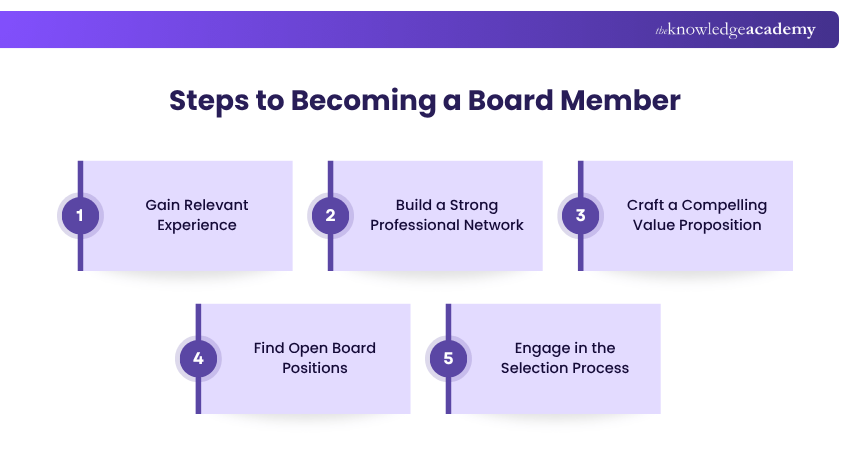
1) Gain Relevant Experience
Standing Board Members greatly value candidates with relevant experience. While becoming a Board Member of a company without an extensive background is possible, a proven track record instils confidence in organisations that you understand the role's demands and can effectively contribute to their mission. Leadership Team Development can also help you refine the strategic skills required for such a role.
You can showcase your passion for the field in various ways. This could include holding leadership positions, participating in workshops or conferences, and obtaining additional degrees or certifications.
2) Build a Strong Professional Network
While studying Board Members' duties, qualifications and expectations is valuable, networking is proven to be the most effective way to learn. Attend industry conferences, join relevant associations and connect with professionals currently serving on boards or in your area of interest. Building relationships with existing Board Members can create opportunities for future involvement and mentorship.
3) Craft a Compelling Value Proposition
Board Member positions are highly competitive, so it’s essential to cultivate specific skills that spotlight your value to organisations. Develop a clear value proposition highlighting what you can contribute as a Board Member.
Identify your unique strengths, such as financial acumen, leadership abilities or industry expertise, and tailor your value proposition to align with the organisation's specific needs. This targeted approach will help you stand out as a strong candidate.
4) Find Open Board Positions
Once you’ve assessed your qualifications and readiness for a board position, you can begin the formal application process.
Start by researching board openings that align with your expertise and interests. Nonprofits, corporate boards, and industry-specific organisations frequently list vacancies. Additionally, tap into your network for potential leads or use professional services that connect candidates with board opportunities.
5) Engage in the Selection Process
Becoming a Board Member involves more than expressing interest; it includes a thorough interview process. This allows leaders, such as the Board Chair or Executive Director, to understand candidates beyond their applications, which can also be relevant when considering theBoard of Directors Salary. Depending on the number of applicants, interviews may be limited to top candidates or open to all.
Learn how to identify actions for resolving vendor issues and disputes with our Vendor Management Training – Register today!
Understanding the Role of a Board Member
A board of directors includes different roles; each focused on a specific part of helping the organisation run well. The exact roles can differ based on the company’s needs, so it is useful to understand the common Types of Directors. Here are the key positions:
a) Chair: Leads the board, runs meetings and oversees the performance of the chief executive.
b) Vice Chair: Supports the chair and takes over when the chair is not available.
c) Secretary: Keeps records of board meetings and important documents, and makes sure the board follows legal and ethical rules.
d) Treasurer: Manages the organisation’s finances and ensures all Financial Management reporting is accurate and compliant.
e) Executive Board Directors: Work within the organisation’s daily operations and act as a link between leadership and the board.
f) Non-executive Board Directors: Do not manage daily work but provide independent advice, oversight, and strategic direction.
Improve decision making and problem solving at senior levels with our Senior Management Training – Join now!
Daily Responsibilities of a Board Member
While exact responsibilities can vary based on an individual’s role on the board, several everyday duties are expected of most Board Members. These include:
a) Setting a Strategic Vision: This involves contributing to developing and conveying the organisation's long-term goals.
b) Attending Board Meetings: This involves participating in regular meetings to discuss and decide on key issues.
c) Appointing and Monitoring Executives: This involves selecting executive leadership and assessing their performance to ensure alignment with the organisation’s objectives.
d) Guiding Organisational Decision-making: This involves providing insights and perspectives that inform critical decisions affecting the organisation.
e) Collaborating with Board Members and Executives: This involves working closely with fellow Board Members and executives to foster a cohesive governance structure.
f) Maintaining Legal, Ethical, and Financial Responsibilities: This involves ensuring compliance with laws and regulations and upholding the organisation’s ethical standards.
g) Reviewing Budgets and Assessing Projects: This involves analysing financial plans and evaluating the viability of proposed initiatives.
h) Representing the Organisation at Events: This involves acting as an ambassador for the organisation at public events and networking opportunities.
What Qualifications and Skills do I Need to Join a Company Board?
Boards welcome individuals with a wide range of skills, backgrounds and experiences. Since board responsibilities are diverse, having members with expertise in areas such as HR, marketing, finance, administration, community engagement, and policy helps a lot. Many boards also value members with lived experiences that reflect the communities they serve.
When expressing an interest in being a Board Member, you can indicate your qualifications, areas of experience and subjects you’d like to contribute to. In many cases, prior board experience isn’t required. All you need is enthusiasm, professionalism and relevant expertise to make a valuable contribution.
Conclusion
Learning How to Become a Board Member means understanding the role, building strong networks and showing the true value you bring to the table. With the right experience, smart opportunities and thorough interview preparation, you can increase your chance of earning a seat at the table. Each step brings you closer to the boardroom, where your ideas and leadership can make a real impact.
Develop essential communication, negotiation, and conflict resolution skills with our Management Courses – Join today!
Frequently Asked Questions
Who is Eligible for the Board of Directors?

Eligibility typically includes individuals with relevant experience, skills, or expertise. Generally, candidates should understand the organisation’s industry and demonstrate leadership capabilities, often requiring background checks and adherence to legal and ethical standards.
What is the Salary of a Board of Directors?
Board Member salaries vary widely based on the organisation's size, type, and location. Compensation may range from nominal fees for nonprofits to substantial wages and stock options in public corporations, reflecting the member's experience and the board's responsibilities.
What are the Other Resources and Offers Provided by The Knowledge Academy?
The Knowledge Academy takes global learning to new heights, offering over 3,000+ online courses across 490+ locations in 190+ countries. This expansive reach ensures accessibility and convenience for learners worldwide.
Alongside our diverse Online Course Catalogue, encompassing 17 major categories, we go the extra mile by providing a plethora of free educational Online Resources like Blogs, eBooks, Interview Questions and Videos. Tailoring learning experiences further, professionals can unlock greater value through a wide range of special discounts, seasonal deals, and Exclusive Offers.
What is The Knowledge Pass, and How Does it Work?
The Knowledge Academy’s Knowledge Pass, a prepaid voucher, adds another layer of flexibility, allowing course bookings over a 12-month period. Join us on a journey where education knows no bounds.
What are Related Courses and Blogs Provided by The Knowledge Academy?
The Knowledge Academy offers various Management Courses, including Directors Development Training, Chief Operating Officer Training, and Operations Management Training. These courses cater to different skill levels, providing comprehensive insights into Sustainability in Business Examples.
Our Business Skills Blogs cover a range of topics related to Management, offering valuable resources, best practices, and industry insights. Whether you are a beginner or looking to advance your Management Skills, The Knowledge Academy's diverse courses and informative blogs have got you covered.

James Smith


Digital Marketing Manager and Trainer
James Smith is a digital marketing professional with over a decade of experience in SEO, content strategy, paid media and analytics. He has supported both SMEs and global brands in transforming their digital presence. James’s writing and training are rooted in results-driven tactics and the latest marketing trends.
View Detail
Upcoming Business Skills Resources Batches & Dates
Date
 Directors Development Training Course
Directors Development Training Course
Thu 25th Jun 2026
Directors Development Training Course
Thu 15th Oct 2026
Directors Development Training Course
Thu 3rd Dec 2026

 If you wish to make any changes to your course, please


