


 Top Rated Course


We may not have the course you’re looking for. If you enquire or give us a call on +91-181-5047001 and speak to our training experts, we may still be able to help with your training requirements.
Bookkeeper Job Description: Duties, Skills, and Qualifications
Olivia Taylor 20 January 2026Bookkeeper responsibilities include recording transactions, handling payables and receivables, reconciling accounts, and preparing financial reports. The role ensures financial accuracy and regulatory compliance. It supports smooth cash flow and informed business decisions consistently across the organisation.
Home
 Resources
Accounting and Finance
Bookkeeper Job Description: Duties, Skills, and Qualifications
Resources
Accounting and Finance
Bookkeeper Job Description: Duties, Skills, and Qualifications
Resources
Accounting and Finance
Bookkeeper Job Description: Duties, Skills, and Qualifications

Training Outcomes Within Your Budget!
We ensure quality, budget-alignment, and timely delivery by our expert instructors.
Table of Contents

A strong financial foundation relies on accuracy and consistency. Understanding the Bookkeeper Job Description will help in understanding how this position contributes to both the stability and the growth of a business.
A Bookkeeper Job Description indicates much more than just doing routine transactions; it also signifies being liable for compliance and facilitating intelligent decision-making. Let's have a look at the main responsibilities and the essential qualifications involved below.
Table of Contents
1) Who is a Bookkeeper?
2) Bookkeeper Duties and Responsibilities
3) Skills Required for a Bookkeeper
4) Qualifications of a Bookkeeper
5) Bookkeeper Job Description Examples
6) Salary Range for Bookkeepers
7) Can You Do Bookkeeping Without Qualifications?
8) Conclusion
Who is a Bookkeeper?
A Bookkeeper Job Description involves recording and maintaining a business’s financial transactions, including purchases, expenses, sales revenue, invoices, and payments. Bookkeepers enter this data into general ledgers, which are used to prepare key financial statements such as the balance sheet and income statement.
They typically manage the first six steps of the Accounting cycle, such as identifying, recording, and classifying transactions. Accountants usually handle the final steps, including adjustments and closing entries. While bookkeepers focus on accurate recordkeeping, Accountants analyse the data for compliance, performance insights, and strategic planning.

Bookkeeper Duties and Responsibilities
The responsibilities and duties of a bookkeeper revolve around the production of precise financial documents and the facilitation of daily financial activities in an uninterrupted manner.
a) Record financial transactions, including invoices, payments, income, and receipts
b) Maintain accurate records using accounting software and spreadsheets
c) Reconcile bank accounts and identify discrepancies
d) Prepare financial statements such as profit and loss reports and balance sheets
e) Manage accounts payable and receivable to track cash flow
f) Complete VAT returns and supports regulatory financial submissions
g) Process payroll, expenses, and employee wages accurately
Support accountants with audits and year-end accounts preparation.
Join the Bookkeeping Course to develop practical accounting skills and strengthen your finance career with confidence.
Skills Required for a Bookkeeper
Bookkeepers rely on a diverse set of skills to excel in their roles. Here are some key skills and qualifications that successful Bookkeepers typically possess:

Qualifications of a Bookkeeper
The qualifications necessary to be eligible for the Bookkeeper’s post can differ depending on the organisation’s requirements. Here is a basic qualification’s list that the employers will want to include in their Bookkeeper Job Description:
1) A high school diploma or equivalent is required. Some employers may prefer candidates with an associate degree in Accounting, Finance, or a related field.
2) A clear understanding of double-entry Bookkeeping, general ledger functions, and the Accounting cycle is essential.
3) Hands-on experience with tools such as QuickBooks, Xero, Sage, or similar platforms is expected in most Bookkeeping roles.
4) Bookkeepers must maintain error-free financial records and ensure precise transaction tracking.
5) Strong time management and document-handling skills are important for maintaining orderly financial records and meeting reporting deadlines.
Register for our Introduction to Credit Control Course to excel the art of managing credit and boosting financial stability!
Bookkeeper Job Description Examples
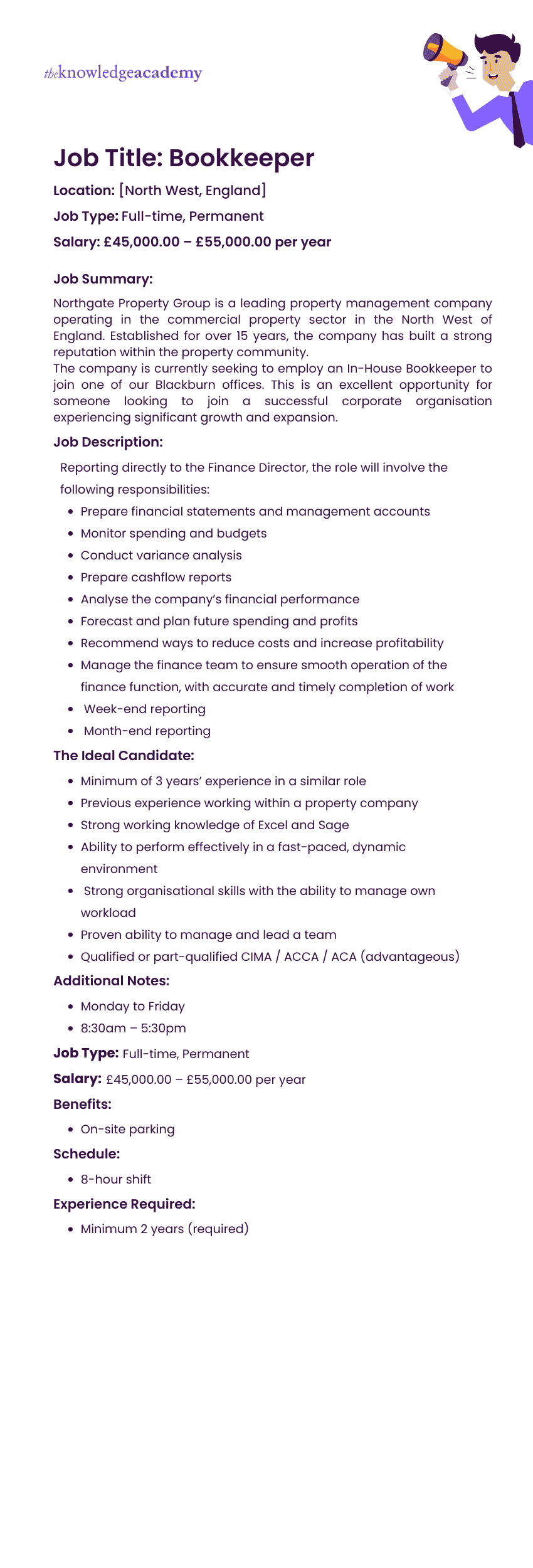
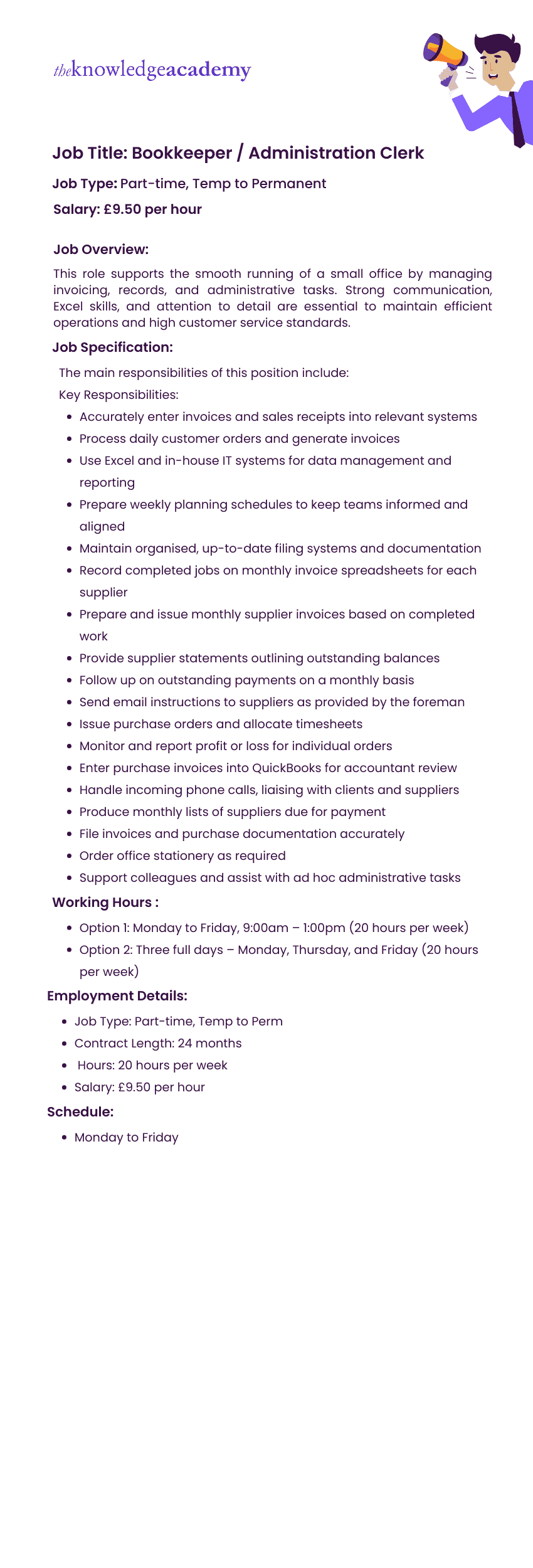
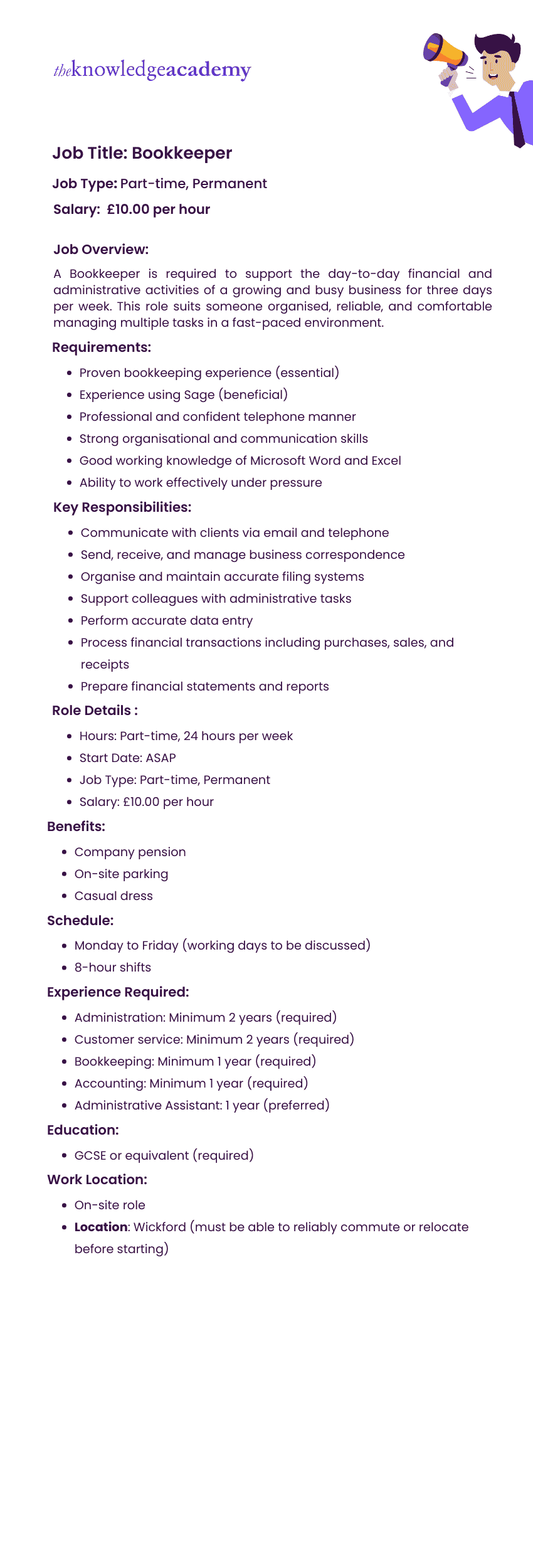
Bookkeeper Roles can vary depending on the size and nature of the organisation. Below are two examples that highlight the responsibilities and requirements for bookkeepers in different business settings.
Example 1
Example 2
Example 3
Salary Range for Bookkeepers
Bookkeeper salaries can vary depending on factors such as geographical locations, experience, certification, and industry. Here are the average annual salaries across three major regions:
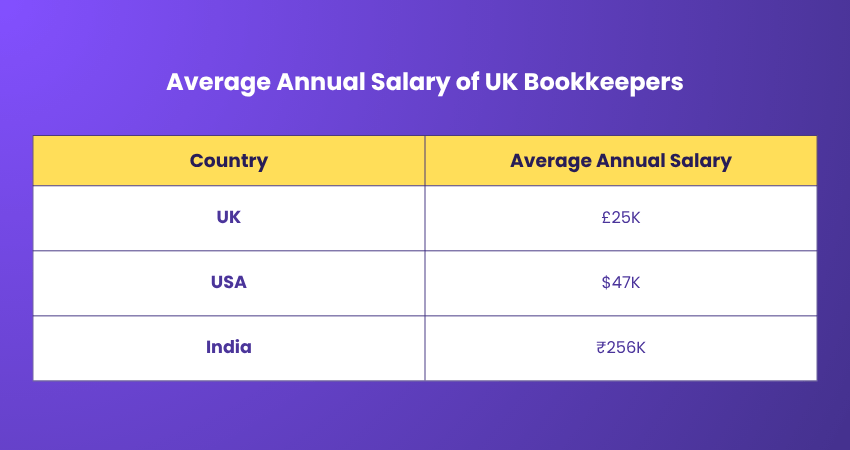
Can You Do Bookkeeping Without Qualifications?
You don't need any formal qualifications to start a career in Bookkeeping. Many successful Bookkeepers have built their careers through practical experience and on-the-job learning, including roles in Outsourced Bookkeeping. A substantial portion of successful Bookkeepers don’t actually have traditional academic credentials. This highlights that practical skills and experience can be just as valuable in this field. Employers often value real-world experience and the ability to handle financial tasks efficiently.
Take control of your financial future! Join our Financial Management Training now!
Conclusion
A clear Bookkeeper Job Description reveals the importance of this position in keeping precise documents and assisting in making smart business choices. If the appropriate qualifications and duties are set, bookkeepers will further be significant in the overall success of the organization in the long run.
Join our Cash Flow Training and enhance your expertise for a brighter financial future!
Frequently Asked Questions
What are the Two Kinds of Bookkeeping?

The two kinds of Bookkeeping are single-entry and double-entry. Single-entry is a simple system for small businesses, recording one side of each transaction. Double-entry records both debit and credit sides, ensuring accuracy and balancing the books.
Why is Hiring a Bookkeeper Important?
Hiring a Bookkeeper ensures accurate financial records, timely reporting, and better cash flow management. They help businesses stay organised, support compliance with tax laws, reduce errors, and allow owners to focus on growth rather than daily financial tasks.
What are the Other Resources and Offers Provided by The Knowledge Academy?
The Knowledge Academy takes global learning to new heights, offering over 3,000+ online courses across 490+ locations in 190+ countries. This expansive reach ensures accessibility and convenience for learners worldwide.
Alongside our diverse Online Course Catalogue, encompassing 19 major categories, we go the extra mile by providing a plethora of free educational Online Resources like Blogs, eBooks, Interview Questions and Videos. Tailoring learning experiences further, professionals can unlock greater value through a wide range of special discounts, seasonal deals, and Exclusive Offers.
What is The Knowledge Pass, and How Does it Work?
The Knowledge Academy’s Knowledge Pass, a prepaid voucher, adds another layer of flexibility, allowing course bookings over a 12-month period. Join us on a journey where education knows no bounds.
What are the Related Courses and Blogs Provided by The Knowledge Academy?
The Knowledge Academy offers various Accounting Courses, including the Project Accounting Course, Project Accounting Course, and Accounting and Financial Statement Analysis Training. These courses cater to different skill levels, providing comprehensive insights into Double-Entry Bookkeeping.
Our Accounting and Finance Blogs cover a range of topics related to Bookkeeper Job Description, offering valuable resources, best practices, and industry insights. Whether you are a beginner or looking to advance your Accounting and Finance skills, The Knowledge Academy's diverse courses and informative blogs have got you covered.

Olivia Taylor


Chartered Accountant and Financial Training Specialist
Olivia Taylor is a qualified chartered accountant with over a decade of experience in financial management, auditing and corporate reporting. Having worked with leading firms in both the public and private sectors, Olivia brings clarity to complex financial topics. Her writing focuses on helping professionals build confidence in key areas of accounting, compliance and financial planning.
View Detail

 If you wish to make any changes to your course, please


