


 Top Rated Course

We may not have the course you’re looking for. If you enquire or give us a call on + 800 908601 and speak to our training experts, we may still be able to help with your training requirements.
What is a Patent? A Beginner’s Guide to Intellectual Property
Hailey Davis 24 November 2025A Patent is a legal document granted by a government that gives an inventor exclusive rights to an invention for a set period, typically for twenty years. Patents benefit inventors by providing them legal protection of their inventions. They also benefit the society by providing public access to technical information about the inventions.

Training Outcomes Within Your Budget!
We ensure quality, budget-alignment, and timely delivery by our expert instructors.
Table of Contents

Ever wondered what protects an investor’s idea from being stolen or copied? That’s where the concept of What is a Patent comes into play. A patent gives investors the exclusive right understanding where a patent is becomes essential. It plays a vital role in protecting intellectual property and encouraging innovation.
In this blog, you will learn What is a Patent, why it’s important, and how it applies to your ideas. Whether you are aspiring inventor or just curious, this is the place to start. Keep reading to explore the essentials of patent law.
Table of Contents
1) What is a Patent?
2) Importance of Patent
3) Types of Patents
4) How do Patents Work?
5) Benefits of Patent
6) Examples of Patents
7) Patents vs Trademarks vs Copyrights
8) Conclusion
What is a Patent?
A Patent is a lawful document that grants property right to an inventor by an authority. This gives the inventor rights to the Patented process. This includes even design, or invention. This is given for some time for a comprehensive disclosure of the invention. Patents are a form of incorporeal right.

Importance of Patent
Patents are a necessity for inventors and businesses. This is because they provide legal protection, incentivise innovation, and create a competitive edge. Patents are also known to grant exclusive rights to an invention. Thus, this prevents others from making, using, or selling it without permission for a limited period. Eventually, it fosters further research and development.
Patent Research
Patents are known to be very important for research and development efforts. They effectively protect your new inventions. This, in the long run, allows you to share your findings. All of this can be done extensively without the fear that your ideas might be stolen.
Information Access
Patents require detailed public disclosures about your inventions. These, on a large scale, adds to technical knowledge. This transparency can inspire others to improve on your technology, fostering a culture of Continuous Development and Enhancement.
Legal Protection
A Patent provides legal recognition of an invention. It also enhances the inventor's credibility. A Patent demonstrates that the invention is unique and meets certain criteria of Patentability. This, itself, can improve a company's reputation and build Brand Trust with customers, partners, and investors.
Learn how to draft a contract by doing the Commercial Contracts Management Training Course Join in today!
Industry Expertise
Industry expertise plays a crucial role in navigating the world of Patents. It helps in understanding technical nuances, identifying market opportunities, and developing effective strategies for Patent prosecution and commercialisation.
Investor Negotiation
In investor negotiations, a Patent is a valuable asset that can increase a company's perceived value. It can also improve its ability to secure funding. A strong Patent portfolio demonstrates innovation and provides a competitive advantage. This helps in making the company more attractive to investors.
Priority Treatment
Patents might also lead to preferential treatment in government contracts and grants. The government bodies may favour you for funding and partnership opportunities. This will be good as they will ultimately recognise the value of your innovative technology.
Licensing Deals
You can license your Patents to others. This will help you in making more revenue streams. These agreements allow others to use your Patented technology while generating financial returns for you.
Market Advantage
A Patent gives a company a distinct advantage in the marketplace by protecting its unique technology. It can be used to stop competitors from getting in the market or replicating the Patented invention. This will give more market share, profitability, enhanced Brand Loyalty and reputation.
Types of Patents
There are various kind of Patents with relation to various inventions that you have probably not through about yet. So, below given are the three types of Patents. Go through them and you will know about the three main type of Patents:

Utility Patents
Utility Patents are known to protect the functional aspects of an invention. These can include how a machine works or how a process is performed. Utility Patents are the most common type of Patent. Examples of it can include new devices, software, chemical compounds, and technological advancements.
Design Patents
Design Patents are known to protect the visual appearance of a manufactured item. This means that it solely focuses on its ornamentation and shape. Design Patents are useful for protecting the aesthetic qualities of a product. Examples of it can include the design of a safety goggle.
Plant Patents
Plant Patents are known to go to anyone who produces, discovers, and invents a new kind of plant. However, it is particularly plants that are capable of reproduction. These Patents are granted for twenty years from the date of filing. Please note that no amount of maintenance fees applies to Plant Patents.
Wanting to make an impact in the world of business through law? Here is the Business Contract Law Training solely for you!
How do Patents Work?
Patents are a very important legal document that is given to inventors. This very right prevents any other party from producing, consuming, distributing, or shipping in the product without the Patent holder’s permission. This is why it is important for you to know about the workings of a Patent.

Unauthorised Protection
A Patent lets a producer have rights to his creation. This ultimately allows them to prevent others from making, using, or selling it for a specific period. Unauthorised Protection is a legal mechanism to incentivise innovation by giving inventors temporary control over their creations. Any form of illegal use of a Patented invention is considered Patent infringement.
Exclusive Rights
A Patent grants the holder exclusive rights to an invention. This prevents others from making, using, selling, or importing the invention for a limited period. This is why exclusive rights is a key feature of Patent protection. It enables inventors to benefit financially from their innovations.
Patent Validity
Patent validity refers to the legal process of determining whether a Patent meets the necessary conditions to be enforceable. For a Patent to be valid, the invention must be new. However, not all inventions are Patentable. Furthermore, some Patent's validity is limited. So, you must pay annual renewal fees to ensure your Patent remains valid throughout its duration.
Know how to prepare a statement that specifies product requirements through the Specification and Service Level Agreement Training!
Knowledge Innovation
Patents require inventors to fully disclose their inventions in the application process. This helps in making the knowledge publicly available. Also, this public disclosure allows others to learn from and build upon existing inventions. This helps in fostering further innovation, dissemination of knowledge, and accelerates technological advancements.
Legal Recourse
A Patent provides legal recourse by granting the inventor rights to stop others from making, using, or selling their invention for a given time. If someone infringes on a Patent, the Patent holder can act legally to stop them and seek compensation for damages.
Rights Ownership
The Patent holder can make, use, sell, and distribute the Patented product or process. He can also allow others to use the invention in exchange for royalties or a one-time fee. The Patent can also be sold or transferred to another party. Furthermore, the holder can also make money by licensing, selling, or using the Patented invention.
Variety of Patent Types for Different Innovations
Patents are respectively of three main types. This includes utility Patents for new inventions and processes, design Patents for unique visual designs, and put Patents for shrub types. These various kinds of Patents cater to different priorities. Thus, its essential for you to know them all.
Benefits of Patent
Patents are known to offer several key benefits to inventors. They primarily grant inventors exclusive rights to their inventions. This brings in innovation and increased financial gains. The other benefits are as listed below:

a) Exclusive Rights: Patents lets inventors keep others away from making, using, selling, or importing their invention for a limited time. The time is respectively twenty years. This exclusivity protects the inventor's innovation and investment.
b) Competitive Advantage: A Patent provides a significant advantage in the market. So, this helps in making it harder for competitors to replicate or sell similar products or processes.
c) Financial Opportunities: Patents can lead to higher profits. This is done either through premium pricing, licensing fees, or by selling the Patent outright. It can also attract investors who see the value in a Patented technology.
d) Bringing in Funding: A strong portfolio can make a firm very enchanting to investors. This further goes into hinting a commitment to innovation and intellectual property protection.
e) Increased Company Valuation: Patents can increase the value of a company. As a sole result of this, it helps in making it more attractive for acquisitions or mergers.
f) Encouraging Innovation: The prospect of Patent protection and potential financial gains can encourage inventors and companies. As a result, they will be inspired to invest in research and development, thus leading to further innovation.
g) Public Knowledge Disclosure: Patents require inventors to publicly disclose their inventions. This action helps in making this knowledge available for others to build upon, further promoting innovation.
h) Monetisation Strategies: Patents can be used in various ways to generate revenue. The ways of generating revenue include licensing, selling the Patent, or suing infringers.
Examples of Patents
Here are a few examples of Patents:
Example 1
Sharmine owns a tech firm. They build computers, processors, and laptops. Recently, she came up with a new idea for smartphones to take pictures through both sides. This means that a camera will be installed on both sides of the body panel. As a result, consumers could take images from dual sides.
A convinced Sharmine, files for a design registration with the USPTO for smartphone design. Consequentially, Sharmine launches the product in the market, and it receives a very response. Her firm sets new sales records. However, her first-mover advantage will not last if other firms use the same design. Luckily, Sharmine owns the legal rights. So, any company trying to copy the design legally would be considered an infringement.
Example 2
In 1895, King C. Gillette brought out the concept of use-and-throw blades for safety razors. The Patenting process took six years. At first, only less than three hundred blades and razors were sold. However, soon, the number skyrocketed.
Till 1921, it was a very high-priced product for the public. Then, Gillette launched an updated version. This is because there was need to update the design as the Patent expired. Soon, the new design reduced the cost of production. As a result, the market price was also brought down too.
The price drop brought in a lot of customers. Still, the razor's cost remained at $5. Within years, the Gillette brand grew due to first-mover advantages. It also completed the Patenting process in a very prompt manner.
Patents vs Trademarks vs Copyrights
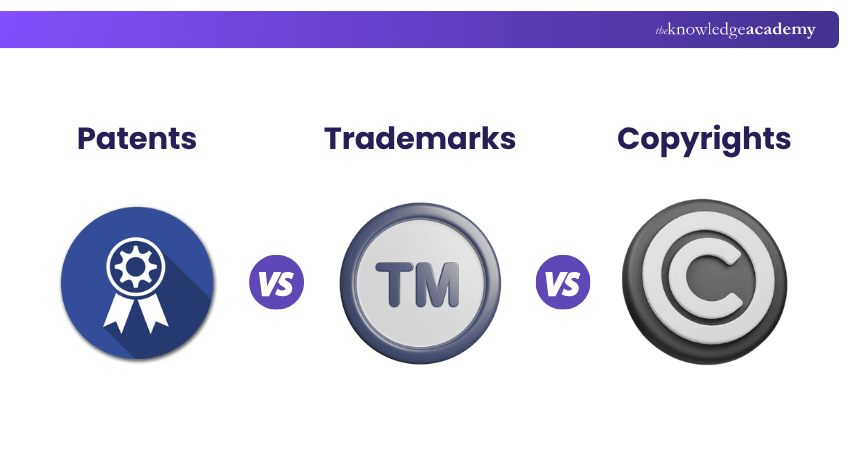
Patents are known to protect inventions and processes. This helps in letting the inventor create, utilise, and market the creation for a limited time. It is known to protect the functionality or design of an invention. However, it does not protect the ideas behind it.
Trademarks are known to protect brand identifiers. Brand identifiers may include names, logos, and slogans used to distinguish goods or services from others. Trademarks, on a wide scale, stops others from using similar marks. This stops the rising confusion among consumers.
Copyrights are known to protect original works of authorship. It helps in granting creators exclusive rights to reproduce, distribute, and adapt their work. It also protects the expression of an idea, and not the idea itself. Copyrights typically last for the author's lifetime plus a certain number of years.
Conclusion
So, by now, you must have understood What is a Patent. By all means, it is a crucial legal document and gives inventors special rights to their creations. By protecting original products and processes, this document encourages new ideas and contributes to economic growth.
This is why understanding the types of Patents, and the application process is essential. This will help in safeguarding intellectual property and ensures inventors receive recognition and benefits for their contributions.
Level up your skills in creating and negotiating contracts through the Specification and Service Level Agreement Training!
Frequently Asked Questions
What are the Five Requirements for a Patent?

The five main requirements for a Patent are:
a) It must be a Patentable subject matter
b) It must be useful
c) It must be novel
d) It must be non-obvious
e) It’s rate of capacity must be high
How Long are Patents Valid?
In the UK, a Patent is valid for a maximum of twenty years. This is applicable from the date of filing the Patent application. However, to keep the Patent in force, annual renewal fees must be paid throughout this period.
What are the Other Resources and Offers Provided by The Knowledge Academy?
The Knowledge Academy takes global learning to new heights, offering over 3,000 online courses across 490+ locations in 190+ countries. This expansive reach ensures accessibility and convenience for learners worldwide.
Alongside our diverse Online Course Catalogue, encompassing 19 major categories, we go the extra mile by providing a plethora of free educational Online Resources like News updates, Blogs, videos, webinars, and interview questions. Tailoring learning experiences further, professionals can maximise value with customisable Course Bundles of TKA
What is The Knowledge Pass, and How Does it Work?
The Knowledge Academy’s Knowledge Pass, a prepaid voucher, adds another layer of flexibility, allowing course bookings over a 12-month period. Join us on a journey where education knows no bounds.
What are the Related Courses and Blogs Provided by The Knowledge Academy?
The Knowledge Academy offers various Contract Management Courses, including the Contract Management Certification Training and Contract Negotiation Course, and the Intellectual Property Training. These courses cater to different skill levels, providing comprehensive insights into 8 Essential Elements of a Contract.
Our ISO & Compliance Blogs cover a range of topics related to Patent, offering valuable resources, best practices, and industry insights. Whether you are a beginner or looking to advance your Project Management skills, The Knowledge Academy's diverse courses and informative blogs have got you covered.

Hailey Davis


Compliance Officer
Hailey Davis is an ISO compliance expert with over 10 years of experience in audit, quality management systems (QMS), and regulatory compliance. She has worked with various industries, including manufacturing, healthcare, and technology, ensuring organisations achieve and maintain ISO certifications. Hailey’s content provides practical, actionable insights on navigating compliance challenges and improving business processes.
View Detail
Upcoming ISO & Compliance Resources Batches & Dates
Date
 Intellectual Property Training
Intellectual Property Training
Fri 10th Apr 2026
Intellectual Property Training
Fri 22nd May 2026
Intellectual Property Training
Fri 10th Jul 2026
Intellectual Property Training
Fri 20th Nov 2026

 If you wish to make any changes to your course, please


