


 Top Rated Course


We may not have the course you’re looking for. If you enquire or give us a call on + 800 908601 and speak to our training experts, we may still be able to help with your training requirements.
10 Guitar Techniques Every Beginner Should Practice
The Knowledge Academy 14 March 2026Guitar Techniques range from picking, fretting, and strumming to bends, vibrato, palm muting, slides, and faster styles like alternate picking and tapping. Playing Guitar needs some techniques to produce different sounds, rhythms, and expressions. They help players gain better control over the instrument and improve sound quality.

Training Outcomes Within Your Budget!
We ensure quality, budget-alignment, and timely delivery by our expert instructors.
Table of Contents

So, you've picked up the Guitar, explored different Guitar Parts and are eager to start strumming away like your favourite rock stars. While enthusiasm is a great starting point, mastering essential Guitar Techniques is key to unlocking your full potential as a musician.
Whether you're a beginner or an experienced player looking to enhance your skills, this blog offers you ten essential Guitar Techniques that are fundamental to your journey as a Guitarist. Let’s dive in!
Table of Contents
1) Essential Guitar Techniques for Better Playing
a) Correct Finger Positioning
b) Smooth Chord Changes
c) Standard Picking Technique
d) Alternate Picking
e) Varied Strumming Techniques
2) How to Learn Every Guitar Technique?
3) How Long Does It Take to Master Guitar Techniques?
4) Conclusion
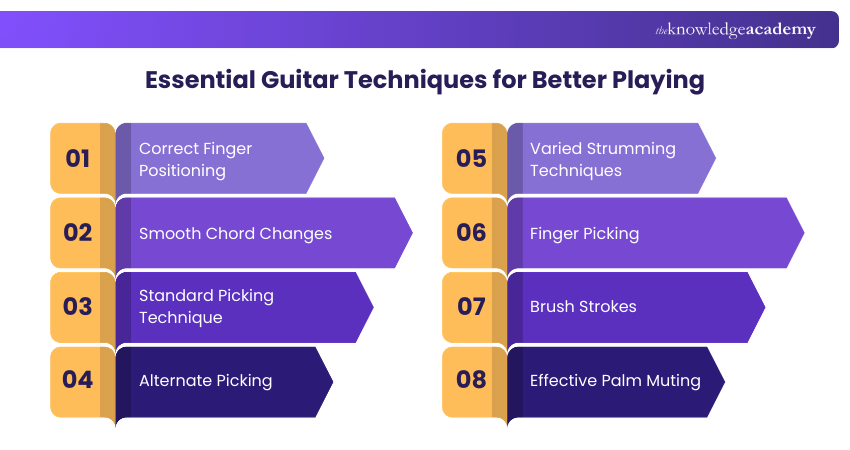
Essential Guitar Techniques for Better Playing
Guitar Techniques are the specific methods and movements Guitarists use with their hands to produce different sounds, rhythms, and expressions on the instrument. These techniques involve how a player picks or strums the strings and how they press, bend, or slide notes on the fretboard.
By learning different Guitar Techniques, players can improve control, play more smoothly, and add emotion and variety to their music. So, here are the techniques that you can practice to produce cleaner notes, better rhythm, and a more expressive Guitar sound:
1) Correct Finger Positioning
The foundation of good Guitar playing starts with proper finger positioning. Your fretting hand should arch over the fretboard, with fingers positioned directly behind each fret to produce clear and precise notes. Avoid pressing too hard because this can cause unnecessary strain and fatigue. Practice touching the frets lightly and precisely, ensuring each note rings out clearly.

2) Smooth Chord Changes
Transitioning between chords seamlessly is a hallmark of proficient Guitar playing. Start by practising fundamental chord changes slowly, focusing on maintaining a consistent rhythm and clean sound. As you become more comfortable, gradually increase your speed and challenge yourself with more complex chord progressions. Consistent practice and patience are vital to mastering smooth chord changes.
3) Standard Picking Technique
Standard picking is the basic method of striking guitar strings using a pick. It typically involves picking the strings in a downward motion to create clear and controlled notes. This technique forms the foundation for many other advanced picking styles. It allows Guitarists to play melodies, riffs, and scales with greater clarity.
4) Alternate Picking
Alternate picking is a technique where the Guitarist alternates between downstrokes and upstrokes while picking the strings. This method increases speed and efficiency, especially when playing fast passages. With regular practice, alternate picking helps improve coordination between the picking hand and the fretting hand.
5) Varied Strumming Techniques
Rhythm is the heartbeat of music, and mastering varied strumming techniques is essential for creating engaging and dynamic performances. To add texture to your playing, experiment with different strumming patterns, including downstrokes, upstrokes, and rhythmic accents. Focus on maintaining a rhythmic tempo and incorporate pauses and syncopation for added flair.
Turn your raw recordings into studio-ready music with our Mixing and Mastering Course – Register today!
6) Finger Picking
Finger picking is a technique where guitarists pluck the strings directly with their fingers instead of using a pick. Each finger is assigned specific strings, allowing multiple notes to be played at the same time. It creates a softer and more intricate sound that is ideal for melodies and arpeggios.
7) Brush Strokes
Brush strokes involve lightly brushing across several strings to produce a gentle and rhythmic sound. This technique is often used in acoustic styles to add subtle dynamics to strumming patterns. When used correctly, they can make a performance sound more expressive and relaxed.
8) Effective Palm Muting
Palm muting adds depth and dynamics to your playing, allowing you to control the intensity of each note. To palm mute, lightly rest the side of your picking hand near the Guitar's bridge while striking the strings. Experiment with different degrees of pressure to achieve the desired muted sound. This technique is standardly used in rock, punk, and metal genres to create a tight and percussive sound.
Explore the world of Music with our Music Production Course – Join today!
9) Barre Chords
Barre chords are movable chord shapes, allowing you to play chords across the fretboard. You can unlock various chord voicings and musical possibilities by barring multiple strings with a single finger. Practice holding down the barre with enough pressure to sound all the strings cleanly, keeping your wrist straight to avoid strain.
10) Mastering Bends, Slides, and Vibrato
Bends, slides, and vibrato are expressive Guitar Techniques that help add emotion and character to your playing. A bend involves pushing or pulling a string to raise the pitch of a note, while a slide allows you to move smoothly from one note to another along the fretboard. Vibrato is created by gently shaking a fretted note to produce a slight variation in pitch. When used together, these techniques make melodies sound more dynamic.
How to Learn Every Guitar Technique?
Learning Guitar Techniques takes time, patience, and consistent practice. Instead of trying to master everything at once, it is better to focus on one technique at a time and practise it slowly until it becomes comfortable. Building strong fundamentals helps improve accuracy, timing, and overall playing ability.
A good approach is to start with basic techniques such as finger positioning, strumming, and picking before moving on to advanced skills like alternate picking, bends, and palm muting. Using a metronome, practising regularly, and learning songs that use these techniques can help you develop better control.
How Long Does it Take to Master Guitar Techniques?
Mastering Guitar Techniques depends on factors like your practice consistency, technique difficulty, natural coordination, and prior musical experience. While every Guitarist learns at a different pace, most players can expect the following general timeline:
1) Basic Techniques (Finger Positioning, Simple Chords, Basic Strumming):
Usually, it takes two to four months with regular daily practice. These techniques help you play clean notes and simple songs.
2) Intermediate Techniques (Barre Chords, Alternate Picking, Smooth Chord Changes):
Often it requires 6 to 12 months of consistent practice. Coordination between both hands improves significantly during this stage.
3) Advanced Techniques (Fast Alternate Picking, Fingerstyle Patterns, Complex Rhythms):
These can take one to three years to develop with accuracy, speed, and control.
4) Full Mastery (Tone Control, Expressive Playing, Fluid Technique Changes):
Achieving true mastery is a long‑term journey that may take several years of continuous improvement and playing experience.
Conclusion
Learning the right Guitar Techniques is an essential step for every beginner who wants to become a confident and skilled player. Each technique plays a significant role in your musical journey, from proper finger positioning to expressive techniques like bends and vibrato. The key to growth is consistency and patience. So, start slowly and gradually increase your speed as your skills improve.
Discover new passions and develop creative skills with our Hobbies & Interests Courses – Join now!
Frequently Asked Questions
What are the Benefits of Learning These Essential Guitar Techniques?

Mastering these Guitar Techniques enhances your playing ability, allowing you to express yourself more creatively and tackle a wider range of musical styles. Additionally, they provide a solid foundation for advanced Guitar learning skills and improvisation techniques.
How Can I Effectively Practice These Guitar Techniques?
Consistent and focused practice is key. Break down each Guitar technique into manageable exercises, practice slowly to ensure accuracy, and gradually increase speed and complexity over time. Remember to incorporate these techniques into your everyday playing to reinforce muscle memory and fluency.
What are the other resources and offers provided by The Knowledge Academy?
The Knowledge Academy takes global learning to new heights, offering over 3,000+ online courses across 490+ locations in 190+ countries. This expansive reach ensures accessibility and convenience for learners worldwide.
Alongside our diverse Online Course Catalogue, encompassing 17 major categories, we go the extra mile by providing a plethora of free educational Online Resources like Blogs, eBooks, Interview Questions and Videos. Tailoring learning experiences further, professionals can unlock greater value through a wide range of special discounts, seasonal deals, and Exclusive Offers.
What is The Knowledge Pass, and how does it work?
The Knowledge Academy’s Knowledge Pass, a prepaid voucher, adds another layer of flexibility, allowing course bookings over a 12-month period. Join us on a journey where education knows no bounds.
What are the Related Courses and Blogs Provided by The Knowledge Academy?
The Knowledge Academy offers various Hobbies and Interests Courses including Guitar Training, Piano Course, and Filmmaking Training. These courses cater to different skill levels, providing comprehensive insights into Careers in Music Production.
Our Business Skills Blogs cover a range of topics related to Guitar Techniques, offering valuable resources, best practices, and industry insights. Whether you are a beginner or looking to advance your Guitar skills, The Knowledge Academy's diverse courses and informative blogs have got you covered.

The Knowledge Academy


Global Training Provider
The Knowledge Academy is a world-leading provider of professional training courses, offering globally recognised qualifications across a wide range of subjects. With expert trainers, up-to-date course material, and flexible learning options, we aim to empower professionals and organisations to achieve their goals through continuous learning.


 If you wish to make any changes to your course, please


