


 Top Rated Course

We may not have the course you’re looking for. If you enquire or give us a call on + 800 908601 and speak to our training experts, we may still be able to help with your training requirements.
Top 11 Benefits of Sustainability for Business
James Smith 05 December 2025Read this blog to uncover the Benefits of Sustainability in Business. Discover how sustainability practices can enhance brand reputation and foster resilience. Explore the myriad ways through which sustainable strategies can elevate business performance. Dive in to contribute towards a responsible and prosperous future.

Training Outcomes Within Your Budget!
We ensure quality, budget-alignment, and timely delivery by our expert instructors.
Table of Contents
While the future hinges on sustainable choices, understanding the Benefits of Sustainability in Business is not just a trend; instead, it’s a necessity. But what does it truly mean to be sustainable, and how does it translate into tangible advantages for companies? This blog delves into the top 11 advantages of Sustainability in Business. It will also reveal how going green can mean saving the planet and enhancing profitability.
So, are you ready to discover how sustainable practices can revolutionise your business model and contribute to a healthier world? Read this blog to explore the Benefits of Sustainability in Business and how integrating them can lead to long-lasting success. Dive in to understand the multitude of ways in which sustainability can positively reshape the corporate landscape.
Table of Contents
1) What is Sustainability in Business?
2) Key Benefits of Sustainability in Business
a) Benefits for the Planet
b) Reduced Costs
c) Enhanced Brand Image and Reputation
d) Risk Management
e) Attracting Investors
f) Tax Benefits
g) Improves Employee Retention
h) Waste Reduction
i) Compliance and Regulation
j) Sector Leadership
3) What are the Benefits of Sustainability in the Workplace?
4) Conclusion
What is Sustainability in Business?
Sustainability in Business refers to a company’s commitment to operate in a way that is socially responsible, environmentally friendly, and economically viable over the long term. It involves integrating Environmental, Social, and Governance (ESG) practices into core operations, decision-making, and growth strategies.
The goal is to generate profit without harming people or the planet, ensuring the business can thrive now and in the future. Also, sustainability opens up new opportunities for innovation, stakeholder trust, and long-term profitability. Some important global issues that these methods help tackle include:
1) Climate change
2) Income inequality
3) Overuse of natural resources
4) Human rights violations
5) Unfair labour practices
6) Environmental pollution
7) Racial injustice
8) Gender inequality

Key Benefits of Sustainability in Business
Beyond fostering socio-environmental progress, sustainability initiatives are instrumental in bolstering an organisation’s success. Contrary to intuition, investing in sustainable practices can enhance a company’s profitability, with research indicating that the most sustainable firms are often the most financially successful.
1) Benefits for the Planet
The essence of sustainable business practices lies in their role in safeguarding our planet. Companies can markedly diminish their ecological footprint through waste minimisation, emission reduction, and efficient resource utilisation.
Moreover, by promoting sustainable supply chains, businesses can champion responsible practices throughout the production lifecycle, aiding in the battle against climate change and the conservation of natural resources.
2) Reduced Costs
Adopting sustainable methodologies can lead to significant operational cost reductions for businesses. Initiatives like energy efficiency, waste reduction, and sustainable sourcing can decrease expenditures over time. For example, transitioning to energy-saving lighting or installing water conservation fixtures can yield notable financial savings.
3) Enhanced Brand Image and Reputation
Nowadays, consumers are aware of environmental and social issues, often favouring Sustainable Businesses that reflect their ethical standards. Companies that openly commit to sustainability can enhance their brand reputation, secure customer loyalty, and differentiate themselves from the competition.
4) Risk Management
The concerns surrounding Environmental, Social, and Governance (ESG) risks are growing for businesses. Integrating sustainability into corporate operations allows for better anticipation and management of these risks. For instance, responsible supply chain oversight can reduce the likelihood of labour or environmental infractions, aligning with effective Sustainability Strategies for Businesses.
5) Attracting Investors
Investors are progressively considering sustainability performance in their investment choices, recognising that firms dedicated to sustainable practices typically exhibit superior Risk Management and sustained viability. Therefore, a robust dedication to sustainability can draw investment and increase shareholder value.
Equip yourself with the essential skills for effective communication, collaboration, and leadership from anywhere – join our Managing Remote Teams Course now!
6) Tax Benefits
Opting for renewable energy and eco-friendly operational practices can amplify eligibility for various tax incentives. Additionally, companies may highly benefit from managing expenses related to sustainable energy solutions.
7) Improves Employee Retention
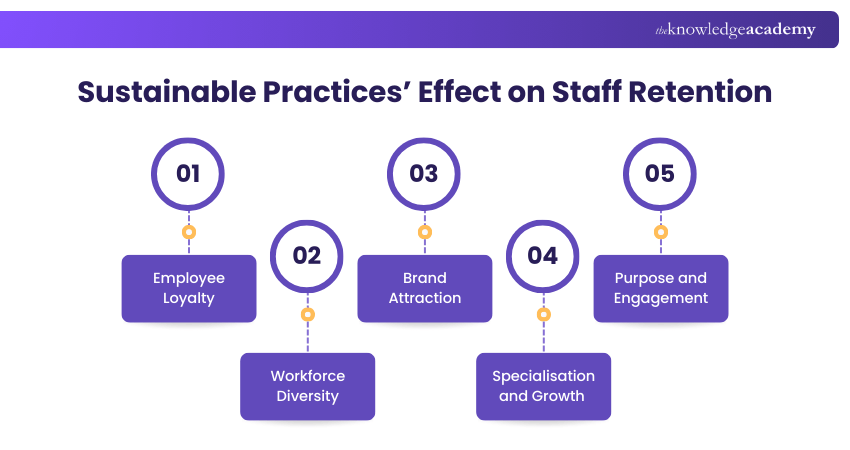
Employees in sustainability-focused companies report greater satisfaction, engagement, and productivity. Embedding sustainable values into workplace culture fosters purpose and loyalty, making it an effective employee retention strategy.
8) Waste Reduction
Sustainable production practices also curtail resource wastage. Recycling is a key strategy for optimal resource utilisation. Business owners can identify recycling opportunities within their operations, emphasising the process to minimise resource usage. Employees should likewise be encouraged to adopt techniques that reduce waste.
Transform your career with our Personal & Organisational Development Course – register today and embark on a journey of growth and achievement!
9) Compliance and Regulation
By proactively adopting sustainability, businesses can stay ahead of regulatory changes and evade potential penalties. With sustainability gaining prominence, regulations are likely to tighten, making proactive efforts advantageous for Compliance.
10) Sector Leadership
By implementing sustainable practices, companies can emerge as industry frontrunners, setting new benchmarks, influencing peers, and gaining a competitive advantage. Sustainability leaders often become preferred choices for consumers and investors who prioritise corporate social responsibility.
11) Cooperative Action Can Drive Change
Cooperative action refers to the collective efforts of individuals, organisations, or communities working together toward a shared goal. When it comes to tackling large-scale challenges like climate change, social inequality, or economic development, no single person or company can solve them alone. That’s where collaboration becomes a powerful force for driving meaningful, long-lasting change.
Elevate your career with our Management Courses – register today and unlock your full potential!
What are the Benefits of Sustainability in the Workplace?
The Return on Investment (ROI) for adopting green and sustainable practices in the workplace is now widely recognised. Eco-friendly buildings and offices are delivering tangible results across various areas, from lower operational costs to enhanced employee performance and engagement. Recent research highlights that sustainable workplaces can:
1) Lower the number of sick days taken by employees
2) Reduce the overall costs associated with sick leave
3) Boost productivity and work efficiency
4) Enhance job satisfaction and morale
5) Improve talent attraction and retention
Creating a healthier, greener work environment doesn’t just benefit the planet. It also fosters a happier, more motivated, and more resilient workforce.
Conclusion
Embracing the Benefits of Sustainability in Business is a strategic advantage. While businesses enjoy benefits like cost savings, stronger brand reputation, and improved employee engagement, they must also address key challenges. By doing so, they contribute to a healthier planet, drive innovation, and build long-term resilience for a successful and sustainable future.
Unlock your team's full potential with our bespoke Performance Management Training – book your spot now!
Frequently Asked Questions
How Can Small Businesses Integrate Sustainability Into Their Operations on a Limited Budget?

Small businesses can integrate sustainability by focusing on energy efficiency, waste reduction, and sourcing eco-friendly materials. Embracing partnerships, leveraging technology, and engaging employees can amplify impact while staying within budget constraints.
How Can Businesses Attract Investors by Focusing on Sustainability?
Businesses can attract investors by showcasing long-term value through sustainability initiatives, demonstrating resilience to market fluctuations, and aligning with Environmental, Social, and Governance (ESG) criteria. Clear reporting, accountability, and measurable progress strengthen investor confidence.
What are the Other Resources and Offers Provided by The Knowledge Academy?
The Knowledge Academy takes global learning to new heights, offering over 3,000 online courses across 490+ locations in 190+ countries. This expansive reach ensures accessibility and convenience for learners worldwide.
Alongside our diverse Online Course Catalogue, encompassing 19 major categories, we go the extra mile by providing a plethora of free educational Online Resources like Blogs, eBooks, Interview Questions and Videos. Tailoring learning experiences further, professionals can unlock greater value through a wide range of special discounts, seasonal deals, and Exclusive Offers.
What is The Knowledge Pass, and How Does it Work?
The Knowledge Academy’s Knowledge Pass, a prepaid voucher, adds another layer of flexibility, allowing course bookings over a 12-month period. Join us on a journey where education knows no bounds.
What are the Related Courses and Blogs Provided by The Knowledge Academy?
The Knowledge Academy offers various Management Courses, including the Business Sustainability Course, Senior Management Training, and Event Management Course. These courses cater to different skill levels, providing comprehensive insights into Asset Performance Management.
Our Business Skills Blogs cover a range of topics related to Sustainability Practices in Business, offering valuable resources, best practices, and industry insights. Whether you are a beginner or looking to advance your Business Skills, The Knowledge Academy's diverse courses and informative blogs have got you covered.

James Smith


Digital Marketing Manager and Trainer
James Smith is a digital marketing professional with over a decade of experience in SEO, content strategy, paid media and analytics. He has supported both SMEs and global brands in transforming their digital presence. James’s writing and training are rooted in results-driven tactics and the latest marketing trends.
View Detail
Upcoming Business Skills Resources Batches & Dates
Date
 Business Sustainability Course
Business Sustainability Course
Fri 24th Jul 2026
Business Sustainability Course
Fri 9th Oct 2026

 If you wish to make any changes to your course, please


