
Music Courses

Online Instructor-led (1 days)

Online Self-paced (8 hours)

Keyboard Instrument Training Course Outline

Module 1: Introduction to Keyboard Instruments

  • Evolution of Keyboard Instruments
  • Types of Keyboard Instruments
  • Understanding the Keyboard Layout
  • Basic Principles of Sound Production in Keyboards
  • Introduction to Musical Notation
  • Overview of Keyboard Genres and Styles

Module 2: Musical Theory Fundamentals

  • Notes, Scales, and Chords
  • Rhythm and Time Signatures
  • Key Signatures and Circle of Fifths
  • Basic Harmonic Progressions
  • Dynamics and Articulation in Keyboard Music
  • Introduction to Musical Forms and Structures

Module 3: Technical Aspects of Keyboard Playing

  • Posture and Ergonomics
  • Finger Techniques and Hand Positioning
  • Pedal Usage and Techniques
  • Articulation and Phrasing in Keyboard Performance
  • Touch and Dynamics Control
  • Tempo and Rhythmic Precision

Module 4: Understanding and Interpreting Keyboard Repertoire

  • Analysis of Classical Keyboard Repertoire
  • Overview of Romantic Keyboard Works
  • Overview of Contemporary Keyboard Music
  • Exploring Jazz and Blues on the Keyboard
  • Keyboard Music of Different Cultures
  • Interpretation and Musical Expression

Module 5: Keyboard Instruments and Technology

  • Acoustic vs. Electronic Keyboards
  • Understanding MIDI and Digital Keyboards
  • Basics of Keyboard Maintenance and Tuning
  • Amplification and Sound Systems for Keyboards
  • Introduction to Recording Keyboard Music
  • Exploring Sound Textures and Timbres

Module 6: Improvisation and Creativity

  • Principles of Musical Improvisation
  • Developing Creativity on the Keyboard
  • Techniques for Solo Improvisation
  • Ensemble Playing and Accompaniment
  • Composing Simple Melodies and Harmonies
  • Introduction to Arranging Music for Keyboard

Module 7: Music Theory Advanced Concepts

  • Advanced Chord Structures and Progressions
  • Modal Theory in Keyboard Music
  • Counterpoint and Polyphony
  • Advanced Rhythmic Concepts
  • Orchestration and Keyboard
  • Exploring Contemporary Harmonies

Module 8: Career and Performance Skills

  • Building a Keyboard Repertoire
  • Practice Strategies and Performance Preparation
  • Stage Presence and Audience Engagement
  • Exploring Career Paths in Keyboard Music
  • Networking and Collaboration Opportunities
  • Managing Performance Anxiety and Stress

Show moredown

Who should attend this Keyboard Instrument Course?

This Keyboard Instrument Course is ideal for individuals who have a passion for music and a desire to deepen their understanding and skills in playing keyboard instruments. It is particularly beneficial for:

  • Music Enthusiasts
  • Producers
  • Composers
  • Musicians Professionals
  • Music Educators
  • Performers
  • Music Hobbyists

Prerequisites for Keyboard Instrument Course

There are no formal prerequisites to attend this Keyboard Instrument Course.

Keyboard Instrument Training Course Overview

The Keyboard Instrument offers a comprehensive exploration of keyboard instruments, delving into their history, mechanics, and diverse musical applications. Emphasising the importance of keyboard skills, the course showcases how mastery of these instruments enhances musical versatility and creativity in various genres.

For organisations, this training enriches individuals’ musical offerings, fostering a more dynamic and skilled workforce capable of handling diverse musical tasks. Individuals benefit through the development of technical proficiency, musical expression, and a deeper understanding of music theory. Furthermore, this course opens numerous career opportunities in music education, performance, composition, and recording, enhancing their professional prospects in the music industry.

The Knowledge Academy’s 1-day Keyboard Instrument Training course provides delegates with in-depth understanding of keyboard layout along with keyboard instrument’s types. This training will embark on a journey that covers the breadth and depth of keyboard music. They will gain a solid foundation in musical theory, understand the technical aspects of keyboard playing, and explore the rich history and diverse styles of keyboard music. This training will be conducted by our highly professional and skilled trainer, who has years of experience in teaching.

Course Objectives

  • To understand the evolution of keyboard instruments
  • To master the basics of musical theory, scales, and chords
  • To develop technical proficiency in keyboard playing
  • To explore various genres and styles of keyboard music
  • To gain skills in improvisation and creative expression
  • To learn effective practice and performance techniques

After attending this Keyboard Instrument training, delegates will be equipped with a profound understanding and practical skills in keyboard music. They will be able to perform with refined technique and expression, interpret a wide range of musical styles, and creatively improvise and compose. Their enhanced understanding of music theory will allow them to analyse and appreciate complex compositions.

Show moredown

What’s included in this Keyboard Instrument Training Course?

  • World-Class Training Sessions from Experienced Instructors
  • Keyboard Instrument Certificate
  • Digital Delegate Pack

Show moredown

Online Instructor-led (1 days)

Online Self-paced (8 hours)

Music Mixing Training Course Outline

Module 1: Introduction to Music Mixing

  • Understanding the Basics of Sound and Audio
  • Principles of Music Mixing
  • Role of a Mixing Engineer
  • Introduction to Mixing Consoles and Equipment
  • Overview of the Mixing Process
  • Essential Listening Skills for Mixing

Module 2: Dynamics and Processing

  • Introduction to Dynamic Range
  • Basics of Compression and Limiting
  • Role of Transient Shapers
  • Techniques for Dynamic EQ

Module 3: Equalisation Techniques

  • EQ in Mixing: Best Practices
  • Using EQ to Shape Tone
  • Problem Solving with EQ
  • Creative Uses of EQ in Mixing
  • Advanced EQ Techniques

Module 4: Effects and Time-Based Processing

  • Introduction to Reverb and Its Uses
  • Delay: Types and Applications
  • Creative Use of Modulation Effects
  • Advanced Techniques in Time-Based Processing

Module 5: Mixing Different Genres

  • Mixing Rock and Pop Music
  • Approaches to Electronic and Dance Music
  • Hip Hop and R&B Mixing Techniques
  • Challenges in Classical and Jazz Mixing
  • Adapting Techniques for Various Genres

Module 6: Mixing Vocals and Instruments

  • Techniques for Mixing Vocals
  • Mixing Drums and Percussion
  • Balancing Guitars in a Mix
  • The Art of Mixing Keyboards and Synths
  • Dealing with Bass and Low Frequencies
  • Special Considerations for Orchestral Instruments

Module 7: Art of Balancing and Panning

  • Principles of Stereo Imaging
  • Techniques for Effective Panning
  • Creating Depth in Mixes
  • Balancing Elements in a Mix
  • Psychology of Spatial Placement

Module 8: Finalising the Mix

  • Critical Listening for Mix Evaluation
  • Making Final Adjustments
  • Preparing Mixes for Different Media
  • Ethics of Mixing

Show moredown

Who Should attend this Music Mixing Training Course?

This Music Mixing Training Course is perfectly suited for individuals passionate about enhancing their expertise in the field of audio engineering and music production. It is particularly beneficial for:

  • Sound Engineers
  • Music Producers
  • Audio Mixing Enthusiasts
  • Recording Artists
  • Studio Technicians
  • Audio Engineering Students
  • Musicians and Band Members

Prerequisites of Music Mixing Training Course

There are no formal prerequisites for Music Mixing Training course.

Music Mixing Course Overview

Music mixing is a critical aspect of music production, transforming raw recordings into polished tracks. This process involves balancing audio elements, enhancing sound quality, and creating a cohesive composition. With the rise of digital platforms and evolving music trends, mastering mixing techniques is essential for producing professional-grade music. This course provides delegates with the knowledge and skills required to excel in the field.

Proficiency in music mixing is vital for music producers, sound engineers, and aspiring artists who wish to create high-quality tracks. It enhances their ability to work with industry-standard tools and achieve the desired sound for diverse projects. Professionals in the media, entertainment, and music industries will benefit significantly from this course, as it equips them to handle various genres and mixing challenges.

This 1-day usic Mixing Course offered by The Knowledge Academy will equip delegates with practical knowledge of mixing techniques, sound dynamics, and industry tools. Delegates will explore equalisation, compression, and effects to produce high-quality audio. Guided by expert trainers, this course ensures delegates develop confidence and competence in creating balanced and professional tracks.

Course Objectives

  • To attain in-depth knowledge of core music mixing principles
  • To understand the concept about dynamic range and its control
  • To get familiar with various genre-specific mixing techniques
  • To learn with practical insights into EQ and effects usage
  • To attain in-depth knowledge in balancing and stereo imaging
  • To understand the concept about advanced mixing and mastering processes
  • To get familiar with the roles and skills of mix engineers

After attending this training, delegates will be equipped with a thorough understanding of music mixing principles, enabling them to confidently apply advanced techniques across various genres. They will also be able to implement the practical skills in EQ, dynamics, audio effects, essential for crafting professional-quality mixes.

Show moredown

What’s included in this Music Mixing Training Course?

  • World-Class Training Sessions from Experienced Instructors
  • Music Mixing Certificate
  • Digital Delegate Pack

Show moredown

Online Instructor-led (1 days)

Online Self-paced (8 hours)

Ukulele Training Course Outline

Module 1: Introduction to the Ukulele

  • What is a Ukulele?
  • Types, Sizes, and Sounds of Ukuleles
  • Anatomy of the Ukulele
  • Tuning and Maintenance

Module 2: Basic Playing Techniques

  • Proper Posture and Holding the Ukulele
  • Basic Rhythm Patterns for Ukulele
  • Introduction to Fingerpicking
  • Playing Your First Song

Module 3: Chords and Progressions

  • Major & Minor Chords (C, G, D, A, Am, Dm, Em)
  • Smooth Chord Transitions
  • Common Strumming Patterns
  • Playing Along with a Metronome

Module 4: Advanced Techniques

  • Barre Chords and Seventh Chords
  • Chunking and Split Chords
  • Incorporating Melodies into Chords

Module 5: Ukulele Genres and Styles

  • Traditional Hawaiian & Folk Music
  • Pop, Rock, Blues, and Jazz Techniques
  • Reggae and Contemporary Ukulele Music

Module 6: Music Theory for Ukulele

  • Understanding Musical Notation
  • Circle of Fifths and Scale Theory
  • Basic Composition and Songwriting

Module 7: Singing and Performance Skills

  • Singing While Playing the Ukulele
  • Matching Chords with Vocals
  • Overcoming Stage Fright & Engaging an Audience

Module 8: Creativity & Live Performance

  • Developing Your Own Playing Style
  • Structuring and Performing a Song
  • Setlist Preparation and Microphone Techniques

Show moredown

Who Should Attend this Ukulele Training Course?

This Ukulele Training Course is ideal for music enthusiasts of all levels seeking to learn, enhance, or diversify their musical skills and knowledge. This course will benefit the following professionals:

  • Music Enthusiasts
  • Beginner Musicians
  • Educators and Music Professionals
  • Team Building Groups
  • Therapeutic Practitioners
  • Performance Artists
  • Youth and Teenagers

Prerequisites for the Ukulele Training Course

There are no formal prerequisites to attend the Ukulele Training Course. However, the basic musical knowledge would be beneficial.

Ukulele Training Course Overview

The ukulele is a small, fun string instrument from Hawaii with Portuguese influences. It's known for its happy sound and is popular worldwide in many types of music. Learning the ukulele is great because it's easy for beginners, easy to carry around, and a fun way to learn music. The ukulele is simple and great for teaching music, helping to spark creativity and a love for music from a young age. Its pleasant sound and ease of playing make it a favorite for both hobbyists and professional musicians, adding a special touch to music with its unique sound.

In this 1-day Ukulele Training Course, delegates will learn the fundamental techniques of ukulele playing, including chord progressions, strumming patterns, and fingerpicking. They will delve into reading and interpreting ukulele tabs and sheet music, enabling them to play a wide range of songs. Beyond technical skills, delegates will also develop performance skills and confidence, preparing them for solo and ensemble playing.

Course Objectives

  • To proficiently master basic ukulele playing techniques and chords
  • To effectively interpret and play from ukulele tabs and music sheets
  • To develop advanced rhythm and strumming patterns for diverse styles
  • To gain a comprehensive understanding of music theory as applied to the ukulele
  • To improve performance skills for both solo and group ukulele playing
  • To cultivate a distinctive musical expression and personal style on the ukulele

After attending this training, delegates will be equipped with a solid skills and knowledge in ukulele playing. They will be able to confidently read and interpret music sheets and tabs, allowing them to play a diverse range of songs. Additionally, the course will have honed their performance skills, both as soloists and in group settings, enhancing their ability to express themselves musically and to collaborate with other musicians.

Show moredown

What’s included in this Ukulele Training Course?

  • World-Class Training Sessions from Experienced Instructors
  • Ukulele Certificate
  • Digital Delegate Pack

Show moredown

Online Instructor-led (1 days)

Online Self-paced (8 hours)

Music Composition Course Outline

Module 1: Fundamentals of Music Theory

  • Elements of Music
  • Rhythm and Meter
  • Basic Scales and Modes
  • Harmony and Chord Structures
  • Interval Recognition and Ear Training
  • Key Signatures and Transposition

Module 2: Art of Melody

  • Principles of Melodic Construction
  • Contour and Movement in Melodies
  • Thematic Development and Variation
  • Melody and Harmony Interaction
  • Use of Motifs in Composition
  • Cross-Cultural Melodic Influences

Module 3: Harmony and Texture

  • Chord Progressions and Voice Leading
  • Counterpoint Fundamentals
  • Harmonic Texture and Layering
  • Non-traditional Harmony
  • Modal and Tonal Harmony
  • Polyphony in Composition

Module 4: Rhythmic Complexity

  • Advanced Rhythmic Structures
  • Time Signatures and Their Creative Use
  • Syncopation and Rhythmic Displacement
  • Cross-rhythms and Polyrhythms
  • Rhythmic Development in Composition

Module 5: Form and Structure in Composition

  • Classical Forms in Music Composition
  • Contemporary Song Structures
  • Theme and Variations
  • Sonata Form and Its Adaptations
  • Use of Repetition and Contrast
  • Developing a Coherent Musical Narrative

Module 6: Orchestration and Arrangement

  • Principles of Orchestration
  • Instrument Ranges and Capabilities
  • Textural Considerations in Arrangement
  • Dynamics and Articulation in Orchestration
  • Adapting Music for Different Ensembles
  • Blending Acoustic and Electronic Sounds

Module 7: Composition for Film and Media

  • Role of Music in Visual Media
  • Developing Themes for Characters and Settings
  • Emotional Storytelling Through Music
  • Synchronising Music with Visual Elements
  • Building Tension and Release

Module 8: Composer’s Career

  • Navigating the Music Industry
  • Collaboration and Networking
  • Intellectual Property and Copyright in Music
  • Marketing Your Compositions
  • Future Trends in Music Composition

Show moredown

Who Should attend this Music Composition Training Course?

This Music Composition Training Course is perfectly suited for individuals passionate about delving deeper into the world of music creation and theory. It is especially beneficial for:

  • Aspiring Composers
  • Music Teachers and Educators
  • Songwriters and Lyricists
  • Music Production Students
  • Professional Musicians
  • Film and Media Scoring Professionals
  • Music Enthusiasts and Hobbyists

Prerequisites for the Music Composition Training Course

There are no formal prerequisites for the Music Composition Training Course. However, understanding musical notation would be beneficial for the delegates.

Music Composition Course Overview

Music composition is the art of creating and arranging original music, encompassing melody, harmony, rhythm, and texture. It involves the creative process of designing and structuring musical elements to convey emotions and ideas. It is important for expressing creativity, evoking emotions, and advancing cultural and artistic expression through sound. Organisations benefit from music composition by enhancing cultural richness, fostering creativity, and potentially expanding commercial and artistic opportunities. Individuals gain creative expression, improved cognitive skills, and emotional fulfillment through the practice of music composition. This training can enhance career prospects in music, offering skills in composition, creative collaboration, and industry networking.

Our 1-day Music Composition Training course aims to provide delegates with the comprehensive knowledge about Music Composition. During this training course delegates will learn the intricacies of music composition, gaining expertise in melody, harmony, rhythm, and orchestration techniques. Our highly professional trainer with years of experience in teaching such courses will conduct this training and will help delegates to get a complete understanding of Music Composition.

Course Objectives

  • To attain in-depth knowledge of music theory and composition techniques
  • To understand the concept of melody creation and thematic development
  • To get familiar with advanced harmony and rhythmic structure concepts
  • To learn orchestration techniques for varied musical arrangements effectively
  • To understand the role and impact of music in film and media
  • To attain insights into the music composition profession and industry trends

After attending this Music Composition training, delegates will be able to implement the acquired skills in music composition, spanning from mastering theoretical aspects of melody, harmony, and rhythm. They will also be able to create, analyse, and adapt music for various contexts, understanding its role in the media and gaining an edge in the professional world of music.

Show moredown

What’s included in this Music Composition Course?

  • World-Class Training Sessions from Experienced Instructors
  • Music Composition Certificate
  • Digital Delegate Pack

Show moredown

Online Instructor-led (1 days)

Online Self-paced (8 hours)

DJ Course Outline

Module 1: Introduction to DJing

  • History and Evolution of DJing
  • Overview of Different DJ Styles and Genres
  • Basic Equipment and Software Overview
  • Understanding the DJ Setup: Turntables, Mixers, Controllers
  • Introduction to Music Theory and Rhythm
  • Health and Safety for DJs

Module 2: Equipment Mastery

  • Detailed Study of Turntables, CDJs, and DJ Controllers
  • Mixer Functionalities and Signal Flow
  • Understanding Audio Interfaces and PA Systems
  • Basics of Setting Up and Troubleshooting Equipment
  • Equipment Care and Maintenance
  • Introduction to Advanced Equipment

Module 3: Music Library Management

  • Building and Organising a Music Library
  • Music Genres and Beat Matching
  • Analysing and Categorising Tracks
  • Digital vs Vinyl: Pros and Cons
  • Using Music Management Software
  • Ethical Considerations in Sourcing Music

Module 4: Basic Mixing Techniques

  • Beatmatching and Tempo Control
  • Cueing and Track Selection
  • Transition Techniques and Blending Tracks
  • Use of EQ and Filters in Mixing
  • Creative Use of Effects
  • Handling Song Structure and Phrasing

Module 5: Scratching and Turntablism

  • Introduction to Scratching Techniques
  • Scratch Patterns and Combinations
  • Developing Hand-Eye Coordination
  • Integrating Scratching into a DJ Set
  • Practice Routines and Drills

Module 6: Advanced Mixing and FX

  • Mastering Complex Transitions
  • Advanced Use of DJ Software Effects
  • Layering Tracks and Harmonic Mixing
  • Using Loops and Hot Cues Creatively
  • Live Remixing and Mashups
  • Developing a Signature Sound and Style

Module 7: Performance Skills

  • Reading and Engaging the Audience
  • Building and Structuring a DJ Set
  • Stage Presence and Performance Techniques
  • Managing Energy Levels Throughout a Set
  • Dealing with Technical Issues During Live Performance
  • Collaborating with Other Artists and Musicians
     

Show moredown

Who Should Attend this DJ Training Course?

This DJ Training Course is ideal for aspiring music enthusiasts, and entertainment industry professionals seeking to develop or enhance their DJ skills. However, this training will be more beneficial for:

  • Aspiring DJs
  • Music Enthusiasts
  • Entertainment Professionals
  • Nightclub/Bar Staff
  • Freelance Artists
  • Event Organisers and Promoters
  • Music Producers and Artists

Prerequisites of the DJ Course

There are no formal prerequisites to attend this DJ Course. However, basic understanding of Music would be beneficial for the delegates.

DJ Course Overview

Mastering the art of DJing opens doors to creative expression and exciting career opportunities. This course in the United Kingdom introduces delegates to the fundamental skills and techniques required to excel as a DJ. From mixing tracks to understanding audio equipment, this training provides a comprehensive foundation for creating unforgettable music experiences.

Proficiency in DJing is essential for aspiring and professional DJs who want to refine their skills, enhance their performances, and connect with audiences. These abilities enable individuals to curate dynamic sets, explore various music genres, and elevate their creative potential.

This immersive 1-day DJ Training Course offered by The Knowledge Academy equips delegates with the knowledge and tools to succeed in the DJ industry. Delegates will learn about beatmatching, mixing, scratching, and using DJ software and hardware effectively. By the end of this course, delegates will have the confidence and expertise to deliver high-quality performances in any setting.

Course Objectives

  • To understand the fundamentals of DJing and its role in the music industry
  • To learn beatmatching, mixing, and scratching techniques
  • To operate DJ hardware and software confidently and efficiently
  • To explore music genres and develop personalised DJing styles
  • To create engaging and professional music sets for various audiences

After completing this DJ Course, delegates will receive a certification recognising their proficiency in DJing, empowering them to pursue their passion and thrive in the music industry.

Show moredown

What’s included in this DJ Course?

  • World-Class Training Sessions from Experienced Instructors
  • DJ Certificate
  • Digital Delegate Pack

Show moredown

Online Instructor-led (1 days)

Online Self-paced (8 hours)

Violin Training Course Outline

Module 1: Introduction to the Violin

  • Parts of the Violin and their Functions
  • Proper Care and Maintenance of the Instrument
  • Basic Posture and Holding Techniques

Module 2: Techniques

  • Understanding Bowing Techniques
  • Developing Left-Hand Finger Placement and Finger Strength
  • Learning to Read Sheet Music and Understand Musical Notation
  • Basic Tuning Methods and Pitch Recognition

Module 3: Playing Your First Notes

  • Producing Clear and Consistent Open String Tones
  • Introduction to Scales
  • Playing Simple Melodies and Tunes
  • Understanding and Practicing Bow Control

Module 4: Intermediate Techniques

  • Exploring More Advanced Bowing Techniques
  • Shifting Positions on the Fingerboard
  • Vibrato Technique Development
  • Introducing Dynamics and Expression in Playing

Module 5: Repertoire and Performance

  • Learning and Practicing Classical Violin Pieces
  • Developing Performance Skills
  • Ensemble Playing and Collaboration
  • Preparing for Performing

Module 6: Advanced Topics

  • Exploring Different Violin Styles
  • Introduction to Improvisation and Composition
  • Advanced Bowing and Fingering Techniques
  • Preparing for Auditions or Competitions

Show moredown

Who should attend this Violin Training Course?

This Violin Training Course is ideal for music enthusiasts of all levels seeking to learn, enhance, or diversify their musical skills and knowledge. This course will benefit the following professionals:

  • Beginners
  • Intermediate Players
  • Advanced Musicians
  • Music Educators
  • Professional Musicians
  • Composers and Arrangers
  • Hobbyists

Prerequisites of Violin Training Course

There are no formal prerequisites for attending this Violin Training Course.

Violin Training Course Overview

The violin is a classic stringed instrument known for its versatility and expressive sound, playing a pivotal role in a wide range of musical genres from classical to contemporary. Mastering the violin involves learning complex techniques like bowing, fingering, and proper posture, making it a challenging yet rewarding endeavor.

For individuals, playing the violin offers numerous benefits as it helps to enhance cognitive skills, improve concentration and coordination, and provide a powerful medium for emotional expression. Gaining skills in using violin opens opportunities for personal growth, artistic expression, and participation in diverse musical communities, from symphony orchestras to folk music bands.

The Knowledge Academy’s 1-day Violin Training course provides delegates with in-depth knowledge of starting with an understanding of its various parts and their functions. They will understand the importance of proper care and maintenance, fundamental techniques, including bowing methods, developing left-hand finger placement and strength, and the basics of reading sheet music and musical notation. This training will be conducted by our highly professional and skilled trainer, who has years of experience in delivering training courses.

Course Objectives

  • To enable the reading and interpretation of sheet music and musical notation
  • To equip individuals with skills for playing basic melodies and controlling the bow
  • To advance delegates’ techniques in bowing, finger positioning, and expressiveness
  • To enhance performance skills, including solo and ensemble playing
  • To explore advanced violin topics for further development in style and technique

After completing this Violin Training course, delegates will be able to play clear and consistent notes, understand and perform basic scales, and play simple melodies with proper bow control. They will also be able to master intermediate techniques such as advanced bowing, shifting on the fingerboard, and developing vibrato.

Show moredown

What’s included in this Violin Course?

  • World-Class Training Sessions from Experienced Instructors
  • Violin Certificate
  • Digital Delegate Pack

Show moredown

Online Instructor-led (1 days)

Online Self-paced (8 hours)

Drum Training Course Outline

Module 1: Understanding Your Drum Kit

  • Anatomy of a Drum Kit
  • Tuning Your Drums for Optimal Sound
  • Drumstick Selection
  • Basic Posture and Ergonomics for Drumming

Module 2: Basic Rhythms and Beats

  • Introduction to Basic Rhythms
  • Playing Basic Rock Beats
  • Techniques for Developing Timing and Consistency
  • Developing a Practice Routine

Module 3: Intermediate Drumming Techniques

  • Ghost Notes and Their Usage
  • Developing Hand and Foot Coordination
  • Intermediate Drum Fills and Variations
  • Dynamic Control and Expression

Module 4: Advanced Rhythmic Concepts

  • Polyrhythms and Odd Time Signatures
  • Advanced Hi-Hat Techniques
  • Double Bass Drumming Essentials
  • Complex Fills and Solos

Module 5: Drumming Styles and Genres

  • Exploring Rock Drumming
  • Fundamentals of Jazz Drumming
  • Basics of Funk and R&B Drumming
  • Latin and Afro-Cuban Rhythms

Module 6: Studio and Live Performance

  • Understanding Drum Mixing and EQ
  • Live Drumming Performance
  • Using Click Tracks and Backing Tracks
  • Stage Presence and Interaction with Other Musicians

Show moredown

Who should attend this Drum Training Course?

This Drum Training is ideal for aspiring drummers, music students, band members, music educators, and enthusiasts seeking to enhance their drumming skills and understanding. However, this training will be beneficial for:

  • Aspiring Drummers
  • Music Students
  • Band Members
  • Music Teachers
  • Professional Musicians
  • Music Enthusiasts
  • Recording Artists

Prerequisites of the Drum Training Course

There are no formal prerequisites to attend this Drum Training. However, basic musical knowledge and instrument familiarity would be beneficial.

Drum Training Course Overview

The drum is a powerful symbol of rhythm and culture, with its beats bringing people together like a universal language. It's important for learning about rhythm and coordination in music. This training can help organisations by training skilled drummers to improve their music projects and live shows.

For people, it means getting good at an instrument, growing artistically, and becoming more confident. Career-wise, it can lead to jobs in performing live, teaching music, and working in recording studios. Having the necessary skills of using Drums will get you ample career opportunities and experience for the future.

The Knowledge Academy’s 1-day Drum Course provides delegates with in-depth understanding of Drum kit. They will understand drum setup and basic stick techniques, various rhythmic patterns, and drumming styles across different genres. Delegates will learn the key areas of focus include developing a solid sense of timing, enhancing limb coordination, and understanding the role of drums in different musical settings. Our highly experienced and professional trainer for this Drum Course will conduct this training and provide delegates with the skill set for a vibrant career in music.

Course Objectives

  • To understand drum notation and musical timing
  • To develop coordination and limb independence
  • To explore various drumming styles and genres
  • To enhance live performance and ensemble skills
  • To learn advanced drumming techniques and solos
  • To cultivate creativity in drum composition
  • To improve listening skills and musical collaboration
  • To prepare for professional drumming opportunities

After attending this Drum Course, delegates will be able to implement drumming techniques to perform confidently across various musical genres. They will also be able to possess the skills to read and interpret drum notation, allowing for effective communication and collaboration in musical settings.

Show moredown

What’s included in this Drum Training Course?

  • World-Class Training Sessions from Experienced Instructors
  • Drum Certificate
  • Digital Delegate Pack

Show moredown

Online Instructor-led (1 days)

Online Self-paced (8 hours)

Harmonica Training Course Outline

Module 1: Foundations of Harmonica Play

  • Introduction to Harmonica Play
  • Differentiating Harmonica Types
  • Key Signatures and Note Layouts
  • Ergonomic Holding and Breathing Techniques
  • Harmonica Care and Maintenance Basics

Module 2: Music Theory and Harmonica

  • Interpreting Harmonica Tablature
  • Scale and Chord Foundations
  • Mastering Rhythmic Patterns
  • Dynamics and Articulation in Harmonica Play
  • Chord Progressions on Harmonica
  • Aural Skills

Module 3: Enhancing Your Harmonica Skills

  • Advanced Bending for Expressive Tones
  • Exploring Different Embouchure Techniques
  • Styles of Play

Module 4: World of Blues Harmonica

  • Exploring the Blues Harmonica Tradition
  • Mastering the Blues Scale and Riffs

Module 5: Jazz Harmonica Explorations

  • Introduction to Jazz on the Harmonica
  • Jazz Improvisation Techniques
  • Constructing a Jazz Harmonica Solo

Module 6: Folk and Country Harmonica

  • Harmonica's Role in Folk and Country Genres
  • Techniques for Traditional Folk and Country Tunes
  • Classic Folk and Country Harmonica Repertoire

Module 7: Harmonica in Rock and Pop Music

  • Harmonica's Influence in Contemporary Music
  • Essential Rock and Pop Harmonica Licks
  • Songwriting and Arranging for Harmonica

Module 8: Art of Performance and Recording

  • Advanced Microphone Techniques
  • Enhancing Live Performance Skills
  • Building a Career in the Music Industry

Module 9: Harmonica Customisation and Upkeep

  • Routine and Advanced Harmonica Care
  • Tools for Harmonica Repair and Maintenance

Module 10: Engaging with the Harmonica Community

  • Finding and Joining Harmonica Groups
  • Lifelong Learning and Development in Harmonica Playing

Show moredown

Who Should Attend this Harmonica Training Course?

This Harmonica Training Course is designed for individuals of all skill levels who aspire to become proficient harmonica players and explore the captivating world of this versatile instrument. However, this training will be beneficial for:

  • Musical Enthusiasts
  • Beginner Musicians
  • Intermediate Musicians
  • Aspiring Singers
  • Songwriters and Composers
  • Music Teachers
  • Professional Musicians

Prerequisites of the Harmonica Training Course

There are no formal prerequisites to attend this Harmonica Training Course.

Harmonica Training Course Overview

The harmonica is a versatile musical instrument celebrated for its rich, soulful sound and portability. Harmonica course introduces the fundamentals of playing the harmonica, catering to music enthusiasts, beginners, and experienced musicians looking to expand their skills. With a focus on melody, rhythm, and improvisation, this training provides a comprehensive foundation for anyone passionate about mastering the harmonica.

Proficiency in harmonica playing is vital for those seeking to explore its expressive capabilities or integrate it into various musical styles. Musicians, music teachers, and hobbyists will greatly benefit from this skill. It is also ideal for creative professionals who wish to diversify their musical expertise and develop a deeper understanding of musical composition and performance.

This 1-day Harmonica Training Course equips delegates with essential harmonica techniques, including proper breathing, note bending, and rhythm patterns. Through expert-led sessions, delegates will build confidence in their playing skills and learn how to perform basic melodies and improvisations. Harmonica course is designed to enhance musical creativity, improve coordination, and provide practical tips for consistent practice and performance.

Course Objectives

  • To explore the harmonica's diversity across music styles
  • To cultivate emotional depth in musical performances
  • To achieve mastery in complex harmonica playing methods
  • To encourage innovative musical collaboration and improvisation
  • To build confidence for live performances and recordings
  • To offer insights into harmonica maintenance and customisation

After attending this Harmonica training course, delegates will be able to confidently perform a variety of songs, understand essential techniques, and even improvise their own melodies. They will also be able to develop a deeper appreciation for the harmonica's versatility and its role in various musical genres.

Show moredown

What’s included in this Harmonica Training Course?

  • World-Class Training Sessions from Experienced Instructors
  • Harmonica Certificate
  • Digital Delegate Pack

Show moredown

Not sure which course to choose?

Speak to a training expert for advice if you are unsure of what course is right for you. Give us a call on +44 1344 203 999 or Enquire.

Skills Gained from Music Courses

The Music Courses offer learners a foundation in music theory, performance, composition, and basic sound production. By working with musical instruments, audio concepts, and creative methods, professionals strengthen their understanding of music structure and develop confidence in creative expression across various musical styles.

These courses help build skills in:

  • Music Theory Fundamentals: Develop an understanding of melody, harmony, rhythm, scales, and basic song structure for structured musical learning.
  • Instrument Performance Skills: Build practical playing techniques across instruments such as keyboard, drums, violin, harmonica, and ukulele.
  • Rhythm and Timing Control: Strengthen timing, coordination, tempo control, and rhythmic accuracy for improved musical performance.
  • Creative Music Composition: Learn how to structure musical pieces, create original tunes and melodies, and arrange basic compositions.
  • Audio Mixing Capabilities: Acquire introductory knowledge of sound balance, track layering, and mixing techniques to improve audio quality.
  • Live Performance Techniques: Establish confidence in performing live music, including basic stage presence and performance coordination.
  • DJ Performance Basics: Learn beat matching, creative track transitions, and dynamic set flow for live DJ performances.
     

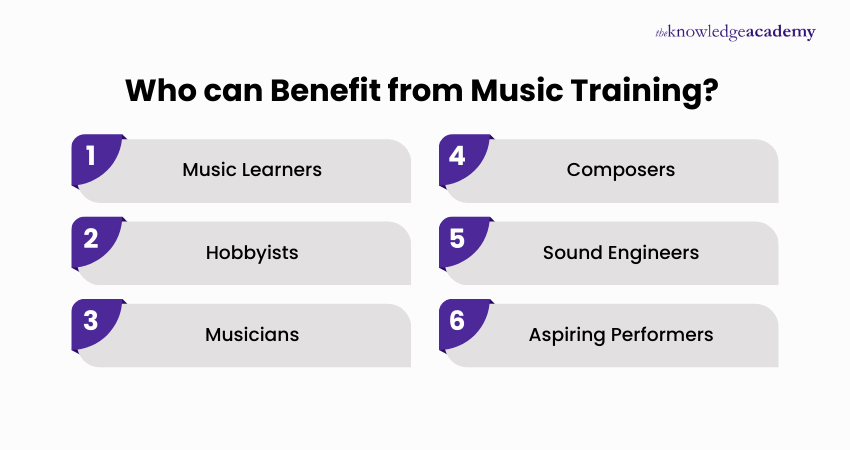
Who can Benefit from Music Training?

Music Training is suitable for learners at different stages of their musical journey, whether they are complete beginners, aspiring performers, or experienced professionals looking to refine their skills. These courses are designed to support creative growth, technical improvement, and performance confidence across various musical interests.

Who can Benefit from Music Training

Learners who can benefit include:

  • Music Learners: Develop core musical skills by learning rhythm, notes, fundamental theory, and simple instrument techniques.
  • Hobbyists: Expand musical skills, explore creative expressions, learn new instruments, and improve performance confidence.
  • Musicians: Refine playing techniques, improve timing and accuracy, expand musical repertoire, and strengthen performance consistency across instruments.
  • Composers: Create original melodies, develop harmonies, structure songs, arrange compositions, and strengthen overall music-writing capabilities.
  • Sound Engineers: Manage sound balance, control audio flow, apply mixing techniques, and support recording and live sound environments.
  • Aspiring Performers: Enhance live performance skills, build stage confidence, and improve coordination and performance techniques for public or professional stages.
Show more blue-arrow

Music Courses FAQs

For beginners, the best music courses are those that offer a basic understanding of music theory, an introduction to reading music, and foundational lessons in a chosen instrument or voice training. Look for courses labeled as "Introduction to Music" or "Beginner [Instrument/Voice] Lessons."

Music courses provide structured training, technical exercises, and professional feedback, all of which are crucial for honing singing or instrument skills. They often cover essential techniques, posture, breath control (for singers), finger placement (for instrumentalists), and musical expression.

Completing a music course can lead to various career paths including professional musician, music teacher, music therapist, audio engineer, music producer, composer, music director, or a role in music marketing and management.

Online music courses offer flexibility and convenience, often with a wide range of resources like video tutorials and digital tools. In-person learning, however, provides direct interaction, immediate feedback, and hands-on experience. Both formats have unique benefits, and the choice depends on individual learning preferences and lifestyle.

Music theory is essential as it provides the foundation for understanding how music works. It covers the basics of rhythm, harmony, melody, structure, and notation. This knowledge is crucial for reading music, composing, and understanding the language and mathematics of music, which is vital for any musician.

Please see our Music Courses available in Madagascar

The Knowledge Academy is one of the Leading global training provider for Music Courses.

The training fees for Music Courses in Madagascar starts from $1695

Show more down

Why we're the go to training provider for you

icon

Best price in the industry

You won't find better value in the marketplace. If you do find a lower price, we will beat it.

icon

Trusted & Approved

Recognised by leading certification bodies, we deliver training you can trust.

icon

Many delivery methods

Flexible delivery methods are available depending on your learning style.
icon

High quality resources

Resources are included for a comprehensive learning experience.

barclays Logo
deloitte Logo
Thames Water Logo

"Really good course and well organised. Trainer was great with a sense of humour - his experience allowed a free flowing course, structured to help you gain as much information & relevant experience whilst helping prepare you for the exam"

Joshua Davies, Thames Water

santander logo
bmw Logo
Google Logo
cross

Exclusive Deals Big Savings This March!

Grab up to 40% OFF and level up your skills this spring! march-madness

WHO WILL BE FUNDING THE COURSE?

close

close

Thank you for your enquiry!

One of our training experts will be in touch shortly to go over your training requirements.

close

close

Press esc to close

close close

Back to course information

Thank you for your enquiry!

One of our training experts will be in touch shortly to go overy your training requirements.

close close

Thank you for your enquiry!

One of our training experts will be in touch shortly to go over your training requirements.