
MSP® Training

accredited by

Our MSP® course is accredited by PeopleCert

Online Instructor-led (5 days)

Online Self-paced (40 hours)

Official PeopleCert MSP® Foundation Exam

MSP® Foundation and Practitioner 5th Edition Course Outline

Module 1: Understand Key Concepts Relating Programmes and MSP

  • Recall the Definition of:
    • Programme
    • 3 Lenses of MSP: Principles, Themes, and the Processes Across the Programme Lifecycle
    • Enterprise Agility
  • Describe:
    • Characteristics of a Programme
    • Common Reasons Why Programme Management Is Used
    • Common Challenges That MSP Is Designed Address
    • Programme Environment

Module 2: Understand How the MSP Principles Underpin the MSP Framework

  • Explain the MSP Principles:
    • Lead with Purpose
    • Collaborate Across Boundaries
    • Deal with Ambiguity
    • Align with Priorities
    • Deploy Diverse Skills
    • Realise Measurable Benefits
    • Bring Pace and Value

Module 3: Understand the MSP Themes and How They Are Applied Throughout the Programme

  • Explain:
    • Purpose of the Programme Strategy
    • Purpose of Programme Governance
    • Purpose of Programme Plans
    • Plan-Do-Check-Act (PDCA) Cycle and Its Applicability Risks and Issues
  • Organisation Theme:
    • Explain the Purpose of the Organisation Theme
    • Describe the Key Relationships Between the Organisation Theme and the Principles
    • Explain the Purpose of the Key Documents Required Support the Organisation Theme
    • Define Key Concepts Related the Organisation Theme
    • Describe the Purpose and Responsibilities of Roles
  • Design Theme:
    • Explain the Purpose of the Design Theme
    • Describe the Key Relationships Between the Design Theme and the Principles
    • Explain the Purpose of the Key Documents Required Support the Design Theme
    • Define Key Concepts Related the Design Theme
    • Describe the Types and Paths
  • Justification Theme:
    • Explain the Purpose of the Justification Theme
    • Describe the Key Relationships Between the Justification Theme and the Principles
    • Explain the Purpose of the Key Documents Required Support the Justification Theme
    • Define Key Concepts Related the Justification Theme
    • Describe the Types and Paths
  • Structure Theme:
    • Explain the Purpose of the Structure Theme
    • Describe the Key Relationships Between the Structure Theme and the Principles
    • Explain the Purpose and Characteristics of the Key Documents Required Support the Structure Theme
    • Define Key Concepts Related the Structure Theme
    • Describe the Types and Paths
  • Knowledge Theme:
    • Explain the Purpose of the Knowledge Theme
    • Describe the Key Relationships Between the Knowledge Theme and the Principles
    • Explain the Purpose of the Key Documents Required Support the Knowledge Theme
    • Describe the Types and Paths
  • Assurance Theme:
    • Explain the Purpose of the Assurance Theme
    • Describe the Key Relationships Between the Assurance Theme and the Principles
    • Explain the Purpose of the Key Documents Required Support the Assurance Theme
    • Define Key Concepts Related the Assurance Theme
    • Describe the Types and Paths
  • Decisions Theme:
    • Explain the Purpose of the Decisions Theme
    • Describe the Key Relationships Between the Decisions Theme and the Principles
    • Explain the Purpose of the Key Documents Required Support the Decisions Theme
    • Define Key Concepts Related the Decisions Theme
    • Describe the Types and Paths

Module 4: Understand the MSP Processes and How They are Carried Out Throughout the Programme

  • Explain the Purposes of the Processes Within the MSP Lifecycle
  • Explain the Objectives of the MSP Processes
  • Explain the Context of the MSP Processes

Module 5: Understand How to Apply MSP Principles in Context

  • Analyse the Application of MSP Principles in Context:
    • Lead with Purpose
    • Collaborate Across Boundaries
    • Deal with Ambiguity
    • Align with Priorities
    • Deploy Diverse Skills
    • Realise Measurable Benefits
    • Bring Pace and Value

Module 6: Understand How to Apply and Tailor Relevant Aspects of the MSP Themes in Context

  • Assess:
    • Component Parts of the Programme Strategy
    • Component Parts of the Programme Plans
    • How to Apply the Plan-Do-Check-Act (PDCA) Cycle
  • Organisation Theme
    • Apply the MSP Requirements for the Organisation Theme, Demonstrating an Understanding of:
    • Analyse Whether an Approach to Applying the Organisation Theme
  • Design Theme
    • Apply the MSP Requirements for the Design Theme, Demonstrating an Understanding
    • Analyse Whether an Approach to Applying the Design Theme is Effective and Fit for Purpose, Taking into Consideration:
  • Justification Theme
    • Apply the MSP Requirements for the Justification Theme, Demonstrating an Understanding
    • Analyse Whether an Approach to Applying the ‘Justification’ Theme is Effective and Fit for Purpose, Taking into Consideration
  • Structure Theme
    • Apply the MSP Requirements for the Structure Theme, Demonstrating an Understanding
    • Analyse Whether an Approach to Applying the Structure Theme is Effective and Fit for Purpose, Taking into Consideration
  • Knowledge Theme
    • Apply the MSP Requirements for the Knowledge Theme, Demonstrating an Understanding
    • Analyse Whether an Approach to Applying the Knowledge Theme is Effective and Fit for Purpose, Taking into Consideration

Module 7: Understand How to Apply and Tailor Relevant Aspects of the MSP Processes in Context

  • Carry Out the Identify the Programme Process, Demonstrating an Understanding of:
    • Activities, Inputs and Outputs
    • Recommended Roles and Responsibilities Within the Process
    • How the Themes May be Applied
  • Analyse Whether the Identify the Programme Process Activities, Roles and Responsibilities are Effective and Fit for Purpose, Taking into Consideration
  • Carry Out the Design the Outcomes Process, Demonstrating an Understanding of:
    • Activities, Inputs and Outputs
    • Recommended Roles and Responsibilities Within the Process
    • How the Themes May be Applied
  • Analyse Whether the Design the Outcomes Process Activities, Roles and Responsibilities are Effective and Fit for Purpose, Taking into Consideration:
  • Carry Out the Plan Progressive Delivery Process, Demonstrating an Understanding of:
    • Activities, Inputs and Outputs
    • Recommended Roles and Responsibilities Within the Process
    • How the Themes May be Applied
  • Analyse Whether the Plan Progressive Delivery Process Activities, Roles and Responsibilities Are Effective and Fit for Purpose, Taking into Consideration
  • Carry out the Deliver the Capabilities Process, Demonstrating an Understanding of:
    • Activities, Inputs and Outputs
    • Recommended Roles and Responsibilities Within the Process
    • How the Themes May Be Applied
  • Analyse Whether the Deliver the Capabilities Process Activities, Roles and Responsibilities Are Effective and Fit for Purpose, Taking into Consideration:
  • Carry out the Embed the Outcomes Process, Demonstrating an Understanding of:
    • Activities, Inputs and Outputs
    • Recommended Roles and Responsibilities Within the Process
    • How the Themes May Be Applied
  • Analyse Whether the embedding of the Outcomes Process Activities, Roles and Responsibilities Are Effective and Fit for Purpose, Taking into Consideration
  • Carry out the Evaluate New Information Process, Demonstrating an Understanding of:
    • Activities, Inputs and Outputs
    • Recommended Roles and Responsibilities Within the Process
    • How the Themes May Be Applied
  • Analyse Whether the Evaluate New Information Process Activities, Roles and Responsibilities Are Effective and Fit for Purpose, Taking into Consideration
  • Carry out the Close the Programme Process, Demonstrating an Understanding of:
    • Activities, Inputs and Outputs
    • Recommended Roles and Responsibilities Within the Process
    • How the Themes May Be Applied
  • Analyse Whether the Close the Programme Process Activities, Roles and Responsibilities Are Effective and Fit for Purpose, Taking into Consideration

Show moredown

Who Should Attend this MSP® Foundation and Practitioner Course?

The MSP® (Managing Successful Programs) Foundation and Practitioner Course is designed for individuals who are seeking to develop a comprehensive understanding of Programme Management and its practical applications of the MSP process. A few of the professionals who will benefit the most from this course are:

  • Programme Managers.
  • Programme Leaders.
  • Project Managers.
  • Portfolio Managers.
  • Senior Executives and Directors.
  • Business Change Managers.
  • Programme Office Staff.

Prerequisites of the MSP® Foundation and Practitioner Course

The MSP® Foundation and Practitioner Course enables individuals to use MSP® principles effectively, applying them to real-world change initiatives in alignment with PeopleCert standards. Managing Successful Programmes 5th Edition MSP Foundation and Practitioner course, based in Monaco, will help you gain the skills and confidence to manage complex programmes effectively, aligned with industry best practices and the PeopleCert framework.

  • MSP Foundation Level: No formal prerequisites are required. However, a basic understanding of management concepts and terminology can help you use MSP more effectively during your learning MSP® journey.
  • MSP Practitioner Level: For the Practitioner level, candidates must have successfully passed the MSP® Foundation Exam, as required by PeopleCert.

MSP® Foundation and Practitioner 5th Edition Course Overview

Managing Successful Programmes (MSP®) Foundation & Practitioner Training is essential for professionals in Project Management, Organisational Change, and Programme Office roles aiming to enhance strategic capabilities.

This MSP® Foundation & Practitioner Training 5-day course by The Knowledge Academy in Monaco, aligned with PeopleCert standards, equips delegates with practical skills to manage complex change initiatives, understand key MSP benefits, and align projects with strategic goals.

The course offers comprehensive preparation for both MSP® Foundation and Practitioner certification levels.

MSP® Foundation and Practitioner Course Objectives

  • To establish a firm understanding of the MSP framework and its application in real-world scenarios.
  • To develop the skills necessary to effectively lead and manage large-scale programme transformations.
  • To ensure delegates are well-prepared for the MSP® Foundation and Practitioner exams.
  • To enhance strategic thinking and decision-making abilities within the context of programme management.
  • To provide a platform for continuous professional development and networking with industry peers.
  • To foster a mindset that embraces change and innovation within an organisational setting.

Upon completing the MSP® Training Course, delegates will emerge with a robust qualification under their belts, poised to drive and manage change initiatives with precision and confidence. Their new skill set will be a significant catalyst for career advancement and organisational success.

Career Progression of MSP Professionals

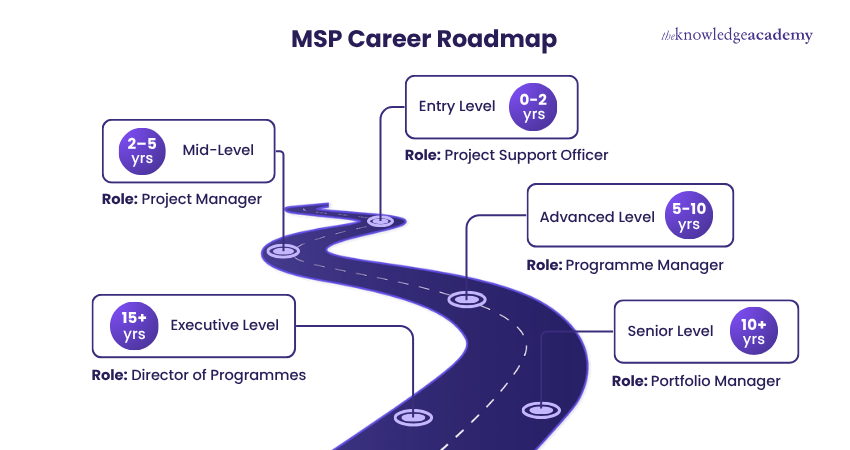
MSP Career Roadmap after completing MSP Training

The MSP Career Roadmap illustrates how MSP certifications align with progressive career stages in programme management. Whether you're starting out or aiming for executive roles, MSP Training supports your development at every step.

  • Entry Level- Project Support Officer
  • Gain foundational knowledge and support programme activities with MSP Foundation training.
  • Mid-Level- Project Manager
  • Manage projects effectively with MSP Practitioner Certification aligned to programme goals.
  • Advanced Level- Programme Manager
  • Lead multiple projects using MSP to manage dependencies and deliver benefits.
  • Senior Level- Portfolio Manager
  • Oversee programmes and improve governance with advanced MSP strategies.
  • Executive Level- Director of Programmes
  • At the executive level, leaders shape the organisation’s strategic direction through complex programme portfolios.

Show moredown

What’s Included in this Managing Successful Programmes® Foundation and Practitioner Course?

  • MSP® Foundation Exam
  • MSP® Practitioner Exam
  • World-Class Training Sessions from Experienced Instructors
  • MSP® Foundation and Practitioner Certificate
  • Digital Delegate Pack

Show moredown

MSP Foundation 5th Edition Exam Information

The MSP® Foundation Exam demonstrates learners’ understanding of the MSP® Programme Management framework. The structure and details of the MSP® 5th Edition Foundation Exam are given below.

  • Question Type: Multiple Choice 
  • Total Questions: 60  
  • Total Marks: 60 Marks 
  • Pass Mark: 60%, 36/60 Marks 
  • Duration: 1 Hour 
  • Open Book/ Closed Book: Closed Book

MSP Practitioner 5th Edition Exam Information

The MSP® Practitioner Exam is intended to assess whether the candidate can use and tailor the MSP® Programme Management framework to be awarded the MSP® Practitioner qualification. The structure and details of the MSP® 5th Edition Practitioner Exam are given below. 

  • Question Type: Objective Testing 
  • Total Questions: 70  
  • Total Marks: 60 Marks 
  • Pass Mark: 60%, 42/70 Marks 
  • Duration: 150 Minutes 
  • Open Book/ Closed Book: Open Book 

Show moredown

accredited by

Our MSP® course is accredited by PeopleCert

Online Instructor-led (3 days)

Online Self-paced (24 hours)

Official PeopleCert MSP® Foundation Exam

MSP® 5th Edition Foundation Course Outline

Module 1: Understand Key Concepts Relating to Programmes and MSP

  • Recall the Definition of:
    • Programme
    • 3 Lenses of MSP: Principles, Themes, and the Processes Across the Programme Lifecycle
    • Enterprise Agility
  • Describe:
    • Characteristics of a Programme
    • Common Reasons Why Programme Management Is Used
    • Common Challenges That MSP Is Designed to Address
    • Programme Environment

Module 2: Understand How the MSP Principles Underpin the MSP Framework

  • Explain the MSP Principles:
  • Lead With Purpose
  • Collaborate Across Boundaries
  • Deal With Ambiguity
  • Align With Priorities
  • Deploy Diverse Skills
  • Realise Measurable Benefits
  • Bring Pace and Value

Module 3: Understand the MSP Themes and How They Are Applied Throughout the Programme

  • Explain:
    • Purpose of the Programme Strategy
    • Purpose of Programme Governance
    • Purpose of Programme Plans
    • Plan-Do-Check-Act (PDCA) Cycle and Its Applicability Risks and Issues
  • Organisation Theme:
    • Explain the Purpose of the Organisation Theme
    • Describe the Key Relationships Between the Organisation Theme and the Principles
    • Explain the Purpose of the Key Documents Required Support the Organisation Theme
    • Define Key Concepts Related the Organisation Theme
    • Describe the Purpose and Responsibilities of Roles
  • Design Theme:
    • Explain the Purpose of the Design Theme
    • Describe the Key Relationships Between the Design Theme and the Principles
    • Explain the Purpose of the Key Documents Required Support the Design Theme
    • Define Key Concepts Related the Design Theme
    • Describe the Types and Paths
  • Justification Theme:
    • Explain the Purpose of the Justification Theme
    • Describe the Key Relationships Between the Justification Theme and the Principles
    • Explain the Purpose of the Key Documents Required Support the Justification Theme
    • Define Key Concepts Related the Justification Theme
    • Describe the Types and Paths
  • Structure Theme:
    • Explain the Purpose of the Structure Theme
    • Describe the Key Relationships Between the Structure Theme and the Principles
    • Explain the Purpose and Characteristics of the Key Documents Required Support the Structure Theme
    • Define Key Concepts Related the Structure Theme
    • Describe the Types and Paths
  • Knowledge Theme:
  • Explain the Purpose of the Knowledge Theme
    • Describe the Key Relationships Between the Knowledge Theme and the Principles
    • Explain the Purpose of the Key Documents Required Support the Knowledge Theme
    • Describe the Types and Paths
  • Assurance Theme:
    • Explain the Purpose of the Assurance Theme
    • Describe the Key Relationships Between the Assurance Theme and the Principles
    • Explain the Purpose of the Key Documents Required Support the Assurance Theme
    • Define Key Concepts Related the Assurance Theme
    • Describe the Types and Paths
  • Decisions Theme:
    • Explain the Purpose of the Decisions Theme
    • Describe the Key Relationships Between the Decisions Theme and the Principles
    • Explain the Purpose of the Key Documents Required Support the Decisions Theme
    • Define Key Concepts Related the Decisions Theme
    • Describe the Types and Paths

Module 4: Understand the MSP Processes and How They are Carried Out Throughout the Programme

  • Explain the Purposes of the Processes Within the MSP Lifecycle
  • Explain the Objectives of the MSP Processes
  • Explain the Context of the MSP Processes

Show moredown

Who Should Attend this MSP® Foundation Course?

The Managing Successful Programmes (MSP®) Foundation Course is designed for individuals who are involved in or looking to be involved in Programme Management. This Course can be particularly beneficial for the following professionals:

  • Programme Managers.
  • Project Managers.
  • Programme Office Professionals.
  • Team Leaders and Project Team Members.
  • Senior Leaders and Executives.
  • Business Change Managers.
  • Operational Managers.
  • Consultants and Advisers.

Prerequisites of the MSP® Foundation Course

There are no formal prerequisites for attending this MSP® Foundation Course. However, having some foundational knowledge or experience in Project Management or related fields can be beneficial for the delegates.

MSP® 5th Edition Foundation Course Overview

The MSP® Foundation Training is an essential stepping stone for professionals who wish to delve into the world of Programme Management. It lays the groundwork for understanding the MSP® framework, a renowned global standard that guides the successful delivery of transformational change through the application of programme management.

Mastery of this MSP® Course is crucial for Project and Programme Managers aiming to enhance their skill set. It is particularly beneficial for those who are responsible for managing large-scale business transformations or those seeking to bring about changes in a structured manner.

The Knowledge Academy's 3-Day MSP® Training equips delegates with a comprehensive understanding of the MSP® principles, governance themes, and transformational flows. This intensive Course is designed to prepare individuals for the MSP® Foundation exam and to implement the theory in real-world scenarios.

MSP® Foundation Certification Course Objectives

  • To establish a firm understanding of the MSP® principles and their application in programme management.
  • To enable delegates to recognise and respond to the challenges in managing major change initiatives.
  • To develop competency in navigating through the complexities of programme governance.
  • To provide insights into managing transformational flows within an organisational context.
  • To cultivate the skills necessary for leading and directing programmes with an emphasis on MSP® frameworks.

Upon completing the MSP® Foundation Course, delegates will emerge with a robust skill set and the confidence to manage and lead significant change initiatives. They will be well-prepared to apply the principles of MSP® to drive successful transformation within their organisations.

Show moredown

What’s Included in this MSP® Foundation Course?

  • MSP® Foundation Examination.
  • World-Class Training Sessions from Experienced Instructors.
  • Digital Delegate Pack.

Show moredown

MSP Foundation 5th Edition Exam Information

The MSP® Foundation Exam demonstrates learners’ understanding of the MSP® Programme Management framework. The structure and details of the MSP® 5th Edition Foundation Exam are given below.

  • Question Type: Multiple Choice 
  • Total Questions: 60  
  • Total Marks: 60 Marks 
  • Pass Mark: 60%, 36/60 Marks 
  • Duration: 1 Hour 
  • Open Book/ Closed Book: Closed Book

Show moredown

Online Instructor-led (2 days)

Online Self-paced (16 hours)

Official Certified Project & Programme Management CPPM Exam

Certified Project and Programme Management (CPPM) Course Outline

Module 1: Introduction

  • Introduction to Projects and Programmes
  • Principles of Projects and Programmes

Module 2: Projects and Project Management

  • Project Environment
  • Project Characteristics
  • Project Parameters
  • Project Management
  • Functions of Project Management
  • Project Management Terminology
  • Project Manager
  • Responsibilities of a Manager
  • Skills of a Manager
  • What Makes a Good Project Manager?
  • Project Scope Management
  • Project Management Vs Programme Management
  • Business Case
  • Identifying Project Objectives
  • Scope of a Project
  • Project Lifecycle
  • Reasons for Structuring Projects into Phases
  • Time Management
  • Cost Management
  • Risk Management
  • Stakeholder Management
  • Stakeholder Analysis
  • Identify Key Stakeholders
  • Benefits of Effective Project Management

Module 3: Programmes and Programme Management

  • Programme and Programme Management
  • Core Characteristics of Programmes
  • Programme Management Terminology
  • What makes a Good Programme Manager?
  • Programme Management Themes
  • Programme Management Lifecycle
  • Planning a Large-Scale Programme
  • Identify Programme Objectives
  • Organisation
  • Vision
  • Stakeholder Engagement
  • Monitoring and Controlling a Programme
  • Design and Delivery
  • Ensuring Quality
  • Ensuring the Realisation of Programme Benefits

Show moredown

Who Should Attend this CPPM Course?

The Certified Project and Programme Management (CPPM) Course is a valuable certification for anyone involved in Project or Programme Management. The CPPM Course can benefit a wide range of professionals, including:

  • Project Managers.
  • Programme Managers.
  • Purchasing Managers.
  • Supply Chain Managers.
  • Business Analysts.
  • Quality Assurance Professionals.
  • Financial Analysts.
  • IT Professionals.

Prerequisites of the CPPM Course

There are no formal prerequisites for this CPPM Course. However, a basic understanding of Project and Programme Management concepts can be beneficial.

Certified Project and Programme Management (CPPM) Course Overview

The Certified Project and Programme Management (CPPM) is an essential course that provides a comprehensive understanding of Project and Programme Management principles. This Training is increasingly relevant in today's fast-paced business environment, where efficient project delivery is synonymous with organisational success. The CPPM is an essential stepping stone for professionals seeking to excel in the realms of structured Project Management and strategic program delivery.

Understanding and mastering the concepts covered in the CPPM MSP® Course is crucial for Project Managers, Program Coordinators, and Business Leaders. These professionals must navigate complex project landscapes and ensure seamless execution to achieve strategic objectives. The MSP® Qualification stands as a testament to their expertise and commitment to continuous improvement in Project Management.

The Knowledge Academy’s 2-Day intensive Training empowers delegates with the necessary tools and insights to drive successful outcomes. By delving into the intricacies of MSP® Course content, delegates will gain the acumen to manage and lead projects with a strategic perspective. This Training is designed to impart practical skills that can be immediately applied to enhance project delivery and overall business performance.

CPPM Certification Course Objectives

  • To provide a thorough grounding in the MSP® framework and its application in real-world scenarios.
  • To enhance strategic decision-making skills specific to project and programme management.
  • To develop the ability to manage and lead projects with greater efficiency and effectiveness.
  • To prepare delegates for obtaining the prestigious MSP® Qualification.
  • To foster a deeper understanding of the principles that underpin successful project and programme delivery.
  • To equip delegates with the knowledge to become creative leaders in their respective fields.

Upon completion of the CPPM Course, delegates will emerge with a marked competitive edge and the confidence to tackle complex projects. The skills acquired will not only contribute to their professional growth but also drive their organisations towards achieving excellence in Project and Programme Management.

Show moredown

What’s included in this CPPM Course?

  • Certified Project and Programme Management Examination.
  • World-Class Training Sessions from Experienced Instructors.
  • CPPM Certificate.
  • Digital Delegate Pack.

Show moredown

Certified Project and Programme Management (CPPM) Exam Information

To achieve the Certified Project and Programme Management CPPM, candidates will need to sit for an examination. The exam format is as follows: 

  • Question Type: Multiple Choice 
  • Total Questions: 40 
  • Total Marks: 40 Marks 
  • Pass Mark: 65%, or 26/40 Marks 
  • Duration: 60 Minutes 
  • Open Book/ Closed Book: Open Book

Show moredown

accredited by

Our MSP® course is accredited by PeopleCert

Online Instructor-led (2 days)

Online Self-paced (16 hours)

Official PeopleCert MSP® Practitioner Exam

MSP® 5th Edition Practitioner Course Outline

Module 1: Understand How to Apply MSP Principles in Context

  • Analyse the Application of MSP Principles in Context:
    • Lead with Purpose
    • Collaborate Across Boundaries
    • Deal with Ambiguity
    • Align with Priorities
    • Deploy Diverse Skills
    • Realise Measurable Benefits
    • Bring Pace and Value

Module 2: Understand How to Apply and Tailor Relevant Aspects of the MSP Themes in Context

  • Assess:
    • Component Parts of the Programme Strategy
    • Component Parts of the Programme Plans
    • How to Apply the Plan-Do-Check-Act (PDCA) Cycle
  • Organisation Theme
    • Apply the MSP Requirements for the Organisation Theme, Demonstrating an Understanding of:
    • Analyse Whether an Approach to Applying the Organisation Theme
  • Design Theme
    • Apply the MSP Requirements for the Design Theme, Demonstrating an Understanding
    • Analyse Whether an Approach to Applying the Design Theme is Effective and Fit for Purpose, Taking into Consideration:
  • Justification Theme
    • Apply the MSP Requirements for the Justification Theme, Demonstrating an Understanding
    • Analyse Whether an Approach to Applying the ‘Justification’ Theme is Effective and Fit for Purpose, Taking into Consideration
  • Structure Theme
    • Apply the MSP Requirements for the Structure Theme, Demonstrating an Understanding
    • Analyse Whether an Approach to Applying the Structure Theme is Effective and Fit for Purpose, Taking into Consideration
  • Knowledge Theme
    • Apply the MSP Requirements for the Knowledge Theme, Demonstrating an Understanding
    • Analyse Whether an Approach to Applying the Knowledge Theme is Effective and Fit for Purpose, Taking into Consideration

Module 3: Understand How to Apply and Tailor Relevant Aspects of the MSP Processes in Context

  • Carry Out the Identify the Programme Process, Demonstrating an Understanding of:
    • Activities, Inputs and Outputs
    • Recommended Roles and Responsibilities Within the Process
    • How the Themes May be Applied
  • Analyse Whether the Identify the Programme Process Activities, Roles and Responsibilities are Effective and Fit for Purpose, Taking into Consideration
  • Carry Out the Design the Outcomes Process, Demonstrating an Understanding of:
    • Activities, Inputs and Outputs
    • Recommended Roles and Responsibilities Within the Process
    • How the Themes May be Applied
  • Analyse Whether the Design the Outcomes Process Activities, Roles and Responsibilities are Effective and Fit for Purpose, Taking into Consideration:
  • Carry Out the Plan Progressive Delivery Process, Demonstrating an Understanding of:
    • Activities, Inputs and Outputs
    • Recommended Roles and Responsibilities Within the Process
    • How the Themes May be Applied
  • Analyse Whether the Plan Progressive Delivery Process Activities, Roles and Responsibilities Are Effective and Fit for Purpose, Taking into Consideration
  • Carry out the Deliver the Capabilities Process, Demonstrating an Understanding of:
    • Activities, Inputs and Outputs
    • Recommended Roles and Responsibilities Within the Process
    • How the Themes May Be Applied
  • Analyse Whether the Deliver the Capabilities Process Activities, Roles and Responsibilities Are Effective and Fit for Purpose, Taking into Consideration:
  • Carry out the Embed the Outcomes Process, Demonstrating an Understanding of:
    • Activities, Inputs and Outputs
    • Recommended Roles and Responsibilities Within the Process
    • How the Themes May Be Applied
  • Analyse Whether the Embed the Outcomes Process Activities, Roles and Responsibilities Are Effective and Fit for Purpose, Taking into Consideration
  • Carry out the Evaluate New Information Process, Demonstrating an Understanding of:
    • Activities, Inputs and Outputs
    • Recommended Roles and Responsibilities Within the Process
    • How the Themes May Be Applied
  • Analyse Whether the Evaluate New Information Process Activities, Roles and Responsibilities Are Effective and Fit for Purpose, Taking into Consideration
  • Carry out the Close the Programme Process, Demonstrating an Understanding of:
    • Activities, Inputs and Outputs
    • Recommended Roles and Responsibilities Within the Process
    • How the Themes May Be Applied
  • Analyse Whether the Close the Programme Process Activities, Roles and Responsibilities Are Effective and Fit for Purpose, Taking into Consideration

Show moredown

Who Should Attend this MSP® Practitioner Training Course?

Professionals looking to enhance their skills in managing multiple projects, stakeholders, and resources should attend this MSP® Practitioner Training Course. The MSP® Practitioner Training is of great use to a wide range of professionals, such as:

  • IT Professionals.
  • Project Managers.
  • Programme Managers.
  • Executives.
  • Senior Managers.
  • PMO Members.
  • Programme Analysts.

Prerequisites of the MSP® Practitioner Training Course

Delegates need to complete the MSP® Foundation Course or MSP 4th Practitioner Course before pursuing the MSP® Practitioner Course.

MSP® 5th Edition Practitioner Course Overview

The landscape of Programme Management is ever evolving, and at the heart of this transformation is MSP®. This advanced methodology equips professionals with a versatile framework, ensuring that large-scale Programme Management is both effective and adaptable to change, marking its relevance in today's fast-paced business environments.

Understanding MSP® principles is imperative for Programme Managers, Project Directors, and organisational leaders seeking to steer complex change initiatives. This course is designed to refine these professionals' strategic lenses, enabling them to align multiple project outputs with organisational goals effectively.

The Knowledge Academy's 2-Day MSP® Practitioner Training provides delegates with intensive, hands-on experience. This Training is meticulously crafted to deepen understanding of the MSP® principles, governance themes, and transformational flows, ensuring delegates can apply this knowledge in real-world scenarios.

Managing Successful Programmes Practitioner Certification Course Objectives

  • To develop a robust understanding of MSP® principles and their application in Programme Management.
  • To enhance strategic decision-making skills tailored for managing successful programmes.
  • To equip delegates with the knowledge to establish a flexible framework for navigating complex projects.
  • To foster leadership qualities that are essential for guiding teams through transformational change.
  • To provide insights into effective stakeholder engagement and communication strategies.
  • To prepare delegates for the MSP® Practitioner exam, laying the groundwork for further professional advancement.

Upon completing this MSP® Training Course, delegates will emerge with a refined skill set, poised to tackle large-scale programme challenges. They will not only be able to enhance their career prospects, but also drive significant value within their organisations through proficient Programme Management.

Show moredown

What's Included in this MSP® Practitioner Training Course?

  • MSP® 5th Edition Practitioner Examination.
  • World-Class Training Sessions from Experienced Instructors.
  • MSP® Practitioner Certificate.
  • Digital Delegate Pack.
  • MSP® Practitioner Workbook.

Show moredown

MSP Practitioner 5th Edition Exam Information

The MSP® Practitioner Exam is intended to assess whether the candidate can use and tailor the MSP® Programme Management framework to be awarded the MSP® Practitioner qualification. The structure and details of the MSP® 5th Edition Practitioner Exam are given below. 

  • Question Type: Objective Testing 
  • Total Questions: 70  
  • Total Marks: 60 Marks 
  • Pass Mark: 60%, 42/70 Marks 
  • Duration: 150 Minutes 
  • Open Book/ Closed Book: Open Book 

Show moredown

accredited by

Our MSP® course is accredited by PeopleCert

Online Instructor-led (2 days)

Online Self-paced (16 hours)

Official PeopleCert MSP® Practitioner Exam

MSP® Re-Registration Course Outline

Module 1: Justification

  • Purpose
  • Key Relationships with Principles
  • Programme Mandate
  • Funding Approach
  • Programme Brief
  • Business Case
  • Measures of Benefit
  • Financial Planning
  • Programme Costs
  • Focus of the Key Roles for the Theme

Module 2: Deliver the Capabilities

  • Purpose
  • Objectives
  • Context
  • Activities
  • Manage the Tranche
  • Responsibilities
  • Application of the Themes in This Process

Module 3: Structure

  • Purpose
  • Key Relationships with Principles
  • Delivery Approach
  • Establishing the Appropriate Pace
  • Delivery Planning
  • Multimodal Delivery
  • Dependencies
  • Benefits Realisation Planning
  • Resourcing Approach
  • Procurement and Supply Chain
  • Focus of Key Roles for the Theme

Module 4: Assurance

  • Purpose
  • Key Relationships with Principles
  • Assurance Approach
  • Assurance at Multiple Levels
  • Three Lines of Defence
  • Assurance Planning
  • Drivers for Assurance
  • Assurance Success Factors
  • Focus of Key Roles for the Theme

Module 5: Embed the Outcomes

  • Purpose
  • Objectives
  • Context
  • Activities
  • Responsibilities
  • Application of the Themes in this Process

Module 6: Knowledge

  • Purpose
  • Key Relationships with Principles
  • Knowledge and Learning Approach
  • Knowledge Management
  • Ensuring Lessons are Learned
  • Information Approach
  • Information Management
  • Focus of Key Roles for the Theme

Module 7: Evaluate New Information

  • Purpose
  • Objectives
  • Context
  • Activities
  • Responsibilities
  • Application of the Themes in this Process

Module 8: Decisions

  • Purpose
  • Key Relationships with Principles
  • Decision-Making Approach
  • Decision Making Hierarchy
  • Issue Resolution Approach
  • Risk Response Approach
  • Risk Response Options
  • Data-Gathering and Reporting
  • Options Analysis
  • Focus of Key Roles for the Theme

Module 9: Close the Programme

  • Purpose
  • Objectives
  • Context
  • Activities
  • Responsibilities
  • Application of the Themes in this Process

Show moredown

Who Should Attend this MSP® Training Course?

The MSP® (Managing Successful Programmes) Re-registration Course is designed for individuals who have previously achieved the MSP® Practitioner Certification and need to maintain their accreditation. The following professionals can find this Course suitable:

  • Programme Managers
  • Project Managers
  • Senior Project Managers
  • Business Change Managers
  • Portfolio Managers
  • Programme Office Staff
  • Team Leaders

 Prerequisites of the MSP® Re-Registration Course

It is expected that candidates have completed both the MSP® Foundation and the MSP® Practitioner Courses before registering on the Practitioner Re-Registration Course. Delegates must submit the candidate number from their expired Practitioner Certification in order to recertify.

MSP® Re-Registration Course Overview

MSP® Training is integral to professionals seeking to manage successful programmes in today’s fast-paced business environment. This advanced Training is designed to refresh and update the MSP® qualification, ensuring that practitioners remain at the forefront of programme management excellence.

Understanding the nuances of MSP® is crucial for Programme Managers, Project Directors, and Organisational Leaders committed to strategic change. Those who aim to uphold and enhance their MSP® Qualification will find this knowledge imperative for career progression and professional development.

The Knowledge Academy’s 2-Day MSP® Re-Registration Training is expertly crafted to help delegates sharpen their skills. This intensive Course will reinforce their grasp of MSP® principles, enabling them to apply best practices and maintain their status as certified MSP® professionals.

MSP® Re-Registration Course Objectives

  • To reaffirm the delegate’s understanding of MSP® principles and governance themes
  • To update the delegates on the latest best practices in programme management
  • To prepare delegates for the MSP® Re-Registration examination with confidence
  • To enhance strategic decision-making and delivery of organisational objectives
  • To ensure continued alignment with the evolving framework of MSP® standards
  • To foster a robust network of peers and industry leaders through collaborative learning

Upon completion, delegates will emerge with renewed confidence in managing and leading strategic programmes. Their updated MSP® Qualification will not only signify their commitment to excellence but also amplify their value in the marketplace.

Show moredown

What's included in this MSP Training Course?

The following is included in this course:

  • MSP® Practitioner Examination
  • Pre-course material
  • Experienced MSP® Instructor
  • Refreshments

Show moredown

MSP Practitioner 5th Edition Exam Information

The MSP® Practitioner Exam is intended to assess whether the candidate can use and tailor the MSP® Programme Management framework to be awarded the MSP® Practitioner qualification. The structure and details of the MSP® 5th Edition Practitioner Exam are given below. 

  • Question Type: Objective Testing 
  • Total Questions: 70  
  • Total Marks: 60 Marks 
  • Pass Mark: 60%, 42/70 Marks 
  • Duration: 150 Minutes 
  • Open Book/ Closed Book: Open Book 

Show moredown

accredited by

Our MSP® course is accredited by PeopleCert

Online Instructor-led (1 days)

Official PeopleCert MSP® Foundation Exam

MSP® Foundation Exam Resit Course Outline

The MSP Foundation exam has the following outcomes:

  • Distinguish between projects and programmes
  • Identify the MSP defined types of programme and their characteristics
  • Explain the benefits of applying the MSP guidance to the management of a programme of transformational change
  • Explain the purpose and areas of focus of the defined roles
  • Explain the purpose of the seven MSP principles, the nine governance themes and the six transformational flow processes
  • Explain the purpose of MSP programme information (documents)

MSP Foundation Classroom Exam Information

Please arrive 30 minutes before the exam start time, unfortunately, late comers will not be permitted to enter the exam once it has commenced.

You will need to bring the following to the exam:

  • Photo ID (a passport or driving licence)
  • 2 pencils
  • Eraser
  • Sharpener

MSP Foundation Online Exam Information

The exam is taken through a remote proctor, PeopleCert. You’ll be able to pick a date and time slot which is most convenient to you.

The system requirements for the exam are as follows:

  • Windows® 10, Windows® 8.1, Windows® 8, Windows® 7
  • Dual-core 2.4GHz CPU or faster with 2GB of RAM (recommended)
  • Active Full-Time/Broadband internet connection of 512/512 kbps (up/down)
  • 16-bit monitor (at least 15”) with screen resolution 1024 x 768 or higher
  • Speakers and microphone
  • Keyboard and mouse or another pointing device
  • A single web camera (embedded or external) you can rotate.

You will also need to present photo ID to verify your identity before the exam.

Show moredown

Who should attend this MSP® Training Course?

This course is open to anyone who has previously taken the MSP® Foundation exam and not passed, or who has sat an MSP® Foundation Training Course and is looking to sit the exam.

  • Programme Managers
  • Project Managers
  • Change Managers
  • Business Analysts
  • PMO (Project Management Office) Staff
  • Senior Responsible Owners (SROs)
  • Operational Managers
  • Consultants involved in programme delivery

Prerequisites of the MSP® Foundation Exam Resit

You must have previously taken the MSP® Foundation exam to attend, or have taken an MSP® Foundation Course and not yet sat the exam.

MSP® Foundation Exam Resit Course Overview

The MSP® Foundation Exam Resit Course offers a focused and concise opportunity for professionals to revisit the key concepts and methodologies of MSP® Training. In today’s rapidly evolving project environments, a deep understanding of structured frameworks is crucial for success. This course ensures that delegates can refresh their knowledge and prepare effectively to retake their MSP® exams.

Professionals in Project Management and those in leadership roles should consider mastering this subject essential. The MSP® Course is particularly beneficial for those aiming to implement large-scale Programme Management strategies within their organisations. Mastery of MSP® principles ensures that projects are managed with a robust structure and clear governance.

The Knowledge Academy’s 1-day MSP® Training is meticulously designed to assist delegates in consolidating their previous learning. It also addresses any areas of weakness demonstrated in their first exam attempt. Through this intensive training, delegates are equipped with the knowledge and confidence needed to achieve their MSP® Qualification.

MSP® Foundation Exam Resit Course Objectives

  • To reinforce the established principles and processes of MSP® Training
  • To identify and rectify the common pitfalls encountered in the initial exam
  • To provide a comprehensive revision of MSP® principles tailored to exam success
  • To enhance delegates' understanding of MSP® frameworks in practical scenarios
  • To build confidence in applying MSP® methodologies to real-world projects

Upon completing the course, delegates will possess a refined grasp of MSP® concepts, ensuring a higher likelihood of passing the MSP® Foundation Exam. The strategic insights gained will empower them to lead creative projects efficiently, bolstering their professional growth and project success.

Show moredown

What's included in this MSP® Training Course?

  • MSP Foundation Examination
  • PDUs

MSP® Foundation Exam Information

  • 75 Questions
  • Multiple choice
  • Pass mark is 50% (35 correct answers out of 70)
  • 60 minutes to complete the exam
  • Closed book

Show moredown

MSP Foundation 5th Edition Exam Information

The MSP® Foundation Exam demonstrates learners’ understanding of the MSP® Programme Management framework. The structure and details of the MSP® 5th Edition Foundation Exam are given below.

  • Question Type: Multiple Choice 
  • Total Questions: 60  
  • Total Marks: 60 Marks 
  • Pass Mark: 60%, 36/60 Marks 
  • Duration: 1 Hour 
  • Open Book/ Closed Book: Closed Book

Show moredown

accredited by

Our MSP® course is accredited by PeopleCert

Online Instructor-led (1 days)

Official PeopleCert MSP® Practitioner Exam

MSP® Practitioner Exam Resit Outline

The MSP Practitioner exam has the following outcomes:

  • Identify additional value as a result of managing the described change as an MSP programme
  • Explain and apply each of the MSP principles, the governance themes and the transformational flow processes and their activities
  • Explain the relationship between the MSP principles, governance themes, the transformational flow, programme information (documents) and the MSP defined programme management roles
  • Produce and evaluate examples of MSP programme information (documents)

Classroom Exam Information

Please arrive 30 minutes before the exam start time, unfortunately, late comers will not be permitted to enter the exam once it has commenced.

You will need to bring the following to the exam:

  • Photo ID (a passport or driving licence)
  • 2 pencils
  • Eraser
  • Sharpener 

Online Exam Information

The exam is taken through a remote proctor, PeopleCert. You’ll be able to pick a date and time slot which is most convenient to you.

The system requirements for the exam are as follows:

  • Windows® 10, Windows® 8.1, Windows® 8, Windows® 7
  • Dual-core 2.4GHz CPU or faster with 2GB of RAM (recommended)
  • Active Full-Time/Broadband internet connection of 512/512 kbps (up/down)
  • 16-bit monitor (at least 15”) with screen resolution 1024 x 768 or higher
  • Speakers and microphone
  • Keyboard and mouse or another pointing device
  • A single web camera (embedded or external) you can rotate.

You will also need to present photo ID to verify your identity before the exam.

Show moredown

Who should attend this MSP® Training Course?

This course is open to anyone who has previously taken the MSP Practitioner exam and not passed, or who has sat an MSP Practitioner Training Course and is looking to sit the exam.

  • Programme Managers
  • Project Managers
  • Change Managers
  • Business Analysts
  • PMO Staff
  • Senior Responsible Owners (SROs)
  • Operational Managers
  • Consultants

MSP® Practitioner Exam Resit Prerequisties

You must have previously taken the MSP Practitioner exam to attend, or have taken an MSP Practitioner Course and not yet sat the exam.

MSP® Practitioner Exam Resit Overview

In business environments, the ability to manage large-scale transformational change is not just valuable but essential. MSP® Training equips professionals with a robust framework for delivering such change effectively, ensuring alignment with organisational objectives.

For Project Managers, Programme Coordinators, and Change Leaders, mastering this course is crucial. This MSP® Qualification is particularly beneficial for those who are keen on enhancing their competence in managing successful programmes and driving strategic outcomes.

The Knowledge Academy's 1-day MSP® Training is tailored to help delegates master the nuances of the MSP® framework. It provides a comprehensive resit opportunity that reinforces core principles and sharpens practical skills essential for the MSP® Practitioner exam.

Managing Successful Programmes Practitioner Exam Resit Course Objectives

  • To enable a thorough understanding of MSP® principles and governance themes
  • To equip delegates with strategies to lead successful Programme Management initiatives
  • To enhance practical skills necessary for passing the MSP® Practitioner Exam
  • To foster a deep comprehension of transformational flow in complex programme environments
  • To reinforce the ability to apply MSP® concepts to real-world scenarios effectively
  • To consolidate knowledge through rigorous exam preparation and practice

Upon completing this resit training, delegates will emerge with a fortified grasp of MSP® methodologies and a heightened readiness for the exam. This accomplishment paves the way for advanced career opportunities and recognition as a certified MSP® Practitioner.

Show moredown

What's included in this MSP® Training Course?

  • MSP Practitioner Examination
  • PDUs

Show moredown

MSP Practitioner 5th Edition Exam Information

The MSP® Practitioner Exam is intended to assess whether the candidate can use and tailor the MSP® Programme Management framework to be awarded the MSP® Practitioner qualification. The structure and details of the MSP® 5th Edition Practitioner Exam are given below. 

  • Question Type: Objective Testing 
  • Total Questions: 70  
  • Total Marks: 60 Marks 
  • Pass Mark: 60%, 42/70 Marks 
  • Duration: 150 Minutes 
  • Open Book/ Closed Book: Open Book 

Show moredown

Not sure which course to choose?

Speak to a training expert for advice if you are unsure of what course is right for you. Give us a call on +44 1344 203 999 or Enquire.

What is MSP®?

Managing Successful Programmes (MSP®) is a methodology which builds expertise in stakeholder engagement, risk management, and benefit realisation, enabling them to lead complex programmes confidently.

MSP® Training develops professionals’ ability to coordinate multiple projects and drive organisational transformation. Accredited by PeopleCert, this globally recognised framework ensures structured governance, strategic alignment, and measurable business benefits.
 

Benefits of MSP Training

Benefits of MSP Training

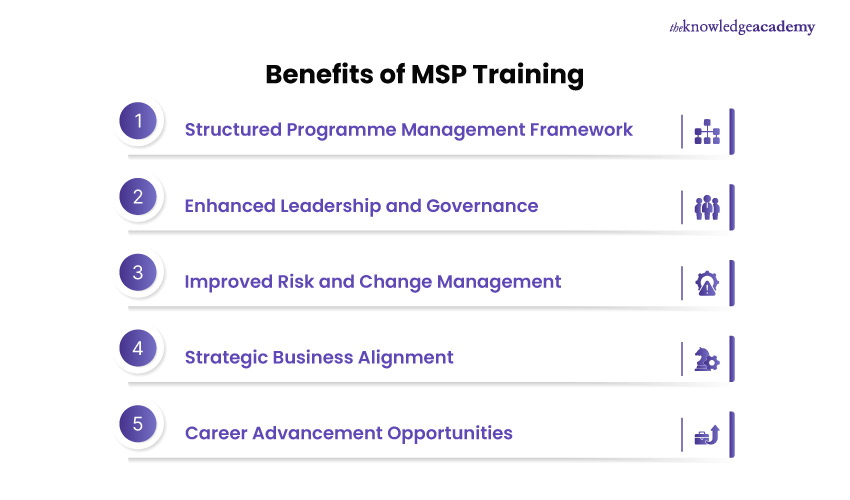
MSP Training provides professionals with the strategic insight and structured methods needed to manage complex programmes effectively. Below are the key benefits of MSP Training:

  • Structured Programme Management Framework: MSP provides a clear, adaptable framework to manage multiple related projects effectively, ensuring strategic alignment and consistent delivery.
  • Enhanced Leadership and Governance: It develops the ability to establish strong governance structures, define roles, and make informed decisions across complex programmes.
  • Improved Risk and Change Management: Learners gain practical tools to identify, assess, and manage risks and change efficiently, ensuring programme stability and adaptability.
  • Strategic Business Alignment: MSP ensures that all projects contribute directly to organisational objectives, optimising resource use and strategic benefits.
  • Career Advancement Opportunities: MSP Certification enhances credibility and opens opportunities for leadership roles in project and programme management worldwide.
Show more blue-arrow

Package deals for MSP® Training

Our training experts have compiled a range of course packages on a variety of categories in MSP® Training, to boost your career. The packages consist of the best possible qualifications with MSP® Training, and allows you to purchase multiple courses at a discounted rate.

Swipe for more. Don’t miss out!

MSP® Training FAQs

MSP principles, themes, and lifecycle processes are addressed in MSP Training. It educates the management on how to run a strategic programme with business objectives and bring some value within the organisation through MSP programme. This approach makes it a valuable MSP qualification for professionals aiming to lead transformation.

Yes, the MSP® Foundation and Practitioner courses are fully accredited by PeopleCert, ensuring global recognition and alignment with industry standards for programme management. These MSP courses are trusted by organisations worldwide to build programme leadership capability.

MSP® Certification is ideal for Programme Managers, Project Managers, Change Managers, PMO staff, and professionals involved in managing or supporting transformational change initiatives. If you're looking for flexible learning, MSP training online is available to suit your schedule and location.

The Foundation course introduces MSP® principles and terminology. The Practitioner course builds on this by teaching how to apply and tailor MSP® in real-world programme scenarios. These levels ensure a structured path through your Project Management courses in in Monaco, helping you progress confidently.

There are no formal prerequisites for the Foundation level. To attend the Practitioner course, you must have passed the MSP® Foundation exam as required by PeopleCert. This ensures you're ready to advance your MSP Certification journey.

You can take the MSP® exams online at a time that suits you for this MSP Training. The exams are available through remote proctoring, allowing flexible scheduling once your course is complete.

Certificates are typically issued within 72 hours after passing the exam for this MSP Training. You can download them from the MyTKA portal or receive them directly from PeopleCert if externally accredited.

To pass the Foundation exam, you need 60% (36/60). For the Practitioner exam, the pass mark is also 60% (42/70). The Foundation is closed book, while the Practitioner is open book.

An MSP® Certification from The Knowledge Academy, one of the best training provider, strengthens strategic thinking, enhances change‑management capability, and expands career prospects. Many certified professionals experience a 20–30% rise in advancement opportunities, making it a valuable step in progressing their programme‑management career.

After the MSP Training, the MSP® Practitioner Certification is valid for 3 to 5 years. Re-registration is required to maintain your certified status and demonstrate continued competence.

Yes, MSP® learners with The Knowledge Academy, a Trusted Global Training Provider, receive expert‑led training, digital study resources, mock exams, and tutor support to help them prepare effectively and succeed in their MSP® exams.

MSP® focuses on managing programmes and strategic change, while PRINCE2® is designed for managing individual projects. MSP® deals with multiple projects aligned to business goals.

MSP® Certification equips you with tools to lead complex programmes, align with strategic goals, and manage change. It supports progression from project roles to senior programme leadership.

After completing MSP® Foundation or Practitioner Training with The Knowledge Academy, a training provider in Monaco, you can pursue roles such as Programme Manager, Business Change Manager, PMO Analyst, Portfolio Manager, or Director of Programmes, depending on your experience and certification level.

The Knowledge Academy, one of the best training providers, stands out as a prestigious training provider known for its extensive course offerings, expert instructors, adaptable learning formats, and industry recognition. It's a dependable option for those seeking this certification.

Please see our MSP® Training available in Monaco

The Knowledge Academy is one of the Leading global training provider for MSP® Training.

The training fees for MSP® Training in Monaco starts from €3495

Show more down

Why we're the go to training provider for you

icon

Best price in the industry

You won't find better value in the marketplace. If you do find a lower price, we will beat it.

icon

Trusted & Approved

Recognised by leading certification bodies, we deliver training you can trust.

icon

Many delivery methods

Flexible delivery methods are available depending on your learning style.

icon

High quality resources

Resources are included for a comprehensive learning experience.

barclays Logo
deloitte Logo
Thames Water Logo

"Really good course and well organised. Trainer was great with a sense of humour - his experience allowed a free flowing course, structured to help you gain as much information & relevant experience whilst helping prepare you for the exam"

Joshua Davies, Thames Water

santander logo
bmw Logo
Google Logo
cross

Exclusive Deals Big Savings This March!

Grab up to 40% OFF and level up your skills this spring! march-madness

WHO WILL BE FUNDING THE COURSE?

close

close

Thank you for your enquiry!

One of our training experts will be in touch shortly to go over your training requirements.

close

close

Press esc to close

close close

Back to course information

Thank you for your enquiry!

One of our training experts will be in touch shortly to go overy your training requirements.

close close

Thank you for your enquiry!

One of our training experts will be in touch shortly to go over your training requirements.