


 Top Rated Course

We may not have the course you’re looking for. If you enquire or give us a call on +44 1344 203 999 and speak to our training experts, we may still be able to help with your training requirements.
What is Fixed Asset Management? A Comprehensive Guide
The Knowledge Academy 09 February 2026Fixed Asset Management is the process of maintaining and tracking the company's physical assets. This involves buildings, machinery, and office equipment. Continue reading this blog to examine the Fixed Asset Management definition, its importance, types, features, benefits, and practices. Let's embark on this financial journey!

Training Outcomes Within Your Budget!
We ensure quality, budget-alignment, and timely delivery by our expert instructors.
Table of Contents

Have you ever wondered how businesses manage and keep track of their invaluable equipment and machinery? The answer lies in 'Fixed Asset Management.' This term may sound highly technical, but it's exactly the opposite.
Continue to delve into this transformational journey to turn your learning into an addiction, where we shall explore the treasures of captivating information on Fixed Asset Management. We'll discuss its workings, importance, essential features, benefits, and best practices to uplift your knowledge of Asset Management.
Table of Contents
1) Understanding Fixed Asset Management
2) The Importance of Fixed Asset Management
3) Different Types of Asset Management
4) Essential Features of Fixed Asset Management Software
5) Best Practices for Fixed Asset Management
6) Conclusion
Understanding Fixed Asset Management
Fixed Asset Management is the procedure of tracking and managing the company's physical assets to ensure they are adequately maintained, sustainable, and in good condition. For example, a manufacturing company might use FAM applications to track its machines' working progress and functionalities.
By scheduling regular maintenance, the company can prevent breakdowns, reduce repair costs, and enhance the longevity of these machines. It typically comprises the following tasks:
a) Monitoring and tracking fixed assets
b) Tracking fixed assets for multiple locations from a single location
c) Minimising maintenance costs
d) Enhance operational activities
e) Keeping a strong asset record to prevent thefts and additional losses
How Does It Work?
Fixed Asset Management works by systematically tracking machinery and office equipment through a comprehensive record database. This database may include the manufacturing date, manufacturing location, purchase date, location, last maintenance date, etc. The records are maintained using various methods, such as barcodes, RFID tags, and GPS tracking systems.
In addition, this system prevents loss, theft, or misplacements to ensure the assets are available when needed. The two vital examples of fixed assets are:
a) Machinery - pneumatic press, compressor, boilers, cooling towers, etc.
b) Office equipment - computers, printers, photostat m/c, copiers, etc.
c) Medical equipment - MRI, X-ray, Ultrasound, patient monitors, etc.
The Importance of Fixed Asset Management
Fixed Asset Management is an essential approach to making money for organisations from machinery to other equipments. By optimising these assets, the company can cut its repair and maintenance costs, avoid unexpected breakdowns, and prevent thefts or accidents. Fixed Asset Turnover Ratio plays a crucial role in evaluating how efficiently a company utilises its fixed assets to generate revenue. Below, we have elaborated this information in pointers. Below, we have elaborated this information in pointers:
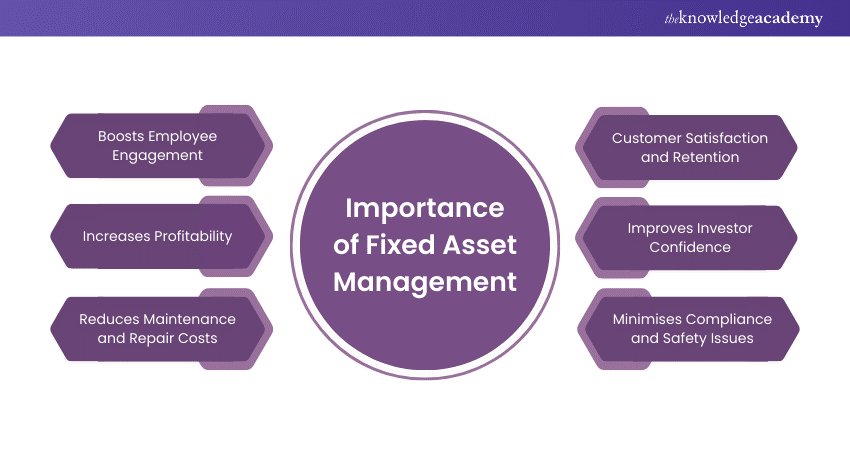
1) Boosts Employee Engagement
A company with reliable and well-maintained equipment attracts potential employees looking for optimal working conditions with enhanced safety. This approach makes it easier for companies to hire talented and deserving candidates for organisational success.
2) Increases Profitability
When you have fewer maintenance costs on machinery and other fixed assets, you can earn more revenue, boosting your profitability.
3) Reduces Maintenance and Repair Costs
Your machinery requires less maintenance through optimal Fixed Asset Management, which minimises costly repairs and unexpected shutdowns.
4) Customer Satisfaction and Retention
Well-maintained machinery means fewer issues in customers' projects, leading to happier clients. This approach is helpful to enhance the clients' satisfaction.
5) Improves Investor Confidence
The efficient Asset Management System promotes the ease of securing funds for business growth.
6) Minimises Compliance and Safety Issues
Proper machinery maintenance reduces accidental risks, reducing the chances of safety violations and legal disputes.
Advance in ISO 55001 asset management systems with ISO 55001 Lead Auditor Training - register today!
Different Types of Asset Management
Despite the vitality of Asset Management, it is also important to understand its type to help you understand the compliance topic better. Here are the types of Asset Management described below:
1) IT Asset Management (ITAM)
Wondering What is IT asset management? IT asset management refers to technology-related assets that form an integral aspect of businesses' functionality. functionality. These include computers, hardware, and servers. FAM ensures that this critical technological equipment is managed adequately and efficiently, providing a streamlined approach to asset tracking and maintenance within IT Asset Management Software.
2) Enterprise Asset Management (EAM)
Enterprise Asset Management (EAM) are the physical assets that help you run the company's efficient operational system, such as assembly machinery and buildings. FAM enhances the workability and efficiency of these equipment by optimising their lifespans and reducing costs.
3) Digital Asset Management (DAM)
Digital Asset Management (DAM) involves managing assets that cannot be touched, such as images, videos, databases, software applications, and other documents and digital files. It establishes that these assets are easily accessible, user-friendly, and managed correctly by business staff.
Implement effective energy management with the ISO 50001 PDF. Download now to start optimizing your energy practices and achieving sustainability goals.
Essential Features of Fixed Asset Management Software
Fixed Asset Management software is a computer application that helps efficiently track all the fixed assets in an organisation. Below, we have described the features of Fixed Asset Management software.

1) Asset Disposal Tracking
This crucial feature helps track how the assets are disposed of after usage. Such features are pertinent for the organisation to ensure accurate records for financial and legal purposes.
2) Dashboards and Reporting
The dashboard is a more precise and comprehensive overview of an organisation's fixed assets under one screen. Reporting typically includes detailed reports on asset performance, values, etc. Both carry their own levels of significance.
Get your free copy of the ISO 55001 PDF and unlock expert insights on implementing an effective asset management system.
3) Asset Logging
Asset logging is a comprehensive database that records all assets, including their location, status, and history. With the integration of Asset Performance Management, this feature enhances the user's ability to efficiently manage, track, and optimise asset performance.
4) Automated Depreciation Calculation
Automated depreciation calculation automatically calculates the depreciation values of assets over time for accurate financial reporting. Such features are vital to ensure the assets are utilised to their finest capabilities.
5) Life Cycle and Transaction Tracking
The Life Cycle and Transaction Tracking provides the complete monitoring of the lifecycle of the particular asset from purchasing to disposal. This feature is highly user-friendly for the organisation, making tracking tasks seamless and hassle-free.
Attain internal audit proficiency for AMS with our ISO 55001 Internal Auditor Course - join now!
Benefits of Fixed Asset Management
Fixed Asset Management offers diverse benefits for organisations, maximising their profitability and long-lasting success. Below, we have elaborated on these benefits to ensure you are utilising fixed assets to their maximum potential.

1) Equipment Maintenance
FAM reduces the need to maintain and repair your fixed assets during sudden breakdowns and enhances longevity.
2) Loss and Theft Prevention
Keeping detailed records of all fixed assets prevents losses and theft and ensures they are all accounted for.
3) Centralised Asset Information
FAM helps keep all information related to the equipment's costs and time in one place, ensuring everyone has easy access to it when needed.
4) Cost Reduction
FAM can significantly minimise maintenance expenses, purchasing costs through authorised dealers, and fixed asset thefts.
Download the Asset Management Policy ISO 27001 PDF and improve your organization's security today!
Best Practices for Fixed Asset Management
There are several best practices for managing fixed assets. A few of those are listed below:
a) Accurate Record-Keeping:
These assets are uniquely identified through barcodes, RFID tags, or serial numbers, making it easier to track their location and condition.
b) Regular Audits:
Regular audits are conducted to ensure all fixed assets are accounted for, spot any discrepancies, maintain accurate financial records, and ensure proper asset utilisation.
c) Preventive Maintenance Schedule:
Proper maintenance schedules are implemented to prevent unexpected equipment failures, extend the lifespan of assets, and reduce repair costs. Additionally, detailed records of maintenance activities optimise safety compliance regulations, supporting better planning for future maintenance and replacements.
d) Centralisation for Asset Management:
All the records about the fixed assets are kept in a single database. This data is easily accessible to centralised stakeholders for enhanced decision-making and efficient management.
e) Effective Disposal Tracking:
Proper asset disposal records are maintained to prevent unauthorised disposal and keep financial records accurate. They also help assess the residual value of assets, which is crucial for financial planning and reporting.
Become a leader in managing assets with ISO 55001 Lead Implementer Training - register now!
Conclusion
Fixed Asset Management comprises tracking and managing physical assets like buildings, machinery, and equipment to ensure optimal maintenance. Understanding the Difference between Fixed Assets and Current Assets can also help companies better allocate resources for both long-term and short-term asset management. This essential topic not only reduces maintenance costs and avoids unexpected breakdowns, but also prevents thefts. The different Asset Management types listed profoundly impact the workability and maintenance of these critical equipments. Gaining insights into Asset Management Interview Questions and Answers can further prepare professionals to demonstrate their understanding of these concepts in real-world job scenarios. We hope this information is helpful and valuable to upscale your careers. We hope this information is helpful and valuable to upscale your careers.
Power your future with our ISO 50001 Energy Management Systems Training – register today!
Frequently Asked Questions
What is the Purpose of Fixed Asset Management?

The primary purpose of Fixed Asset Management is to enhance the lifespan of these assets and ensure they adequately contribute to an organisation's overall profitability.
How do You Manage Fixed Asset Management?
Fixed assets are managed in several ways, such as assigning unique identifiers like barcodes or RFID tags, maintaining a comprehensive database, regular audits, preventive maintenance, a centralised management system, and accurate disposal tracking.
What are the Other Resources and Offers Provided by The Knowledge Academy?
The Knowledge Academy takes global learning to new heights, offering over 3,000+ online courses across 490+ locations in 190+ countries. This expansive reach ensures accessibility and convenience for learners worldwide.
Alongside our diverse Online Course Catalogue, encompassing 19 major categories, we go the extra mile by providing a plethora of free educational Online Resources like Blogs, eBooks, Interview Questions and Videos. Tailoring learning experiences further, professionals can unlock greater value through a wide range of special discounts, seasonal deals, and Exclusive Offers.
What is The Knowledge Pass, and How Does it Work?
The Knowledge Academy’s Knowledge Pass, a prepaid voucher, adds another layer of flexibility, allowing course bookings over a 12-month period. Join us on a journey where education knows no bounds.
What are the Related Courses and Blogs Provided by The Knowledge Academy?
The Knowledge Academy offers various ISO 55001 Trainings, including the ISO 55001 Foundation Training, ISO 55001 Lead Auditor Training, and ISO 55001 Lead Implementer Training. These courses cater to different skill levels, providing comprehensive insights into Asset Manager Salary.
Our IT Service Management Blogs cover a range of topics related to IT service delivery and management, offering valuable resources, best practices, and industry insights. Whether you are a beginner or looking to advance your service management skills, The Knowledge Academy's diverse courses and informative blogs have got you covered.

The Knowledge Academy


Global Training Provider
The Knowledge Academy is a world-leading provider of professional training courses, offering globally recognised qualifications across a wide range of subjects. With expert trainers, up-to-date course material, and flexible learning options, we aim to empower professionals and organisations to achieve their goals through continuous learning.

Upcoming IT Service Management Resources Batches & Dates
Date
 ISO 55001 Foundation Training
ISO 55001 Foundation Training
Mon 29th Jun 2026
ISO 55001 Foundation Training
Mon 30th Nov 2026

 If you wish to make any changes to your course, please


