


 Top Rated Course

We may not have the course you’re looking for. If you enquire or give us a call on +352 20 33 17 60 and speak to our training experts, we may still be able to help with your training requirements.
Workforce Planning Models Explained
James Smith 27 February 2026A Workforce Planning Model helps organisations predict future skill needs, spot gaps, and ensure the right people are in place to achieve business goals. It supports proactive hiring, succession planning, and targeted training plans. This improves productivity, reduces recruitment costs, and strengthens retention over time.

Training Outcomes Within Your Budget!
We ensure quality, budget-alignment, and timely delivery by our expert instructors.
Table of Contents
Workforces today must adapt quickly to changing markets, technology, and business priorities. Organisations need a clear approach to ensure they always have the right talent available at the right time.
A Workforce Planning Model helps businesses anticipate future staffing needs and prepare for growth or change. Let’s explore how it works and why it plays a key role in long-term success.
Table of Contents
1) What are Workforce Planning Models?
2) 4 Strategic Workforce Planning Models You Should Know
3) The Benefits of Workforce Planning Model
4) Stages of Workforce Planning Model
5) Strategic Workforce Planning Tools
6) What are the Five Pillars of Workforce Planning?
7) What are the Four Steps in the Basic Model for Workforce Planning?
8) Conclusion
What are Workforce Planning Models?
Organisations use Workforce Planning Models to create structured frameworks that match their staffing needs with their business goals and expected demand. The system enables organisations to discover their skill deficiencies while they examine their employee patterns and develop their training requirements.
The models use forecasting and gap analysis to assist organisations in making data-based decisions while they optimise their resources and get ready for upcoming developments and expansion.
4 Strategic Workforce Planning Models You Should Know
Organisations use different approaches to plan their workforce effectively and respond to changing business needs. The following strategic Workforce Planning Models help forecast demand, manage talent, and maintain the right staffing levels.
1) Optimisation Models
Optimisation models focus on using existing employees as efficiently as possible to meet business goals, such as reducing labour costs or increasing productivity. They analyse different staffing scenarios and resource constraints to improve allocation and support better decision-making.
2) Flow Models
Flow models examine how employees move within an organisation, including promotions, transfers, and career progression. They support succession planning and training by mapping career paths and identifying the development employees need to move into future roles.
3) Deterministic Models
Deterministic models rely on historical workforce data to predict future staffing needs. By analysing trends and patterns, organisations can forecast hiring and training requirements and make clearer resource planning decisions, particularly in stable environments.
4) Equilibrium Models
Equilibrium models aim to balance workforce supply with business demand. They help organisations ensure the right number of employees with the right skills are available by combining hiring, upskilling, and labour market analysis to maintain productivity.
Build skills with our practical and complete Talent Management Training – Join now!
The Benefits of Workforce Planning Model
The Workforce Planning Model provides a framework and assists organisations in building teams that collaborate effectively to achieve meaningful, enduring results. It also strengthens their Talent Management capabilities. Here are a few benefits of this model:
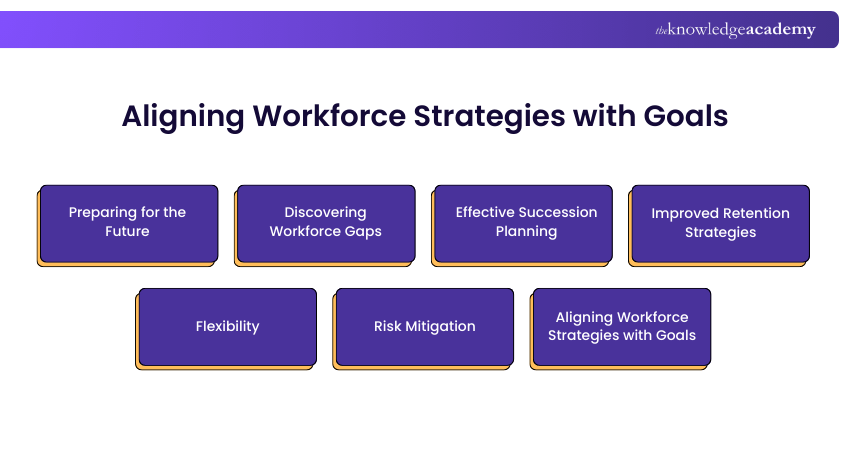
1) Preparing for the Future
Utilising a Workforce Planning Model allows organisations to prepare for the future by strategically addressing their staffing requirements. This may involve recruiting additional personnel to align with growth projections, modifying their business model, and identifying the necessary individuals to facilitate these changes.
2) Discovering Workforce Gaps
Identifying deficiencies in the existing Workforce allows organisations to develop hiring strategies, reassign personnel, and provide targeted training. This strategic approach ensures a more agile and responsive organisational structure.
3) Effective Succession Planning
By choosing and nurturing individuals with the capacity for future leadership positions, organisations can strategically prepare for staff departures with minimal disruption. Furthermore, succession planning can contribute positively to Employee Engagement, fostering a sense of career development and loyalty within the workforce.
4) Improved Retention Strategies
By following the Workforce Planning framework, organisations can gain a comprehensive insight into employees' skills and identify optimal roles for their success within the company. Instead of resorting to employee terminations, strategic redeployment can be implemented to retain valuable staff.
5) Flexibility
A well-defined Workforce Plan, incorporating recruitment and training frameworks, can enhance the flexibility of business models. It enables businesses to effectively predict and respond to change. By devising strategies given below, these businesses can lower your overall staffing expenses:
a) Boost productivity and maximise return on workforce investment
b) Retain skilled personnel and minimise expenses linked to staff turnover
c) Develop a functional workforce capable of meeting varying customer demands
6) Risk Mitigation
Risk Mitigation in Strategic Workforce Planning (SWP) helps organisations align talent with business needs, manage budgets, and address skill gaps. By forecasting future workforce needs and adapting to market changes, SWP builds resilience. It reduces risks and ensures long-term organisational agility and success.
7) Aligning Workforce Strategies and Organisational Goals
To effectively support long-term success, it's crucial to align workforce strategies with the overall goals of the organisation. By anticipating future needs and challenges, businesses can develop a workforce equipped to meet these objectives. This alignment ensures that talent, skills, and resources.
Learn Team Performance Management with our Senior Management Training – Join now!
Stages of Workforce Planning Model
There are five core steps in the Workforce Planning Model by which organisations can simplify the process of Workforce Planning:

1) Deciding Strategic Direction and Goals
Workforce Planning is a hierarchical process that requires the right organisational path and specific strategic goals to make informed decisions. There are some important questions to ask before examining the Workforce and executing new employee management strategies. These questions are as follows:
1) In what direction your business should go?
2) What are you expecting to get through Workforce Planning?
3) What are the primary goals or objectives you need to target?
4) Why do you require a Workforce Planning structure for your business?
2) Current Workforce Analysis
In this stage of the Workforce Planning Model, the organisation assesses its current Workforce. This involves analysing employee demographics, skills, performance, and potential future retirements and departures. The primary aim is to gain a complete view of the existing Workforce’s strengths and gaps. The following are the strategies implemented in this stage:
a) Demand Planning: This involves determining the number of employees required for each role to achieve the organisation’s objective. It requires accurate prediction of the business to specify the accurate Workforce for the future.
b) Internal Supply: This involves accurate talent evaluations and analysing the expected turnover rate of an Employee, such as retirement, resignation, etc.
c) Gap Analysis: This involves addressing the gaps in the Workforce and creating plans to end up with recruitment, redeployment, and training.
3) Develop the Plan
This involves the process of creating a strategic and actionable plan to address the identified gaps between the current Workforce and future Workforce requirements of the organisation. This step involves translating the insights gained from the earlier stage of the Workforce analysis into concrete strategies and initiatives. Here are some steps involved in developing a Workforce plan:
a) Identify Specific Workforce Gaps: Based on the gap analysis from the previous steps, the organisation pinpoints specific areas where there are shortages of skills and roles.
b) Set Clear Objectives: The organisation clearly defines the goals and objectives of the Workforce. This involves specifying the desired outcomes, such as reducing skills gaps, ensuring leadership continuity, and so on.
c) Craft Strategies: Then, the organisation develops a plan to fill the identified gaps. If there’s a shortage of certain skills, the plan might outline initiatives for recruitment and training.
Unlock your Leadership potential! Join our Successful People Management & Team Leadership Training to develop essential skills and lead your team to success!
4) Implement the Workforce Plan
Now, it’s time for the organisation to implement the Workforce plan. Implementing the Workforce plan is the process of putting the strategies outlined in the plan into action. It involves executing various steps and tactics that have been developed to address the gaps in the organisation’s Workforce. Successfully implementing Workforce Planning needs the following:
1) HR personnel to clearly analyse their key roles and responsibilities.
2) Tactics and processes to record the complete data and information.
3) Effective communication between invested parties to support and execute the plan
Monitor Result
Results monitoring or analysis of the results is a critical process in Workforce Planning. It denotes the tracking and evaluating the outcomes regarding the strategies and initiatives implemented in the plan. This ensures that the organisation can review how effective the interventions are and thus come up with a valid, informed decision for making improvements in the future. The following are monitoring steps.
a) Data Collection: This outlines the process or approach of collecting the right metrics and data based on the outlined goals and objectives in the workforce plan.
b) Performance Measurement: It measures against benchmarked results and Key Performance Indicators (KPIs) that were set in the plan.
c) Analysis: Involves the analysis of collected data so that a trend, pattern, strength, or weakness can be identified and gaps between expected outcomes and actuality are found.
Learn to forecast demands and bridge skill gaps with our Workforce Resource Planning Training - join now!
Strategic Workforce Planning Tools
Strategic Workforce Planning is a data-driven process that helps organisations align their workforce with business goals. Utilising the right tools can enhance this alignment, ensuring that the organisation has the right people with the right skills at the right time.
9 Box Grid
The 9 box grid, or performance-potential matrix, is a tool that evaluates both employee performance and potential. It categorises employees based on their current performance and future potential, ranging from "talent risk" to "consistent stars." This helps identify individuals who excel and those with potential for growth within the company.
HR Dashboarding
Another valuable tool in strategic Workforce Planning is the HR dashboard. It consolidates data from various sources, such as payroll, your ATS, and other HR systems. By analysing this combined information, you can calculate and report on key HR metrics. The aim is to provide a comprehensive overview of your workforce's status, helping guide future decision-making.
Compensation & Benefit Analysis
Compensation and benefits data directly impact performance and can offer valuable insights when analysed. Start by setting an internal pay benchmark, categorising employees as overpaid or underpaid, and comparing this with their performance levels.
Ideally, top performers should be overpaid, and underperformers underpaid. If this alignment isn't present, you risk losing your best talent while keeping those who contribute the least.
Scenario Planning
Scenario planning allows you to anticipate various potential situations that may arise in the future, ensuring you're prepared for any eventuality.
This method involves considering unexpected events or changes, such as technological advancements, new legislation, market shifts, or natural disasters, that could significantly affect the organisation.
The next step is to assess the potential impact of each scenario on the business and develop strategies to manage these situations effectively.
What are the Five Pillars of Workforce Planning?
These are the Five pillars of Workforce Planning:
1) Plan: Align workforce needs with organisational goals
2) Attract: Draw individuals into the sector
3) Employ: Ensure efficient recruitment processes
4) Train: Provide continuous professional development
5) Nurture: Support employee well-being and career progression
What are the Four Steps in the Basic Model for Workforce Planning?
These are the four steps in the basic model:
1) Current State Analysis: Assess the existing workforce, skills and performance.
2) Future State Visioning: Project future workforce needs based on business strategy.
3) Gap Analysis: Identify discrepancies between current and future workforce requirements.
4) Action: Develop and implement strategies to address gaps, such as recruitment or training.
Want to get ahead in your resource planning interview? Study our detailed list of Resource Planning Interview Questions and Answers to give impressive, well-prepared responses!
Conclusion
Understanding how each Workforce Planning Model works can help organisations prepare for change and make confident staffing decisions. We hope you enjoyed this guide and that it helped you develop a clearer approach to workforce strategy and long-term success.
Strengthen your leadership and team skills with our People Management Courses and move forward in your management career!
Frequently Asked Questions
How does Workforce Planning Model benefit employees?

A Workforce Planning Model benefits employees by ensuring a clear career path, identifying training opportunities, and optimising workload distribution, which enhances job satisfaction and career development.
What are the Key Principles of Workforce Planning?
Workforce Planning involves forecasting staffing needs and developing strategies to meet those needs. It focuses on aligning the workforce with the business goals to ensure the right people are in the right roles at the right time.
What are the Other Resources and Offers Provided by The Knowledge Academy?
The Knowledge Academy takes global learning to new heights, offering over 3,000+ online courses across 490+ locations in 190+ countries. This expansive reach ensures accessibility and convenience for learners worldwide.
Alongside our diverse Online Course Catalogue, encompassing 17 major categories, we go the extra mile by providing a plethora of free educational Online Resources like Blogs, eBooks, Interview Questions and Videos. Tailoring learning experiences further, professionals can unlock greater value through a wide range of special discounts, seasonal deals, and Exclusive Offers.
What is The Knowledge Pass, and How Does it Work?
The Knowledge Academy’s Knowledge Pass, a prepaid voucher, adds another layer of flexibility, allowing course bookings over a 12-month period. Join us on a journey where education knows no bounds.
What are the Related Courses and Blogs Provided by The Knowledge Academy?
The Knowledge Academy offers various People Management Courses, including the Successful People Management and Team Leadership Course, Talent Acquisition Training, and Performance Appraisal Training. These courses cater to different skill levels, providing comprehensive insights into Matrix Organisational Structure.
Our HR Blogs cover a range of topics related to Workforce Planning Model, offering valuable resources, best practices, and industry insights. Whether you are a beginner or looking to advance your Strategic Thinking skills, The Knowledge Academy's diverse courses and informative blogs have got you covered.

James Smith


Digital Marketing Manager and Trainer
James Smith is a digital marketing professional with over a decade of experience in SEO, content strategy, paid media and analytics. He has supported both SMEs and global brands in transforming their digital presence. James’s writing and training are rooted in results-driven tactics and the latest marketing trends.
View Detail
Upcoming ISO & Compliance Resources Batches & Dates
Date
 Workforce Planning Training
Workforce Planning Training
Fri 14th Aug 2026
Workforce Planning Training
Fri 13th Nov 2026

 If you wish to make any changes to your course, please


