


 Top Rated Course

We may not have the course you’re looking for. If you enquire or give us a call on +352 20 33 17 60 and speak to our training experts, we may still be able to help with your training requirements.
Private Sector Explained: Types, Characteristics and Role
Amelia Williams 23 December 2025The Private Sector includes businesses not owned by the government, run by individuals or companies aiming to earn profit for owners or shareholders. It covers a wide range of industries, from small enterprises to multinational corporations, driving innovation, job creation, and economic growth through competition and investment.

Training Outcomes Within Your Budget!
We ensure quality, budget-alignment, and timely delivery by our expert instructors.
Table of Contents

Who really powers the world of opportunities we rely on every day? The Private Sector plays this vital role, from local shops to global corporations, shaping opportunities and creating growth. Its diversity fuels innovation and generates countless jobs, making it a cornerstone of modern society. Understanding its types, characteristics, and influence helps you see how businesses impact communities and careers. Let’s explore how this dynamic force shapes the world around us.
Table of Contents
1) What is Private Sector?
2) Purpose of the Private Sector
3) Characteristics of the Private Sector
4) Types of Private Sector Businesses
5) Role of the Private Sector
6) How is the Private Sector Regulated?
7) Difference Between Private Sector and Public Sector?
8) Conclusion
What is Private Sector?
The Private Sector refers to that section of the economy that's run by individuals and companies, as opposed to the Public Sector, which is managed by the government. It covers a broad range of businesses, including small startups and large corporations and plays a substantial role in driving economic growth and innovation.
Here are the features of the Private Sector:
1) Profit-oriented: Focus on generating profits for owners or Shareholder.
2) Private Ownership: Owned and controlled by individuals or private organisations.
3) Market-driven: Operates based on market demands and competition.
4) Efficient Operations: Prioritises cost efficiency and innovation.
5) Limited Government Control: Minimal regulatory intervention compared to the Public Sector.

Purpose of the Private Sector
The Private Sector plays a vital role in shaping economies and societies by driving growth, creating opportunities, and meeting the needs of individuals and communities.
Profit Generation: Private enterprises exist with the intention of earning financial returns. This profit-driven focus motivates them to improve operations, maintain efficiency, and remain competitive in dynamic markets.
Supplying Goods and Services: Businesses in this sector ensure that consumer needs are met by producing and delivering a wide variety of goods and services, forming the backbone of daily economic activity.
Employment Creation: Growth within the Private Sector translates into new job opportunities. By expanding operations and industries, it provides livelihoods, helping individuals achieve financial independence and stability.
Encouraging Innovation: The pressure to stay relevant and profitable fosters creativity. Private firms often pioneer fresh ideas, technologies, and practices, advancing society with solutions that enhance everyday life.
Supporting Economic Growth: Through investment, expansion, and contribution across industries, the Private Sector strengthens national economies. Its activities play a direct role in improving infrastructure, wealth distribution, and overall living standards.
Characteristics of the Private Sector
The Private Sector is defined by Private ownership, profit-centred operations, self- management, and market-based decision making. It depends on private financing and fosters competition for innovation and efficiency. With minimal government involvement, it focuses on delivering high-quality goods and services while contributing to economic growth and job creation.

1) Private Ownership and Control
a) Ownership lies with individuals, families, or shareholders who make strategic and operational decisions.
b) Profits are either reinvested for growth or distributed among owners, ensuring business sustainability.
2) Profit Motive
a) Encourages businesses to innovate, improve efficiency, and attract customers through better products or services.
b) Provides sustainability by enabling reinvestment, long-term survival, and opportunities for expansion in competitive markets.
3) Private Financing
a) Relies on private funding sources like individual investments, loans, and shareholder contributions, without government support.
b) Businesses raise capital through equity, debt, or retained earnings, ensuring financial independence and flexibility.
4) Independent Management
a) Operates independently of direct government control while complying with legal and regulatory frameworks.
b) Autonomy in decision-making enables businesses to adapt quickly to market changes and opportunities.
5) No State Participation
a) Businesses have full control over strategic planning, resource allocation, and market positioning.
b) Quick and independent decision-making ensures adaptability in response to economic and industry shifts.
6) Market Driven Operations
a) Businesses adapt their products, services, and strategies based on customer needs and market demands.
b) Staying market driven helps organisations remain competitive, relevant, and responsive to changing trends and preferences.
Master the strategies to manage time and resources efficiently in our Organisational Skills Training- Sign up now!
Types of Private Sector Businesses
The Private Sector is made up of different types of businesses, each with unique structures, responsibilities, and purposes. Below are the main forms that drive economic activity and shape business operations.

1) Sole Proprietors
Sole Proprietorships means single individual owns and runs the business, enjoying full control but bearing unlimited liability for debts and losses.
2) Partnerships
Two or more people share ownership, responsibilities, profits, and risks while pooling resources and expertise.
3) Limited Liability Companies (LLC) and Corporations
Separate legal entities that protect owners’ personal assets while allowing them to raise capital and limit risk.
4) SME (Small and Medium Enterprise)
Small and Medium-sized Enterprises drive innovation, provide employment, and contribute significantly to economic growth.
5) Joint Ventures
Two or more businesses collaborate for a specific project, sharing resources, risks, and rewards.
6) Non-profit Organisations
Operate to serve social, cultural, or charitable purposes, reinvesting surplus into their mission rather than distributing profits.
Role of the Private Sector
The Private Sector helps shape economies and drive societal progress. At its core, it’s all about businesses, from small local shops to global corporations, working independently of government control. But its role goes far beyond just generating profits—it’s about innovation, opportunity, and growth.
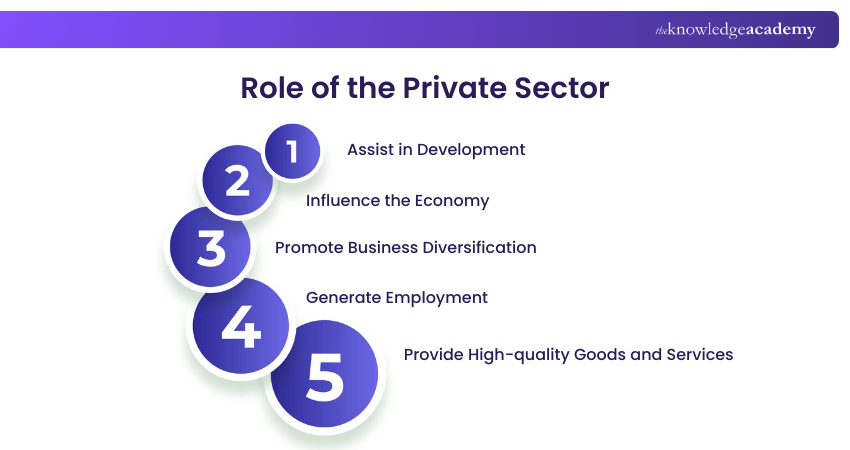
1) Assist in Development
a) Drives national and community growth by investing in infrastructure, innovation, and technology.
b) Expands industries and improves access to essential services, boosting productivity and economic resilience.
2) Influence the Economy
a) Contributes to GDP, fosters entrepreneurship, and generates income to sustain economic progress.
b) It shapes market trends, sets competitive pricing, and attracts foreign investments, enhancing economic dynamism.
3) Promote Business Diversification
a) Encourages expansion across various industries, reducing reliance on a single sector.
b) Supports innovation and builds a resilient economy capable of adapting to global market shifts.
4) Generate Employment
a) Creates job opportunities by establishing and expanding businesses across industries.
b) Reduces unemployment, provides stable income sources, and improves overall living standards.
5) Provide High-quality Goods and Services
a) Competition drives businesses to enhance product and service quality continuously.
b) Innovation meets consumer demands, ensuring efficiency, affordability, and customer satisfaction.
Sign up for our Certified Training and Development Manager Course to spotlight your leadership expertise now!
How is the Private Sector Regulated?
The Private Sector is regulated through laws, policies, and standards that promote fair competition, protect consumers, and uphold ethical practices. Governments enforce taxation, labour rules, and compliance requirements to ensure accountability, stability, and sustainable business operations.
Difference Between Private Sector and Public Sector?
The Private Sector is owned by individuals or companies and is profit-driven, focusing on growth, innovation, and competitiveness. The public sector is government-owned, service-oriented, and funded by taxation, aiming to provide welfare, infrastructure, and essential services for society.
Conclusion
The Private Sector, much like the Public Sector, plays an indispensable role in creating jobs and opening new doors for job seekers. From local businesses to global corporations, they contribute to economic growth and meet consumer needs in more innovative ways. Understanding What is Private Sector involves exploring its diverse approach and how it complements the Public Sector, making them indispensable in shaping a balanced and enriching society.
Struggling with rapid decision-making strategies for effective outcomes? Sign up for our High Speed Work Training now!
Frequently Asked Questions
What Type of Companies Fall under the Private Sector?

The ownership of the companies in the field of the private sector does not belong to the government but to individuals or groups of people. These are startups, small business, multinational corporations, partnerships, privately owned firms in such industries as tech, retail, finance, and manufacturing.
What Are the Benefits of Working in the Private Sector?
Private sector jobs often offer competitive salaries, performance-based growth, innovation-driven environments, and diverse career paths. Employees may benefit from faster promotions, skill development, and exposure to dynamic market trends and global opportunities.
What are the Other Resources and Offers Provided by The Knowledge Academy?
The Knowledge Academy takes global learning to new heights, offering over 3,000 online courses across 490+ locations in 190+ countries. This expansive reach ensures accessibility and convenience for learners worldwide.
Alongside our diverse Online Course Catalogue, encompassing 19 major categories, we go the extra mile by providing a plethora of free educational Online Resources like Blogs, eBooks, Interview Questions and Videos. Tailoring learning experiences further, professionals can unlock greater value through a wide range of special discounts, seasonal deals, and Exclusive Offers.
What is The Knowledge Pass, and How Does it Work?
The Knowledge Academy’s Knowledge Pass, a prepaid voucher, adds another layer of flexibility, allowing course bookings over a 12-month period. Join us on a journey where education knows no bounds.
What are the Related Courses and Blogs Provided by The Knowledge Academy?
The Knowledge Academy offers various Learning and Development Courses including the Certified Training & Development Manager Course and Certified Training Professional Course and the Training Delivery for Experienced Trainers Course. These courses cater to different skill levels, providing comprehensive insights into Human Resource Development (HRD).
Our HR Blogs cover a range of topics related to growth in the job market, offering valuable resources, best practices, and industry insights. Whether you are a beginner or looking to advance your People Management skills, The Knowledge Academy's diverse courses and informative blogs have got you covered.

Amelia Williams


Senior Human Resources Consultant and Learning Specialist
Amelia Williams is a highly respected HR professional with over 12 years of experience in human capital management, talent development and workplace policy. She has worked across sectors including education, healthcare and corporate services, focusing on aligning people strategies with organisational goals. Amelia’s writing blends current HR trends with practical solutions for modern workplace challenges.

Upcoming HR Resources – Learn about Human Resources Batches & Dates
Date
 Organisational Skills
Organisational Skills
Fri 17th Jul 2026
Organisational Skills
Fri 16th Oct 2026

 If you wish to make any changes to your course, please


