


 Top Rated Course

We may not have the course you’re looking for. If you enquire or give us a call on +352 20 33 17 60 and speak to our training experts, we may still be able to help with your training requirements.
Board Diversity: Definition, Types, and Examples
James Smith 12 March 2026Board Diversity is the inclusion of directors with varied backgrounds and skills to improve governance, decision-making, and organisational performance. It brings broader perspectives that strengthen strategic oversight and risk management. Diverse boards also enhance innovation, accountability, and long-term business resilience.

Training Outcomes Within Your Budget!
We ensure quality, budget-alignment, and timely delivery by our expert instructors.
Table of Contents

Board Diversity refers to the inclusion of directors with varied backgrounds, perspectives, and experiences. It helps organisations strengthen governance by drawing on a wider range of insights. A diverse board also better reflects the stakeholders it serves.
This can include differences in gender, ethnicity, age, professional expertise, and lived experiences. Such varied representation enhances decision‑making and promotes innovation. With this foundation in place, we can now explore the definition, types, and real‑world examples that illustrate how diversity shapes modern boards.
Table of Contents
1) What is Board Diversity?
2) Types of Board Diversity
3) Implementing Board Diversity
4) Examples of Board Diversity
5) Advantages of Board Diversity
6) Disadvantages of Board Diversity
7) What is the Board Diversity Rule?
8) Conclusion
What is Board Diversity?
Board Diversity is a term that refers to the inclusion of a range of individuals from various backgrounds, skills, and perspectives in the leadership of an organisation. Essentially, it is the practice of ensuring that a company’s board of directors is made up of individuals who bring diverse qualities, such as expertise, gender, age, ethnicity, and professional experiences. Rather than a superficial approach, Board Diversity is about creating a balanced and dynamic group that can tackle challenges from different angles.

The Importance of Board Diversity
The importance of Board Diversity is increasingly recognised in today’s business landscape.
1) Better Financial Performance: Diverse boards of companies generally bring better financial performance due to varied opinions and balanced decision-making.
2) Innovation: The diversified board leads to innovation and creativity as various viewpoints introduce new ideas and solutions.
3) Better Understanding of the Customers: Companies with diverse boards have a better idea about diverse customers, and policies are shaped to meet the requirements of diverse customers.
4) Reputation Enhancement: Stakeholders, employees, and customers appreciate diversity, and this will enhance the company's brand and credibility.
5) Social Responsibility: The representation of society’s diversity reflects commitment to social responsibility and inclusiveness.
6) Effective Decision-Making: Diversity positively influences decision-making; diverse boards will be in a better position to make rounded decisions by considering a variety of insights in strategic planning.
Types of Board Diversity
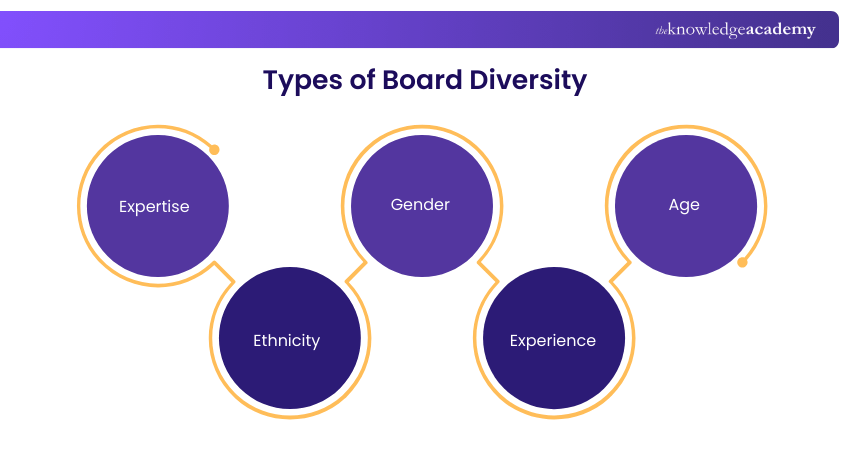
When considering Board Diversity, there are multiple types to focus on, each contributing a unique value to the organisation. Let’s dive into the key types of Board Diversity that companies are prioritising today.
1) Expertise
Boards thrive when members bring different professional specialisms. This mix strengthens strategic discussions and supports well‑rounded decision‑making.
2) Ethnicity
Including directors from varied racial and cultural backgrounds broadens perspectives. This diversity helps boards better understand stakeholders and society.
3) Gender
Balanced gender representation enriches boardroom viewpoints. It also challenges traditional norms and supports more effective governance.
4) Experience
Experience may include prior board roles or sector‑specific knowledge. Directors with varied backgrounds contribute insights that strengthen board performance.
5) Age
Age diversity blends seasoned wisdom with fresh perspectives. Boards benefit from both stability and innovative thinking.
Boost productivity and strengthen collaboration with our Managing Remote Teams course designed for today’s distributed workforce.
Implementing Board Diversity
Implementing Board Diversity is essential for fostering innovation and balanced decision-making within an organisation. Here's how you can implement Board Diversity:
1) Strategic Planning and Commitment: Diversity in a board requires strategic planning and commitment toward diversity.
2) Identify Gaps: Assess the current board composition and figure out what is missing or lacking in diversity.
3) Engage Diverse Recruitment Agencies: Partner with specialised diversity agencies to recruit candidates from different backgrounds and with different levels of expertise.
4) Set Diversity Goals: Defining clear, measurable goals aimed at Board Diversity.
5) Ensure Transparency and Accountability: Track the developments and report progress to stakeholders to maintain transparency.
6) Foster Openness to New Perspectives: Foster a board culture that is open to new ideas and diverging viewpoints because these serve as an essential in getting a real diverse board.
Examples of Board Diversity

There are numerous examples of organisations that have successfully implemented diverse boards. Global companies like Coca-Cola, Unilever, and Johnson & Johnson are known for their commitment to Board Diversity. Coca-Cola, for instance, has board members from different ethnicities, genders, and backgrounds, which contributes to its inclusive and innovative corporate culture.
In the technology sector, Salesforce has a strong commitment to gender and ethnic diversity, with a board that includes professionals from a range of backgrounds. These examples demonstrate that diversity is not limited to any one industry; instead, it is an asset across all sectors.
Advantages of Board Diversity
A diverse board offers several advantages that contribute to a company’s success. Here are some of the most compelling benefits:
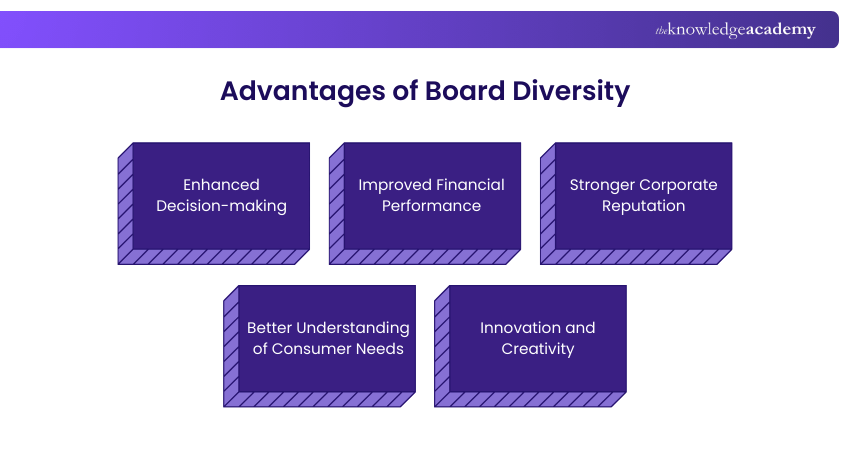
1) Enhanced Decision-making: Diverse boards bring multiple perspectives, which lead to more thorough discussions and well-rounded decisions. Different viewpoints help the board foresee risks and opportunities that a homogeneous group might overlook.
2) Improved Financial Performance: A few research indicates that companies with Board Diversity tend to outperform those without diversity. Diverse boards are more likely to tap into innovative ideas and adapt to changes, which positively impacts the bottom line.
3) Stronger Corporate Reputation: Companies with diverse boards are viewed as progressive and socially responsible. This can strengthen brand loyalty, attract top talent, and appeal to investors who prioritise environmental, social, and governance (ESG) factors.
4) Better Understanding of Consumer Needs: A board that reflects the diversity of its customer base is better positioned to understand their needs and preferences. This can be particularly valuable in industries like retail, where consumer preferences vary widely.
5) Innovation and Creativity: Diversity encourages a culture of openness, where new and unconventional ideas are more likely to be explored. This leads to innovative solutions and can give the company a competitive edge.
Empower your career! Register for our Introduction to Management Course and learn to lead with confidence and impact – Join today!
Disadvantages of Board Diversity
While Board Diversity has numerous benefits, there are some challenges and potential downsides to consider:
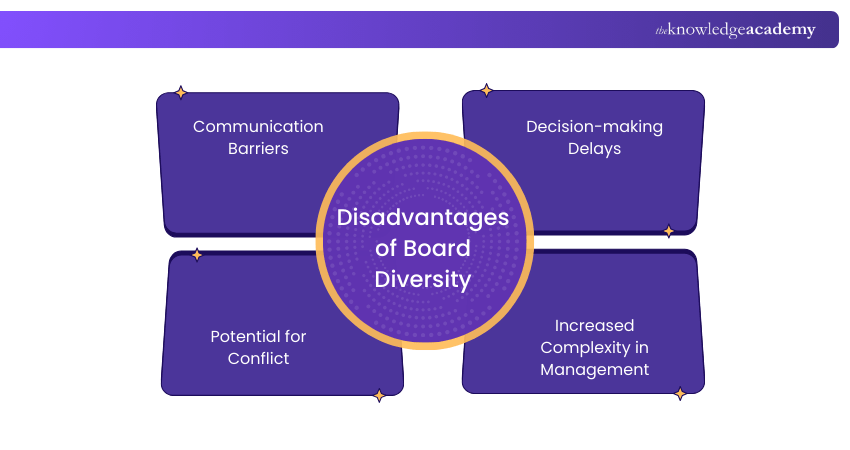
1) Communication Barriers: With diversity in backgrounds and perspectives, there can be differences in communication styles. This sometimes leads to misunderstandings or delays in decision-making as the board members work to find common ground.
2) Decision-making Delays: A diverse board may experience longer decision-making processes due to differing opinions and viewpoints. While these discussions are often beneficial, they can slow down the process, which might be challenging in industries that require quick decision-making.
3) Potential for Conflict: When individuals with diverse perspectives come together, there is always a risk of conflict. Different viewpoints can lead to disagreements, and if not managed well, these conflicts can hinder the board’s effectiveness.
4) Increased Complexity in Management: Managing a diverse board requires a higher level of coordination and sensitivity to various needs and preferences. For companies unprepared for these challenges, diversity can initially seem overwhelming.
What is the Diversity Board Rule?
The Board Diversity Rule refers to Nasdaq’s requirement that listed companies either appoint a minimum number of diverse directors or explain why they do not. This included at least one director who self‑identified as female and one who identified as an underrepresented minority or LGBTQ+.
Alongside this, Nasdaq’s Disclosure Rule required companies to publish an annual Board Diversity matrix showing directors’ self‑identified gender, race, ethnicity, and LGBTQ+ status. These rules were ultimately vacated when the Fifth Circuit ruled that the SEC exceeded its authority in approving them.
Conclusion
In today’s evolving corporate landscape, Board Diversity is no longer optional but a strategic advantage. By bringing together varied perspectives, skills, and experiences, organisations strengthen governance, encourage innovation, and improve long-term performance. Embracing diversity at the top sets the foundation for inclusive growth and sustainable success.
Ready to lead with confidence? Join our Personal and Organisational Development Course and take the first step to success – Register now!
Frequently Asked Questions
How to Measure Board Diversity?

A firm would think about measuring Board Diversity by assessing composition concerning attributes like gender, ethnicity, age, professional expertise, and experience. Companies can also track their diversity goals and assess whether the board corresponds with the workforce and customer demographics.
What is the Board Diversity Rule?
Board Diversity rule is the requirement, or directive forces that companies bring under-represented groups, either females or minorities, to the boards. These rules vary by region, with some mandates enforcing quotas for diversity.
What are the Other Resources and Offers Provided by The Knowledge Academy?
The Knowledge Academy takes global learning to new heights, offering over 3,000 online courses across 490+ locations in 190+ countries. This expansive reach ensures accessibility and convenience for learners worldwide.
Alongside our diverse Online Course Catalogue, encompassing 19 major categories, we go the extra mile by providing a plethora of free educational Online Resources like News updates, Blogs, videos, webinars, and interview questions. Tailoring learning experiences further, professionals can maximise value with customisable Course Bundles of TKA.
What is The Knowledge Pass, and How Does it Work?
The Knowledge Academy’s Knowledge Pass, a prepaid voucher, adds another layer of flexibility, allowing course bookings over a 12-month period. Join us on a journey where education knows no bounds.
What are the Related Courses and Blogs Provided by The Knowledge Academy?
The Knowledge Academy offers various Management Courses, including the Senior Management Training, Introduction to Supplier Management Course, and Performance Management Training. These courses cater to different skill levels, providing comprehensive insights into Portfolio Management.
Our Business Skills Blogs cover a range of topics related to Board Diversity, offering valuable resources, best practices, and industry insights. Whether you are a beginner or looking to advance your Leadership skills, The Knowledge Academy's diverse courses and informative blogs have got you covered.

James Smith


Digital Marketing Manager and Trainer
James Smith is a digital marketing professional with over a decade of experience in SEO, content strategy, paid media and analytics. He has supported both SMEs and global brands in transforming their digital presence. James’s writing and training are rooted in results-driven tactics and the latest marketing trends.
View Detail
Upcoming Business Skills Resources Batches & Dates
Date
 Directors Development Training Course
Directors Development Training Course
Thu 25th Jun 2026
Directors Development Training Course
Thu 15th Oct 2026
Directors Development Training Course
Thu 3rd Dec 2026

 If you wish to make any changes to your course, please


