


 Top Rated Course

We may not have the course you’re looking for. If you enquire or give us a call on +44 1344 203 999 and speak to our training experts, we may still be able to help with your training requirements.
29 Types of Psychology with Explanations
The Knowledge Academy 27 March 2026Types of psychology include clinical, cognitive, developmental, social, abnormal and biopsychology, and each studies human behaviour in different ways. These branches help experts understand thoughts, emotions and actions across life stages. They also support therapy, research, education and everyday behaviour improvement.

Training Outcomes Within Your Budget!
We ensure quality, budget-alignment, and timely delivery by our expert instructors.
Table of Contents
Ever overthought a text, felt nervous before an interview, or instantly cheered up when talking to someone you love? Psychology helps us understand why. It explains our emotions, habits, relationships, and daily decisions, showing how we think, feel, and behave. This makes exploring the Types of Psychology truly fascinating.
In this blog, you will learn what Psychology is and explore its history. You will also discover the different Types of Psychology, how to become a psychologist, and how these branches connect to explain behaviour and support mental wellbeing.
Table of Contents
1) What is Psychology
2) History of Psychology
3) Different Types of Psychology
4) How to Become a Psychologist?
5) How do the Different Types of Psychology Interconnect?
6) Conclusion
What is Psychology
Psychology is the scientific study of the human mind and behaviour. It helps us understand how people think, feel and act in different situations. Psychologists use scientific methods such as observation, experiments and data analysis to learn why individuals behave the way they do. The field covers many areas, including the brain, emotions, relationships, learning and mental health, making it essential for understanding human life and improving wellbeing.
History of Psychology
Now let’s have a look at the overview of the History of Psychology in these three major schools:
a) Behaviourism
b) Humanism
c) Cognitive theory
Behaviourism
Behaviourism thrived in the United States at the beginning of the 1930s. B.F. Skinner was setting the pace in exhibiting the power of operant conditioning with reinforcement. Skinner and his followers plainly excluded mental life, seeing the human mind as an unbreakable “black box” which is open only to conjecture and speculative fiction.
Their work explained that social behaviour is easily affected by manipulating certain unforeseen circumstances and by altering the outcomes and rewards. Similarly, varieties of emotions, whether positive or negative, may be obtained by the process of behaviour modifications and can be changed with the application of the same principles. Psychology Quotes from experts like Skinner illustrate the lasting impact of these ideas on how we understand human actions and reactions.
Humanism
Carl Rogers and Abraham Maslow did not agree with Psychoanalysis and Behaviourism. They considered that thoughts and actions are managed by free will and the capacity of an individual for development. Humanists give importance to emotions and think people are normally good.
The concept of this humanist approach shows that humans have an inherent desire to reach personal fulfilment or become the best version of themselves. According to humanists, reaching this level is not an easy task, and there are various other factors, such as psychosocial needs, that an individual must take into consideration before chasing personal fulfilment.
Cognitive theory
The Cognitive approach began gaining influence during the 1950s and 1960s, marking what is known as the Cognitive Revolution. Cognitive theorists believe that people process information from their environment through perception, memory, reasoning and problem-solving.
This theory explains how we receive, store, retrieve and interpret information, showing how mental processes guide decision-making, learning and behaviour.
Understand the Psychological underpinnings of social interactions with our Social Psychology Training – Register today!
Different Types of Psychology
Major Types of Psychology refer to the distinct areas or subfields within the discipline that focus on specific aspects of Human Behaviour, cognition, and Mental Processes. These branches represent specialised areas of study and research that contribute to our understanding of the complexities of the human mind.
Each branch emphasises different aspects of Human Behaviour, such as Mental Health, cognition, growth and development, social interactions, and the influence of various factors. Studying these branches allows researchers and practitioners to gain insights into specific domains of Human Psychology and apply their knowledge to various practical and theoretical contexts. Some of the major Types of Psychology are as follows:
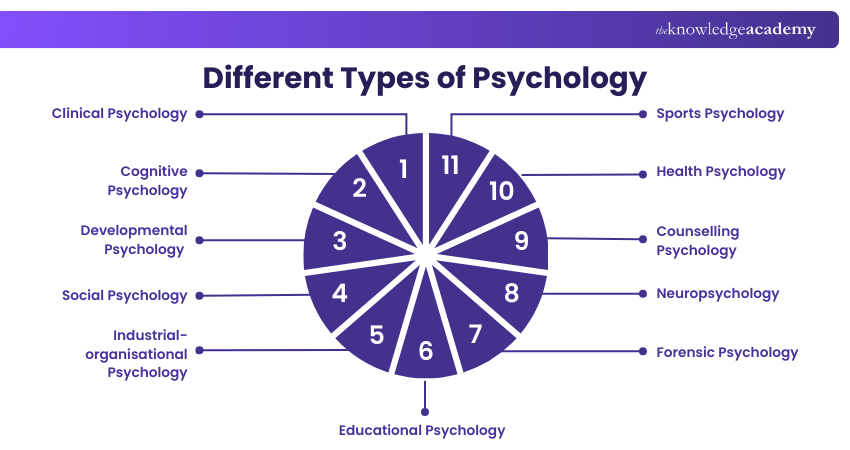
1) Abnormal Psychology
This specialisation focuses on studying Psychological Disorders and atypical behaviours. It seeks to understand the causes, symptoms, and treatment of these conditions, aiming to promote Mental Health and well-being.
2) Behavioural Psychology
Behavioural Psychology focuses on understanding observable actions and how they are shaped through learning and experience. Behavioural psychologists study how behaviour changes in response to reinforcement, punishment, and environmental influences. This field examines habits, learned responses, and behaviour patterns, and is commonly used to understand and modify behaviours such as addictions, phobias, or unhealthy routines.
3) Biopsychology
Biopsychology studies how the brain, nervous system, hormones, and neurotransmitters influence human behaviour, thoughts, and emotions. This field is also known as behavioural neuroscience or psychobiology. Biopsychologists explore how biological processes interact with cognitive functions, emotions, and actions, helping explain how the body and mind work together to shape behaviour.
4) Clinical Psychology
Clinical Psychology focuses on assessing, diagnosing, and treating mental disorders and Psychological distress.
Consider the following points:
a) Clinical Psychologists employ various therapeutic approaches to help individuals improve their emotional and Mental Health.
b) These professionals work with clients to address issues such as anxiety, depression, trauma, and relationship difficulties.
c) Clinical Psychologists often work in hospitals, research settings, Mental Health clinics, or private practice.
d) They conduct Psychological assessments, provide Psychotherapy, and collaborate with other healthcare professionals in different fields to provide care and ensure the well-being of patients.
5) Cognitive Psychology
Cognitive Psychology explores mental processes, including:
a) Memory
b) Language
c) Perception
d) Attention
e) Problem-solving
It investigates how individuals acquire, process, and use information.
Cognitive Psychologists use experimental methods and Psychological Theories to study cognitive phenomena. They examine topics like:
a) Cognitive development
b) Decision-making
c) Impact of cognitive processes on behaviour
Cognitive Psychology provides insights into human thought processes, memory formation, and cognitive biases. It has practical applications in fields like education, human-computer interaction, and clinical settings where understanding and improving cognitive functioning are crucial.
Understand the major theoretical perspectives on Child Development. Join our Child Psychology Course today!
6) Counselling Psychology
Counselling Psychology focuses on helping individuals navigate personal, social, and emotional challenges. It involves providing therapy, guidance, and support to promote Mental Health, personal growth, and well-being. Counselling Psychologists work with clients to address a wide range of issues, such as problems regarding:
a) Career transitions
b) Relationships
c) Stress Management
d) Self-esteem
They employ various therapeutic approaches to facilitate positive change and help individuals develop coping strategies and effective problem-solving skills. This form of Psychology is practised in settings such as Mental Health clinics
a) Hospitals
b) Schools
c) Private practices
7) Comparative Psychology
Comparative Psychology studies the behaviour and mental processes of different animal species to understand how behaviours evolved over time. By examining similarities and differences across species, this field provides insights into the evolutionary, biological, and adaptive foundations of behaviour. It helps researchers understand the continuity and diversity of psychological processes across the animal kingdom, including humans.
8) Consumer Psychology
This specialisation investigates individuals' behaviour and decision-making processes in the context of purchasing and consuming goods and services. It examines factors influencing consumer choices, preferences, and responses to marketing strategies, helping businesses effectively understand and meet consumers' needs and desires.
9) Cross-cultural Psychology
This specialisation examines the influence of culture on Human Behaviour, cognition, and development. It investigates how cultural factors shape individuals' thoughts, emotions, and actions, exploring both the universal aspects of Human Behaviour and the variations across different cultural groups, fostering cultural understanding and inclusivity.
Begin your career in Psychology with our comprehensive Psychology Course today – Sign up now!
10) Developmental Psychology
Developmental Psychology studies human growth and development of one's mind and thought process across the lifespan. It examines the following kinds of changes that occur from infancy to old age:
a) Physical
b) Cognitive
c) Emotional
d) Social
Developmental Psychologists investigate how factors such as genetics, environment, and culture shape development. They explore areas such as child development, adolescence, adulthood, and ageing.
This field helps explain how individuals mature over time, recognise key developmental milestones, and understand how life experiences influence growth. The insights gained support better educational approaches, parenting techniques, and interventions that promote healthy human development.
11) Educational Psychology
Educational Psychology explores how individuals learn and grow within educational settings. It investigates factors that influence learning, instructional methods, motivation, and the assessment of learning outcomes. To better understand how to improve teaching and learning, Educational Psychologists study:
a) Cognitive processes
b) Learning theories
c) Developmental Psychology
Educational Psychologists may be involved in designing educational programs, conducting assessments, and providing guidance to teachers and administrators. Educational Psychology informs instructional strategies, curriculum development, and the creation of inclusive learning environments, ultimately improving educational practices and fostering optimal student development and achievement.
12) Environmental Psychology
This specialisation studies the interactions between individuals and their physical and social environments. It explores how the environment influences behaviour, well-being, and perception, examining topics such as the impact of natural and built environments on individuals' Psychological processes and the promotion of sustainable and healthy environments.
13) Evolutionary Psychology
This specialisation explores how Psychological processes have evolved to adapt to our environment. It investigates behaviours and cognitive functions from an evolutionary perspective, examining how they contribute to survival and reproductive success, shedding light on the biological and adaptive basis of Human Behaviour.
Learn techniques for promoting emotional well-being across different populations. Join our Prevention Psychology Training now
14) Experimental Psychology
This specialisation utilises controlled experiments to investigate various Psychological phenomena. It explores areas such as perception, memory, learning, and decision-making, using empirical methods to uncover fundamental principles of Human Behaviour and cognition.
15) Forensic Psychology
Forensic Psychology applies Psychological principles to legal and criminal justice contexts. It involves the application of Psychological knowledge in areas such as:
a) Criminal profiling
b) Eyewitness testimony
c) Assessment of individuals within the legal system
Forensic Psychologists may evaluate the competency of individuals to stand trial, assess risk, or provide expert testimony. They also work in correctional facilities, providing counselling and rehabilitation services to offenders. Forensic Psychology intersects with law enforcement, courts, and mental health services, aiming to contribute to the understanding and application within the legal and criminal justice systems.
16) Health Psychology
Health Psychology examines the Psychological factors that influence health, illness, and healthcare. It explores topics such as stress, health behaviours, coping mechanisms, and the mind-body connection. Health Psychologists investigate how Psychological factors interact with biological, social, and environmental factors to impact physical well-being.
Health Psychologists may study health promotion, prevention, and adherence to medical treatments. Health Psychology informs strategies for behaviour change, patient education, and the development of interventions to improve health outcomes. Health Psychologists may work in healthcare settings, research institutions, or as part of interdisciplinary healthcare teams.
17) Industrial-organisational Psychology
Industrial-organisational (I-O) Psychology applies Psychological principles to the workplace. It focuses on areas such as employee selection, performance evaluation, motivation, leadership, and organisational behaviour. I-O Psychologists strive to enhance productivity, employee satisfaction, and well-being in work settings.
They conduct research on topics like job satisfaction, team dynamics, and organisational culture. I-O Psychologists may also be involved in designing training programmes, improving job satisfaction, and implementing organisational change. Additionally, they provide guidance on personnel selection and development strategies to optimise individual and organisational performance, which often includes preparing for Psychology Interview Questions relevant to the field.
18) Military Psychology
Military Psychology applies Psychological principles to understand and address the challenges faced by currently serving and retired military personnel. It focuses on areas such as combat stress, trauma, leadership, and resilience, aiming to support the Psychological well-being, performance, and adjustment of military personnel and their families in military settings.
19) Media Psychology
Media Psychology examines the effects of media on individuals' behaviour, attitudes, and perceptions. It investigates how media influences individuals' thoughts, emotions, and behaviours, exploring topics such as media consumption, media literacy, and the Psychological impact of media content, aiming to enhance our understanding of the role of media in society.
20) Neuropsychology
Neuropsychology is a Types of Psychology that studies the relationship between Brain function and Behaviour. It investigates how brain injuries, diseases, and neurological conditions impact cognitive abilities, emotions, and behaviour. Neuropsychologists use various Psychological Tools and techniques to evaluate cognitive functioning and assist in diagnosing and treating neurological disorders.
They may work with individuals who have experienced traumatic brain injuries, strokes, or neurodegenerative diseases. Neuropsychology contributes to understanding the Ways of Studying the Brain’s Psychology and informs rehabilitation approaches, cognitive interventions, and treatment planning for individuals with neurological conditions
21) Occupational Psychology
Occupational Psychology focuses on how people behave and perform at work, with the goal of improving employee well-being, productivity, and job satisfaction. It examines how workplace conditions, organisational structures, and job roles influence motivation, stress, and performance.
Occupational Psychologists assess work environments, identify factors that affect employee health and morale, and develop strategies to create safer, healthier, and more supportive workplaces.
Their work often includes:
a) Evaluating employee attitudes and experiences
b) Improving work–life balance and job design
c) Supporting mental health and reducing workplace stress
d) Enhancing communication and teamwork
While related to Industrial - Organisational Psychology, Occupational Psychology places a stronger emphasis on employee well-being, workplace health, and the human experience at work.
22) Positive Psychology
This specialisation examines factors that contribute to well-being, happiness, and human flourishing. It emphasises positive emotions, character strengths, resilience, and the pursuit of a meaningful life, aiming to enhance individuals' overall Psychological well-being and quality of life.
Understand the strategies for cultivating happiness and resilience with our Positive Psychology Course – Join now!
23) Personality Psychology
This Type of Psychology involves studying an individual’s personality. Personality Psychologists carry out research based on personality traits, biology, evolution, humanism, social learning and behaviour in order to determine what makes a human unique. They also understand how personality grows and its similarities as variances. Personality Psychologists analyse, detect and treat personality disorders that negatively affect an individual’s quality of life.
24) Psychometric Psychology
Psychometric Psychology, also known as psychometrics, is a subfield of Psychology that focuses on the measurement of psychological attributes through Psychological tests. These tests are particularly helpful in Child Development, as they help understand children’s cognitive and emotional growth. There are some examples of these tests, such as aptitude or IQ tests, that help in measuring a person’s intelligence and capability to perform specific tasks.
25) Rehabilitation Psychology
Rehabilitation Psychology is all about studying and using Psychology to help people who have disabilities because of accidents or illnesses. Rehabilitation Psychologists work in teams to figure out and treat problems with thinking, feelings, and daily activities. They help individuals to get past obstacles that might stop them from taking part in their everyday lives. These Psychologists do practical work, research, and speak up for people with disabilities, all with the main aim of helping them become more independent and have more chances in life.
26) Research Psychology
Research Psychology is also known as experimental Psychology, in which Psychologists study human memory, attention, decision-making, learning, sensation, perception and emotion. Research Psychologists usually publish their discoveries and share their outcomes with others in this field in order to provide significant information that enhances industry knowledge. This process also includes creating and analysing experiments and developing assumptions.
27) Social Psychology
Social Psychology studies how social interactions, group influences, and the presence of others shape people's thoughts, emotions, and behaviours. It explores key topics such as social perception, attitudes, conformity, group dynamics, and interpersonal relationships.
Social Psychologists examine how people form impressions of others, how social norms guide behaviour, and how individuals act in different social situations. They investigate important phenomena such as obedience, persuasion, prejudice, cooperation, and group influence.
28) Sports Psychology
Sports Psychology applies Psychological principles to enhance athletic performance, motivation, and mental well-being in sports. It focuses on areas such as goal setting, concentration, confidence, and managing performance-related stress. Sports Psychologists may work with individual athletes, teams, or sports organisations to optimise performance and well-being.
These professionals may provide techniques for improving focus, reducing anxiety, and enhancing motivation. Sports Psychology, a branch within Psychology and Psychiatry, involves understanding the Psychological aspects of sports, such as the impact of mental states on physical performance and the development of effective strategies for athletic success.
29) School Psychology
This specialisation focuses on supporting students' academic and social-emotional development within educational settings. School Psychologists address issues such as learning disabilities, behaviour problems, and Mental Health concerns, promoting a positive school climate and providing interventions that improve students' well-being and educational outcomes.
Learn about the work-related attitudes, values, and perceptions. Join our Psychology of Behaviour at Work Training now!
How to Become a Psychologist?
Becoming a psychologist involves several key steps, each requiring dedication and time. Here’s a general roadmap:
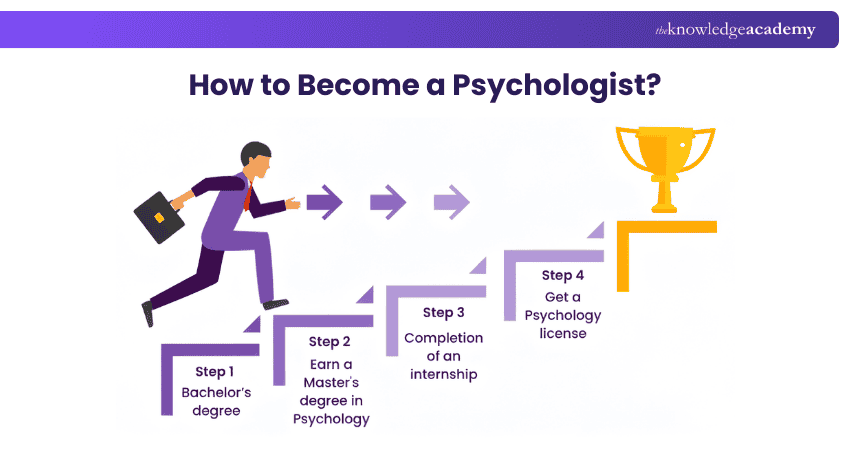
1) Earn a Bachelor’s Degree: Start with a Bachelor’s degree in Psychology or a related field. This foundational education covers topics like cognitive processes, developmental Psychology, and research methods.
2) Pursue a Master’s Degree: While not always required, a master’s degree can provide specialised knowledge and improve your chances of getting into a doctoral programme.
3) Complete Supervised Clinical Training: Gain practical experience through internships or supervised clinical practice.
4) Pass Licensing Exams: After completing your education and training, you must pass state-specific licensing exams to practice as a Psychologist.
5) Meet State-specific Requirements: Each state has its own licensing requirements, so ensure you meet all criteria for the state where you plan to practice.
6) Consider Board Certification (Optional): While optional, board certification in a speciality area can enhance your credentials and career prospects.
How do the Different Types of Psychology Interconnect?
Many Types of Psychology overlap. For example, cognitive Psychology informs clinical practices, while social Psychology increases our understanding of group dynamics in organisational or cultural settings. Together, they provide a fuller view of human behaviour.
Conclusion
Psychology helps us understand how the mind works and why people think, feel, and behave the way they do. From improving mental health to supporting learning, relationships, and decision-making, it plays a vital role in everyday life. With many Types of Psychology offering different perspectives, this field continues to grow and create meaningful positive change for individuals and society.
Learn to assess and support the mental wellbeing of individuals effectively with our Mental Health Courses – Join now!
Frequently Asked Questions
What are the Different Psychology Careers?

There are various promising Types of Psychology careers, including the following:
a) Aviation Psychologists
b) Biopsychologists
c) Clinical Psychologists
d) Cognitive Psychologists
e) Counselling Psychologists
f) Cross-Cultural Psychologists
g) Educational Psychologists
h) Engineering Psychologists
i) Environmental Psychologists
j) Forensic Psychologists
What is the Highest-paying Job in Psychology?
The highest-paying job in Psychology is that of a Psychiatrist.
What are the Other Resources and Offers Provided by The Knowledge Academy?
The Knowledge Academy takes global learning to new heights, offering over 3,000+ online courses across 490+ locations in 190+ countries. This expansive reach ensures accessibility and convenience for learners worldwide.
Alongside our diverse Online Course Catalogue, encompassing 17 major categories, we go the extra mile by providing a plethora of free educational Online Resources like Blogs, eBooks, Interview Questions and Videos. Tailoring learning experiences further, professionals can unlock greater value through a wide range of special discounts, seasonal deals, and Exclusive Offers.
What is The Knowledge Pass, and How Does it Work?
The Knowledge Academy’s Knowledge Pass, a prepaid voucher, adds another layer of flexibility, allowing course bookings over a 12-month period. Join us on a journey where education knows no bounds.
What are the Related Courses and Blogs Provided by The Knowledge Academy?
The Knowledge Academy offers various Mental Health Training, including the Psychology Course, Psychology of Personal Growth Training, and the Prevention Psychology Training. These courses cater to different skill levels, providing comprehensive insights into Big Five Personality Traits.
Our Health & Safety Blogs cover a range of topics related to Types of Psychology, offering valuable resources, best practices, and industry insights. Whether you are a beginner or looking to advance your mental health knowledge, The Knowledge Academy's diverse courses and informative blogs have got you covered.

The Knowledge Academy


Global Training Provider
The Knowledge Academy is a world-leading provider of professional training courses, offering globally recognised qualifications across a wide range of subjects. With expert trainers, up-to-date course material, and flexible learning options, we aim to empower professionals and organisations to achieve their goals through continuous learning.

Upcoming Health & Safety Resources Batches & Dates
Date
 Psychology Course
Psychology Course
Fri 10th Jul 2026
Psychology Course
Fri 18th Sep 2026
Psychology Course
Fri 4th Dec 2026

 If you wish to make any changes to your course, please


