


 Top Rated Course

We may not have the course you’re looking for. If you enquire or give us a call on +800 312616 and speak to our training experts, we may still be able to help with your training requirements.
What is Visual Communication: A Brief Overview
Charlotte Wilson 14 February 2026Visual communication conveys ideas through images, symbols, and design, helping information be understood quickly, clearly, and across cultures. It reduces reliance on text alone. This makes messages more engaging, memorable, and easier to interpret for diverse global audiences across multiple digital platforms.

Training Outcomes Within Your Budget!
We ensure quality, budget-alignment, and timely delivery by our expert instructors.
Table of Contents
Today’s fast-paced world, which relies on visual elements, needs clear communication as its fundamental requirement. Visual communication enables people to comprehend how images and designs with visual elements efficiently deliver their intended messages. In the upcoming sections, What is Visual Communication, its basic principles, which demonstrate its applications and current effects on modern communication.
Table of Contents
1) What is Visual Communication?
2) Why is Visual Communication Important?
3) Types of Visual Communication
4) The Relationship Between Visual Communication and Other Forms of Communication
5) Examples of Visual Communication
6) Principles of Visual Communication
7) What Kind of Job Roles can you get with a Visual Communication Degree?
What is Visual Communication?
Visual Communication is the practice of conveying ideas, instructions, or messages through images rather than text or audio. It employs various visual elements, known as signs, to communicate information. These elements include images, typography, drawing, graphic design, illustration, industrial design, advertising, animation, and digital media. The core components of Visual Communication include colour, shape, tone, texture, figure-ground, balance, and hierarchy.
Unlike verbal or written languages, Visual Communication transcends language barriers, making it easily understandable to a diverse audience. It plays a vital role in various aspects of life, such as culture, Social Media, Politics, Economics, and Science. By effectively using visual elements, Visual Communication enhances the clarity and impact of a message, making it more engaging and accessible to a broader audience.

Why is Visual Communication Important?
Visual Communication plays a vital role in how people perceive and retain information. Here are some of its importance:
1) Enhances Understanding and Retention: People grasp and remember information better through visuals, as images and graphics make complex ideas easier to understand and recall.
2) Creates Greater Impact: Visuals can convey messages more clearly and emotionally than text alone, making difficult information easier to understand.
3) Drives Engagement: On Social Media platforms like TikTok and Instagram, visual content consistently outperforms text, drawing higher interaction and shares.
4) Captures Short Attention Spans: In today’s fast-paced digital world, visuals quickly grab attention and help messages stand out amid constant distractions.
5) Strengthens Emotional Connection: Visuals evoke emotions that help build stronger bonds with audiences and improve message recall.
6) Saves Time and Simplifies Communication: Images communicate ideas faster and more efficiently than lengthy explanations.
7) Builds Brand Identity: Consistent visual elements like colours, logos, and styles reinforce a unified and recognisable brand image.
Types of Visual Communication
Visual Communication does not merely refer to images. It is the use of visual elements to convey ideas and information. Here's a breakdown of some common types:

a) Graphics and Illustrations: Visual elements like logos, infographics, and illustrations draw attention and simplify complex concepts, making communication more effective and engaging. For example, companies can use infographics to present intricate data in a clear, easily digestible format. This helps to overcome the Language Barrier to Communication, as visual content can transcend language differences. A marketing team might leverage an infographic to highlight key performance metrics, making trends and outcomes more understandable for stakeholders.
b) Photography and Videography: Photographs and videos effectively convey emotion, showcase products, and tell authentic stories. Organisations can create training videos to educate employees on new software, policies, or safety procedures. For instance, a manufacturing company might use animated videos to demonstrate proper equipment handling techniques.
Master the art of unspoken cues with our Nonverbal Communication Training – Register today!
c) Typography and Layout: Typography and layout involve the careful selection of font, size, and colour, as well as the overall structure of the content. These elements ensure the text is readable, important aspects stand out, and the design is visually appealing.
d) Branding and Design: Visual components like logos, colour schemes, and brand imagery establish a unique identity and foster recognition, linking the product or service to the customer. For example, a fashion retailer might use striking photos and videos of new collections on Instagram to attract and engage customers.
e) Data Visualisation: Data presented through charts, graphs, and other visual formats makes complex information clearer and helps identify trends. Interactive dashboards allow for real-time Data Visualisation in business analytics. A finance department might use such a dashboard to monitor cash flow, expenses, and revenue, enabling quick, informed decision-making.
f) Signage and Wayfinding: Clear signs and symbols guide people through physical spaces and convey instructions effectively. Airports and large venues use distinct, visually clear signs to direct visitors. Colour-coded maps and symbols assist travellers in quickly finding gates, restrooms, and other facilities.
Strategies for Workplace Visual Communication
Here is a brief look at ways in which Visual Communication can aid you in the workplace:
Boost your writing skills and confidence with our English Grammar Course – Join and excel today!
The Relationship Between Visual Communication and Other Forms of Communication
Although visual communication is based on the utilisation of images, graphics, colours, and layouts, it does not exist in isolation. It collaborates with other communications, including verbal, written and nonverbal communications to develop a complete and effective message. Performing the tasks of other methods of communication, the use of the visual helps to improve, explain, and support meaning.
1) Visual and Verbal Communication
Verbal communication requires people to speak and listen to each other. Visual communication supports and enhances spoken communication by providing visual elements which help the audience to understand content with greater speed and clarity.
Examples:
a) Speakers use presentation slides which contain charts and images to show essential information that enables audiences to understand their spoken content.
b) A commercial video uses voiceover to describe a product while showing its functionalities through visual elements, which help viewers understand the material more efficiently.
The combination of visual elements with spoken content creates a dynamic experience that people will remember better because of its challenging scientific material.
2) Visual and Written Communication
Written communication uses text as its fundamental method to deliver messages through various formats such as emails, reports, and articles. Visual elements can enhance written content by dividing extensive text sections while providing visual indicators that enhance learning and comprehension of material.
Examples:
a) A blog post may include infographics or photos to support the text, keeping readers interested and aiding understanding.
b) Research reports regularly use charts and graphs to present data, helping readers quickly interpret trends or results.
The combination of visual elements with written text creates a system which delivers information in a way that both maintains comprehension and keeps viewers interested.
3) Visual and Nonverbal Communication
Nonverbal communication includes gestures, facial expressions, body language, and tone of voice. Visual elements enable the presentation of nonverbal signals, which enhance the strength of both emotional and contextual signals.
Examples:
a) In videos, an actor’s expressions and movements combine with setting and imagery to communicate emotions like joy or urgency.
b) Posters or advertisements often use imagery that evokes feelings, such as a smile to connect with viewers on a nonverbal level.
Both nonverbal and visual messages serve as strong tools that enable people to express their emotions while showing their emotional reactions to others.
4) Visual Communication as a Bridge
Visual communication works as a connection that unites all three modes of communication, which include spoken words, written text, and body language, to improve understanding. The system improves message delivery through a better understanding of content, which makes information easier to remember by different types of viewers.
Examples:
a) In a classroom, a teacher may explain a concept verbally, sketch diagrams on a board, and provide written notes. This combination supports varied learning styles and deepens comprehension.
b) On social platforms, visuals like infographics are paired with captions and hashtags, mixing written and visual communication to maximise reach and impact.
Visual elements create a better understanding of messages because they connect different ways of communication, which helps more people understand the message.
Examples of Visual Communication
Examples of Visual Communication highlight how images, charts, videos, and graphics effectively convey messages and enhance understanding in various contexts. Let's explore some interesting examples:
1) Screenshots
Screenshots are one of the easiest and most versatile ways to share information visually. They capture exactly what is on your screen, making them ideal for tutorials, how-to guides, and troubleshooting instructions. It can:
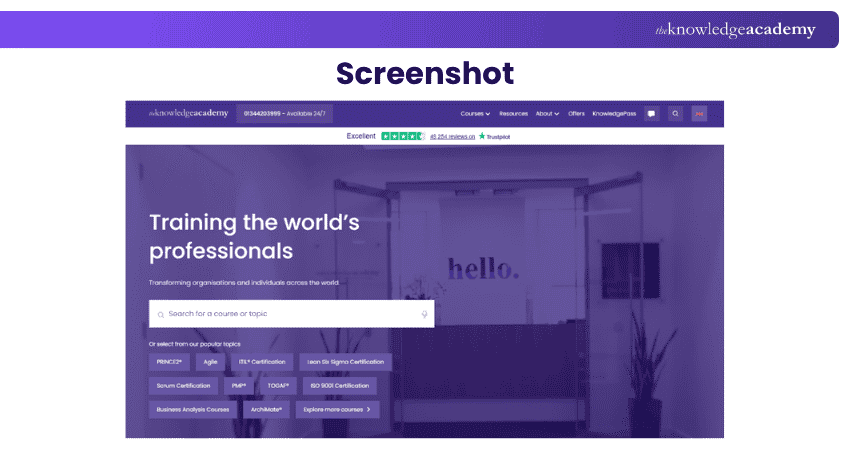
1) Highlight key details and steps visually
2) Make instructions clear and easy to follow
3) Help document feedback or record specific information
4) Save time by eliminating lengthy written explanations
2) Videos and Screen Recordings
Videos and screen recordings combine visuals, sound, and movement to make complex processes simple to understand. They’re especially effective for training, onboarding, and product demonstrations. They can:
1) Engage multiple senses for better learning and recall
2) Demonstrate step-by-step processes effectively
3) Build trust and connection through tone and expression
4) They are highly shareable across digital platforms
3) GIFs
Graphics Interchange Format (GIFs), though short and simple, are powerful visual tools that add life and emotion to communication. They’re ideal for internal team chats, presentations, and even marketing content. It can:
1) Capture attention instantly through motion
2) Add personality and humour to messages
3) Reinforce tone and emotion in communication
4) Help illustrate repetitive or subtle actions quickly
4) Charts and Graphs
Charts and graphs visually represent data, helping audiences quickly grasp trends, comparisons, and relationships. They are more suitable for reports, presentations, and progress updates. They can:
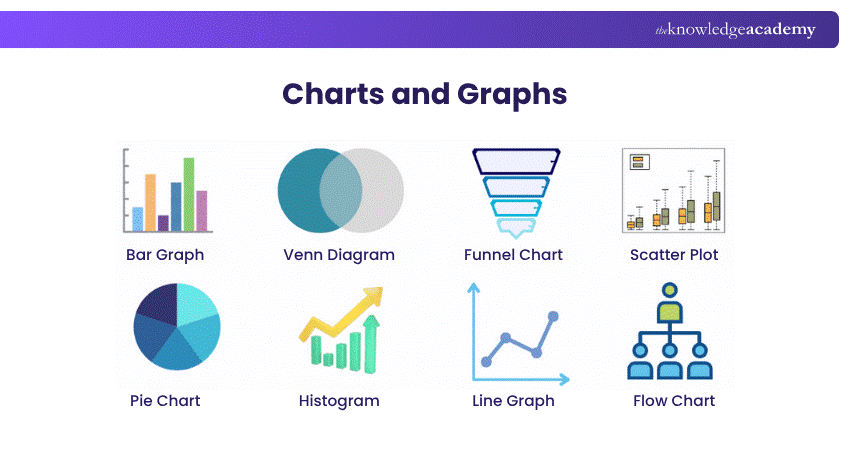
1) Simplify complex numbers into digestible visuals
2) Highlight key patterns, milestones, and insights
3) Support data-driven storytelling and presentations
4) Increase credibility by presenting clear, visual evidence
Discover impactful communication that drives results at the highest level with our Executive Communication Training – Sign up soon!
Principles of Visual Communication
Visual communication requires more than basic elements, which include images, colours, and text. The application of fundamental principles enables you to design visuals which effectively convey your message while maintaining audience engagement and simple message comprehension.
1) Clarity
Visual communication must be clear. This may cause the message to be lost in case of a confusing or overloaded design. The idea is to make the message easily decipherable. Single concept visuals are more effective.
Tips to achieve clarity:
1) Clutter can be avoided by reducing the elements
2) Fonts and text sizes should be readable
3) Focus on one key idea at a time
2) Simplicity
Less is more. Strauss designs are easier to digest for the audience. Too much information, which may slow down the message, should be avoided and may become overwhelming to viewers.
Tips for simplicity:
1) Make use of clean layouts and lots of white space
2) Keep it to the minimum number of colors and fonts
3) Only use visuals that are directly related to what you are saying
3) Contrast
Contrast emphasises the distinctions of such elements of design as colours, sizes, and forms. It assists in making your work more attractive and easier to read and navigate.
Tips for effective contrast:
1) Use contrasting colours (e.g. dark text on light background)
2) Be able to distinguish between important and secondary elements
3) Make important points emphasised by the use of size and shape differences
4) Balance
Balance will make a design appear steady and attractive. It assists the viewer with the movement of the eye in the layout. Balance may be either symmetrical or asymmetrical, yet both seek harmony.
Tips for balance:
1) Balances the distribution of visual weight
2) Combine large elements with small ones to make them become stable
3) Space should be used wisely to bring about orderliness
5) Proximity
Proximity is used to group related content together. This aids the audience in realising associations and arrangements.
Tips for using proximity:
1) Location of related elements close together
2) Separate different parts with the help of spacing
3) Keep texts and images paired together, such as captions to pictures
6) Hierarchy
Hierarchy helps to lead the eye of the viewer, telling what the most significant element is. It may be made with size, colour, placement or contrast.
Tips for hierarchy:
1) Key messages should be written in bigger fonts or in bold colours
2) Placing significant elements where the eye usually begins (top-left or centre)
3) The reading sequence is indicated with the use of size, colour, and spacing
7) Consistency
Unity is generated through consistency, and brand identity is enhanced. It makes sure that your images are easily identifiable and professional.
Tips for consistency:
1) Use a restricted number of colours and fonts
2) Have equal spacing of similar contents
3) Maintain consistency between graphics and headings, icons and buttons
8) Emphasis
Dressing up causes some elements to be highlighted to draw attention. It brings out important messages, calls to action, or critical features.
Tips for emphasis:
1) The key elements should be written in bold colours or fonts
2) Put valuable information in a place where it will be seen initially
3) Use contrast or isolation to highlight things
9) Movement
Movement determines the movement of the eye of the viewer through a design. It establishes a visual continuation of one aspect to another.
Tips to guide movement:
1) Direct attention using arrows, lines or shapes
2) Elements of position to direct the eye naturally
3) Organise information according to the most important to the supporting information
10) Alignment
Alignment helps to organise tie-up elements in design. It makes it appear clean and professional.
Tips for alignment:
1) Make text and image parallel to one another (left, right, centre)
2) Make sure that the elements are arranged in a systematic manner
3) Do not place randomly; alignment enhances readability and order
What Kind of Job Roles can you get With a Visual Communication Degree?
With a Visual Communication degree, you could build a creative career in roles such as designer, art director, illustrator, animator, photographer, or filmmaker. The graduates use their skills to create visual stories through their work as multidisciplinary creatives or their freelance projects or their operation of independent studios.
Conclusion
Every visual tells a story. Learning What is Visual Communication enables you to develop clear ideas and create engaging content while making your visual elements stick in viewers' memories. The implementation of these principles enables you to develop designs which attract viewers and create a lasting impact
Frequently Asked Questions
What are Some Trends Shaping the Field of Visual Communication Today?

Popular Visual Communication tools include:
a) Adobe Photoshop for image editing
b) Illustrator for creating vector graphics
c) InDesign for creating layouts
d) Presentation tools like PowerPoint
e) Online platforms like Canva
How Does Cultural Context Influence Visual Communication
Cultural context significantly impacts Visual Communication. Colours, symbols, and even layouts can hold different meanings across cultures. Understanding your audience's cultural background ensures your visuals are interpreted correctly and avoids unintentional offence.
What are the Other Resources and Offers Provided by The Knowledge Academy?
The Knowledge Academy takes global learning to new heights, offering over 3,000+ online courses across 490+ locations in 190+ countries. This expansive reach ensures accessibility and convenience for learners worldwide.
Alongside our diverse Online Course Catalogue, encompassing 19 major categories, we go the extra mile by providing a plethora of free educational Online Resources like Blogs, eBooks, Interview Questions and Videos. Tailoring learning experiences further, professionals can unlock greater value through a wide range of special discounts, seasonal deals, and Exclusive Offers.
What is the Knowledge Pass, and How Does it Work?
The Knowledge Academy’s Knowledge Pass, a prepaid voucher, adds another layer of flexibility, allowing course bookings over a 12-month period. Join us on a journey where education knows no bounds.
What are Related Courses and Blogs Provided by The Knowledge Academy?
The Knowledge Academy offers various Communication Skills Course, including the Pubic Speaking Course, Negotiation Skills Training, Apoken Arabic Training. These courses cater to different skill levels, providing comprehensive insights into Interpersonal Skills.
Our Business Skills Blogs cover a range of topics related to What is Visual Communication, offering valuable resources, best practices, and industry insights. Whether you are a beginner or looking to advance your Business skills, The Knowledge Academy's diverse courses and informative blogs have got you covered.

Charlotte Wilson


Soft Skills and Business Training Manager
Charlotte Wilson is an expert in soft skills development, with over 14 years of experience helping individuals and teams improve communication, productivity and emotional intelligence in the workplace. Her training content is focused on enhancing interpersonal effectiveness and fostering positive, collaborative environments across all levels of an organisation.
View Detail
Upcoming Business Skills Resources Batches & Dates
Date
 Visual Communication Course
Visual Communication Course
Fri 17th Jul 2026
Visual Communication Course
Fri 9th Oct 2026

 If you wish to make any changes to your course, please


