


 Top Rated Course

We may not have the course you’re looking for. If you enquire or give us a call on +800 312616 and speak to our training experts, we may still be able to help with your training requirements.
GDPR Scope: Who It Applies To and Why It Matters
John Davies 20 July 2026GDPR scope covers personal data processing in the EU and for EU individuals, including automated/manual data and businesses inside or outside the European Union. It ensures strong protection standards and applies to controllers and processors handling such data, regardless of business location.

Training Outcomes Within Your Budget!
We ensure quality, budget-alignment, and timely delivery by our expert instructors.
Table of Contents
Many assume GDPR is just for big corporations in the EU, but that’s a myth. Even small businesses and global freelancers are affected if they handle data from EU citizens. A simple email form, analytics tool, or online purchase puts you in GDPR territory. And it’s the first step in protecting both your users and your business from avoidable risks.
GDPR Scope is not about where you are, but about whose data you’re handling, because its purpose is to protect personal data. So, if your website gets clicks from Europe, this regulation is already in your world. Let’s explore just how far GDPR’s reach really goes. Read on to know more!
Table of Contents
1) What is the Scope of GDPR?
2) What are the Purposes and Scope of GDPR?
3) Personal Data Processing
4) Examples of Personal Data
5) Exemptions Concerning the Processing of Personal Data by Natural Persons
6) Exemptions in The Case of Freedom of Information and Expression
7) Conclusion
What is the Scope of GDPR?
Personal data includes sensitive information, such as name, address, and phone number. Hence, it should be treated with caution, as any leakage of this sensitive information could result in devastating consequences. That’s where GDPR comes in. However, in some cases, it’s also applicable for manual data processing.

The GDPR and the Data Protection Act are primarily applicable within the EU zone, but there are some exceptions where they can apply outside of it as well. For example, if your organisation is outside the EU but collects the personal data of EU citizens, your organisation must still adhere to the GDPR guidelines. Therefore, regardless of the processes involved or who carries out the activities of collecting personal data, GDPR and the Data Protection Act remain applicable.
From small businesses and large corporations to private individuals, the GDPR and Data Protection Act apply to all of them, a key consideration when discussing the Advantages and Disadvantages of GDPR. However, exceptions are applicable in some cases, for instance, if the process of collecting this information is exercised under their rights, freedom of information, and expression acts.
Protect your data and ensure compliance-join our GDPR Awareness Training today!
What are the Purposes and Scope of GDPR?
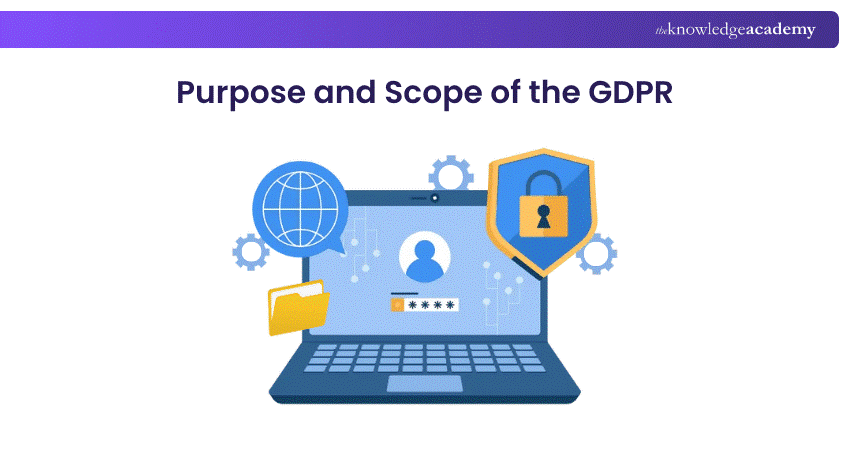
One of the main objectives of the General Data Protection Regulation (GDPR) is to protect individuals’ fundamental rights and freedoms, especially their right to personal data protection. This right is rooted in Article 8 of the European Convention on Human Rights and reinforced by Articles 7 and 8 of the EU Charter of Fundamental Rights, both of which are legally binding across the EU. In Sweden, similar protections are enshrined in Chapter 2, Section 6 of the Instrument of Government.
Purpose
These constitutional rights provide the legal basis for the GDPR, which aims to create a harmonised standard of data protection across the EU. By applying directly in all member states, the regulation ensures the free flow of personal data within the Union while updating the older 1995 Directive to meet the demands of the digital age.
Scope
The GDPR applies to virtually all automated processing of personal data and, in some cases, manual data processing. Personal data refers to any information relating to an identified or identifiable natural person.
The regulation covers data processing linked to the EU in two main circumstances: when the organisation processing the data is established in the EU, or when a non-EU organisation offers goods or services to individuals in the EU or monitors their behaviour within the EU.
The GDPR is applicable across all sectors and applies to any individual or entity that processes personal data, whether businesses, associations, organisations, public authorities, or individuals. However, certain exceptions exist. For instance, it does not apply to the personal or household use of data by private individuals, nor to processing carried out solely in the context of exercising freedom of expression or freedom of information.
Personal Data Processing
The General Data Protection Regulation (GDPR) applies to the processing of personal data any information that can identify a living person, such as names, addresses, national ID numbers, images, or IP addresses. Even encrypted or pseudonymised data qualifies if it can be linked back to an individual.
Processing includes a wide range of activities, such as collecting, storing, modifying, sharing, or deleting personal data. The GDPR covers both automated processing and certain manual processes that form part of a searchable filing system.
It applies to organisations within the EU, and also to those outside offering goods or services to EU residents or monitoring their behaviour, including tracking online activity through cookies or IP addresses. When such processing is large-scale or involves sensitive data, organisations are required to appoint a Data Protection Officer (DPO) to oversee and ensure compliance with data protection obligations.
Master data privacy and GDPR compliance -join our Certified Data Protection Officer Course today!
Examples of Personal Data
Personal data under the General Data Protection Regulation (GDPR) includes any information that can be linked to a living individual, either directly or indirectly. Common examples include names, addresses, email addresses, personal identity numbers, phone numbers, and photographs. Less obvious forms like IP addresses, location data, cookies, and audio or video recordings are also personal data if they relate to an identifiable person. Even pseudonymised or encrypted data can fall under this definition if it can be re-associated with an individual using other information.
According to the Swedish Authority for Privacy Protection (IMY), what qualifies as personal data depends on the context and the possibility of identifying someone through the information alone or in combination with other data. This broad scope means that organisations must carefully handle any data that could potentially identify someone, ensuring compliance with GDPR requirements.
Exemptions Concerning the Processing of Personal Data by Natural Persons
The General Data Protection Regulation (GDPR) does not apply when individuals process personal data purely for private or household purposes.
Examples where GDPR exemptions apply include:
- Saving contacts in a personal address book
- Recording video from a home security camera aimed only at your own property
- Taking photos of identifiable people for personal use
- Sharing photos with a business for private printing
- Uploading pictures to social media with strict privacy settings, where only a limited number of people can view them
- However, these exemptions no longer apply if:
- Personal data from your address book is shared widely or made public
- Your security camera captures footage of public spaces or a neighbour’s property
- You share photos on social media without privacy limits or distribute/print them for wider circulation or sale
In such cases, GDPR obligations come into effect, and you may need to ensure proper data protection measures are in place.
Exemptions in The Case of Freedom of Information and Expression
The General Data Protection Regulation (GDPR) does not apply when personal data is processed as part of exercising the right to freedom of expression or freedom of information. Each country must include such exemptions in their national laws.
In Sweden, this means that if applying the GDPR would conflict with the country's constitutional laws, such as the Freedom of the Press Act or the Fundamental Law on Freedom of Expression, those laws take priority. In addition, most GDPR rules do not apply to personal data used for journalistic, academic, artistic, or literary purposes. These exemptions currently exist in the Personal Data Act and will continue in future national legislation supporting the GDPR.
The GDPR also does not stop public authorities or other bodies from releasing official documents, in line with the Swedish principle of public access to official records. However, if those documents are shared electronically (for example, by email or online), GDPR rules do apply to that form of disclosure.
Get hired faster with expert tips on How to Create a Data Protection Officer Resume!
Journalistic and Academic Purposes
GDPR has a specific provision called Article 85. It provides exemptions specifically designed to protect freedom of expression and freedom of the press. It states that EU member states may adopt specific rules to reach a middle ground. It means they can merge the protection of personal data rights with the right to freedom of expression, including processing for journalistic, academic, artistic, or literary purposes.
These rules can allow for derogations from certain GDPR provisions, but they must be proportionate and respect the essence of both rights.
This exemption allows journalists, researchers, artists, and authors to continue their work without any restrictions while respecting the privacy of others. It emphasises the importance of responsible journalism and creative expression.
Public Interest
Under Article 6 of the GDPR, the processing of personal data is lawful when it is necessary for the performance of a task carried out in the public interest. This exemption allows public authorities to process personal data when it serves a legitimate public interest, such as public health, national security, or law enforcement.
Similarly, Article 9 permits the processing of special categories of personal data (sensitive data) for reasons of substantial public interest, such as for health and social care, without the need for explicit consent.
These provisions ensure that government agencies and public bodies can carry out their essential functions while complying with GDPR Principles.
Freedom of Information Legislation
GDPR acknowledges that the regulation should not hinder the right to access public documents based on freedom of information laws at the EU or member state level. This recognition aligns with the principles of transparency and access to government information.
Freedom of Information Laws may provide mechanisms to request access to public documents that may contain personal data. The GDPR respects these laws and allows for the disclosure of such documents when it is in the public interest.
Overall, the GDPR recognises the importance of balancing privacy rights with freedom of information and freedom of expression. It includes provisions and exemptions that enable these fundamental rights. These provisions ensure that privacy is protected without unduly hindering essential freedoms.
Boost your career with in-depth knowledge of GDPR Interview Questions & Answers- prepare to succeed!
Conclusion
Understanding GDPR Scope is crucial to safeguard personal data and privacy rights. Pharming attacks, which aim to steal sensitive data by redirecting users to fake sites, are an important consideration for GDPR compliance. A detailed GDPR Privacy Policy Template helps ensure your organisation is prepared to protect against such threats while maintaining compliance.
Master data protection compliance with our Certified EU General Data Protection Regulation (EU GDPR) Foundation Course and safeguard your business's future.
Frequently Asked Questions
What Types of Data are Covered Under GDPR?

GDPR covers personal data that can directly or indirectly identify an individual. This includes names, addresses, identification numbers, IP addresses, location data, and online identifiers. It also encompasses information related to physical, physiological, genetic, mental, economic, cultural, or social identity.
What Are the Key Factors That Determine Whether GDPR Applies to an Organisation?
GDPR applies if an organisation processes the personal data of individuals in the EU or UK, offers goods or services to them, or monitors their behaviour within the EU or UK, regardless of the organisation’s location. It applies to both controllers and processors of such data.

John Davies


Cyber Security Governance & Assurance Specialist
John Davies is a cybersecurity expert specialising in governance, risk management, and compliance. With over 15 years in the field, he has led enterprise-wide security programmes across finance, healthcare and public sector organisations. His content provides practical guidance on building secure environments, managing risk and aligning with regulatory frameworks.


 If you wish to make any changes to your course, please


