


 Top Rated Course

We may not have the course you’re looking for. If you enquire or give us a call on +800 312616 and speak to our training experts, we may still be able to help with your training requirements.
15 Proven Cash Flow Strategies to Improve Business Capital
Olivia Taylor 19 March 2026Effective Cash Flow Strategies boost liquidity by accelerating inflows, delaying outflows, improving forecasting, and tightening inventory control. It is crucial for maintaining the financial stability and growth of any business, helping organisations to manage funds, reduce financial risks, and maintain healthy working capital.

Training Outcomes Within Your Budget!
We ensure quality, budget-alignment, and timely delivery by our expert instructors.
Table of Contents

Many businesses struggle because they do not manage their incoming and outgoing cash effectively. This is where the right Cash Flow Strategies become essential. By understanding how money moves through a business, organisations can maintain stability, avoid financial stress, and make sure they have sufficient capital to operate smoothly.
In today’s business environment, having strong strategies can make a significant difference in how a company grows and survives market challenges. In this blog, you will learn effective Cash Flow Strategies to help you strengthen working capital and support long-term business success. Keep reading to learn more!
Table of Contents
1) 15 Effective Strategies to Improve Cash Flow
a) Provide Discounts for Early Payments
b) Perform Credit Checks on Customers
c) Opt. for Leasing Instead of Buying
d) Join a Buying Cooperative
e) Optimise Inventory Management
f) Minimise External Hiring
g) Implement Electronic Payment Methods
h) Negotiate Terms With Suppliers
i) Issue Invoices Promptly
j) Accurate Forecasting
2) Conclusion
15 Effective Strategies to Improve Cash Flow
Maintaining a robust Cash Flow is important for the sustainability and growth of any business. Efficient Cash Flow management ensures that you have enough liquidity to meet your obligations, invest in opportunities, and weather financial challenges. Below are 15 effective Cash Flow Strategies to keep your business on a solid financial footing.
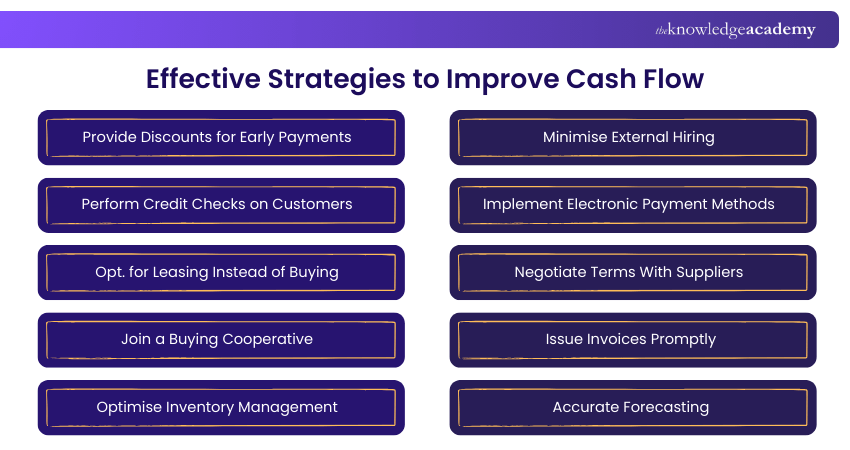
1) Provide Discounts for Early Payments
Offering discounts for early payments is a powerful strategy to encourage customers to pay their invoices sooner. By providing a financial incentive, you can accelerate cash inflows, reducing the waiting period for payments. This strategy improves your Cash Flow and strengthens customer relationships by rewarding prompt payment.

2) Perform Credit Checks on Customers
If a customer prefers not to pay in cash, ensure you conduct a credit check before finalising the sale. A poor credit rating may indicate a higher risk of late payments, which can negatively impact your business's Cash Flow. If you choose to proceed with the sale despite these risks, consider implementing a higher interest rate to mitigate potential financial strain.
3) Opt. for Leasing Instead of Buying
Leasing equipment or assets rather than purchasing them outright can greatly improve Cash Flow. Leasing requires lower upfront costs and preserves your cash reserves, allowing you to allocate funds to other critical areas of your business. This approach helps manage expenses more effectively and keeps Cash Flow positive.
4) Join a Buying Cooperative
Joining a buying cooperative allows you to benefit from collective purchasing power. By pooling resources with other businesses, you can negotiate better terms and discounts from suppliers. This reduces costs and improves your Cash Flow by lowering the amount you need to spend on inventory and supplies.
5) Optimise Inventory Management
Inventory is a crucial investment for many businesses. Excess stock can tie up cash and increase overall storage costs, while very little inventory can lead to lost sales. Optimising inventory is among the most effective Cash Flow Strategies because it frees up capital that would otherwise remain locked in stock. Uing effective techniques, such as Just-in-time (JIT) inventory helps maintain the right balance, reduce storage costs, and improve overall cash flow.
Transform your career with expert skills in accounting with our Accounting and Financial Statement Analysis Training - Join now!
6) Minimise External Hiring
Reducing reliance on external hiring can help control payroll costs and improve Cash Flow. Instead of hiring temporary or freelance workers, consider training existing employees to take on additional responsibilities. This approach can reduce expenses and stabilise your Cash Flow by lowering variable labour costs.
7) Implement Electronic Payment Methods
In today’s time, many businesses prefer electronic payments for Business-to-business (B2B) transactions because they are faster and more efficient than checks. Methods like Automated Clearing House (ACH) or wire transfers allow companies to schedule payments and release funds closer to the due date. This improves Cash Flow management, reduces accounts payable workload, and simplifies forecasting.

8) Negotiate Terms with Suppliers
Negotiate favourable payment terms with your suppliers to extend your payment deadlines and improve Cash Flow. By securing longer payment terms, you can better manage your cash reserves and reduce the pressure on your finances. This strategy provides more flexibility in managing expenses and maintaining a positive Cash Flow.
9) Issue Invoices Promptly
Timely invoicing is crucial for maintaining healthy Cash Flow. Ensure that invoices are issued as soon as goods or services are delivered and follow up promptly on overdue invoices. This practice accelerates the collection process and reduces the risk of delayed payments affecting your Cash Flow.
10) Accurate Forecasting
Accurate Cash Flow forecasting helps businesses understand their future financial needs and plan accordingly. This helps companies estimate future Cash Flow by analysing past financial trends, current orders, and market conditions. Also, using forecasting software allows businesses to prepare for various future scenarios, helping them manage funds more effectively and avoid unexpected cash shortages.
Understand financial policies that strengthen business governance with Accounting and Finance Policies Course – Join now!
11) Link Your Capital Strategy and Long-term Goals
A strong capital strategy must align with a company’s long-term business goals. Businesses should consider their plans for the next three to five years and determine the level of Cash Flow required to achieve those objectives. Using financial analysis methods and forecasting formulas can help organisations evaluate their current position and plan future Cash Flow effectively.
12) Collectively Manage All Your Accounts
Managing every business account together helps organisations track available funds effectively. Businesses must identify accounts with surplus capital and move those funds to areas where they are needed the most. Consolidating funds prevents excess cash from sitting idle, reduces reliance on credit, and simplifies receivables reconciliation.
13) Use Overdrafts as a Backup Option
Having an overdraft facility in place provides a safety net for managing short-term Cash Flow issues. An overdraft allows you to access additional funds when needed, ensuring that you can cover unexpected expenses or temporary cash shortfalls. Use this option judiciously to avoid high-interest costs and maintain a positive Cash Flow.
14) Diversify Revenue Streams
Businesses can strengthen their financial stability by creating multiple sources of income. Exploring new markets, introducing new products, or offering additional services can help generate extra revenue. Also, diversifying revenue streams reduces dependence on a single income source and supports more stable and consistent Cash Flow.
15) Optimise Accounts Payable
Improving accounts payable means effectively handling your unpaid bills to sustain a strong Cash Flow. Negotiate beneficial conditions with suppliers, prioritise payments according to deadlines, and make use of any available discounts. Strategically handling payables can enhance Cash Flow and lessen financial pressures on your business.
Utilising these tactics can improve your management of Cash Flow. It can offer you the necessary funds for expansion and manage financial obstacles. Frequently evaluate and modify your Cash Flow tactics to match your business requirements and maintain continual financial well-being.
Conclusion
Managing Cash Flow effectively is crucial for the growth and stability of your business. By implementing these 15 actionable Cash Flow Strategies, you can ensure a steady stream of cash that allows your business to thrive, invest, and expand without financial stress. Remember, proactive financial management is key to unlocking your business’s full potential. Start applying these strategies today and set your business on the path to long-term financial success.
Build strong accounting knowledge for smarter financial decisions with Accounting Courses – Sign up now!
Frequently Asked Questions
How do I Handle Cash Flow During Seasonal Fluctuations?

To manage Cash Flow during seasonal fluctuations, plan ahead with accurate forecasting, build a cash reserve, and adjust expenses based on anticipated sales patterns. Implement strategies like securing lines of credit and adjusting inventory levels to maintain liquidity throughout peak and off-peak periods.
How can Technology Aid in Cash Flow Management?
Technology helps in Cash Flow Management by providing real-time financial insights, automating invoicing and payment processes, and facilitating budget tracking. Tools like accounting software and Cash Flow forecasting apps streamline financial tasks, improve accuracy, and enhance decision-making efficiency.
What are the Other Resources and Offers Provided by The Knowledge Academy?
The Knowledge Academy takes global learning to new heights, offering over 3,000+ online courses across 490+ locations in 190+ countries. This expansive reach ensures accessibility and convenience for learners worldwide.
Alongside our diverse Online Course Catalogue, encompassing 17 major categories, we go the extra mile by providing a plethora of free educational Online Resources like Blogs, eBooks, Interview Questions and Videos. Tailoring learning experiences further, professionals can unlock greater value through a wide range of special discounts, seasonal deals, and Exclusive Offers.
What is The Knowledge Pass, and How Does it Work?
The Knowledge Academy’s Knowledge Pass, a prepaid voucher, adds another layer of flexibility, allowing course bookings over a 12-month period. Join us on a journey where education knows no bounds.
What are the Related Courses and Blogs Provided by The Knowledge Academy?
The Knowledge Academy offers various Accounting Courses, including Cash Flow Training, Inventory Accounting and Costing Course and Accounting and Financial Statement Analysis Course. These courses cater to different skill levels, providing comprehensive insights into Corporate Finance.
Our Accounting and Finance Resources Blogs cover a range of topics related to Accounting, offering valuable resources, best practices, and industry insights. Whether you are a beginner or looking to advance your Accounting and Finance Skills, The Knowledge Academy's diverse courses and informative blogs have got you covered.

Olivia Taylor


Chartered Accountant and Financial Training Specialist
Olivia Taylor is a qualified chartered accountant with over a decade of experience in financial management, auditing and corporate reporting. Having worked with leading firms in both the public and private sectors, Olivia brings clarity to complex financial topics. Her writing focuses on helping professionals build confidence in key areas of accounting, compliance and financial planning.
View Detail
Upcoming Accounting and Finance Resources Batches & Dates
Date
 Cash Flow Management Course
Cash Flow Management Course
Fri 18th Sep 2026
Cash Flow Management Course
Fri 18th Dec 2026

 If you wish to make any changes to your course, please


