


 Top Rated Course

We may not have the course you’re looking for. If you enquire or give us a call on +800 312616 and speak to our training experts, we may still be able to help with your training requirements.
What is B2B Marketing Funnel? Stages to Boost Your Conversion
Charlotte Wilson 03 April 2026The B2B Marketing Funnel is a structured model that outlines the stages businesses go through to convert potential business clients into loyal customers. It includes stages like awareness, consideration, decision, and retention, instructing marketing strategies to nurture leads, build trust, and drive sustained business growth.

Training Outcomes Within Your Budget!
We ensure quality, budget-alignment, and timely delivery by our expert instructors.
Table of Contents
Ever wondered why some leads convert effortlessly while others slip through the cracks? That’s where understanding the B2B Marketing Funnel becomes crucial. It’s not just a fancy diagram, it's the roadmap guiding potential clients from first contact to final purchase, with strategy and precision at every stage.
So, what makes the B2B Marketing Funnel different from its B2C cousin? It's longer, more complex, and built on trust, relationships, and logic. Whether you’re just starting out or refining your approach, knowing how this funnel works can make all the difference in turning prospects into loyal business partners. Let’s break it down.
Table of Contents
1) What is a B2B Marketing Funnel?
2) Six Benefits of a B2B Marketing Funnel for Businesses
3) What Are the Stages of the B2B Marketing Funnel?
4) How to Build a B2B Marketing Funnel?
5) What Are the B2B Marketing Funnel Strategies?
6) Conclusion
What is a B2B Marketing Funnel?
The B2B Marketing Funnel is essentially a blueprint designed to transform potential customers into paying clients. This journey begins with raising awareness among the target audience and continues until they make a purchase. In other words, the B2B Marketing Funnel, incorporating Funnel Hacking techniques, guides prospects through each stage of their journey until they become actual customers. Effective B2B Marketing strategies ensure that businesses attract, engage, and convert leads efficiently, optimising the entire funnel for success.
Key aspects of the B2B Marketing Funnel include:
a) Awareness: Spreading awareness about the brand to attract potential customers.
b) Engagement: Using targeted content and multi-channel touchpoints to engage with cold leads.
c) Consideration: Implementing varied marketing tactics to nurture leads and move them closer to a purchase decision.
d) Conversion: Ensuring a successful conversion rate by guiding prospects through their journey with unique and effective strategies.

Six Benefits of a B2B Marketing Funnel for Businesses
A well-structured B2B Marketing Funnel does more than just capture leads, it lays the groundwork for meaningful, long-term client relationships. By understanding each stage, businesses can strategically influence buyer decisions and drive sustained growth.
1) A Greater Understanding of Your Audience
One of the biggest advantages of using a funnel is the clarity it brings about your target audience. Each stage provides data on how prospects engage with your content and messaging. This helps you segment them more precisely, predict their behaviour, and create solutions that speak directly to their pain points.
2) Better Brand Awareness
The top of the funnel is all about getting your brand in front of the right eyes. Whether it’s through organic search, paid media, or social engagement, this stage is your opportunity to make a powerful first impression. High-value content at this point positions your company as a thought leader in your industry.
3) Supports SEO
An effective B2B funnel depends on content that aligns with buyer needs. This naturally lends itself to SEO. Keyword-optimised blogs, landing pages, and guides drive traffic to your site, improve visibility on search engines, and attract organic leads who are already searching for what you offer.
4) Increased ROI
Because each funnel stage targets specific buyer behaviours, you waste less time and money on unqualified leads. You’re not casting a wide net;you’re fishing with a spear. Marketing becomes more efficient, lead quality improves, and your sales team can focus on closing deals rather than chasing the wrong audience.
5) Nurtures Relationships
Relationship-building is at the core of B2B success. With a structured funnel, you can nurture leads over time, offering helpful content, answering their queries, and gradually earning their trust. This approach strengthens brand loyalty and often leads to upselling, cross-selling, and referrals.
6) Performance is Easily Measured
Funnels provide crystal-clear metrics for each stage. You can track how many leads are converting, where they’re dropping off, and what content resonates most. This data-driven approach allows you to tweak your strategy continuously and optimise performance for better results.
Boost your career with top-tier Sales Training! Learn powerful strategies to drive growth and maximise profits. Start now!
What Are the Stages of the B2B Marketing Funnel?
Let’s break down the B2B Marketing Funnel into its three primary stages: Top, Middle, and Bottom. Each represents a phase of the buyer journey with unique goals and tactics.

Top of the Funnel (TOFU)
This is the discovery phase where prospects first encounter your brand. They may not yet realise they have a problem or need, so your goal is to spark curiosity and provide value through educational content. Building trust and visibility at this stage sets the tone for the rest of the buyer journey.
1) Awareness Stage
This is where the journey begins. Your audience may not even know they have a problem yet. Your goal here is to educate and inform. Content like blog articles, social posts, infographics, and explainer videos work well at this stage. Your brand should be helpful, not pushy.
2) Interest Stage
Once a prospect acknowledges a challenge or need, they start exploring. They’re interested, but not yet committed. Offering value-rich lead magnets like ebooks, newsletters, or industry reports can help nurture their interest and collect their contact details.
Middle of the Funnel (MOFU)
Here, prospects are aware of their problem and are actively searching for solutions. Your job is to position your business as the most suitable option by offering detailed information, personalised insights, and evidence of your expertise. This stage is all about nurturing interest and building credibility.
1) Consideration Stage
Now the prospect is actively researching solutions. They’re comparing vendors, reading reviews, and evaluating case studies. Here’s where you need to demonstrate why your solution is the best fit. Webinars, product demos, and comparison guides are perfect tools at this stage.
2) Intent Stage
You’re close to the sale. The lead is showing buying signals, like spending more time on your site, engaging with sales reps, or requesting pricing. At this point, personalisation is key. Use targeted messaging to showcase ROI, value, and customer success stories.
Bottom of the Funnel (BOFU)
Prospects at this stage are close to making a purchase decision. They need assurance, clarity, and confidence to take that final step. Your focus should be on addressing objections, highlighting success stories, and simplifying the buying process to convert interest into commitment.
1) Review Stage
This is the final stretch. Your prospect is finalising their decision. They may consult internal stakeholders, request a trial, or review contracts. Make the process as seamless as possible with tailored proposals, client testimonials, or one-on-one consultations.
2) Purchase Decision Stage
It’s time to seal the deal. A smooth, efficient sales process with no friction points is critical. Keep communication open, address any last-minute concerns, and walk them through onboarding or implementation details with confidence.
Master the art of closing deals with confidence—join our Sales Negotiation Training today!
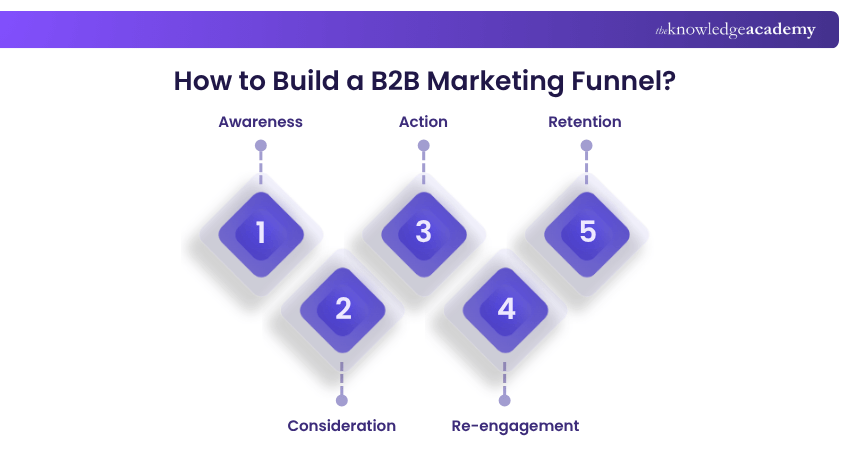
How to Build a B2B Marketing Funnel?
Building a successful funnel requires intention and planning. Each stage must be carefully designed to guide the buyer without pushing too hard.
1) Awareness
Start by creating content that solves real problems. Post consistently on platforms like LinkedIn and industry blogs. Collaborate with influencers, run awareness ads, and ensure your SEO game is strong. Make it easy for prospects to discover you.
2) Consideration
Now that they know you, it’s time to deepen the connection. Use email sequences to deliver high-value content over time. Invite them to webinars, send tailored reports, or offer assessments. Keep the conversation flowing and encourage feedback.
3) Action
Convert warm leads into customers with a smooth, compelling sales process. Offer free trials, one-on-one consultations, or demos. Simplify contracts and provide clear next steps. Make it easy for them to say “yes”.
4) Re-engagement
Some leads go quiet, that’s normal. Don’t give up on them. Set up retargeting ads, drip email campaigns, and personalised reactivation offers. Often, timing is the only thing standing between interest and conversion.
5) Retention
A sale is not the end; it’s just the beginning. Keep customers engaged with post-sale check-ins, exclusive insights, and referral programmes. A well-managed retention plan leads to greater lifetime value and a steady flow of inbound referrals.
What Are the B2B Marketing Funnel Strategies?
No funnel is complete without a set of proven strategies to support each stage. Here are four essentials.
1) Content Marketing
Your content is the voice of your funnel. Create blog posts, ebooks, video tutorials, and email series that guide users through their journey. Use storytelling, statistics, and case studies to build credibility and inspire action.
2) Search Engine Optimisation (SEO)
Invest in a strong SEO strategy. Use keyword research tools to understand what your audience is searching for. Create pillar pages, optimise metadata, and link to authoritative sources. SEO works quietly but powerfully to fill the top of your funnel with high-quality leads.
3) Pay-per-click (PPC) Advertising
PPC lets you reach your ideal clients directly. Use it to promote gated content, free tools, or consultations. Set up remarketing ads to follow visitors who didn’t convert the first time. Every click should lead to a meaningful interaction.
4) Email Marketing
Email remains one of the most effective B2B tools. Use segmentation to tailor your messaging by industry, role, or funnel stage. Automate workflows to deliver the right message at the right time. Always include a clear call to action, and test regularly to improve open and conversion rates.
Conclusion
Getting a grip on the B2B Marketing Funnel is important for boosting your marketing efforts and seeing real business growth. It helps turn potential prospects into loyal customers by guiding them through different stages of their buying journey. With the right tools, you can really understand your audience, monitor how your strategies are performing, and tweak your approach to get better results.
Drive growth with strategic partnerships — join our Key Account Management Training today!
Frequently Asked Questions
What are the 4 Types of B2B Marketing?

The four main types of B2B Marketing are content marketing, account-based marketing (ABM), inbound marketing, and outbound marketing. Each focuses on different strategies to attract, engage, and convert business clients through targeted communication and value delivery.
Do You Need to Create Both a Sales and a Marketing Funnel?
Yes, ideally. A marketing funnel generates and nurtures leads, while a sales funnel focuses on converting those leads into paying customers. Together, they create a seamless journey from awareness to purchase, ensuring prospects are guided effectively at every stage.
What are the Other Resources and Offers Provided by The Knowledge Academy?
The Knowledge Academy takes global learning to new heights, offering over 3,000+ online courses across 490+ locations in 190+ countries. This expansive reach ensures accessibility and convenience for learners worldwide.
Alongside our diverse Online Course Catalogue, encompassing 19 major categories, we go the extra mile by providing a plethora of free educational Online Resources like Blogs, eBooks, Interview Questions and Videos. Tailoring learning experiences further, professionals can unlock greater value through a wide range of special discounts, seasonal deals, and Exclusive Offers.
What is The Knowledge Pass, and How Does it Work?
The Knowledge Academy’s Knowledge Pass, a prepaid voucher, adds another layer of flexibility, allowing course bookings over a 12-month period. Join us on a journey where education knows no bounds.
What are the Related Courses and Blogs Provided by The Knowledge Academy?
The Knowledge Academy offers various Sales Courses, including Sales Funnels Training, Outbound Sales Training and Sales Management Training. These courses cater to different skill levels, providing comprehensive insights into Teaching Assistant Job Description.
Our Business Skills Blogs cover a range of topics related to Sales Training, offering valuable resources, best practices, and industry insights. Whether you are a beginner or looking to advance your Marketing skills, The Knowledge Academy's diverse courses and informative blogs have got you covered.

Charlotte Wilson


Soft Skills and Business Training Manager
Charlotte Wilson is an expert in soft skills development, with over 14 years of experience helping individuals and teams improve communication, productivity and emotional intelligence in the workplace. Her training content is focused on enhancing interpersonal effectiveness and fostering positive, collaborative environments across all levels of an organisation.
View Detail
Upcoming Business Skills Resources Batches & Dates
Date
 Online Sales Training
Online Sales Training
Fri 10th Jul 2026
Online Sales Training
Fri 2nd Oct 2026

 If you wish to make any changes to your course, please


