


 Top Rated Course

We may not have the course you’re looking for. If you enquire or give us a call on +44 1344 203 999 and speak to our training experts, we may still be able to help with your training requirements.
What is Blockchain: An Ultimate Guide
Pearl Williams 17 October 2025Blockchain is a decentralised digital ledger that records transactions across multiple computers securely, making records tamper-proof and transparent. This technology is best known for its use in Cryptocurrencies but has applications in numerous other fields, including Supply Chain Management and Healthcare.

Training Outcomes Within Your Budget!
We ensure quality, budget-alignment, and timely delivery by our expert instructors.
Table of Contents

A digital ledger that never sleeps, one that records every transaction with absolute transparency and security! This idea has captured the imagination of the digital ecosystem for a long time, and thanks to Blockchain Technology, it's now a reality. From its cryptographic roots to its ongoing real-world applications, Blockchain has revolutionised how we store, share, and trust information.
One of its most prominent uses is in the creation and handling of Cryptocurrencies, which has been shaking up the world of Finance like nothing else. This blog will explore the decentralised powerhouse that is Blockchain Technology in detail, highlighting its benefits, limitations, types and more. So read on and decode the world of Blockchain!
Table of Contents
1) What is Blockchain?
2) What are the Key Elements of Blockchain?
3) How Blockchain Technology Works?
4) How Do Different Industries Use Blockchain?
5) Benefits of Blockchain
6) Drawbacks of Blockchain
7) Different Types of Blockchain Networks
8) Bitcoin vs Blockchain
9) What are Blockchain Protocols?
10) Is Blockchain Secure?
11) What is Blockchain as a Service?
12) Conclusion
What is Blockchain?
A shared database or ledger that is accessible by all of the nodes in a computer network is known as Blockchain Technology. A Blockchain is a digital database that electronically stores data. The concept is widely explored in Blockchain Books, which delve into its principles and applications. The most well-known use of Blockchain Technology is for preserving a secure and decentralised record of transactions in Cryptocurrency systems like Bitcoin.
Multiple transactions are included in every block of the chain, and every time a new transaction takes place, a record is posted to the ledger of every user. Distributed Ledger Technology (DLT) refers to a decentralised database that is governed by numerous users. The uniqueness of a Blockchain is that it instills confidence without the requirement for a reliable third party by ensuring fidelity and Blockchain Data Privacy.

What are the Key Elements of Blockchain?
The fundamental elements of Blockchain are:
1) Shared Ledger: The shared ledger's immutable record of transactions is available to every network user. This shared ledger removes the duplication of effort that's inherent in conventional corporate networks by simply recording transactions once.
2) Permissions: Permissions guarantee the security, authenticity, and verifiability of transactions. Organisations can easily adhere to data protection laws like those specified in the Health Insurance Portability and Accountability Act (HIPAA) and EU General Data Protection Regulation (GDPR).
3) Smart Contracts: A set of rules, referred to as a smart contract, is recorded on the Blockchain and is automatically carried out to speed up the transactions. A smart contract specifies the parameters for corporate bond transactions, stipulate how much must be paid for travel insurance, and much more.
4) Consensus: With consensus, the network-verified transaction is approved by all parties. Blockchains have a variety of consensus processes, such as multi-signature, proof of stake, and Practical Byzantine Fault Tolerance (PBFT).
5) Immutable Records- Once a transaction has been added to the shared ledger, no participant may alter or interfere with it. A subsequent transaction must be added to undo any error in a transaction record before the transactions are displayed.
How Blockchain Technology Works?
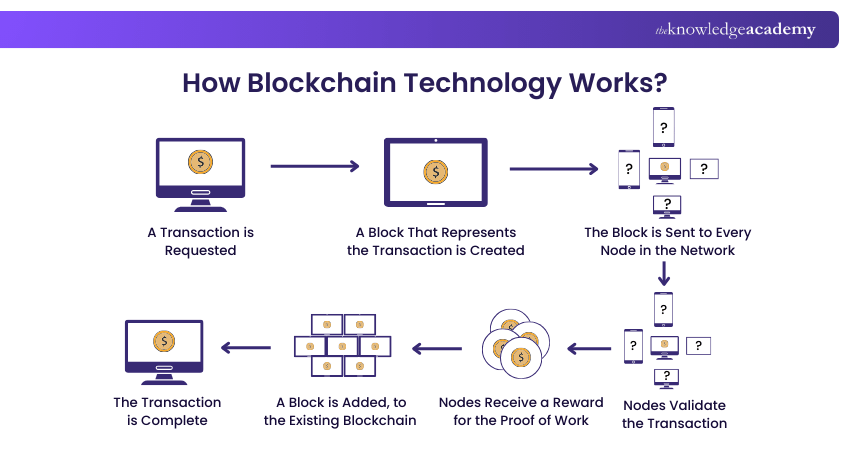
1) As each transaction happens, it’s recorded as a “block” of data. These exchanges demonstrate the movement of an asset, particularly in the context of Blockchain Technology Helping Organisations in Data Sharing. Who, when, what, where, how much, and even a condition, like temperature of a food shipment, can be recorded in the data block.
2) Each block is connected to the previous ones and the subsequent one, forming a continuous chain. As the object moves from one location to another or ownership changes, these blocks create a secure chain of data. Blocks link securely to prevent modification or insertion, ensuring precise timing and order of transactions.
3) Each new block reinforces the prior block's verification and consequently, the entire Blockchain. This gives the Blockchain its crucial strength of immutability and makes it tamper-evident. By doing so, you and other network users can create a trusted ledger of transactions and reduce the chance of tampering by unauthorised individuals.
Learn about Bitcoin and ride the lucrative Crypto wave. Sign up for our Bitcoin and Cryptocurrency Course now!
How Do Different Industries Use Blockchain?
Blockchain is being used by several businesses to reduce friction, create trust, and unleash new values. The following is a list of such industries:
1) Healthcare: Blockchain in Healthcare can help record patients' health and personal data and manages clinical trials and medicine supply chains. It also helps healthcare researchers to unlock genetic codes. It also helps maintain smart contracts for medical insurance, remote monitoring, and much more.
2) Government: It simplifies the process of issuing birth certificates, filing taxes and other government processes that need paperwork and are potential fraud entities.
3) Supply Chain: These industries can efficiently complete transactions without third-party involvement. Blockchain in Supply Chain Management also facilitates the integration of financial and logistics services.
4) Media and Advertising: Companies can verify and maintain copyright data to improve productivity and reduce costs in copyright processing.
5) Financial Services: Banks and stock exchanges use Blockchains Technology to maintain online payments, accounts and market trading.
6) Travel and Transportation: Blockchain helps businesses track truck fleets, routes, traffic incidents, and other related operations.
Benefits of Blockchain
Business incorporate this technology as Blockchain Technology provides multiple benefits for managing asset transactions, such as:
1) Improved Safety
1) Blockchain employs advanced Cryptography to secure data.
2) Decentralised storage makes information tamper-resistant.
3) Every transaction is chronicled in a transparent and immutable ledger.
4) It reduces risks of fraud, hacking, and unauthorised access.
5) The system builds stronger trust among users through transparency and security.
2) Improved Effectiveness
1) Blockchain bypasses the need for intermediaries by enabling direct peer-to-peer transactions.
2) It streamlines all processes, making them faster and more straightforward.
3) Reduced reliance on third parties helps you lower operational costs.
4) Smart contracts automate all workflows and approvals.
5) Automation ensures greater accuracy and minimises the risks of human error.
6) Efficiency improves significantly across industries such as finance, supply chain, and healthcare.
3) Fast-tracked Audit
1) Blockchain offers a permanent and transparent record of transactions.
2) Transactions can be easily traced and verified at any time.
3) Real-time visibility simplifies the auditing process.
4) It ensures stronger compliance with regulations and standards.
5) The effort and time needed to validate financial or operational records is greatly reduced.
Master Ethereum and lead the decentralised revolution. Sign up for our Ethereum Developer Training now!
Drawbacks of Blockchain
Although Blockchain has proved to be one of the most reliable technologies in today's world, it also has a flip side.Here are some Disadvantages of Blockchain Technology you need to consider
1) Technology Cost
1) Blockchain can reduce transaction fees for users but is not cost-free.
2) Bitcoin’s proof-of-work system requires vast computational power to validate transactions.
3) Solutions include Bitcoin-mining farms powered by solar energy.
4) Excess natural gas from fracking sites is being utilised for mining.
5) Wind farms are also explored as renewable energy sources for mining.
2) Speed and Data Inefficiency
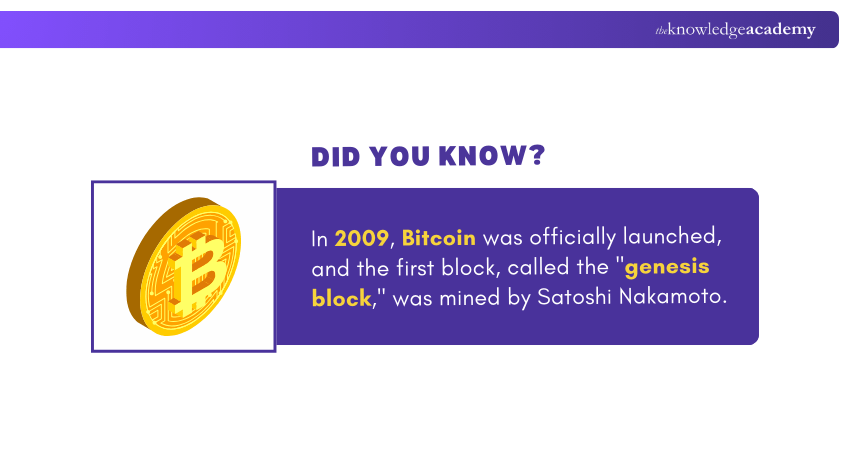
1) Bitcoin highlights Blockchain inefficiencies, as its PoW system takes nearly 10 minutes to add a block.
2) The Bitcoin network processes only about 10 Transactions per Second (TPS).
3) Other cryptocurrencies, like Ethereum, perform better but still face scalability limits.
4) Blockchain projects are being developed, claiming tens of thousands of TPS.
5) Ethereum upgrades with data sampling, BLOBs, and rollups aim to improve speed and reduce fees.
6) Limited block size remains a major scalability issue for future Blockchains.
3) Illegal Activity
1) Blockchain’s confidentiality protects user’s privacy but also enables illegal trading.
2) The Silk Road Dark Web marketplace is a notable example of illicit Blockchain use.
3) The dark web allows anonymous buying and selling of illegal goods via the Tor Browser.
4) Cryptocurrencies like Bitcoin are commonly used for untracked illicit purchases.
5) This dual nature gives financial access to many but also eases criminal transactions.
6) Most illegal activity still occurs with untraceable cash rather than cryptocurrency.
4) Regulation
1) Many in the crypto community are concerned about increasing government regulation.
2) Several jurisdictions are imposing stricter controls on specific cryptocurrencies and virtual assets.
3) So far, no regulations directly restrict Blockchain Technology itself.
4) Current rules mainly target products and applications built on Blockchain rather than its development.
5) Data Storage
1) Blockchains require storage, which increases as usage expands over time.
2) Nodes on some Blockchains must store the entire chain, adding to storage demands.
3) At present, most data storage is centralised in large data centres.
4) A global shift to Blockchain across industries would cause exponential growth in storage needs.
5) This could require advanced storage techniques for efficiency.
6) Participants may be forced to upgrade their storage capacity continually.
Different Types of Blockchain Networks
Building a Blockchain network can be done in several ways. They may be permitted, public, private, or constructed by a consortium.
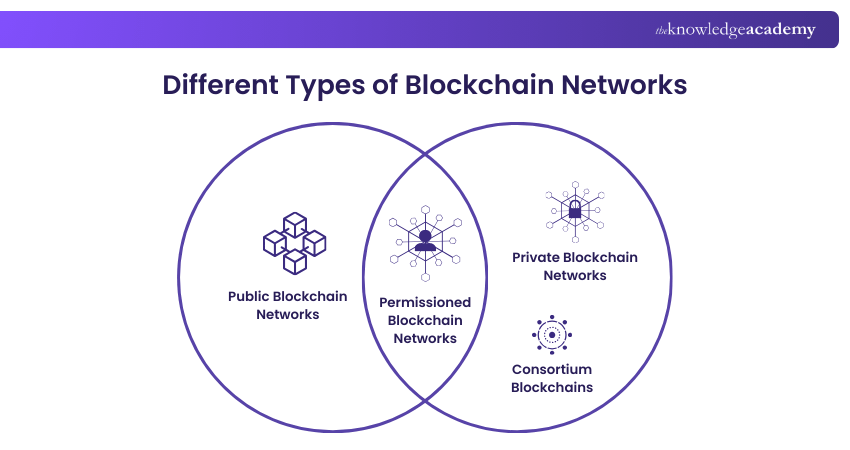
1) Public Blockchain Networks: Bitcoin and other cryptocurrencies have their roots in public Blockchains, which also helped spread Distributed Ledger Technology (DLT) to a broader audience. Public Blockchains also assist in removing some difficulties and problems, such as centralisation and security issues. Rather than being kept in one place, data is spread throughout a peer-to-peer network using DLT.
2) Private Blockchain Networks: This is a decentralised peer-to-peer network, just like a public Blockchain network. However, one entity controls the network's governance, carrying out a consensus protocol and keeping track of the shared ledger. Depending on the Blockchain Use Case, this can significantly increase participant confidence and trust. It is possible to host a private Blockchain on-site and to operate it behind a company's security system.
3) Permissioned Blockchain Networks: Permissioned Blockchain networks, also known as hybrid Blockchains, are private Blockchains that grant privileged access to approved users. These kinds of Blockchains are frequently put up by businesses in order to combine the finest aspects of both worlds. They also allow for greater structure when deciding who gets to join in the network and in which transactions.
4) Consortium Blockchains: The responsibility of maintaining a blockchain can be shared across multiple groups. These pre-selected organisations decide who has the authority to submit transactions or access data. When all parties in a business transaction require permission and shared ownership, a consortium blockchain becomes the ideal solution.
Want to learn how to navigate the Crypto markets with ease. Register for our Cryptocurrency Trading Training now!
Bitcoin vs Blockchain
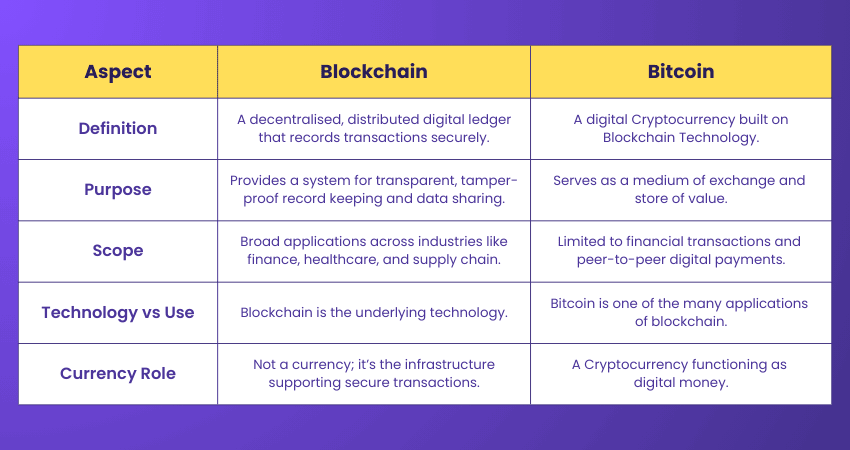
Here are the key differences between Bitcoin and Blockchain:
What are Blockchain Protocols?
The phrase "Blockchain protocol" describes different Blockchain platforms used for developing applications. Every protocol applies core Blockchain principles to meet the needs of particular sectors or uses. The examples provided below:
1) Fabric in Hyperledger
Hyperledger Fabric provides a set of tools and libraries as an open-source initiative. It allows businesses to efficiently create private Blockchain applications quickly. Its distinctive identity management and access control make it ideal for supply chain tracking, trade finance, loyalty programs, and financial asset settlement, among other applications.
2) Ethereum
Ethereum is a platform that is decentralised and open-source, designed for creating public Blockchain applications. Ethereum Enterprise is designed specifically for business applications.
3) Corda
Corda is a Blockchain project that is open-source and created specifically for business uses. It enables the building of compatible Blockchain networks that guarantee strong privacy in transactions. Corda's advanced contract technology allows businesses, especially financial institutions, to conduct direct transactions involving value.
4) Quorum
Quorum is a Blockchain protocol that is open-source and based on Ethereum. Its purpose is tailored for private Blockchain networks, in which one member controls all nodes, or consortium Blockchain networks, where multiple members have ownership over parts of the network.
Master the powerhouse fusion of Data Science and Blockchain with our up-to-date Data Science and Blockchain Training - Sign up now!
Is Blockchain Secure?
Blockchain is generally considered secure, but like any technology, its security depends on how it's implemented and used. Here's why it's secure:
1) Blocks are added in a strict, linear, chronological order. Once a block is in place, previous blocks cannot be modified without detection.
2) Each block contains its own hash and also the hash of the previous block. Any change in a block breaks the chain, making tampering evident.
3) The ledger is decentralised. It’s stored on many nodes across the network. Altering one copy would be rejected by the others due to hashing mismatches.
However, here's what you should remember:
1) Smaller or less secure Blockchains can be vulnerable to a 51% attack, where one party controls over half the network’s computational power.
2) Security is only as strong as the code. Vulnerabilities in the software can be exploited.
What is Blockchain as a Service?
Blockchain as a Service (BaaS) is a Cloud-based Blockchain service offered by a third party. It enables the development of Blockchain apps and digital services with infrastructure and tools managed by the cloud provider. By adapting current Blockchain Technology, BaaS speeds up and simplifies the adoption of Blockchain.
Conclusion
Blockchain Technology enhances security and transparency with immutable transaction records. It’s transforming finance, healthcare, and supply chains. Challenges like scalability and regulations exist. However, ongoing advancements suggest Blockchain will be crucial for digital infrastructure, driving innovation and trust at an exponential rate.
Unlock the Chain of Innovation through decentralisation. Sign up for our Blockchain Courses now!
Frequently Asked Questions
What is the Basic Idea Behind Blockchain?

The fundamental concept of Blockchain involves establishing a decentralised digital ledger that records transactions on multiple computers to prevent any retroactive alteration of the recorded transactions. Each block in the Blockchain records transactions and is added to the chain in sequence once completed.
What is the Main Purpose of Blockchain?
Blockchain's primary goal is to offer a secure and transparent method to document and authenticate transactions without relying on a central authority. This technology seeks to decrease the number of middlemen, boost the precision and effectiveness of transactions, and enhance security.
What are the Other Resources and Offers Provided by The Knowledge Academy?
The Knowledge Academy takes global learning to new heights, offering over 3,000 online courses across 490+ locations in 190+ countries. This expansive reach ensures accessibility and convenience for learners worldwide.
Alongside our diverse Online Course Catalogue, encompassing 19 major categories, we go the extra mile by providing a plethora of free educational Online Resources like Blogs, eBooks, Interview Questions and Videos. Tailoring learning experiences further, professionals can unlock greater value through a wide range of special discounts, seasonal deals, and Exclusive Offers.
What is The Knowledge Pass, and How Does it Work?
The Knowledge Academy’s Knowledge Pass, a prepaid voucher, adds another layer of flexibility, allowing course bookings over a 12-month period. Join us on a journey where education knows no bounds.
What are the Related Courses and Blogs Provided by The Knowledge Academy?
The Knowledge Academy offers various Blockchain Training, including the Blockchain Course, Ethereum Developer Training, and Bitcoin And Cryptocurrency Course. These courses cater to different skill levels, providing comprehensive insights into 10+ Interesting Blockchain Facts.
Our Advanced Technology Blogs cover a range of topics related to Blockchain, offering valuable resources, best practices, and industry insights. Whether you are a beginner or looking to advance your Blockchain knowledge base, The Knowledge Academy's diverse courses and informative blogs have got you covered.
Upcoming Advanced Technology Resources Batches & Dates
Date
 Blockchain Course
Blockchain Course
Thu 16th Apr 2026
Blockchain Course
Thu 9th Jul 2026
Blockchain Course
Thu 17th Dec 2026

 If you wish to make any changes to your course, please


