


 Top Rated Course

We may not have the course you’re looking for. If you enquire or give us a call on +44 1344 203 999 and speak to our training experts, we may still be able to help with your training requirements.
ITIL Framework: Definition, Benefits and Components
John Davies 13 July 2026The ITIL Framework is a globally recognised framework helping organisations improve IT service delivery, boost efficiency, and cut overall operational costs. It aligns IT services with business goals, enhances customer satisfaction, and ensures consistent, high-quality support across the organisation for long-term success.

Training Outcomes Within Your Budget!
We ensure quality, budget-alignment, and timely delivery by our expert instructors.
Table of Contents
Imagine waiting forever for IT support while your system crashes or getting vague replies that make things worse. Frustrating, right? Think about a setup where everything runs smoothly, problems are fixed fast, and everyone stays productive. That’s the power of the ITIL Framework, making IT teams smarter, faster, and truly helpful.
In this blog, we’ll explore what the ITIL Framework is and why it’s trusted by organisations worldwide. We’ll break down its definition, key components, benefits, and how it compares to IT Service Management (ITSM). You’ll also learn about ITIL’s guiding principles, real-world value, implementation tips, and whether getting ITIL certified is really worth it. Let’s make IT make sense!
Table of Contents
1) What is ITIL Framework?
2) Understanding the Service Value Chain
3) What are the Steps to Implementing the ITIL Framework?
4) Importance of ITIL
5) Core Components of ITIL Framework
6) What are the Four Dimensions of ITIL 5?
7) How Long will the ITIL Framework Take to Implement?
8) Benefits of ITIL 5
9) Integrating ITIL With Enterprise Architecture
10) Why is IT Called ITIL 5?
11) Conclusion
What is ITIL Framework?
The ITIL Framework is a globally recognised framework that provides best practices for IT Service Management (ITSM). It offers a structured approach to managing IT services effectively. It aims to align IT services with business needs, enhancing efficiency, reducing costs, and improving customer satisfaction.
ITIL outlines five key stages in the service lifecycle:
a) Service Strategy
b) Service Design
c) Service Transition
d) Service Operation
e) Continual Service Improvement
By adopting ITIL, organisations can standardise processes, manage risks effectively, and ensure consistent, high-quality IT service delivery.

Understanding the Service Value Chain
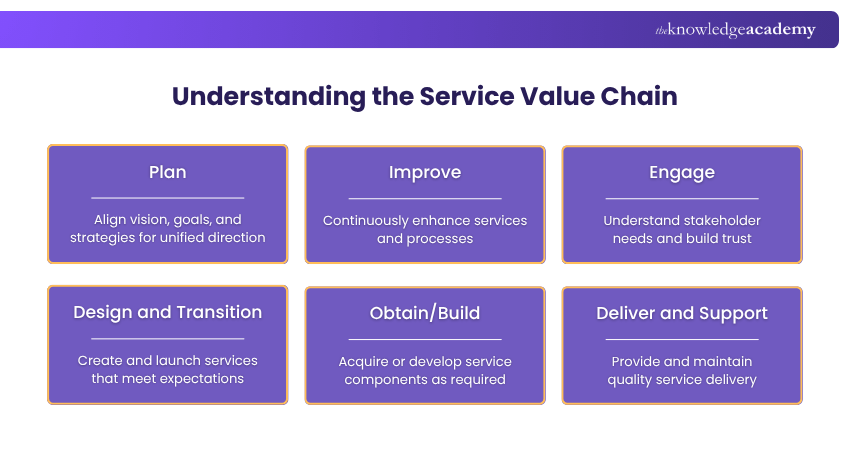
The Service Value Chain (SVC) in ITIL 4 is a key part of the ITIL Service Value System, providing a flexible way to deliver value through IT services. It includes six activities that work together to turn demand into valuable services, helping organisations meet customer needs and achieve business goals.
1) Plan:
Aligning the organisation’s vision, goals, and strategies across all areas ensures everyone shares a common understanding.
2) Improve:
Continuously enhancing services, practices, and processes to optimise performance and adapt to changing needs.
3) Engage:
Managing interactions with stakeholders to understand their needs, maintain transparency, and foster strong, collaborative relationships.
4) Design and Transition:
Designing and deploying new or modified services that meet stakeholder expectations in terms of quality, cost, and time.
5) Obtain/Build:
Acquiring or creating the necessary service components and ensuring they are available when needed, with the right specifications.
6) Deliver and Support:
Providing and supporting services to ensure they meet stakeholder needs, maintaining performance and satisfaction.
By integrating these activities with ITIL Management practices, the SVC enables a seamless flow of value, promoting Agility, innovation, and customer-centric service delivery in the digital age.
Deliver efficient and customer-focused IT services with ITIL® 5 Service Certification – Register today!
What are the Steps to Implementing the ITIL Framework?
To use the ITIL Framework well, you need to follow a clear plan. This helps your IT team work better and match their work with what the business really needs.
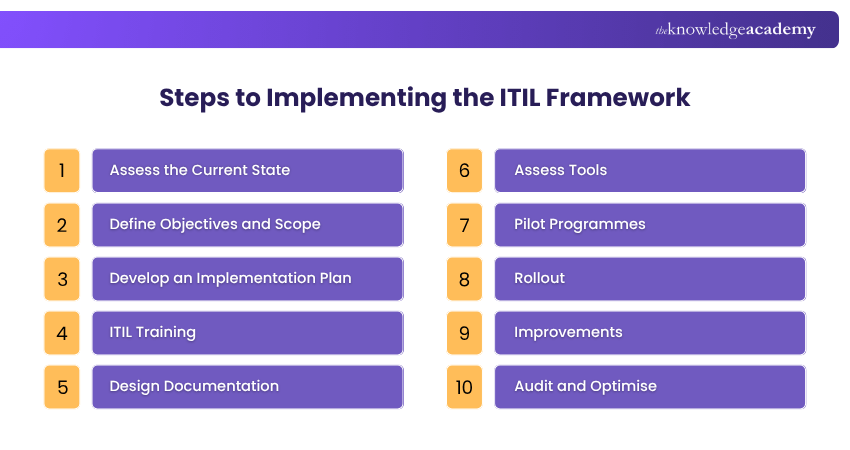
By following these steps, any company can improve the way IT services are managed and make sure everything runs smoothly. Here are the simple steps to start using the ITIL Framework:
Step 1: Assess the Current State
Talk to everyone involved to understand what they need from IT. Check how your current IT work compares to ITIL standards. This helps you see what’s missing or needs to change.
Step 2: Define Objectives and Scope
Think about what you want ITIL to help with, like making customers happier, working faster, or improving service. Then decide which ITIL parts to start with based on what your business needs most.
Step 3: Develop an Implementation Plan
Make a clear plan that explains what needs to be done, when it should happen, and who is responsible. This plan helps everyone stay on track and work together easily.
Step 4: ITIL Training
Train your team so they understand how ITIL Framework works and what their roles are. Training helps everyone feel confident and ready to follow the new process.
Step 5: Design Documentation
Write down the steps, rules, and tasks for how IT work should be done. This helps people follow the same process and avoid confusion.
Step 6: Assess Tools
Choose the right tools to support your IT work, like software to handle help requests, problems, or changes. Make sure the tools fit your team's needs and work well with what you already use.
Step 7: Pilot Programmes
Try the new ITIL process in one part of your company first. This helps you test if everything works well. Use the feedback to make any improvements before using it everywhere.
Step 8: Rollout
Start using the ITIL Framework across the whole company, step by step. Watch how things are going and fix any problems quickly to keep everything running smoothly.
Step 9: Improvements
Check how well ITIL works by using simple measures. Keep looking for ways to improve your IT services and make things better over time.
Step 10: Audit and Optimise
Review everything regularly to make sure your ITIL process framework is still working well. Update the process when needed, so it continues to help your business grow.
Importance of ITIL
ITIL is important because it helps IT teams do their work better and help the business run smoothly. Here’s why it’s useful:
1) Better Service: ITIL gives easy steps to follow, so IT problems are fixed faster and service is always good.
2) Helps the Business: IT teams can focus on what the business really needs—like saving time, helping people, or doing better work.
3) Saves Money and Stops Mistakes: With a clear plan, teams don’t waste time and make fewer mistakes.
4) Better Choices: ITIL shows what is going well and what needs to change. This helps managers choose the right actions.
5) Keep Getting Better: ITIL says teams should always check their work and try to improve it.
6) Builds Trust: When a company uses ITIL, people see the IT team as serious, smart, and well organised.
Start your journey towards better service management with ITIL® 5 Product Certification – Join now!
Core Components of ITIL Framework
These are the core components of ITIL Framework:
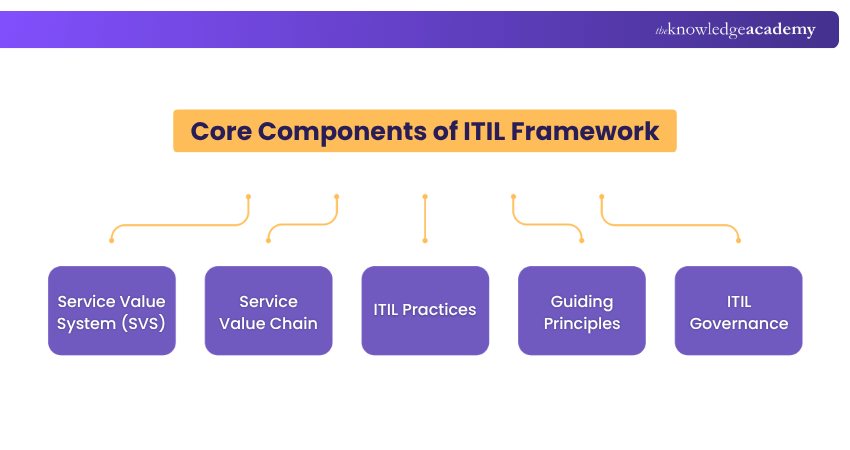
1) Service Value System (SVS)
At the heart of ITIL lies the Service Value System (SVS). It explains how all parts of an organisation work together to create value through IT services.
Key Elements of SVS:
1) Guiding Principles
2) Governance
3) Service Value Chain
4) Practices
5) Continual Improvement
2) Service Value Chain
The Service Value Chain (SVC) is the operating model within the SVS. It outlines the key activities needed to respond to demand and deliver value.
Six Core Activities:
1) Plan: Align strategy and direction
2) Improve: Ensure continuous enhancement
3) Engage: Manage stakeholders and relationships
4) Design and Transition: Develop and deploy services
5) Obtain/Build: Create service components
6) Deliver and Support: Provide and maintain services
3) ITIL Practices
There are 34 helpful activities grouped into three types:
1) General Management Practices: Managing security, knowledge, or strategy
2) Service Management Practices: Fixing problems, handling changes or managing assets
3) Technical Management Practices: Setting up software or systems
4) Guiding Principles
There are seven guiding principles in ITIL and they include:
1) Always give value
2) Start with what you already have
3) Take small steps and learn as you go
4) Work together and promote visibility
5) Look at everything, not just one part
6) Keep it simple and practical
7) Use tools and automation when helpful
5) ITIL Governance
Governance ensures that IT services align with organisational objectives and compliance requirements.
What it Includes:
1) Setting policies and direction
2) Monitoring performance
3) Ensuring accountability
4) Evaluating results
What are the Four Dimensions of ITIL 5?
ITIL 5 talks about four main areas that help IT teams work better and give good service. These four parts work together to keep everything running smoothly.
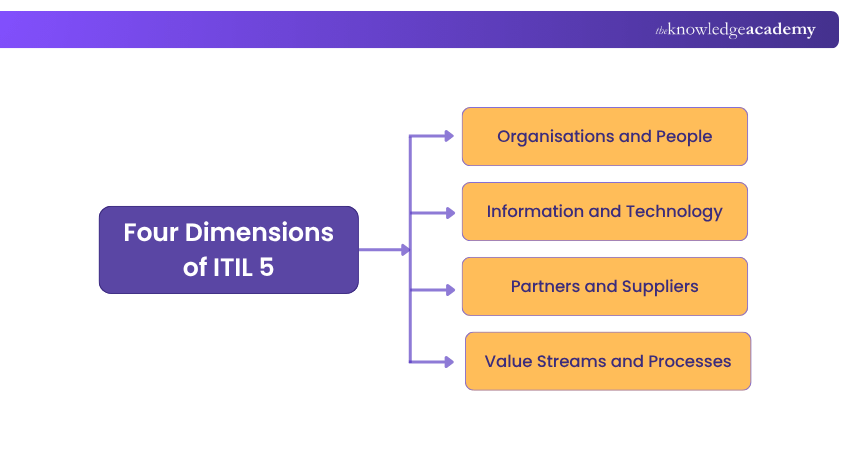
1) Organisations and People
This is about the people in your team or company. It looks at what each person does, how they work with others, and if they have the right skills. It’s also about having a good work culture and clear roles, so everyone knows their job and can work well together.
2) Information and Technology
This is about the tools and data you need to give IT services. It includes computers, software, the internet, networks, and how information is stored and shared. The right tools and data help the team work faster and smarter.
3) Partners and Suppliers
Sometimes, your company works with other companies or people to get things done. These could be IT experts, software sellers, or service providers. This part is about building good relationships with those partners and making sure they help your business run better.
4) Value Streams and Processes
This is about how work is done from start to finish. It looks at all the steps needed to give a service and asks, “How can we do this better?” This helps the company give faster and higher-quality service to its customers.
Strengthen your foundation in IT Service Management with ITIL® 5 Foundation Certification – Sign up soon!
How Long will the ITIL Framework Take to Implement?
The time required to implement the ITIL Framework can vary significantly based on several factors, including the size and complexity of the organisation, the current state of IT processes, and the level of commitment from management. Generally, a full ITIL implementation can take anywhere from several months to a few years.
Here are some key considerations:
1) Scope and Scale: Larger organisations with more complex IT environments may require more time to implement ITIL processes.
2) Current Maturity Level: Organisations with well-established IT processes may find it quicker to adopt ITIL compared to those starting from scratch.
3) Resource Availability: Adequate resources, including skilled personnel and budget, can accelerate the implementation process.
4) Phased Approach: Implementing ITIL in phases, starting with high-priority areas, can make the process more manageable and provide quick wins.
Benefits of ITIL 5
The ITIL 5 Framework offers valuable best practices that help IT services keep pace with the evolving digital landscape. With its updated approach, organisations can effectively navigate the digital transformation. Some key advantages of ITIL 4 include:

1) Business Alignment: Ensures IT services align with business goals
2) Flexibility: Encourages adaptability to changing market needs
3) Collaboration: Fosters teamwork and communication across departments
4) Value Focus: Emphasises value co-creation for customers and stakeholders
5) Holistic Approach: Considers the entire service lifecycle and interactions
6) Modern Practices: Integrates Agile methodologies, DevOps, and Lean methodologies
Boosts employability with up-to-date skills in Service Management. Join our ITIL® 4 Specialist: Create Deliver and Support Certification now!
Integrating ITIL with Enterprise Architecture
ITIL Framework and Enterprise Architecture (EA) work well together. They help IT services match what the business needs and support big goals.
1) Works with Business Plans
EA shows the company’s big plans and structure. ITIL makes sure IT services follow those plans.
2) Helps Plan Services
EA helps the company see what services it needs now and in the future. ITIL uses this to plan better IT services.
3) Designs Services That Fit
When IT teams create new services, ITIL uses the ideas from EA to make sure everything works well together.
4) Clear Rules and Roles
EA shows who makes decisions. ITIL adds clear steps to follow when making changes or improvements in IT.
5) Manages Risks and Changes
EA helps spot risks and needs changes. ITIL helps teams manage those changes safely and carefully.
6) Keeps Teams and Suppliers Working Together
If many IT suppliers are helping the company, ITIL and EA help them all work in the same way.
7) Makes Data and Tools Work Well
EA shows how data and tools should connect. ITIL keeps this data correct so IT teams can do their job properly.
What are the Five Elements of ITIL?
The 5 parts of an ITIL service desk are:
1) Self-service: lets people fix small problems by themselves
2) Incident Help: It fixes issues fast
3) Service Requests: It handles common asks like password resets
4) Problem Solving: It finds and fixes big causes
5) Knowledge Sharing: This saves info to help in the future
Why is IT Called ITIL 5?
IT is called ITIL 5 because it refers to the fifth version of ITIL. It was made to help IT teams work faster, be more flexible, and work well with other systems like Agile methodologies. It also helps teams keep up with new ways of working in modern businesses.
Conclusion
The ITIL Framework helps IT teams work better, faster, and more organised. It gives clear steps to plan, manage, and improve IT services every day. Whether your business is big or small, ITIL can make your IT support stronger and more useful. Learning and using ITIL is a smart way to improve service, save time, and reach your goals.
Master IT Service Management with our Certified IT Service Manager (CITSM) Certification, Sign up Now!
Frequently Asked Questions
What Distinguishes ITIL From Other IT Frameworks?

ITIL stands out from other IT Frameworks due to its comprehensive approach to IT Service Management (ITSM). Some of the features that differentiate ITIL include the service strategy, service design, service transition, service operation, and so on.
Does ITIL Have Variants for Different Industries?
Yes, ITIL has different versions for different industries. For example, there is ITIL for hospitals, banks, and government offices. Each version is made to fit that industry’s special needs and rules.

John Davies


Cyber Security Governance & Assurance Specialist
John Davies is a cybersecurity expert specialising in governance, risk management, and compliance. With over 15 years in the field, he has led enterprise-wide security programmes across finance, healthcare and public sector organisations. His content provides practical guidance on building secure environments, managing risk and aligning with regulatory frameworks.


 If you wish to make any changes to your course, please


