


 Top Rated Course

We may not have the course you’re looking for. If you enquire or give us a call on +44 1344 203 999 and speak to our training experts, we may still be able to help with your training requirements.
What is Educational Management? A Complete Overview
The Knowledge Academy 07 February 2026Educational Management involves planning, organising, and overseeing educational resources to achieve academic goals. This blog explores Educational Management, covering its types, key principles, benefits, and best practices, providing a complete overview of how it functions. It also enhances the efficiency of educational institutions.

Training Outcomes Within Your Budget!
We ensure quality, budget-alignment, and timely delivery by our expert instructors.
Table of Contents
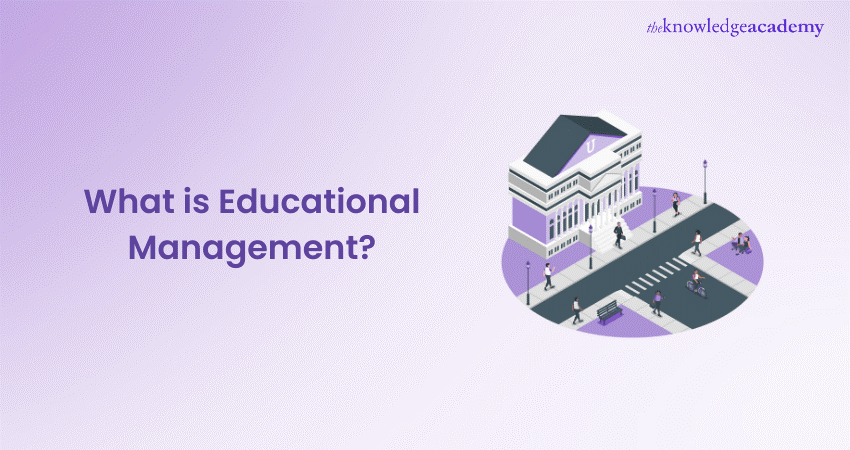
How do schools and colleges keep everything running smoothly while ensuring students succeed? The answer lies in Educational Management. It involves overseeing resources and activities to create an effective learning environment. From developing policies to fostering collaboration, Educational Management plays a key role in shaping successful educational systems.
In this blog, we discuss the different types, key principles, benefits, and best practices of Educational Management, showing how it helps improve both student outcomes and institutional performance.
Table of Contents
1) What is Educational Management?
2) Types of Educational Management
3) Key Principles of Educational Management
4) Benefits of Educational Management
5) Best Practices in Educational Management
6) Conclusion
What is Educational Management?
Educational Management involves organising, planning, and overseeing all the resources and activities needed to reach academic goals. Its main aim is to create policies, develop plans, and build an effective education system that supports a positive environment for both students and staff.
Additionally, it ensures that educational institutions run smoothly and efficiently. By fostering collaboration among teachers, administrators, and students, additionally, Educational Management helps achieve the best possible outcomes, including managing Extracurricular Activities that enhance student engagement and personal growth.
Types of Educational Management
Here are the types of Educational Management:

Internal and External
Internal Educational Management is managed by individuals directly responsible for each educational programme. They handle planning, organising, coordinating, supervising, controlling, administering, and evaluating.
On the other hand, external Educational Management is managed by government bodies or external organisations. They oversee policies, curriculum development, teacher training programmes, and more.
Autocratic and Democratic
In autocratic Educational Management, authority and control are concentrated in the hands of a single individual, group, or institution. This is common in unitary states or authoritarian systems.
On the other hand, in democratic Educational Management, power and responsibilities are shared among different levels of management. This approach is widely used today and is essential for fostering positive changes in the education system.
Centralised
In this type, one person has all the power and authority to run the education system. Every decision is made by this individual at the top level and then passed down to lower levels for implementation.
Decentralised
This approach involves sharing control and authority from the top level to various levels of management and school administrators. For example, top-level management makes major policies, while middle and lower levels make necessary adjustments.
Key Principles of Educational Management
Some of the key principles include:
a) Equal Division of Work: Responsibilities are evenly divided among all staff members, including principals, directors, and teachers.
b) Authority and Responsibility: Align authority with corresponding responsibilities to ensure an efficient administrative structure. For example, teachers are responsible for student care, not policy-making.
c) Prioritise Organisational Goals: Academic objectives and organisational goals should take precedence over individual interests.
d) Fair Remuneration: Provide fair compensation to employees, ensuring that teachers and staff receive competitive salaries and benefits.
e) Appropriate Resource Allocation: Distribute resources effectively to meet the needs of both employees and the institution.
f) Collaboration and Innovation: Encourage a culture of innovation and collaboration, where ideas are freely shared to continuously improve the work environment.
Learn to provide efficient educational services with our ISO 21001 Lead Auditor Training – Join today!
Benefits of Educational Management
Here are some of the advantages of Educational Management:

a) Enhanced Student Outcomes: Effective Educational Management and planning lead to improved student achievement. This is achieved by utilising resources efficiently to support learning.
b) Improved Collaboration: It fosters collaboration and partnerships among stakeholders. This creates a more interconnected education system.
c) Boosted Morale: Effective management increases job satisfaction and morale among educators. This encourages a positive and supportive learning environment.
d) Strategic Planning: It involves long-term planning to set goals and define a clear vision for the institution’s future. This includes forecasting trends, anticipating challenges, identifying opportunities for growth, and developing strategies to achieve desired outcomes.
e) Efficient Resource Allocation: By managing resources such as finances, facilities, technology, and human capital effectively, educational institutions ensure proper utilisation. This maximises the impact of these resources.
Best Practices in Educational Management
Educational institutions should use effective management methods to create a productive and encouraging learning environment. They can adapt to changing needs and achieve their educational goals by following these best practices.
Engaging Parents and the Community
Involving parents and the larger community in the educational process can significantly boost student achievement. Active community involvement strengthens the institution’s mission by fostering a positive learning environment.
Leveraging Modern Technology
The use of technology in the management and administration of schools can be beneficial in making information available, making work easier, and helping deliver quality education. Technologies such as data use in data analytics and Learning Management Systems (LMS) have the potential to enhance education administration.
Fostering Continuous Professional Development
Investing in professional development ensures that educators stay updated on trends and best practices in education. Ongoing professional development is crucial for maintaining high standards in both management and instruction.
Maintaining Clear Communication Channels
Effective communication within the organisation is essential for good Educational Management. Clear communication ensures that all stakeholders are aware of and aligned with the institution’s goals and objectives.
Encouraging a Collaborative Learning Environment
Promoting a collaborative environment motivates teachers and students to actively participate in the learning process.
"This approach enhances educational outcomes and supports the institution’s overall development.
By effectively implementing these best practices, educational institutions can cultivate a thriving learning environment, improve student outcomes, and enhance their overall reputation. This, in turn, can lead to increased demand for qualified Education Managers, driving up the Education Manager Salary and creating rewarding career opportunities for professionals in the field. Referring to Education Manager Interview Questions can also help aspiring candidates prepare effectively for these roles. Referring to Education Manager Interview Questions can also help aspiring candidates prepare effectively for these roles."
Learn to manage the operations of educational organisations with our ISO 21001 Internal Auditor Training – Join today!
Conclusion
We hope you understand the importance of Educational Management. It is essential for both institutions and countries to help efficiently allocate and manage resources, track progress in real-time, and make informed decisions. Explore these top Educational Management systems to find the best fit for your needs and goals. An effective Education Manager can play a pivotal role in this process, with an average Education Manager Salary and common Education Manager Interview Questions reflecting the responsibilities and expertise required.
Learn how to plan the management process with our ISO 21001 Foundation Training – Sign up now!
Frequently Asked Questions
Which is the First Aspect of Educational Management?

The first aspect of Educational Management is planning. This involves setting goals, defining strategies, and outlining the steps needed to achieve the institution’s objectives, as outlined in the ISO 21001 guide.
What are the Major Functions of Educational Management?
The major functions include planning, organising, directing, and controlling educational activities. These functions help achieve the institution’s goals and maintain high standards.
What are the Other Resources and Offers Provided by The Knowledge Academy?
The Knowledge Academy takes global learning to new heights, offering over 3,000+ online courses across 490+ locations in 190+ countries. This expansive reach ensures accessibility and convenience for learners worldwide.
Alongside our diverse Online Course Catalogue, encompassing 19 major categories, we go the extra mile by providing a plethora of free educational Online Resources like Blogs, eBooks, Interview Questions and Videos. Tailoring learning experiences further, professionals can unlock greater value through a wide range of special discounts, seasonal deals, and Exclusive Offers.
What is The Knowledge Pass, and How Does it Work?
The Knowledge Academy’s Knowledge Pass, a prepaid voucher, adds another layer of flexibility, allowing course bookings over a 12-month period. Join us on a journey where education knows no bounds.
What are Related Courses and Blogs Provided by The Knowledge Academy?
The Knowledge Academy offers various ISO 21001 Training, including the ISO 21001 Foundation Training, ISO 21001 Lead Auditor Training, and ISO 21001 Internal Auditor Training. These courses cater to different skill levels, providing comprehensive insights into Education Manager Salary Across the World.
Our Business Improvement Blogs cover a range of topics related to Educational Management, offering valuable resources, best practices, and industry insights. Whether you are a beginner or looking to advance your Educational Management skills, The Knowledge Academy's diverse courses and informative blogs have got you covered.

The Knowledge Academy


Global Training Provider
The Knowledge Academy is a world-leading provider of professional training courses, offering globally recognised qualifications across a wide range of subjects. With expert trainers, up-to-date course material, and flexible learning options, we aim to empower professionals and organisations to achieve their goals through continuous learning.

Upcoming Business Improvement Resources Batches & Dates
Date
 ISO 21001 Foundation Training
ISO 21001 Foundation Training
Mon 23rd Mar 2026
ISO 21001 Foundation Training
Mon 29th Jun 2026
ISO 21001 Foundation Training
Mon 21st Sep 2026
ISO 21001 Foundation Training
Mon 30th Nov 2026

 If you wish to make any changes to your course, please


