


 Top Rated Course

We may not have the course you’re looking for. If you enquire or give us a call on +44 1344 203999 and speak to our training experts, we may still be able to help with your training requirements.
What Are the 9 Core Counselling Skills You Should Know?
The Knowledge Academy 12 November 2025Counselling skills involve active listening, empathy, and questioning to support clients in processing experiences and achieving goals in a non-judgemental way. These skills create a safe and supportive environment that encourages openness. They also help build trust, promote self-awareness, and support personal growth.

Training Outcomes Within Your Budget!
We ensure quality, budget-alignment, and timely delivery by our expert instructors.
Table of Contents
Effective communication and empathy are at the heart of every successful counselling session. Understanding key Counselling Skills helps professionals build trust, encourage openness, and support personal growth. In this blog, we’ll explore the nine essential skills that form the foundation of meaningful client relationships.
Table of Contents
1) What are Core Counselling Skills?
2) 9 Core Counselling Skills
3) Benefits of Core Counselling Skills
4) Examples of Core Counselling Skills
5) Career Opportunities in Counselling
6) Conclusion
What are Core Counselling Skills?
Core Counselling Skills, such as active listening, empathy and effective communication, are set to empower the professionals to establish a safe and supportive atmosphere for the clients. Besides, they also facilitate the clients' engagement in deep and personal growth conversations.
The trust is built through the use of these core skills, and the relationships between the counsellors and their clients are deepened. The clients are allowed to delve into their emotions, acquire the mental picture, and become self-aware, while the counsellors give the required support and inspire the change to happen in a good way forever.
9 Core Counselling Skills
Core Counselling Skills are the basic professional abilities that provide essential techniques to help create a secure and trusting atmosphere throughout the counselling process. It, in turn, aids the clients in showing their thoughts and feelings and also helps bring about change.
Skill 1: Active Listening
Active listening means fully engaging with both spoken and unspoken messages a client shares. It helps in forming trust and a deeper exploration of the client's feelings.
Skill 2: Empathy
Empathy, by definition, is the process of understanding the emotions of the client from their point of view without any criticism. This would make the connection stronger and the client feel more recognised and acknowledged.
Skill 3: Nonverbal Communication
This involves noticing body language, tone of the voice, and facial expressions to attain insight into a client's true feelings and experiences. Recognising these cues and responding accordingly can deepen the therapy session.
Skill 4: Reflection
Mirroring a client’s language, emotions, and experiences indicates that the therapist is supportive and aware. This also enables clients to discover new insights and promotes deeper self-awareness.
Skill 5: Questioning Techniques
Using both effective open and closed questions to gather information and promote clarity. When implemented properly, it enables clients to make sense of the situation in a deeper sense.
Skill 6: Summarisation
Summarisation is the ability to restate key points from a session concisely to ensure shared understanding and highlight emerging patterns. This helps clients and counsellors remain aligned on progress and focus.
Skill 7: Feedback
Feedback is important to provide a client with validation, insight, and guidance into their behaviour and experience. Delivered properly, feedback will also support growth and self-awareness.
Skill 8: Rapport Building
The act of building rapport involves establishing an interpersonal connection characterised by trust, transparency, and emotional comfort. This particular ability leads to the involvement of the client and consequently creates a space where the therapy can take place in a smooth manner.
Skill 9: Goal Setting
Goal setting helps in building clear objectives and strategies for change in a collaborative environment. This provides direction, enhances motivations, and supports achievable outcomes.
Benefits of Core Counselling Skills
The main benefits of Core Counselling Skills are mentioned below:
a) Improves communication between clients and counsellors
b) Enables trust and builds a better rapport
c) Promotes personal growth, self-awareness, and deeper insight
d) Empowers clients to achieve positive therapeutic outcomes.
e) Contributes to the professional growth of counsellors
f) Improves client well-being, resilience, and self-esteem
g) Strengthens essential Counselling Skills like listening, empathy, and reflection
h) Facilitates meaningful personal growth and lasting therapeutic success
Understand the methods of giving social support with our Psychology Course – Join today!
Examples of Core Counselling Skills
Core Counselling Skills are fundamental tools utilised by Therapists and Counsellors during their sessions. However, these skills extend far beyond the therapy room. They can be used in day-to-day interactions, helping to promote improved communication and understanding. Let's delve a bit deeper into each of these Counselling Skills for:

1) Active Listening
Active listening is more than just hearing a bunch of words but actually paying attention to what is said and noticing how they feel. Making the other person feel heard will help validate their feelings and encourage open conversation.
2) Empathy
Empathy is the ability to be sensitive and to wilfully understand and appreciate another person's emotions and experiences. Putting yourself in another person's shoes helps in connecting with their emotional world. Empathy allows counsellors to build a strong a bond of trust as it involves recognising their feelings and promoting a safe environment for them to express themselves.
3) Open-ended Questions
Open-ended questions promote deeper understanding and self-reflection as they encourage people to share details and express their thoughts and emotions freely. Asking such questions creates space for meaningful and in-depth conversations.
Learn anxiety management strategies with our Anxiety Course – Join today!
4) Non-verbal Communication
Non-verbal communication includes facial expressions, body language, and tone of voice. It's an essential skill for Counsellors because it helps them to understand and interpret the unsaid feelings or emotions of their clients. Paying attention to these non-verbal cues can provide insights into a person's emotional state and enhance the effectiveness of the communication process.
5) Reflecting
Reflecting is a skill that involves summarising or paraphrasing the speaker's words to show understanding and encourage further explanation. It shows the speaker that you're fully engaged and interested in what they have to say. This skill helps in validating the person's feelings, ensuring they feel heard and understood.
Career Opportunities in Counselling
There are many diverse career opportunities available in the field of Counselling. They are only going to expand as mental health gains importance in various sectors. Let’s take a look at some of them below:
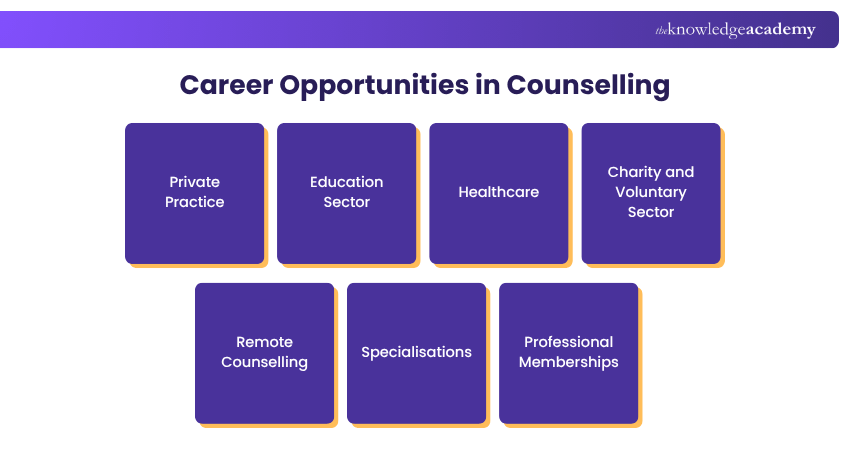
1) Private Practice: Many qualified Counsellors establish their own private practices, offering Counselling services to clients. This often involves a combination of running a private practice and part-time work to gain experience. Building a successful practice usually requires many years of experience.
2) Education Sector: Counsellors can find employment in educational institutions, including schools, colleges, and universities. In these settings, they provide support to students, helping them address both academic and personal issues.
3) Healthcare: There are many opportunities available in the healthcare sector. However, National Health Service (NHS) positions may be limited. Counsellors can work in hospitals, General Practitioner (GP) surgeries, or within community and occupational healthcare teams. They assist clients in dealing with a range of health-related problems.
4) Charity and Voluntary Sector: The charity and voluntary sector offer a wide range of career options for Counsellors. They can work for organisations focusing on mental health, homelessness, domestic violence, adoption, offender rehabilitation, and family relationships.
5) Remote Counselling: With the advent of technology, Counsellors have the option to work remotely, offering Counselling services online or via telephone. Additionally, alternative approaches like equine therapy and walk-and-talk therapy are gaining popularity, providing opportunities to work outdoors.
6) Specialisations: Counsellors may choose to specialise in specific areas, such as couples Counselling, family therapy, play therapy, art or music therapy, or focus on issues like trauma, grief, or eating disorders. Specialisations often develop based on personal interests and experiences.
7) Professional Memberships: Membership in a professional governing body is important in your career. This includes bodies such as British Association for Counselling and Psychotherapy (BABCP), the National Counselling Society (NCS), the UK Council for Psychotherapy (UKCP). Therefore, joining any one of these will let a member demonstrate good professional standard.
Conclusion
Counselling skills are the foundation of effective therapeutic relationships, helping clients feel understood, supported, and empowered. Each skill, from active listening to goal setting, plays a vital role in promoting communication and emotional growth. By developing these core abilities, counsellors can guide clients towards greater clarity, confidence, and positive change.
Learn how to possess an attitude of respect with our Counselling Course – Join today!
Frequently Asked Questions
What are the Qualities of a Good Counsellor?

A good Counsellor is empathetic, patient, and a great listener. They create a safe, non-judgmental space where clients feel supported and understood.
How do Clients Avoid Painful Agendas in Counselling?
Clients may avoid painful topics by redirecting conversations or focusing on less emotional issues. A Skilled Counsellor gently encourages them to explore these areas at their own pace.
What are the Other Resources and Offers Provided by The Knowledge Academy?
The Knowledge Academy takes global learning to new heights, offering over 3,000+ online courses across 490+ locations in 190+ countries. This expansive reach ensures accessibility and convenience for learners worldwide.
Alongside our diverse Online Course Catalogue, encompassing 19 major categories, we go the extra mile by providing a plethora of free educational Online Resources like Blogs, eBooks, Interview Questions and Videos. Tailoring learning experiences further, professionals can unlock greater value through a wide range of special discounts, seasonal deals, and Exclusive Offers.
What is The Knowledge Pass, and How Does it Work?
The Knowledge Academy’s Knowledge Pass, a prepaid voucher, adds another layer of flexibility, allowing course bookings over a 12-month period. Join us on a journey where education knows no bounds.
What are Related Courses and Blogs Provided by The Knowledge Academy?
The Knowledge Academy offers various Mental Health Courses, including the Mental Capacity Training, Mindfulness Training, and Psychology Course. These courses cater to different skill levels, providing comprehensive insights into Emotional Awareness.
Our Business Skills Blogs cover a range of topics related to Counselling, offering valuable resources, best practices, and industry insights. Whether you are a beginner or looking to advance your Business skills, The Knowledge Academy's diverse courses and informative blogs have got you covered.

The Knowledge Academy


Global Training Provider
The Knowledge Academy is a world-leading provider of professional training courses, offering globally recognised qualifications across a wide range of subjects. With expert trainers, up-to-date course material, and flexible learning options, we aim to empower professionals and organisations to achieve their goals through continuous learning.

Upcoming Health & Safety Resources Batches & Dates
Date
 Counselling Course
Counselling Course
Fri 27th Mar 2026
Counselling Course
Fri 22nd May 2026
Counselling Course
Fri 24th Jul 2026
Counselling Course
Fri 27th Nov 2026

 If you wish to make any changes to your course, please


