


 Top Rated Course

We may not have the course you’re looking for. If you enquire or give us a call on 01344 203999 and speak to our training experts, we may still be able to help with your training requirements.
6 Key Product Owner Responsibilities: A Complete Guide
David Evans 10 January 2026A Product Owner’s Responsibilities include defining the product vision, managing the product backlog, and prioritising features to maximise value. In this role, they act as the bridge between stakeholders and development teams, ensuring clarity in requirements. They also align the final product with business goals and user needs.

Training Outcomes Within Your Budget!
We ensure quality, budget-alignment, and timely delivery by our expert instructors.
Table of Contents
Imagine being the person who decides what features get built, when they get released, and why they matter. That’s the daily life of a Product Owner. This role plays a big part in turning ideas into real, working products that people love. Product Owner Responsibilities include setting the vision, guiding the team, and making sure everything stays on track.
The Product Owner also connects the dots between business goals and technical work. They listen to feedback, update the product backlog, and help the team focus on what truly matters. These roles and responsibilities make a big difference in how fast and how well a product evolves. In this blog, we’ll discuss the key tasks they handle and why they’re so important to Agile success.
Table of Content
1) Who is a Product Owner?
2) What are Product Owner Responsibilities?
a) Communicating the Vision
b) Managing the Product Backlog
c) Prioritising Needs
d) Participating in Scrum Events
e) Acting as the Liaison Between Teams and Stakeholders
f) Evaluating Feedback at Each Iteration
3) Salary of Product Owner
4) Conclusion
Who is a Product Owner?
A Product Owner is the person responsible for deciding what the team should work on in a project. They represent the customer’s needs and make sure the team builds the right product. The Product Owner handles the product backlog and works closely with the team to set priorities.
For example, in a company making a mobile app, the Product Owner will decide which features to build first like login, profile setup, or messaging. They listen to user feedback and talk to stakeholders (like marketing or sales teams) to understand what’s important. Then they guide the team on what to build next to give the most value to users.

What are Product Owner Responsibilities?
A Product Owner plays a role in making sure the team builds the right product. They manage goals, work with the team, and make decisions that help move the project forward. Here are some important responsibilities of a Product Owner:

1) Communicating the Vision
The Product Owner must clearly explain the product’s goals to the team. Everyone should understand what they are working on and why it matters. A clear vision helps the team stay focused and work together. The Product Owner also shares updates with stakeholders.
a) Share product goals clearly with the team
b) Explain how the product helps end users
c) Keep everyone focused on the shared vision
d) Update the product vision when things change
2) Managing the Product Backlog
It is a list of all tasks and features needed in the product. The Product Owner creates, updates, and organises this list. They make sure items are clear and ready for the team. A well-managed backlog helps the team work faster and better.
a) Add and update new backlog items
b) Keep tasks clear and well explained
c) Work with the team to plan work
d) Remove tasks that are no longer needed
3) Prioritising Needs
Not all tasks are equally important, so the Product Owner must decide what comes first. They choose what brings the most value to users and the business. This helps the team work on the most useful features first. Prioritising well keeps the project on track.
a) Choose features that provide the most value
b) Focus on user and business needs first
c) Adjust priorities based on changing situations
d) Plan work in the correct order
4) Participating in Scrum Events
The Product Owner joins regular Scrum events like sprint planning and reviews. This helps them stay connected with the team and make quick decisions. They give feedback, answer questions, and help solve blockers. Being involved builds trust and clarity.
a) Attend all daily stand-ups and planning meetings
b) Give useful feedback during sprint reviews
c) Help team plan next steps clearly
d) Share updates with Scrum Master regularly
5) Acting as the Liaison Between Teams and Stakeholders
The Product Owner talks to both the development team and outside stakeholders. They collect feedback, share updates, and make sure everyone’s on the same page. This helps avoid confusion and delays. Being a good link builds stronger teamwork.
a) Share feedback from users and stakeholders
b) Keep all communication clear and timely
c) Balance technical work with business needs
d) Align team goals with stakeholder expectations
6) Evaluating Feedback at Each Iteration
After ever work cycle or sprint, the Product Owner reviews feedback from users and the team. They decide what to change or improve in the next round. This helps the product grow better over time. Feedback helps avoid big mistakes later.
a) Gather user feedback after each sprint ends
b) Review success and improvement points together
c) Plan updates based on new user insights
d) Improve product gradually with useful feedback
Shape Agile project outcomes with our Scrum Certification – Join today!
Salary of Product Owner
The salary of a Product Owner can vary depending on several factors. On average, in the United Kingdom, a Product Owner's annual salary typically falls within the range of £51,000 to £78,000, with variations based on experience, location, industry, and organisation size. Here’s a table showcasing the average salary of a PO across countries:
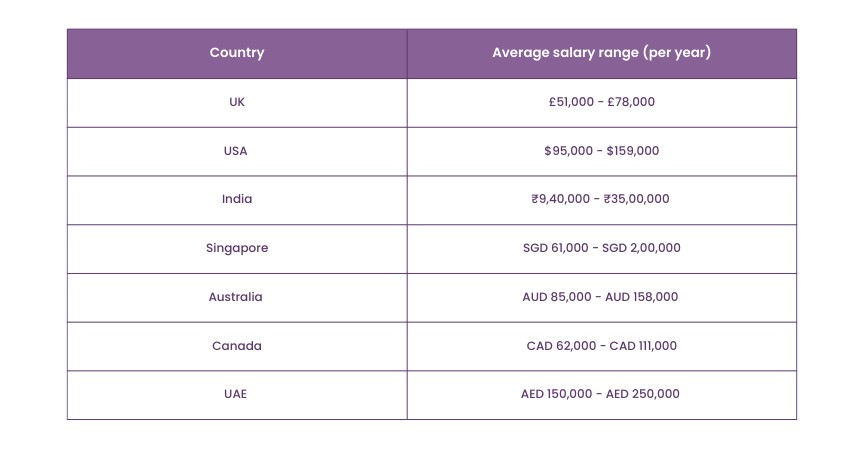
Source: Glassdoor
In recent years, the demand for Product Owners has been on the rise as businesses increasingly adopt Agile methodologies to stay competitive. This growing demand, coupled with the critical Product Owner Roles and Responsibilities, suggests that salaries for this role are likely to remain competitive and potentially increase in the future
Become a Scrum Developer and boost your development skills with our Scrum Developer Training – sign up now!
Conclusion
We hope this blog gave you a helpful look at important Product Owner Responsibilities. From setting the product vision to handling feedback, the Product Owner plays a big part in building the right product. Their work supports the team, connects with stakeholders, and keeps the project moving. Understanding these tasks can help you step into the role with more confidence and make a real impact on your projects.
Master product ownership in Scrum with our Scrum Master Certification – Join today!
Frequently Asked Questions
Is a Product Owner the Same as a Project Manager?

No, a Product Owner is not the same as a Project Manager. A Product Owner focuses on building the right product by managing the product backlog and working closely with the team. A Project Manager, on the other hand, focuses on timelines, budgets, and overall project delivery.
How can I Become a Product Owner?
To become a Product Owner, start by learning Agile and Scrum principles. Get experience in working with teams, managing tasks, and understanding customer needs. You can also take a certified Product Owner course to improve your skills and boost your chances.
What are the Other Resources and Offers Provided by The Knowledge Academy?
The Knowledge Academy takes global learning to new heights, offering over 3,000 online courses across 490+ locations in 190+ countries. This expansive reach ensures accessibility and convenience for learners worldwide.
Alongside our diverse Online Course Catalogue, encompassing 19 major categories, we go the extra mile by providing a plethora of free educational Online Resources like News updates, Blogs, videos, webinars, and interview questions. Tailoring learning experiences further, professionals can maximise value with customisable Course Bundles of TKA.
What is The Knowledge Pass, and How Does it Work?
The Knowledge Academy’s Knowledge Pass, a prepaid voucher, adds another layer of flexibility, allowing course bookings over a 12-month period. Join us on a journey where education knows no bounds.
What are Related Courses and Blogs Provided by The Knowledge Academy?
The Knowledge Academy offers various Scrum Certification, including Scrum Developer Training, Scrum Master Certification, and Scrum Product Owner Certification. These courses cater to different skill levels, providing comprehensive insights into Workflow Management.
Our Project Management Blogs cover a range of topics related to Product Owner, offering valuable resources, best practices, and industry insights. Whether you are a beginner or looking to advance your Project Management skills, The Knowledge Academy's diverse courses and informative blogs have got you covered.

David Evans


Certified Project Trainer and Agile Delivery Expert
David Evans brings over a decade of hands-on experience in project delivery, Agile transformation, and team leadership. With a background in technology and business consulting, David has led cross-functional teams through Agile and Waterfall projects in both public and private sectors. He combines technical knowledge with practical insights to help readers navigate the challenges of modern project environments.

Upcoming Project Management Resources Batches & Dates
Date
 Scrum Master Certification
Scrum Master Certification
Thu 7th May 2026
Scrum Master Certification
Thu 2nd Jul 2026
Scrum Master Certification
Thu 3rd Sep 2026
Scrum Master Certification
Thu 5th Nov 2026

 If you wish to make any changes to your course, please


