


 Top Rated Course

We may not have the course you’re looking for. If you enquire or give us a call on + 1-866 272 8822 and speak to our training experts, we may still be able to help with your training requirements.
Eight Steps to Better Problem Solving Process
William Brown 05 March 2026The Problem Solving Process involves defining the issue, analysing causes, generating solutions, selecting, implementing, and evaluating results. The right Problem Solving skills can help individuals identify, analyse and resolve issues efficiently, helping make smart decisions in personal and professional settings.

Training Outcomes Within Your Budget!
We ensure quality, budget-alignment, and timely delivery by our expert instructors.
Table of Contents
The true power of the Problem Solving Process lies not just in finding answers but in unlocking possibilities. From tackling a design dilemma as a Designer to delving into a business bottleneck as a Business Manager, having a clear process can soften the chaos and reveal new ways to success. Think of it as your roadmap to smarter decisions, creative breakthroughs and confident solutions.
In this blog, we’ll walk you through the powerful eight step Problem Solving Process that'll sharpen your thinking and drive you toward uncharted territories of business and personal triumphs. So read on and become the Problem Solving pro everyone can count on!
Table of contents
1) What is a Problem Solving Process?
2) Steps of the Problem Solving Process
3) What Does an Effective Problem Solving Process Look Like?
4) Potential Risks and How Can They be Mitigated by Problem Solving Process?
5) Creating Your Process for Problem Solving
6) What are the Five C's of Problem Solving?
7) What are the Four P's of Problem Solving?
8) Conclusion
What is a Problem Solving Process?
The Problem Solving Process is a crucial analytical skill that helps individuals identify, analyse and develop effective solutions to various challenges. It serves as a guiding framework, promoting logical and systematic approaches to address complex issues. By examining the root causes of problems and assessing potential options, individuals can make informed decisions and optimise outcomes.
Emphasising Critical Thinking and creativity, the Problem Solving Process improves adaptability and resilience in the face of adversity. Whether dealing with personal dilemmas or professional challenges, mastering this process empowers individuals to navigate uncertainties and achieve success.

Steps of Problem Solving Process
The Problem Solving Process is a systematic approach to identifying, analysing, and resolving issues efficiently. Each step is designed to break down complex problems into manageable tasks, leading to effective solutions. Let’s explore them:
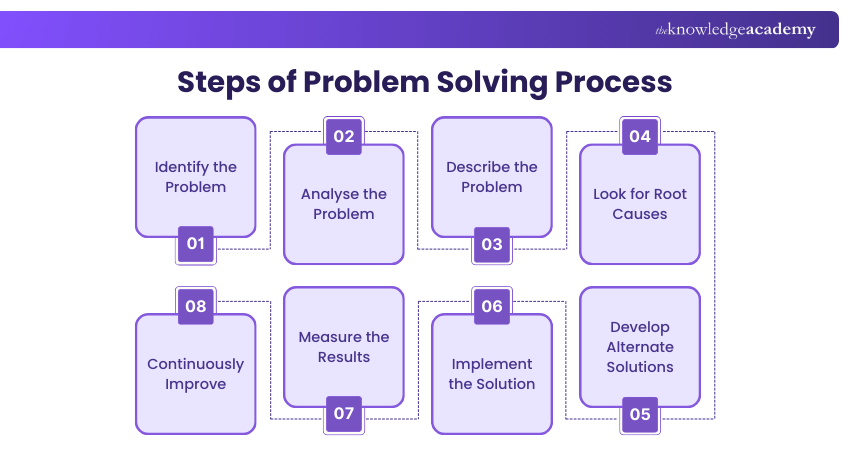
Step 1: Identify the Problem
Initiate the Problem Solving process by visualising the ideal scenario while utilising an Issue Log in Project Management to track discrepancies. Define the standard against which the current situation will be measured. Ask critical questions like, "If things were going perfectly, what would that look like?"
Further, determine the acceptable variation from the norm, considering factors like engineering precision or behavioural flexibility. Assess how much deviation is tolerable. This step sets the stage for a clear understanding of the problem's context and the criteria for an optimal outcome.
Step 2: Analyse the Problem
Understand the problem's urgency by identifying its stage: emergent, mature, or crisis. An emergent problem allows time for corrective action without immediate threats. At the same time, a mature problem causes more than minor damage, necessitating quick intervention. A crisis demands immediate correction due to severe repercussions.
Thus, evaluating the potential damage guides decision-making and makes sure an appropriate level of urgency is assigned to the problem.
Step 3: Describe the Problem
Craft a concise problem statement in a clear yet short manner. This concise articulation serves as a focal point for the Problem Solving effort. Further, statement should be distributed to the team for consensus, ensuring everyone involved agrees on the root cause.
The critical question to ask here is, "Is your premise correct?" Validating the accuracy of the premise ensures a shared comprehension of the problem.
Step 4: Look for Root Causes
This step involves a thorough investigation to uncover the underlying issues and come up with targeted solutions. Delve into the root causes of the problem by asking a series of questions: who, what, when, why, how, and where.
You can use the 5Why method or Fishbone Diagram in Root Cause Analysis to explore the factors that led to a departure from the set standards. Also, assess the possibility of solving the problem permanently while aligning with effective leadership principles.
Step 5: Develop Alternate Solutions
This step emphasises the importance of exploring a range of possibilities before committing to a specific course of action. So, generate a list of diverse solutions beyond the initial perspective. Apply the One-third Plus One Rule for consensus-building, involving key stakeholders in the Decision Making process.
Further, rank solutions based on their efficiency, cost, and long-term value. Carefully select the most suitable solution, considering available resources and potential impacts.
Step 6: Implement the Solution
Translate the chosen solution into action by creating an implementation plan. Outline responsibilities, timelines, and contingency measures to ensure a smooth execution. Moreover, clearly communicate team roles and track the solution's progress.
This step involves strategic planning and coordination to bring the selected solution to completion. Also, anticipate potential deviations from the plan and establish mechanisms for prompt resolution.
Step 7: Measure the Results
Evaluate the solution's effectiveness by measuring and tracking results. Answer critical questions about its success, learning opportunities, and applicability to future challenges. This step involves a systematic assessment of the outcomes against the desired objectives. Insights gained from this evaluation contribute to continuous improvement and the refinement of Problem Solving skills.
Step 8: Continuously Improve
The focus of this final step is on identifying additional opportunities to enhance the implemented solution and ensure that the problem does not recur. It is equally important to communicate the lessons learned so that others can benefit from the experience. If necessary, you can repeat the eight-step Problem Solving Process to refine the outcomes and drive ongoing improvements.
Learn to strengthen your team with our Team Development Course - Sign up today!
What Does an Effective Problem Solving Process Look Like?
Here are the points to remember pertaining the ideal Problem Solving Process:
1) An effective Problem Solving Process always begins with a clear agenda that sets direction and focus.
2) A well-structured Problem Solving workshop is one of the most effective ways to move a group from identifying challenges to putting solutions into action.
3) The workshop format allows everyone to contribute, ensures group buy-in, and creates space for free thinking and creative exploration.
4) By encouraging open discussion before deciding on the best solution, the process leads to stronger outcomes and smoother implementation.
Potential Risks and how can They be Mitigated by Problem Solving Process?
Efficient Risk Management requires a systematic approach to identifying, evaluating, and minimising potential risks in any project or business endeavour. Here’s how the Problem Solving process can be beneficial:

1) Risk Identification
The first step involves recognising potential risks that may impact the project or organisation. This includes brainstorming, analysing past data, and consulting experts to uncover hidden risks.
2) Risk Assessment
Once identified, each risk is evaluated based on its likelihood and potential impact. This stage involves prioritising risks to address the most significant threats first. Tools like risk matrices can be helpful in this process.
3) Risk Mitigation Strategies
After assessment, strategies are developed to minimise each risk. This might involve implementing safeguards, exploring alternative approaches, or transferring risk through insurance. The goal is to reduce the likelihood or impact of each risk.
4) Contingency Planning
If mitigation strategies fail, contingency plans are created. These plans outline steps to take if a risk materialises, ensuring the organisation can respond quickly and effectively.
5) Monitoring and Review
Continuous monitoring and reviewing of risks ensure that mitigation strategies remain effective and can adapt to emerging threats.
6) Communication
Effective communication throughout the Risk Management process ensures that all stakeholders are informed and prepared to address potential risks.
Learn the art of Conflict Resolution and transform conflict into lasting collaboration. Sign up for our Conflict Management Training now!
Creating Your Process for Problem Solving
Below are the Problem Solving steps that can help you create a suitable process:
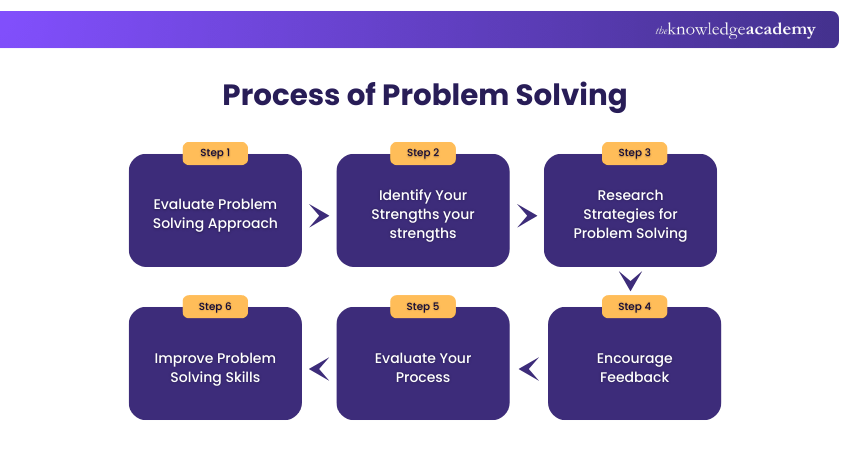
1) Evaluate Problem Solving Approach
To create an effective Process for Problem Solving, it is crucial to evaluate the Problem Solving approach. Assess the success of previous solutions, identify areas for improvement, and gather feedback from team members. Further, adjust the Process based on insights gained, fostering continuous improvement and enhancing Problem Solving capabilities.
2) Identify Your Strengths your strengths
When creating a Problem Solving Process, it's essential to identify your strengths. Recognise the skills and expertise within your team and your talents. Leveraging these strengths will enable you to assign tasks effectively and collaborate efficiently. It will also help capitalise on your team's unique abilities to achieve successful Problem Solving outcomes.
3) Research Strategies for Problem Solving
To create an effective Problem Solving Process, researching feasible strategies is vital. Explore various Problem Solving Techniques, methodologies, and best practices. Consider their applicability to your specific challenges and team dynamics. A well-informed approach ensures you adopt the most suitable strategies to tackle problems efficiently and achieve desired outcomes.
4) Encourage Feedback
While creating a Problem Solving Process, it is crucial to encourage feedback. Foster an open and supportive environment for team members to freely share their thoughts and experiences. Valuable insights from diverse perspectives empower continuous improvement, refine Problem Solving strategies, and enhance overall effectiveness in resolving challenges successfully.
5) Evaluate Your Process
When creating your Problem Solving Process, testing and revising are essential steps. Implement the strategy in real-life scenarios to evaluate its effectiveness. Seek feedback from team members and superiors to examine strengths and areas for improvement. Make necessary adjustments to refine and optimise the process for better Problem Solving outcomes.
6) Improve Problem Solving Skills
To create an effective Problem Solving Process, prioritise improving Problem Solving skills. Encourage continuous learning through workshops, training, and skill-building exercises—practice solving diverse problems to gain experience and confidence. By investing in skill development, individuals and teams can enhance their Problem Solving capabilities and achieve better outcomes in challenging situations.

What are the Five C's of Problem Solving?
Here are the five C’s of problem solving:
1) Comprehend: Understand the problem through facts
2) Consider: Explore different perspectives and solutions
3) Choose: Select the most practical solution
4) Communicate: Share the plan clearly with everyone involved
5) Check: Review outcomes, monitor progress and make adjustments
What are the Four P's of Problem Solving?
The four P’s of Problem Solving are:
1) Define the Problem: Understand what the problem is
2) Generate Possibilities: Brainstorm as many solutions as you can
3) Create a Plan: Visualise the process of achieving the solution
4) Perform Your Plan: Finally, do everything as planned
Conclusion
Developing a well-defined and adaptive Problem Solving Process is crucial for navigating the complexities of life and work successfully. By fostering creativity, promoting collaboration and continuously refining strategies, individuals and teams can approach challenges confidently and with agility. This is the key to improved problem resolution and overall success.
Our Management Training for New Managers is your quick route to mastering leadership skills – Sign up today!
Frequently Asked Questions
What are Two Problem Solving Tools?

Choosing the appropriate Problem Solving tool depends on the nature of the issue. For example, Mind Mapping helps generate ideas by visually displaying connections between concepts. On the other hand, the Fishbone Diagram systematically identifies potential causes, with branches representing different categories of causes.
What is the Seven diamond Problem Solving Process?
The Seven Diamond process in Problem Solving is a systematic approach to tackling complex issues. It involves the following seven steps:
1) Define the problem
2) Gather data
3) Analyse data
4) Develop hypotheses
5) Verify hypotheses
6) Identify root cause
7) Implement solution
What are the Other Resources Provided by The Knowledge Academy?
The Knowledge Academy takes global learning to new heights, offering over 3,000 online courses across 490+ locations in 190+ countries. This expansive reach ensures accessibility and convenience for learners worldwide.
Alongside our diverse Online Course Catalogue, encompassing 17 major categories, we go the extra mile by providing a plethora of free educational Online Resources like Blogs, eBooks, Interview Questions and Videos. Tailoring learning experiences further, professionals can unlock greater value through a wide range of special discounts, seasonal deals, and Exclusive Offers.
What is The Knowledge Pass, and How Does it Work?
The Knowledge Academy’s Knowledge Pass, a prepaid voucher, adds another layer of flexibility, allowing course bookings over a 12-month period. Join us on a journey where education knows no bounds.
What are the Related Courses and Blogs Provided by The Knowledge Academy?
The Knowledge Academy offers various Management Courses, including the Problem Solving Course, Productivity and Time Management Training and Costing and Pricing Training. These courses cater to different skill levels, providing comprehensive insights into Problem Solving.
Our Business Skills Blogs cover a range of topics related to Problem Solving, offering valuable resources, best practices, and industry insights. Whether you are a beginner or looking to advance your Problem Solving skills, The Knowledge Academy's diverse courses and informative blogs have got you covered.

William Brown


Senior Business Analyst and Strategic Advisor
William Brown is a senior business analyst with over 15 years of experience driving process improvement and strategic transformation in complex business environments. He specialises in analysing operations, gathering requirements and delivering insights that support effective decision making. William’s practical approach helps bridge the gap between business goals and technical solutions.
View Detail
Upcoming Business Skills Resources Batches & Dates
Date
 Management Training for New Managers
Management Training for New Managers
Fri 26th Jun 2026
Management Training for New Managers
Fri 21st Aug 2026
Management Training for New Managers
Fri 30th Oct 2026

 If you wish to make any changes to your course, please


