


 Top Rated Course

We may not have the course you’re looking for. If you enquire or give us a call on + 1-866 272 8822 and speak to our training experts, we may still be able to help with your training requirements.
How to Introduce Yourself in an Interview: A Step-by-Step Guide
Sophia Ellis 24 April 2026Improve your interview self-introduction with expert tips, examples, and techniques to confidently showcase your skills and stand out. Learn how to structure your introduction effectively and highlight key professional strengths. Make a strong first impression that instantly captures attention and builds lasting confidence.

Training Outcomes Within Your Budget!
We ensure quality, budget-alignment, and timely delivery by our expert instructors.
Table of Contents
First impressions can shape your success in an interview, and how you present yourself sets the tone. Clearly communicating your skills, experience, and personality helps you stand out. This is where understanding How to Introduce Yourself in an Interview becomes essential.
A well-structured introduction grabs attention and builds credibility from the start. Let’s explore key strategies and tips to help you create a strong, memorable impression.
Table of Contents
1) What is Self-introduction in an Interview?
2) Why is Self-introduction Important in a Job Interview?
3) Steps on How to Introduce Yourself in an Interview
4) Key Tips for a Perfect Self Introduction
5) Things to Avoid When Introducing Yourself
6) Conclusion
What is Self-Introduction in an Interview?
A self-introduction in an interview, often prompted by questions like “Tell me about yourself,” is a concise and structured overview of your professional background, skills, and career goals. It is usually one of the first questions asked and plays an important role in creating a strong first impression.
Rather than being a casual introduction, it is a strategic summary of your career journey that highlights your relevance to the role. It helps you explain who you are professionally, what you have achieved, and why you are a good fit for the position.
A strong self-introduction focuses on three key elements:
a) Your background, including education and relevant work experience
b) Your key skills and achievements, aligned with the job requirements
c) Your career goals, showing your interest in the role, and future direction
Interviewers use this response to evaluate your communication skills, clarity, confidence, and overall suitability for the organisation. In simple terms, a self-introduction is your chance to set the tone for the interview, present your story clearly, and capture the interviewer’s interest from the start.

Why is Self-introduction Important in a Job Interview?
A self-introduction is important because it creates a strong first impression and sets the tone for the interview. It allows candidates to highlight their skills, experience, and confidence clearly. It also helps interviewers assess communication and suitability for the role, while giving candidates a chance to stand out early.
Steps on How to Introduce Yourself in an Interview
Crafting a compelling self-introduction is a crucial step in acing your job interview. It's your opportunity to make a strong first impression and set the stage for a successful conversation with your potential employer. Here are some key tips to ensure your self-introduction leaves a lasting impact:
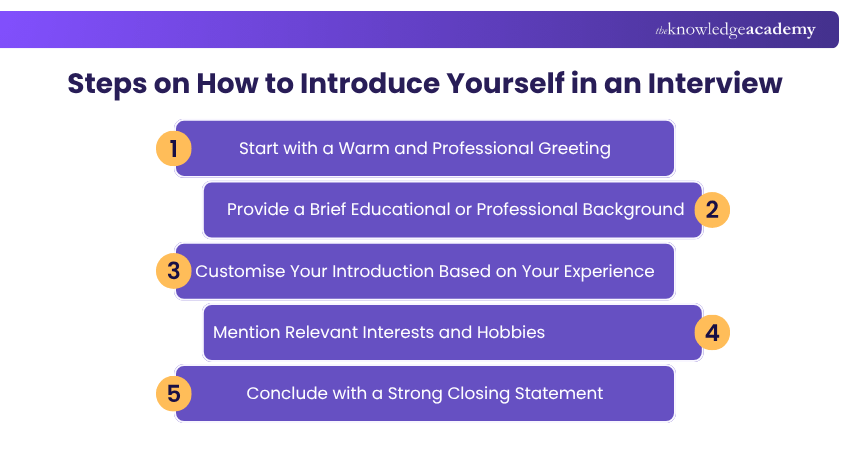
1) Start with a Warm and Professional Greeting
Your introduction about yourself begins with the first impression you make when you walk into the job interview room. So, How to Introduce Yourself in an Interview?
Start with a warm greeting and a friendly smile to effectively Introduce Yourself in Interviews. A firm handshake, if culturally appropriate, can convey confidence and professionalism. This simple gesture can help put both you and your interviewers at ease.
2) Provide a Brief Educational or Professional Background
Your educational background is a fundamental part of your Self-introduction in an Interview. Provide a concise summary of your academic journey, including your highest qualification, the university you attended, and any notable academic achievements.
Make sure to relate your educational background to the role you're interviewing for. For example, if you hold a degree in Marketing and you're interviewing for a marketing position, highlight how your education has prepared you for the role.
3) Customise Your Introduction Based on Your Experience
Experienced professionals often have a wealth of work history to draw from. In this case, you may choose to begin with a brief career summary rather than immediately discussing your education.
Highlight key roles, achievements, and experiences that are directly relevant to the job you're interviewing for. This approach can capture the interviewer's attention and convey your expertise in the field.
4) Mention Relevant Interests and Hobbies
Adding a personal touch to your introduction can help you establish yourself as an individual with diverse skills. After discussing your education or career summary, briefly mention your interests and hobbies.
Choose those that align with the company culture or the position. For instance, if you're interviewing for a creative role, mentioning your passion for painting or writing can show that you're not just a professional but also a creative thinker.
5) Conclude with a Strong Closing Statement
End your self-introduction with a confident closing that highlights your enthusiasm for the role and aligns your qualifications with the job requirements. A well-crafted conclusion reinforces professionalism and leaves a positive, lasting impression, setting the stage for a productive and engaging interview.
Key Tips for a Perfect Self Introduction
A perfect self-introduction should be clear, concise, and tailored to the job while reflecting confidence and professionalism. Focusing on relevant details and practising beforehand can help you deliver it smoothly and make a strong first impression.
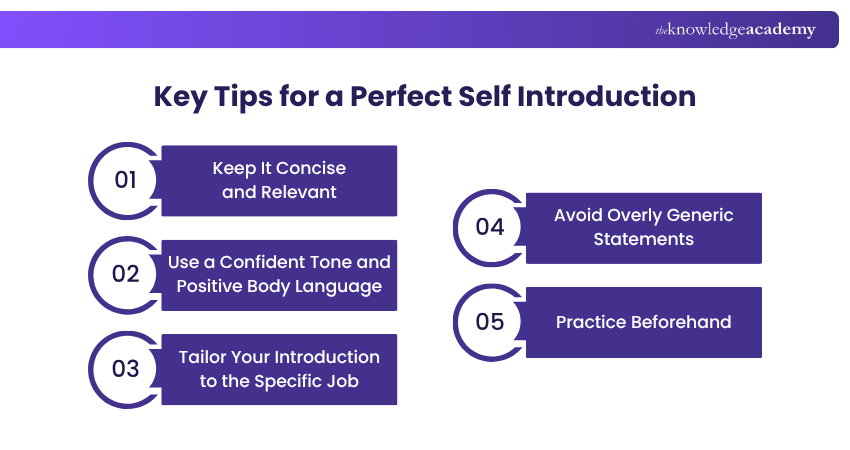
1) Keep It Concise and Relevant
A strong self-introduction should be brief and focused on the most relevant aspects of your background. Highlight key experiences, skills, and achievements that align with the job, rather than sharing unnecessary personal details.
2) Use a Confident Tone and Positive Body Language
Confidence plays a crucial role in how your introduction is received. Speak clearly, maintain good posture, and make eye contact to convey professionalism and self-assurance. Positive body language helps reinforce your words and leaves a lasting impression.
3) Tailor Your Introduction to the Specific Job
Customising your introduction to match the job requirements shows preparation and genuine interest. Emphasise skills and experiences that directly relate to the role to demonstrate your suitability.
4) Avoid Overly Generic Statements
Generic phrases can make your introduction sound unoriginal and forgettable. Instead, focus on specific examples or strengths that differentiate you from other candidates and reflect your unique value.
5) Practice Beforehand
Practising your self-introduction helps you deliver it smoothly and confidently. It allows you to refine your content, improve clarity, and ensure you stay within an appropriate length during the interview.
Experience a life without stress and regain balance with our Stress Management Course – Sign up today!
Things to Avoid When Introducing Yourself
While making a strong first impression is crucial during an interview, it's equally important to be aware of the pitfalls to avoid. To ensure your introduction leaves a positive impact, steer clear of these common missteps:
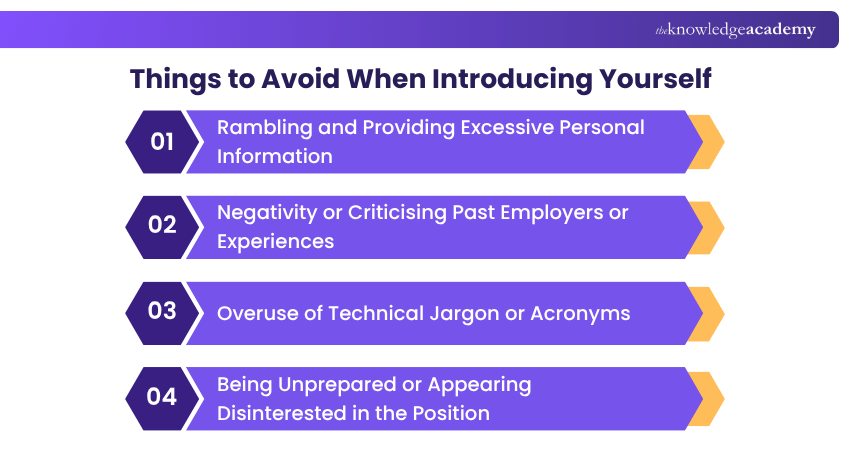
1) Rambling and Providing Excessive Personal Information
One of the most common mistakes in self-introduction is oversharing. It's essential to keep your introduction concise and relevant to the job interview and the company. So, avoid the temptation to veer off-topic, detailing personal information or stories that have no direct bearing on the role or your qualifications. Instead, focus on key points that highlight your suitability for the position.
2) Negativity or Criticising Past Employers or Experiences
Maintain a positive and professional tone during your self-introduction. Speaking negatively about previous employers, coworkers, or experiences reflects poorly on your professionalism.Even if you've had challenging work situations in the past, use your introduction as an opportunity to highlight your ability to handle difficulties with grace and maturity. Stay focused on the positive aspects of your career and how they've prepared you for the new role.
3) Overuse of Technical Jargon or Acronyms
In certain industries, technical jargon and acronyms are the norm. However, it's crucial to remember that not everyone in the job interview may be familiar with these terms. Overloading your introduction with jargon can make you seem unapproachable and may lead to miscommunication. Instead, aim to explain technical concepts in a way that a broader audience, including non-specialists, can understand. This demonstrates your ability to convey complex ideas clearly.
4) Being Unprepared or Appearing Disinterested in the Position
Arriving unprepared or seeming disinterested can leave a negative impression. Research the company, role, and interviewers in advance to tailor your introduction and demonstrate enthusiasm. Showing genuine interest and a positive attitude during your self-introduction highlights your qualifications, communication skills, and commitment, setting the tone for a strong and professional interview.
Conclusion
Understanding How to Introduce Yourself in an Interview can greatly improve your chances of making a strong first impression. A clear, confident, and tailored introduction helps you stand out and sets a positive tone for the conversation. With the right approach and practice, you can turn this simple question into a powerful opportunity to showcase your value.
Transform your life with our Personal Development Training – Sign up now!
Frequently Asked Questions
How do I Introduce Myself in an Online Interview?

In an online interview, introduce yourself with a clear and structured summary of your background, current role, and career goals while keeping it concise and engaging. Focus on delivering your introduction confidently with clarity and energy, as virtual settings require stronger communication and a well-organised flow to make an impact.
How do I Sound Confident in an Interview?
To sound confident in an interview, preparation is key, as understanding the role and practising your answers helps you respond clearly and calmly. Maintaining positive body language, steady eye contact, and a composed tone also reinforces confidence and creates a strong impression on the interviewer.
What are the Other Resources and Offers Provided by The Knowledge Academy?
The Knowledge Academy takes global learning to new heights, offering over 3,000+ online courses across 490+ locations in 190+ countries. This expansive reach ensures accessibility and convenience for learners worldwide.
Alongside our diverse Online Course Catalogue, encompassing 17 major categories, we go the extra mile by providing a plethora of free educational Online Resources like Blogs, eBooks, Interview Questions and Videos. Tailoring learning experiences further, professionals can unlock greater value through a wide range of special discounts, seasonal deals, and Exclusive Offers.
What is The Knowledge Pass, and How Does it Work?
The Knowledge Academy’s Knowledge Pass, a prepaid voucher, adds another layer of flexibility, allowing course bookings over a 12-month period. Join us on a journey where education knows no bounds.
What are the Related Courses and Blogs Provided by The Knowledge Academy?
The Knowledge Academy offers various Personal Development Courses, including Time Management Training, Active Listening Training, and Supervisor Training. These courses cater to different skill levels, providing comprehensive insights into Setting Goals.
Our Business Skills Blogs cover a range of topics related to How to Introduce Yourself in an Interview, offering valuable resources, best practices, and industry insights. Whether you are a beginner or looking to advance your Communication skills, The Knowledge Academy's diverse courses and informative blogs have got you covered.
Upcoming Business Skills Resources Batches & Dates
Date
 Time Management Training
Time Management Training
Fri 10th Jul 2026
Time Management Training
Fri 11th Sep 2026

 If you wish to make any changes to your course, please


