


 Top Rated Course


We may not have the course you’re looking for. If you enquire or give us a call on + 1-866 272 8822 and speak to our training experts, we may still be able to help with your training requirements.
10 Benefits of Lean Management for Development of Business
The Knowledge Academy 11 February 2026The Benefits of Lean Management include reduced waste and costs, improved efficiency and higher-quality results through customer value and continuous improvement. It also promotes streamlined processes, better resource use, faster delivery, employee involvement, and a culture focused on long-term operational excellence and business performance.

Training Outcomes Within Your Budget!
We ensure quality, budget-alignment, and timely delivery by our expert instructors.
Table of Contents

Ever noticed how Netflix always seems to know exactly what you’re in the mood for? It’s the power Lean Management at work. By constantly fine-tuning processes and cutting out inefficiencies, Netflix stays ahead of the game and always keeps its binge-worthiness up. So, if a business is a high-speed train, then Lean Management is the track that keeps it gliding smoothly toward growth.
The result includes faster growth, happier customers and a culture of continuous improvement. This blog explores the key Benefits of Lean Management, from reduced waste and costs to improved lead time and positive corporate culture. So read on and charge up your business journey with Lean thinking!
Table of Contents
1) Definition of Lean Management
2) 10 Benefits of Lean Management
3) Where did Lean Management Come From?
4) What are the Five Principles of Lean Management?
5) Conclusion
Definition of Lean Management
Lean Management is a structured methodology that helps you improve processes by removing waste across all areas of an organisation. It focuses on delivering value as defined by the customer. It’s accomplished by continuously striving to improve quality, shorten lead times and reduce costs. At its core, Lean is a philosophy promoting ongoing improvement and active involvement of everyone in the company.
Lean Management also builds a culture of teamwork and responsibility, where everyone has a role in making things better. Employees are encouraged to spot problems and share ideas. This helps the company grow steadily, adapt to changes and stay competitive over time. Now we can explore the Advantages of Lean Management.

10 Benefits of Lean Management
Implementing Lean Management principles can lead to numerous benefits for an organisation, improving various aspects of operations and overall performance. Here are the key Benefits of Lean Management:

1) Reduced Waste
Reduced waste is a core principle of lean. It is achieved by identifying and eliminating non-value-adding activities. This includes minimising excess inventory, unnecessary motion and overproduction. By streamlining various processes, businesses can use resources more efficiently. This helps them lower costs and boost overall productivity.
2) Boost Team Morale
Lean Management helps create a more positive work environment by encouraging open communication, trust, and collaboration between employees and management. When staff feel heard and involved in improvements, motivation increases, leading to higher job satisfaction and stronger overall team performance.
3) Improved Productivity and Efficiency
Lean practices drive improved productivity by eliminating non-value-added activities. This results in faster turnaround times and greater use of resources. So teams can focus on delivering quality work with fewer bottlenecks, which reduces operational costs.
4) Increased Quality
As mentioned above, Lean principles help eliminate waste and improve efficiency. This approach encourages continuous improvement, ensuring that every step adds value to the final product. Ultimately, Lean methods foster a culture of precision and accountability. This leads to reduced costs and greater customer satisfaction.
5) Reduced Costs
Lean Management focuses on eliminating all forms of waste in business processes. This includes waste from overproduction, excessive inventory, waiting time, unnecessary movement, defects, extra processing, or poor transport. By concentrating only on what truly benefits the customer, Lean helps reveal delays and hidden costs.
6) Employee Engagement
Employee engagement thrives in a Lean environment, where team members are actively involved in process improvement and problem-solving. By encouraging participation and valuing contributions, Lean practices give employees a sense of ownership and purpose. This involvement boosts morale, motivation, and commitment.
7) Improved Lead Time
Improved lead time is a major benefit of Lean practices, as they streamline processes and reduce delays. By eliminating bottlenecks and inefficiencies, products move through production more quickly. This faster turnaround not only enhances customer satisfaction but also allows businesses to respond quicker to market demands.

8) Agility and Adaptability
Agility and adaptability are strengthened through Lean practices, as they encourage flexible processes that can quickly respond to changes. By streamlining workflows and eliminating waste, businesses become more responsive to customer needs and market shifts. This ability to adjust efficiently ensures long-term success in dynamic environments.
Awaken the Lean mindset with our Lean Awareness Training where every step counts and every waste is eliminated. Sign up now!
9) Customer Focus and Satisfaction
Lean Management places strong emphasis on delivering value that truly matters to customers. By continuously improving processes, organisations can provide higher-quality products and services more efficiently, leading to faster delivery, reduced costs, and improved customer satisfaction and loyalty.
Lean processes are your shortcut to business brilliance. Learn about it in our Lean Processes and Tools Training – Sign up now!
10) Positive Corporate Culture
Lean Management encourages teamwork, empowers the employees and supports shared problem-solving. This creates a culture where motivation, communication and continual engagement thrive. When people feel valued and involved, they drive innovation and help build a workplace that supports long-term organisational success.
Where did Lean Management Come From?
The origin of Lean Management can be traced back to Japan's Toyota Production System (TPS). It focused on Just-in-Time (JIT) production and Jidoka to spot and fix issues quickly. It’s supported by Kaizen for continuous improvement and Respect for People, emphasising teamwork and employee growth. Many businesses now use these principles to be efficient.
What are the Five Principles of Lean Management?
Here are the five Principles of it:
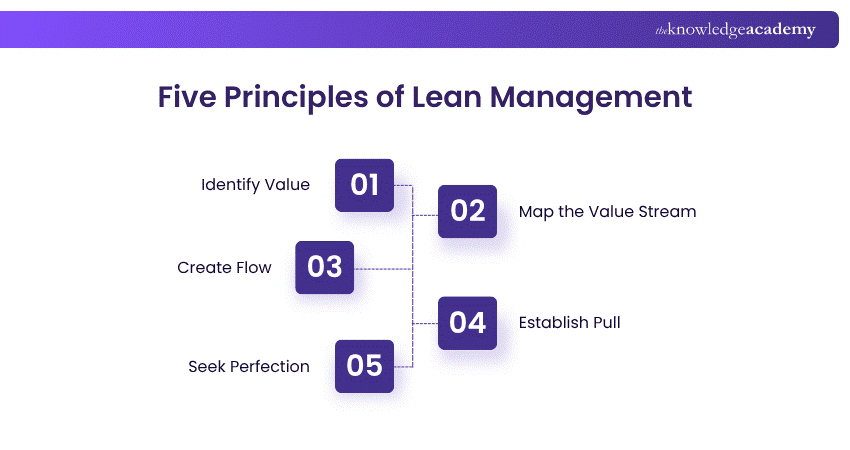
a) Identify Value: Focus on what customers truly need
b) Map the Value Stream: Find and remove steps that don’t add value
c) Create Flow: Make work move smoothly without delays
d) Establish Pull: Produce only when there is demand, avoiding excess
e) Seek Perfection: Keep improving to make things better all the time
Conclusion
Lean Management empowers organisations to improve quality, reduce waste, and deliver greater value through continuous improvement. By embracing Benefits of Lean Management, teams can boost efficiency, engage employees, and stay agile in changing markets. Adopting Lean is a strategic step toward long-term operational excellence.
Gain a deeper understanding of Lean Process Mapping with our Certified Lean Foundation & Practitioner Course - Join now!
Frequently Asked Questions
Who Benefits from Lean Management?

Here are the groups that benefit from it:
a) Businesses: They reduce waste and increase profits
b) Customers: They get better products and services at lower costs
c) Employees: They enjoy a smoother workflow and job satisfaction
d) Industries & Economy: It helps companies grow and boost the economy
What are the Three Main Aims of Lean?
The three main aims of Lean are to eliminate waste, maximise customer value, and continuously improve processes. Together, these aims help organisations improve efficiency, reduce costs, enhance quality, and create sustainable long-term business growth.
What are the Other Resources and Offers Provided by The Knowledge Academy?
The Knowledge Academy takes global learning to new heights, offering over 3,000 online courses across 490+ locations in 190+ countries. This expansive reach ensures accessibility and convenience for learners worldwide.
Alongside our diverse Online Course Catalogue, encompassing 19 major categories, we go the extra mile by providing a plethora of free educational Online Resources like Blogs, eBooks, Interview Questions and Videos. Tailoring learning experiences further, professionals can unlock greater value through a wide range of special discounts, seasonal deals, and Exclusive Offers.
What is The Knowledge Pass, and How Does it Work?
The Knowledge Academy’s Knowledge Pass, a prepaid voucher, adds another layer of flexibility, allowing course bookings over a 12-month period. Join us on a journey where education knows no bounds.
What are the Related Courses and Blogs Provided by The Knowledge Academy?
The Knowledge Academy offers various Lean Training , including the Introduction to Lean, Certified Lean Foundation, and Certified Lean Practitioner. These courses cater to different skill levels and provide comprehensive insights into Lean Methodology.
Our Business Improvement Blogs cover a range of topics related to Lean Management, offering valuable resources, best practices, and industry insights. Whether you are a beginner or looking to advance your Lean Management skills. The Knowledge Academy's diverse courses and informative blogs have got you covered.

The Knowledge Academy


Global Training Provider
The Knowledge Academy is a world-leading provider of professional training courses, offering globally recognised qualifications across a wide range of subjects. With expert trainers, up-to-date course material, and flexible learning options, we aim to empower professionals and organisations to achieve their goals through continuous learning.


 If you wish to make any changes to your course, please


