


 Top Rated Course

We may not have the course you’re looking for. If you enquire or give us a call on + 1-866 272 8822 and speak to our training experts, we may still be able to help with your training requirements.
The ArchiMate® Modelling Language Cheat Sheet: A Quick Reference Guide
James Smith 03 June 2026This blog serves as the ArchiMate® Modelling Language Cheat Sheet, guiding you through key components like its framework, layers, elements, and relationships. This cheat sheet shows common uses of the ArchiMate® Modelling Language, including simplifying the architecture modelling process and enabling access to concepts and relationships.
Home
 Resources
Business Improvement
The ArchiMate® Modelling Language Cheat Sheet: A Quick Reference Guide
Resources
Business Improvement
The ArchiMate® Modelling Language Cheat Sheet: A Quick Reference Guide
Resources
Business Improvement
The ArchiMate® Modelling Language Cheat Sheet: A Quick Reference Guide

Training Outcomes Within Your Budget!
We ensure quality, budget-alignment, and timely delivery by our expert instructors.
Table of Contents

The ArchiMate® Modelling Language is a standardised language for describing and visualising enterprise architectures. It enables architects to represent complex systems, business processes, and organisational structures clearly and consistently. The language offers a wide range of elements and relationships, allowing architects to effectively model various aspects of an enterprise architecture. However, a quick reference is always handy whether you are an amateur or a seasoned architect. Read this blog to understand all there is to know about the ArchiMate® Modelling Language Cheat Sheet, its contents and tips for using it.
Table of Contents
1) Key Components of the Cheat Sheet
2) Uses of the Cheat Sheet
3) How to Create an Effective the ArchiMate® Modelling Language Cheat Sheet?
4) Tips and Tricks
Key Components of the Cheat Sheet
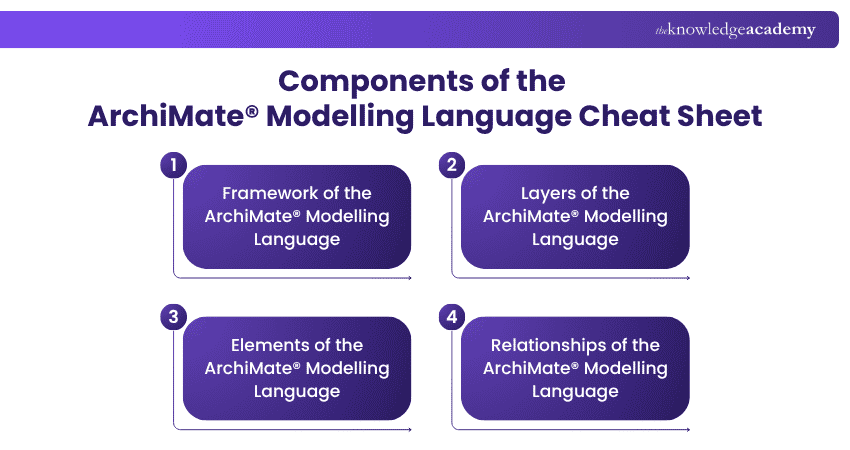
Before we delve deep into the components of the ArchiMate® Modelling Language Cheat Sheet, we will first define what it is. In the world of architecture modelling, efficiency and accuracy are key. When working on complex projects or collaborating with other architects, having a quick reference can save you valuable time and effort. The cheat sheet acts as a condensed version of the framework of the ArchiMate® Modelling Language Cheat Sheet allowing you to access the most important elements and relationships quickly. It is a handy tool for architects, ensuring consistency and facilitating effective communication.
The ArchiMate® Modelling Language Cheat Sheet comprises essential components that provide a comprehensive reference for architects. This section of the blog will explore these components in detail.
1) Framework of the ArchiMate® Modelling Language
The cheat sheet begins with an overview of the framework of the ArchiMate® Modelling Language. It outlines the layers, elements, and relationships that make up the ArchiMate® modelling Language. Understanding the framework gives you a holistic view of the ArchiMate® Modelling Language’s structure and purpose.

2) Layers of the ArchiMate® Modelling Language
Next, the cheat sheet delves into the layers of the ArchiMate® Modelling Language. These layers represent different aspects of enterprise architecture, including business, application, technology, and motivation. Each layer contains specific elements and relationships that are relevant to that domain.
3) Elements of the ArchiMate® Modelling Language
Within each layer, the cheat sheet highlights the key elements of the ArchiMate® Modelling Language. These elements range from business processes and functions to applications, infrastructure, and stakeholders. You can quickly identify and butilise the appropriate elements for your architecture models by referring to the cheat sheet.
4) Relationships of the ArchiMate® Modelling Language
In addition to elements, the ArchiMate® Modelling Language Cheat Sheet provides a comprehensive list of relationships. These relationships define the connections and dependencies between elements. The cheat sheet helps you understand and apply these relationships accurately, enabling you to create coherent and meaningful architecture models.
Learn core concepts and build strong foundations in architecture modelling with the ArchiMate® 3 Training Course: Level 1 – Join now!
Uses of the Cheat Sheet
Now that we've explored the components of the cheat sheet, let's discuss how you can effectively use it in your architecture modelling endeavours.
1) Simplifying Architecture Modelling
The ArchiMate® Modelling Language Cheat Sheet simplifies the process of architecture modelling by providing a concise overview of the language. Instead of sifting through extensive documentation or searching for specific elements and relationships, you can refer to the cheat sheet for quick guidance. It streamlines your workflow, allowing you to focus on architecture design's creative and analytical aspects.
2) Quick Access to Concepts and Relationships
The ArchiMate® Modelling Language Cheat Sheet gives you instant access to essential concepts and relationships. The cheat sheet serves as a valuable reference whenever you need to incorporate a specific element or establish a connection between elements. It saves you time and ensures accuracy in your modelling efforts.
3) Enhancing Communication and Collaboration
The ArchiMate® Modelling Language Cheat Sheet also promotes effective communication and collaboration among architects. Using standardised language, architects can convey complex ideas and architectures concisely and understandably. The cheat sheet is a common reference point, facilitating discussions, clarifications, and decision-making processes.
Take your ArchiMate® skills to the next level with our ArchiMate® 3 Course: Level 2 – sign up today!
How to Create an Effective the ArchiMate® Modelling Language Cheat Sheet?
If you're considering creating the ArchiMate® Modelling Language Cheat Sheet, here's how you can create one and ensure its effectiveness:
1) Choosing Relevant Concepts and Relationships
When creating a cheat sheet, select the most relevant the ArchiMate® Modelling Language concepts and relationships carefully. Focus on the elements and relationships commonly used in your architectural domain. This will make the cheat sheet more practical and tailored to your needs.
2) Organising Information and Layout
To make the cheat sheet user-friendly, organise the information in a logical and structured manner. Headings, subheadings, and bullet points help create an easily scannable document. Consider grouping related elements and relationships for better coherence.
3) Providing Clear Examples and Explanations
Include clear examples and explanations alongside each element or relationship on the cheat sheet to enhance understanding. These examples can illustrate the usage or demonstrate the meaning of a specific concept. Providing context and practical applications makes the cheat sheet more valuable to architects.
Learn how to design complex architectures with greater precision by joining the ArchiMate® 3 Training Course: Level 2 – Sign up today!
Tips and Tricks
To maximise the benefits of the ArchiMate® Modelling Language Cheat Sheet, keep the following tips in mind:
1) Familiarise Yourself with the Cheat Sheet
You must get familiar with and learn the content of the cheat sheet. Understand the elements, relationships, and their meanings. This will allow you to navigate the cheat sheet efficiently and make accurate references when needed.
2) Customise the Cheat Sheet for Your Needs
Feel free to customise the cheat sheet according to your specific architectural context. Add or remove elements and relationships as required. Tailor the content to align with your organisation's architecture practices and terminology.
3) Keep the Cheat Sheet Handy
Make sure to keep a printed or digital copy of the ArchiMate® Modelling Language Cheat Sheet easily accessible. Pin it to your workspace or save it in a folder on your computer. Having it readily available will save you time and effort during your architecture modelling tasks.
Conclusion
The ArchiMate® Modelling Language Cheat Sheet is a valuable quick reference for architects working with the framework of the ArchiMate® Modelling Language. It concisely overviews the essential elements, relationships, and concepts, streamlining the architecture modelling process. Architects can enhance their efficiency, promote effective communication, and create coherent and meaningful architecture models by utilising the cheat sheet.
Build powerful enterprise architecture with confidence by signing up for the ArchiMate® Training now!
Frequently Asked Questions

James Smith


Digital Marketing Manager and Trainer
James Smith is a digital marketing professional with over a decade of experience in SEO, content strategy, paid media and analytics. He has supported both SMEs and global brands in transforming their digital presence. James’s writing and training are rooted in results-driven tactics and the latest marketing trends.
View Detail

 If you wish to make any changes to your course, please


