


 Top Rated Course

We may not have the course you’re looking for. If you enquire or give us a call on +39 800580270 and speak to our training experts, we may still be able to help with your training requirements.
What is the Employee Lifecycle: Stages, Benefits, and Impact
The Knowledge Academy 21 April 2026The Employee Lifecycle maps an employee’s journey from attraction to offboarding, helping boost engagement, growth, and retention outcomes overall ROI. It helps organisations understand employee growth and engagement in their careers, while management of each stage improves performance, enhances experience, and sustains a workforce.

Training Outcomes Within Your Budget!
We ensure quality, budget-alignment, and timely delivery by our expert instructors.
Table of Contents
Have you ever wondered why some organisations feel organised, supportive, and easy to grow in? The difference lies in how effectively a company understands the Employee Lifecycle. Employees go through a series of stages. When these stages are managed well, employees feel valued, encouraged and connected to the organisation’s purpose.
In this blog, we will break down what the Employee Lifecycle model is, its benefits, how it works and more. Whether you are an HR professional, or a team leader, understanding this cycle can transform how you support people and how your organisation performs. Keep reading ahead for more insight!
Table of Contents
1) What is the Employee Lifecycle?
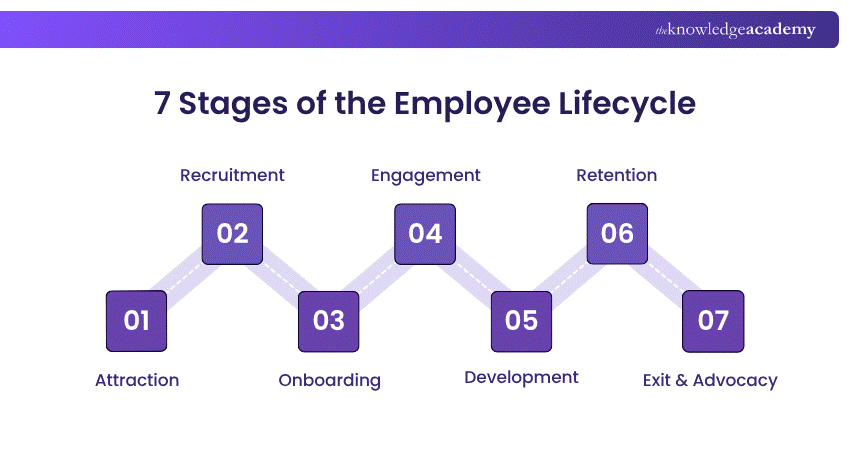
2) 7 Stages of the Employee Lifecycle
3) Benefits of Using the Employee Lifecycle
4) How Do You Manage the Employee Lifecycle?
5) How to Measure Employee Life Cycle?
6) Conclusion
What is the Employee Lifecycle?
The Employee Lifecycle refers to the complete relationship between an employee and an organisation. From the moment they are attracted to a role until they leave the company, it explains the key stages during their journey and how organisations manage each phase effectively.
The Employee Lifecycle model helps organisations understand the employee and employer relationship clearly. Visualising each stage helps businesses to identify what employees need to succeed, feel valued, and remain productive. When organisations understand this, they make better decisions that improve engagement, performance, and success.

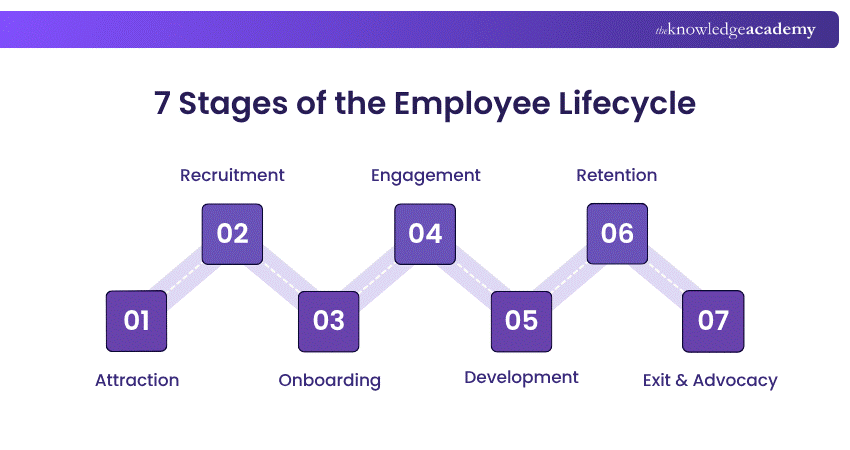
7 Stages of the Employee Lifecycle
Each stage of the Employee Lifecycle is crucial in shaping employee experience and ensuring organisational success. Understanding these stages helps organisations optimise processes, improve engagement, and build a productive workforce. Let’s look at the stages below.
Stage 1) Attraction
This stage focuses on drawing potential candidates to the organisation. It involves employer branding, communication, and showcasing company culture to create interest in job opportunities. A strong employer brand helps organisations to attract skilled talent.
Key Focus Areas:
1) Building a strong employer brand that reflects the company’s values and culture.
2) Using social media, career pages, and campaigns to reach the right talent.
3) Create clear and honest messaging about roles and responsibilities.
4) Highlighting workplace culture, benefits, and growth opportunities.
Stage 2) Recruitment
Recruitment is the process of identifying, assessing, and hiring the right candidates for the organisation. It includes job postings, applications, interviews, and final selection. A clear, fair recruitment process improves the candidate experience and supports better hiring decisions.
Key Focus Areas:
1) Writing clear, inclusive, and engaging job descriptions.
2) Designing a simple and user-friendly application process
3) Ensuring fair and transparent selection methods
4) Using technology and data to improve hiring efficiency.
Gain essential people practice skills with our CIPD Level 3 Foundation Certificate in People Practice – Register now!
Stage 3) Onboarding
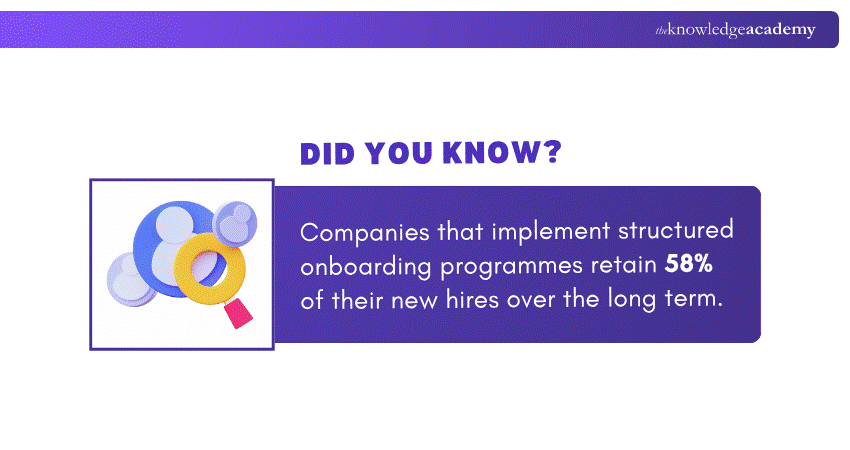
Onboarding helps new employees understand their roles, responsibilities, and organisational culture. It builds the foundation of the employee and employer relationships and supports new hires in becoming productive and confident in their roles.
Key Focus Areas:
1) Preparing new hires before their first day.
2) Providing clear role expectations and training resources.
3) Supporting new employees through guidance and mentorship.
4) Encouraging early engagement with teams and company culture.
Stage 4) Engagement
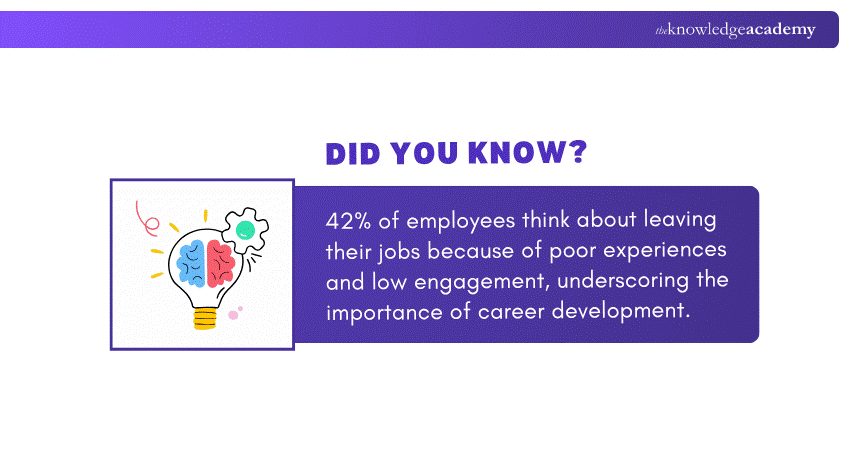
Engagement refers to how emotionally connected, motivated, and committed employees feel towards their work and organisation. Highly engaged employees are more productive and loyal to the organisation. Strengthening engagement improves performance, reduces turnover, and creates a positive workplace.
Key Focus Areas:
1) Building a supportive and inclusive workplace culture.
2) Encouraging open communication and regular feedback.
3) Recognising and rewarding employee contributions.
4) Supporting employee well-being and work-life balance.
Stage 5) Development
Development focuses on improving employee skills, performance, and long-term career growth. Training, mentoring, and continuous learning opportunities help employees progress while contributing more effectively to organisational goals.
Key Focus Areas:
1) Offering continuous learning and skill development opportunities.
2) Creating clear career paths and growth plans.
3) Supporting leadership and professional development.
4) Encouraging coaching, mentoring, and job rotation.
Stage 6) Retention
Retention focuses on keeping employees engaged, motivated, and satisfied with their roles. Organisations must continuously support employees through culture, technology, and work environment to reduce turnover.
Key Focus Areas:
1) Improving employee engagement and job satisfaction.
2) Creating an inclusive, supportive, and collaborative work culture.
3) Offering competitive rewards, benefits, and recognition.
4) Supporting flexible work and well-being initiatives.
Stage 7) Exit & Advocacy
At some point, employees may leave the company. This can happen for many reasons, such as retiring, getting a new job, or personal needs. Even when they leave, you need to ensure that they are treated well. So, this stage is about managing their exit process respectfully and maintaining good relationships even after they leave.
Key Focus Areas:
1) Having a proper exit meeting
2) Offering alumni networks or a referral programme
3) Motivating departing employees to become brand advocates
4) Learning from their feedback to improve retention
Advance your HR career and build expertise in organisational learning and development with CIPD Level 5 Associate Diploma in Organisational Learning and Development now!
Benefits of Using the Employee Lifecycle
Using the Employee Lifecycle is important for a company to grow and improve. By focusing on each stage of the employee journey, businesses can build stronger teams, reduce turnover, and boost overall performance. So, here are some of the benefits:
1) Lower Staff Turnover
1) Builds stronger onboarding and support systems
2) Keeps employees engaged throughout their journey
3) Addresses issues early before they cause resignations
4) Helps identify burnout and prevent dissatisfaction
5) Promotes stability in teams and roles
2) Increased Employee Engagement
1) Increasing employee engagement to improve motivation and commitment
2) Encouraging open communication across teams and leadership
3) Providing regular feedback to support continuous improvement
4) Involving employees in decision-making to build ownership and trust
5) Implementing initiatives, such as mentorship or wellness programmes
3) Better Training and Development
1) Identifies what is needed by the employees more clearly
2) Increases productivity and performance
3) Prepares employees for career development
4) Offers personalised learning plans
5) Builds a more capable workforce
4) Smoother Transitions and Succession
1) Reduces disruption when employees leave
2) Supports internal hiring and promotion
3) Maintains business continuity during changes
4) Prepares backups for key roles
5) Tracks reasons for employee exits
How Do You Manage the Employee Lifecycle?
For effective management of the Employee Lifecycle, it requires undertaking a structured and thoughtful approach to each stage of an Employee Lifecycle. Each stage of the cycle gives a chance to strengthen the employee experience, build trust, and create a suitable workplace environment. This will result in contributing to happier teams and desired business results.
Today, one of the effective ways to manage the Employee Lifecycle model is by utilising an all-in-one HR software. By integrating the right system, organisations can streamline onboarding, centralise employee records, manage performance, automate workflow, and improve communication. This enables HR teams to save time and focus on meaningful work.
How to Measure Employee Life Cycle?
For an effective measurement of Employee Lifecycle, the key metrics at each stage are provided below:
1) Attraction Stage:
a) Track career page traffic
b) Analyse candidate demographics
c) Measure social media engagement on job-related posts
d) Monitor employer-brand rating on platforms, such as Glassdoor
e) Track job ad performance
2) Recruitment:
a) Candidate Net Promoter Score (NPS)
b) Time-to-hire and time-to-fill
c) Offer acceptance rate
d) Application completion rate
e) Cost per-hire
f) Quality of hire (performance of a year)
3) Onboarding:
a) Time to full productivity
b) New hire satisfaction scores
c) First-month retention rate
d) Onboarding task completion rate
e) Manager feedback
Earn a strategic people management qualification and become a strategic HR leader with CIPD Level 7 Advanced Diploma in Strategic People Management Training today!
4) Development:
a) Training completion rates
b) Learning effectiveness through post-training assessments
c) Performance improvement after training
d) Internal mobility rate (change of role or promotions)
e) Reduction of skill gap
f) Participation in development programmes
5) Retention:
a) Employee retention rate
b) Voluntary turnover rate
c) Employee Net Promoter Score (eNPS)
d) Absenteeism rate
e) Manager relationship score
f) Engagement survey scores
6) Performance Management:
a) Goal completion rate
b) Performance rating distribution
c) Frequency of feedback conversations
d) Calibration results
e) High-performer retention rate
7) Offboarding:
a) Exit interview completion rate
b) Exit feedback (reasons for leaving)
c) Knowledge transfer effectiveness
d) Final month productivity indicators
e) Offboarding process satisfaction scores
Conclusion
The Employee Lifecycle shapes how employees experience, grow, and contribute within an organisation. When each stage is managed thoughtfully, organisations can boost engagement, improve performance, and retain skilled talent. This helps businesses build a resilient culture, enhance productivity, and achieve long-term success.
Transform organisational strategy with CIPD Courses – Join now!
Frequently Asked Questions
What is the Role of HR in the Employee Lifecycle?

HR plays a vital role in every stage of the Employee Lifecycle. They ensure smooth processes, support employee growth, handle communication, and gather feedback. HR helps create a positive experience that keeps employees engaged, productive, and loyal throughout their journey.
How to Improve Employee Lifecycle?
To improve your Employee Lifecycle, you can focus on developing some qualities. Those include clear communication, strong onboarding, regular feedback, and ongoing development. You can also recognise achievements, offer growth paths, and gather feedback in all stages. Promoting a work-life balance can also make a big difference.
What are the Other Resources and Offers Provided by The Knowledge Academy?
The Knowledge Academy takes global learning to new heights, offering over 3,000+ online courses across 490+ locations in 190+ countries. This expansive reach ensures accessibility and convenience for learners worldwide.
Alongside our diverse Online Course Catalogue, encompassing 17 major categories, we go the extra mile by providing a plethora of free educational Online Resources like Blogs, eBooks, Interview Questions and Videos. Tailoring learning experiences further, professionals can unlock greater value through a wide range of special discounts, seasonal deals, and Exclusive Offers.
What is The Knowledge Pass, and How Does it Work?
The Knowledge Academy’s Knowledge Pass, a prepaid voucher, adds another layer of flexibility, allowing course bookings over a 12-month period. Join us on a journey where education knows no bounds.
What are the Related Courses and Blogs Provided by The Knowledge Academy?
The Knowledge Academy offers various CIPD Qualifications, including CIPD Level 5 Associate Diploma in Organisational Learning and Development, CIPD Level 3 Foundation Certificate in People Practice and CIPD Level 5 Associate Diploma in People Management. These courses cater to different skill levels, providing comprehensive insights into the Employee Lifecycle.
Our Human Resource Blogs cover a range of topics related to the Employee Lifecycle, offering valuable resources, best practices, and industry insights. Whether you are a beginner or looking to advance your People Management skills, The Knowledge Academy's diverse courses and informative blogs have got you covered.

The Knowledge Academy


Global Training Provider
The Knowledge Academy is a world-leading provider of professional training courses, offering globally recognised qualifications across a wide range of subjects. With expert trainers, up-to-date course material, and flexible learning options, we aim to empower professionals and organisations to achieve their goals through continuous learning.

Upcoming HR Resources – Learn about Human Resources Batches & Dates
Date
 CIPD Level 5 Associate Diploma in People Management Course

 If you wish to make any changes to your course, please


