


 Top Rated Course

We may not have the course you’re looking for. If you enquire or give us a call on +39 800580270 and speak to our training experts, we may still be able to help with your training requirements.
Data Extraction : A Complete Guide
The Knowledge Academy 22 April 2026Data Extraction is the process of collecting data from various sources and moving it to a new destination created to support online analytical processing. It helps organisations turn scattered information into useful insights for better decisions. This process is common in business intelligence and Data Analysis tasks.

Training Outcomes Within Your Budget!
We ensure quality, budget-alignment, and timely delivery by our expert instructors.
Table of Contents
Ever searched your phone for one important photo or file and felt lost in digital clutter? Now imagine that on a business scale with thousands of emails, spreadsheets, and systems overflowing with untapped information. Data Extraction steps in as the hero, gathering scattered data and organising it into useful insights. It is like turning messy drawers into neat, labelled folders, only this time it powers smarter decisions.
In this blog, you will learn about Data Extraction, its link to ETL, the main types, and how it works. We will also look at its benefits, methods, tools, real examples, and key best practices. By the end, you will see how raw data turns into meaningful insights. Let’s get started!
Table of Contents
1) What is Data Extraction?
2) Data Extraction and ETL
3) Types of Data Extraction
4) How Does Data Extraction Work?
5) Benefits of Data Extraction
6) Data Extraction Methods
7) Types of Data Extraction Tools
8) Real-world Data Extraction Example
9) Best Practices for Data Extraction
10) Conclusion
What is Data Extraction?
Data Extraction is defined as the method of getting back structured or unstructured data. This can be from various sources. It helps businesses collect important information for analysis. This data can come from various Databases. It can also come from websites or documents. Extracting information efficiently improves decision-making. It is a key step in data processing workflows.

Data Extraction and ETL
ETL stands for Extract, Transform, Load, and it is the process businesses use to collect data, clean it, and move it into a system where it can be used for reporting or analysis. The goal is to ensure information is accurate, consistent, and easy to interpret before it is stored or shared.
Data Extraction is the first stage of the ETL process. It involves pulling data from different sources such as applications, websites, files, or databases. Once extracted, the data is cleaned, organised, and then loaded into a central system. This makes it easier for teams to access reliable information, spot trends, and make better decisions.
Types of Data Extraction
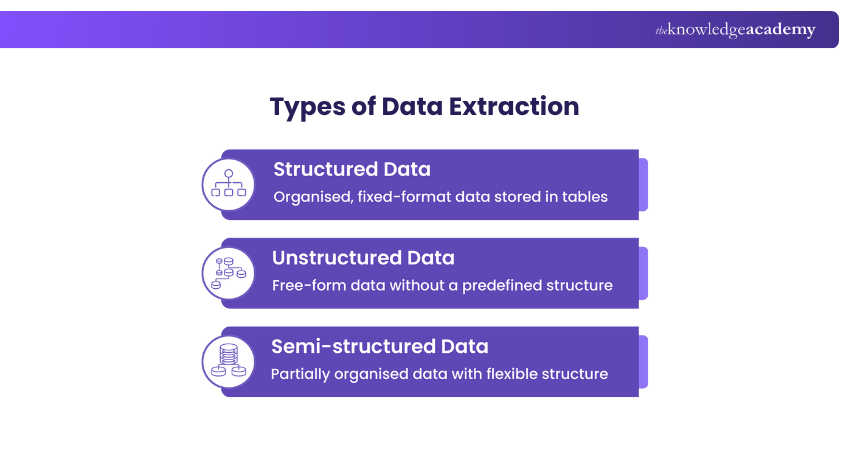
Data Extraction methods depend on the type of source. Some information comes in clean, organised formats, while others are free-form or mixed. Choosing the right method ensures accurate, efficient, and reliable data collection. The main types include:
1) Structured Data
Structured data follows a fixed, predictable format, making it straightforward to access, sort, and analyse. It is commonly stored in databases, spreadsheets, and tables, where every element has a defined position. Businesses rely on structured extraction methods to quickly retrieve specific, accurate details without complexity.
2) Unstructured Data
Unstructured data does not follow a set format. It appears in emails, social media posts, documents, images, scanned files, and other free-form sources. Extracting insights from this type of data requires advanced techniques such as Machine Learning and Natural Language Processing. Although less organised, unstructured data often contains rich insights and needs careful, intelligent handling.
3) Semi-structured Data
Semi-structured data combines aspects of both structured and unstructured formats. It has some organisation but is not as rigid as databases. Examples include JSON, XML, and tagged files. Specialised tools help extract and transform this data for further analysis.
Understand Machine Learning algorithms and Data Visualisation techniques. Join our Python Data Science Course now!
How Does Data Extraction Work?
Data Extraction follows a clear process to ensure accurate and useful results. It includes finding data sources, choosing the right method, and refining the collected information. Each step improves efficiency and data quality. The steps are:
1) Identify Data Sources
The first step is locating relevant data. Sources can include databases, websites, APIs, or documents. Choosing the right source ensures meaningful insights and reliability for better decisions.
2) Data Discovery and Profiling
This phase analyses the data structure and content. Profiling helps understand patterns, inconsistencies, and quality issues. This is because it brings in effective extraction and transformation.
3) Select the Extraction Method
Different techniques are used based on data type and format. Structured data may require queries, while unstructured data needs advanced processing. The right method ensures efficiency and accuracy.
4) Transform and Cleanse Data
Extracted data often contains inconsistencies or errors. This step refines the information by filtering duplicates, correcting formats, and standardising values. Clean data enhances usability and accuracy.
5) Load Extracted Data
Once processed, the refined data is stored in a target system. This could be a database, a cloud platform, or an analytics tool. Proper loading ensures seamless access and usability for smooth analysis.
Benefits of Data Extraction
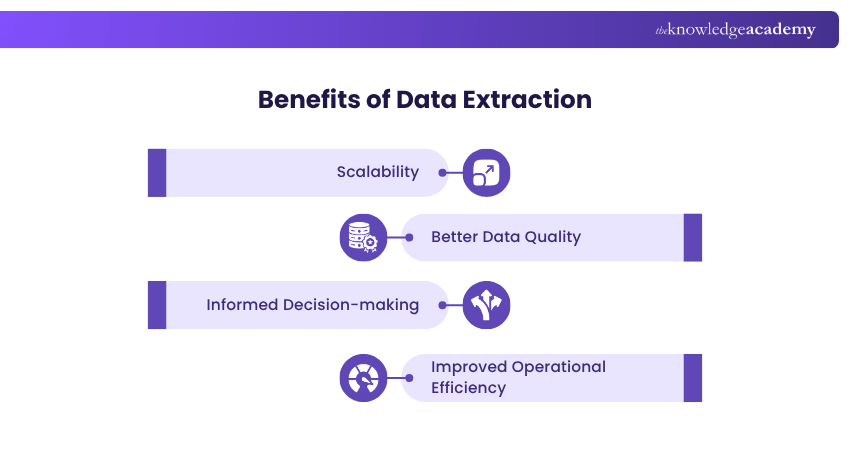
Efficient Data Extraction unlocks valuable business insights. It improves accessibility, enhances decision-making, and streamlines operations. Businesses rely on correct data to drive growth. Therefore, give the below listed benefits a read:
1) Scalability
Automated extraction processes adjust to increasing data volumes. They support growing business needs without compromising performance or efficiency. This flexibility makes it easier to handle future growth smoothly.
2) Better Data Quality
Cleansing and transformation enhance accuracy. Reliable data improves analysis, reduces errors, and strengthens business strategies. High-quality data ensures teams can trust the insights they use.
3) Informed Decision-making
Access to accurate and timely data empowers businesses. Well-processed information supports confident, data-driven decisions. Leaders gain clarity to act faster and plan smarter every single day with confidence.
4) Improved Operational Efficiency
Optimised Data Extraction reduces manual effort. It speeds up workflows, minimises errors, and enhances overall productivity. This results in smoother operations and better resource utilisation across teams.
Data Extraction Methods
Different methods are used to retrieve data based on business needs and system capabilities. Some approaches focus on efficiency, while others prioritise accuracy. Choosing the right method ensures seamless data flow and effective processing. Given below are some of the methods:
1) Update Notification
This method triggers extraction when data changes. It relies on system alerts or built-in mechanisms to detect updates. Businesses use it to maintain real-time accuracy without unnecessary processing.
2) Incremental Extraction
Incremental extraction retrieves only new or modified records. It minimises processing time by avoiding redundant data pulls. This approach is useful for systems with frequent updates and real-time needs.
3) Full Extraction
Full extraction gathers all available data from a source. It is used for initial setup or periodic backups. While comprehensive, it can be resource-intensive, requiring careful management and planning.
Understand data manipulation and Machine Learning fundamentals clearly with our Data Science With R Training – Register today!
Types of Data Extraction Tools
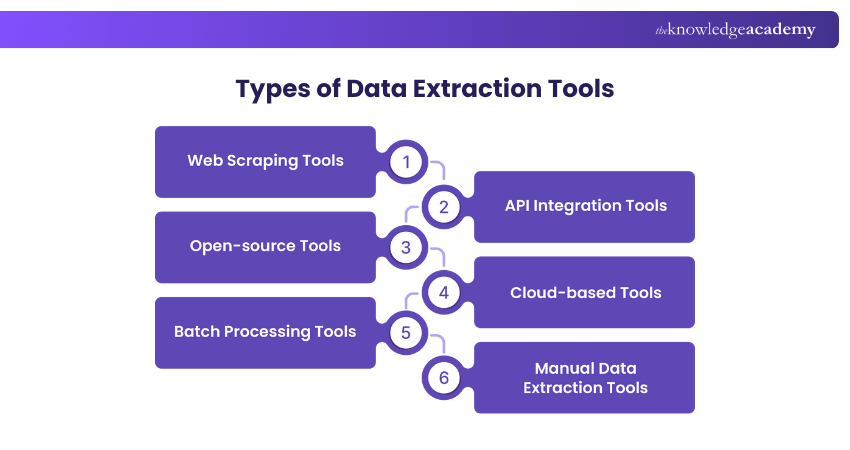
Data Extraction tools help businesses gather valuable information from different sources. Some are automated, while others require manual effort. The choice depends on the data type, complexity, and processing needs. Given below are some tools for you to find your match:
1) Web Scraping Tools
These tools extract data from websites using automated scripts. They collect information from web pages for research, analysis, or market insights. They are commonly used for price monitoring, lead generation, and trend tracking.
2) API Integration Tools
APIs allow systems to share and retrieve data seamlessly. Integration tools help connect different platforms for real-time access to structured information. They are ideal for businesses that rely on continuous data exchange.
3) Open-source Tools
Open-source solutions provide customisable Data Extraction capabilities. They offer flexibility and allow users to modify features based on specific requirements. These tools are cost-effective and supported by active developer communities.
4) Cloud-based Tools
Cloud extraction tools store and process data in online environments. They provide scalability, security, and accessibility across multiple locations. They are suitable for organisations managing large and distributed data sets.
5) Batch Processing Tools
These tools extract large volumes of data at scheduled intervals. They ensure efficient processing without overloading systems with constant updates. They work well for routine data operations like daily or weekly updates.
6) Manual Data Extraction Tools
Manual tools rely on human effort to collect and process data. They are useful when automation is not feasible, but they require time and accuracy. These methods are common for small-scale tasks or unique data formats.
Gain proficiency in forecasting for strategic decision-making with our Predictive Analytics Course – Join now!
Real-world Data Extraction Example
Data Extraction plays a vital role across industries. It helps businesses analyse information and optimise processes. Different sectors and company use extraction techniques to enhance efficiency. Therefore, it helps improve decision-making and gain actionable insights. Some of these examples will help you know more about it:
1) Healthcare
Hospitals and clinics extract patient records to streamline treatment plans. Medical researchers collect health data from studies to track disease trends and develop new treatments. This leads to improved patient care and faster medical decisions.
2) Manufacturing
Factories analyse machine performance and production metrics. Extracting data from equipment sensors helps predict maintenance needs and reduce downtime. This results in better productivity and lower repair costs.
3) Education
Institutions gather learner performance data to improve teaching methods. Learning platforms use extraction techniques to assess user engagement and personalise educational content. This helps create more effective and enjoyable learning experiences.
4) Finance
Banks retrieve transaction records for fraud detection and compliance checks. Financial Analysts extract market data to assess investment risks and opportunities. This supports safer transactions and smarter financial planning.
5) E-commerce and Retail
Online stores collect customer purchase history to refine marketing strategies. Retailers analyse inventory and sales patterns to optimise Stock Management and pricing. This improves customer experience and boosts business growth.
Best Practices for Data Extraction
Effective Data Extraction ensures accuracy, efficiency, and security. Therefore, the following established rules minimise errors and improve overall usability. So, look at some of the essential best practices below:
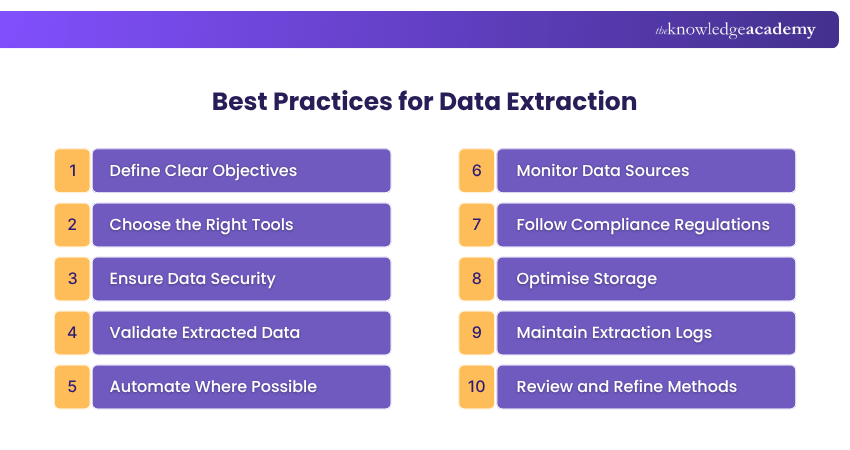
1) Define Clear Objectives: Identify what data is needed and how it will be used.
2) Choose the Right Tools: Select software suited to the data type and extraction complexity.
3) Ensure Data Security: Protect sensitive information with encryption and access controls.
4) Validate Extracted Data: Check for inconsistencies, duplicates, and formatting errors.
5) Automate Where Possible: Use scripts and workflows to speed up extraction processes.
6) Monitor Data Sources: Keep track of updates or changes to maintain accuracy.
7) Follow Compliance Regulations: Adhere to industry standards and legal requirements.
8) Optimise Storage: Organise extracted data efficiently for easy retrieval and use.
9) Maintain Extraction Logs: Keep detailed records for tracking and troubleshooting.
10) Review and Refine Methods: Regularly assess techniques to improve efficiency.
A well-planned approach enhances data accessibility, supports informed decisions, and reduces operational risks.
Conclusion
Thus, Data Extraction helps businesses collect and process information efficiently. Using the right methods ensures accuracy, security, and scalability. Structured data handling improves decision-making, boosts operational efficiency, and drives growth. Whether in healthcare, finance or retail, effective extraction leads to better insights. Thus, it can bring in stronger strategies, and improved outcomes.
Develop advanced analytical skills to extract meaningful insights from large datasets with our Data Science Courses – Join now!
Frequently Asked Questions
What is the Purpose of Extracting Data?

Data Extraction gathers valuable information for analysis and decision-making. Businesses use it to track trends, optimise processes, and improve efficiency. It enables accurate reporting, better forecasting, and streamlined workflows across industries.
Why is Data Extraction so Difficult?
Challenges include unstructured data, compatibility issues, security concerns, and processing large volumes efficiently. Varying formats require specialised tools, and maintaining accuracy demands constant refinement.
What are the Other Resources and Offers Provided by The Knowledge Academy?
The Knowledge Academy takes global learning to new heights, offering over 3,000+ online courses across 490+ locations in 190+ countries. This expansive reach ensures accessibility and convenience for learners worldwide.
Alongside our diverse Online Course Catalogue, encompassing 17 major categories, we go the extra mile by providing a plethora of free educational Online Resources like Blogs, eBooks, Interview Questions and Videos. Tailoring learning experiences further, professionals can unlock greater value through a wide range of special discounts, seasonal deals, and Exclusive Offers.
What is The Knowledge Pass, and How Does it Work?
The Knowledge Academy’s Knowledge Pass, a prepaid voucher, adds another layer of flexibility, allowing course bookings over a 12-month period. Join us on a journey where education knows no bounds.
What are the Related Courses and Blogs Provided by The Knowledge Academy?
The Knowledge Academy offers various Data Science Courses including the Advanced Data Science Certification, Python Data Science Course, and Predictive Analysis Course. These courses cater to different skill levels, providing comprehensive insights into Data Transformation.
Our Data, Analytics & AI Blogs cover a range of topics related to Data Extraction, offering valuable resources, best practices, and industry insights. Whether you are a beginner or looking to advance your Data Extraction skills, The Knowledge Academy's diverse courses and informative blogs have got you covered.

The Knowledge Academy


Global Training Provider
The Knowledge Academy is a world-leading provider of professional training courses, offering globally recognised qualifications across a wide range of subjects. With expert trainers, up-to-date course material, and flexible learning options, we aim to empower professionals and organisations to achieve their goals through continuous learning.

Upcoming Data, Analytics & AI Resources Batches & Dates
Date
 Advanced Data Science Certification
Advanced Data Science Certification
Mon 29th Jun 2026
Advanced Data Science Certification
Mon 7th Sep 2026
Advanced Data Science Certification
Mon 14th Dec 2026

 If you wish to make any changes to your course, please


