


 Top Rated Course

We may not have the course you’re looking for. If you enquire or give us a call on +44 1344 203999 and speak to our training experts, we may still be able to help with your training requirements.
What is Remittance and How Does it Work?
Olivia Taylor 22 April 2026Remittance is the transfer of money by a person working abroad to someone in their home country, often to support family or meet financial needs. This money helps cover essentials like food, education, and medical costs. Remittances also play a major role in supporting economies and improving lives in developing nations.

Training Outcomes Within Your Budget!
We ensure quality, budget-alignment, and timely delivery by our expert instructors.
Table of Contents
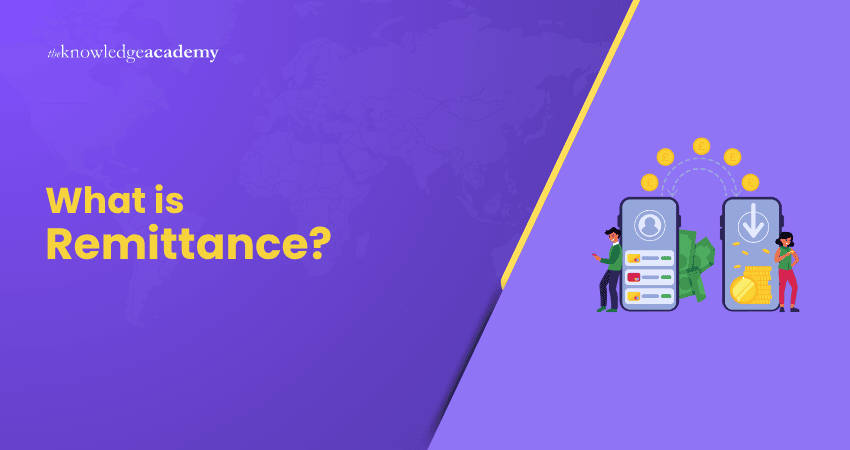
You know that feeling when you send money home and get a message that says, “Thanks, I really needed that”? That moment perfectly captures What is Remittance, it’s not just money, but support, love and responsibility all rolled into one.
In this blog, we’ll explore What is Remittance, why it’s important, its key features, and the different types. We’ll also look at how Remittances work, how to send them, the benefits they offer and how Remittance differs from a bank transfer.
Table of Contents
1) What is Remittance?
2) Key Features of Remittances
3) Different Types of Remittances
4) How do Remittances Work?
5) How to Send a Remittance?
6) Benefits of Remittance Payments
7) Remittance vs Bank Transfer: What’s the Difference?
8) Conclusion
What is Remittance?
Remittance is the money that someone sends to another person, usually from one country to another. It is most common when people work in a foreign country and send money back home to support their families.
For example, a person from India working in the UK may send money home to help pay for food, school fees or bills. This money is a Remittance. Remittance can be sent through banks, online services, or special money transfer companies.

Key Features of Remittances
Remittances are regular; personal money transfers sent to support family needs. They directly aid households and boost local economies. These are the key features of Remittance:
1) Sender and Receiver
There are always two main people in a Remittance. Both the sender and receiver need to have access to a money transfer method, like a bank or a mobile app.
1) The Sender: This is the person who sends the money. They often work in another country and send money home.
2) The Receiver: This is the person who gets the money. It could be a parent, child, friend, or someone else.
2) Economic Impact of Remittances
Remittances play a big role in a country’s economy. Here’s how:
1) They bring in money from other countries, which helps the local economy.
2) People spend Remittance money on goods and services, which helps small shops and businesses.
3) Remittances can help reduce the need for loans or government assistance.
Gain essential accounting principles and learn how to apply them effectively. Join our Tally Training now!
Different Types of Remittances
Remittances can be broadly classified into two main types - Outward Remittances and Inward Remittances. Now, we’ll discuss them in detail:

1) Outward Remittances
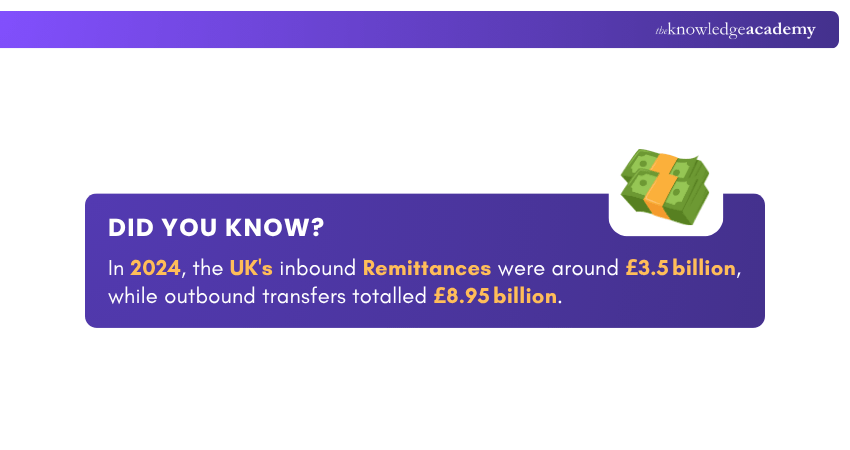
Outward Remittances refer to money sent from one country to another, usually by residents, businesses, or organisations.
Example:
2) Inward Remittances
Inward Remittances are funds received from abroad by individuals or organisations in a particular country.
How do Remittances Work?
Remittances follow a simple process:

1) Sender (Individual): The process starts when a person initiates a money transfer.
2) Money Transfer Application with Payment Gateway: The sender uses a digital or physical platform (like a bank app or remittance service) to start the transaction.
3) Issuing Bank: The sender’s bank verifies details, deducts funds, and processes the transaction request.
4) Payment Processor: The payment gateway routes the funds through secure financial channels.
5) Card Networks (Visa/MasterCard): If the transaction uses a debit/credit card, the network authorises and transmits the payment to the corresponding bank.
6) Correspondent Banks (if necessary): These act as intermediaries, especially for international transfers between banks that don’t have a direct relationship.
7) Beneficiary Bank: The receiving bank credits the transferred amount to the receiver’s account.
8) Recipient (Individual): The final step - the intended receiver gets the money, either in their account, through mobile payment, or as a cash pickup.
How to Send a Remittance?
There are several secure and convenient ways to send a remittance. Let’s look at some of the most commonly used methods:
1) Using Money Transfer Services
Companies like Western Union, MoneyGram, and Wise help people send money across borders. You can visit their store, use their website, or mobile app. These services are fast and secure, but may charge a small fee.
2) Money Orders
A money order is like a prepaid cheque. You pay money to a post office or service provider, and they give you a paper slip. You can send this slip to someone who can cash it or deposit it in their bank.
3) Banks and Credit Unions
You can send Remittances through banks or credit unions. These are safe options but may take more time. Also, fees may be higher than some other methods. Many people choose this method for large or important transfers because of its trustworthiness and reliability.
4) Cheques
People can also send cheques by post. The receiver deposits the cheque in their bank account. This is not very common anymore because it takes longer and may not be accepted in all countries.
5) Utilising Wire Transfers
A wire transfer is a direct bank-to-bank transfer. It’s a very safe method, but it can be a bit expensive. Many banks use the Society for Worldwide Interbank Financial Telecommunication (SWIFT) system to send wire transfers internationally.
6) Prepaid Cards
Some people use prepaid cards to send money. The sender loads money onto the card, and the receiver uses the card to withdraw cash or shop. This method is useful for people who do not have a bank account.
7) Electronic Funds Transfers (EFTs)
This is an online method where money is transferred from one account to another. Many banks and financial services allow this. It is fast and cheap. People often use it for regular payments like bills or sending money to families.
Improve reporting accuracy and streamline daily accounting tasks with our QuickBooks Training now!
Benefits of Remittance Payments
Here are the benefits of Remittance Payments:
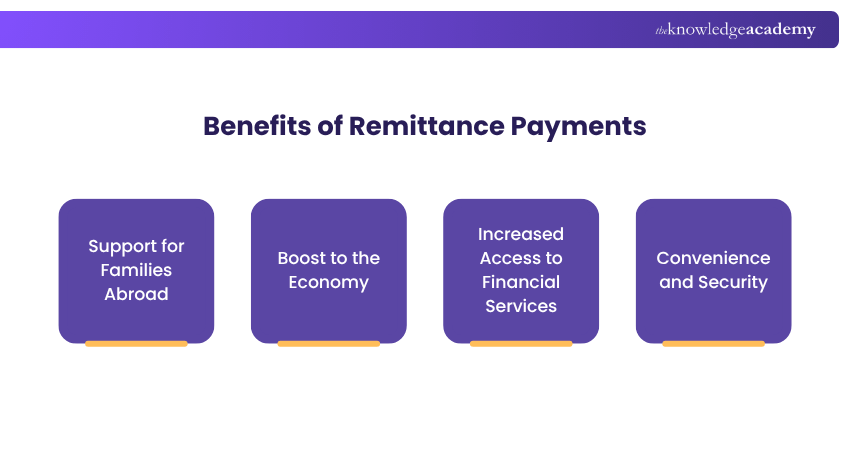
1) Support for Families Abroad
One of the main benefits of sending remittances is that they help families living in other countries. The money can be used for food, education, healthcare, and other essential needs. With modern transfer systems, sending money internationally has become quick, affordable, and convenient, allowing people to support loved ones easily.
2) Boost to the Economy
Remittances play a key role in strengthening developing economies. When families receive funds, they spend locally on goods and services, which helps small businesses grow, creates employment opportunities, and supports community development. Remittances also form an essential component in Calculating GDP for many nations.
3) Increased Access to Financial Services
Regular remittance inflows encourage people to use formal banking systems. Families who receive money often open bank accounts, save regularly, and build better financial habits. This promotes financial inclusion and long-term economic stability.
4) Convenience and Security
Modern digital transfer options make sending money simple, fast, and secure. People can rely on trusted online platforms and banking apps to ensure their families receive funds safely, without delays or errors.
Remittance vs Bank Transfer: What’s the Difference?
Bank transfer and Remittance both help you send money, but they are a little different in how they work. Here's a simple comparison:
1) What it Means
A bank transfer is the process of sending money from one bank account to another, usually within the same country. A remittance, on the other hand, typically involves sending money across borders, often by people working abroad to support their families.
2) How Fast it is
Remittances are often processed quickly, especially when sent through digital money transfer services. In comparison, a bank transfer may take one to two working days, particularly for international payments. Speed makes remittances ideal for urgent financial needs.
3) What it Costs
Sending a Remittance usually costs less and often has a fixed fee. A bank transfer can cost more, especially if you send a large amount. Lower fees make Remittance more affordable for regular use.
4) How do you Send it
A bank transfer must be done through net banking or a debit/credit card; you cannot use cash. With Remittance, you can pay in cash and send it without any trouble. This flexibility makes Remittance more convenient for people without access to a bank.
Conclusion
Understanding What is Remittance helps us see how a simple money transfer can make a big difference. It’s more than just sending funds; it’s about supporting loved ones, easing financial burdens, and staying connected across borders. As technology evolves, Remittance continues to empower families and strengthen communities around the world.
Upgrade your finance skills with hands-on software training with our Accounting Software Training now!
Frequently Asked Questions
What is a Remittance Payment?

A Remittance payment is money that someone sends, usually from one country to another. It helps people support family, friends, or businesses.
Who Pays the Remittance?
Usually, the sender pays the Remittance. They may also pay a small fee to the service provider. The receiver gets the full or slightly reduced amount, depending on the charges.
What are the Other Resources and Offers Provided by The Knowledge Academy?
The Knowledge Academy takes global learning to new heights, offering over 3,000+ online courses across 490+ locations in 190+ countries. This expansive reach ensures accessibility and convenience for learners worldwide.
Alongside our diverse Online Course Catalogue, encompassing 17 major categories, we go the extra mile by providing a plethora of free educational Online Resources like Blogs, eBooks, Interview Questions and Videos. Tailoring learning experiences further, professionals can unlock greater value through a wide range of special discounts, seasonal deals, and Exclusive Offers.
What is The Knowledge Pass, and How Does it Work?
The Knowledge Academy’s Knowledge Pass, a prepaid voucher, adds another layer of flexibility, allowing course bookings over a 12-month period. Join us on a journey where education knows no bounds.
What are the Related Courses and Blogs Provided by The Knowledge Academy?
The Knowledge Academy offers various Accounting Software Training, including the Sage 50 Accounts Training, QuickBooks Training, and Tally Training. These courses cater to different skill levels, providing comprehensive insights into Cash Flow Statement.
Our Accounting and Finance Blogs cover a range of topics related to Remittance, offering valuable resources, best practices, and industry insights. Whether you are a beginner or looking to advance your Accounting and Finance skills, The Knowledge Academy's diverse courses and informative blogs have got you covered.

Olivia Taylor


Chartered Accountant and Financial Training Specialist
Olivia Taylor is a qualified chartered accountant with over a decade of experience in financial management, auditing and corporate reporting. Having worked with leading firms in both the public and private sectors, Olivia brings clarity to complex financial topics. Her writing focuses on helping professionals build confidence in key areas of accounting, compliance and financial planning.
View Detail
Upcoming Accounting and Finance Resources Batches & Dates
Date
 Sage 50 Accounts Training
Sage 50 Accounts Training
Fri 7th Aug 2026
Sage 50 Accounts Training
Fri 6th Nov 2026

 If you wish to make any changes to your course, please


